Inside the fast and furious world of London’s oldest Scalextric Club
- Text by Ryan Loftus
- Photography by Ryan Loftus

Buzz & whir — First opening in 1977 in north London, members meet every Tuesday to race carefully customised and handcrafted slot cars around a 34-metre plastic track. Ryan Loftus attempts to take them on.
Fresh-faced, but with a seasoned sense of calm, Michael sits at an old desk in the middle of a north London church hall on a cold January evening. He’s typing away at a desktop monitor, running a 1980’s leaderboard simulator with a refreshing, primary-colour-only simplicity, dwarfed by a five-lane racing track – the only one of its kind in the world.
Michael tests a microphone by tapping it. “Marshals, are you ready?”
The other marshals and I are placed on particularly tricky corners and bends, ready to rescue cars should they fly off the track.
“Racers, are you ready?” A single, low-set yes from a raised platform, designed to give an uninterrupted view of the track, where huddled racers fidget excitedly with homemade controllers that give diabolical genius.
Michael again…“Watch for the lights.”
Above the starting line, red flashes to green, and the space swells with the buzz of very fast toy cars. They hammer it around the 34-metre track for three minutes straight with immense precision. This has an artistry about it.


For those who don’t know, Scalextric is a racing game that originated in the UK in the late 1950s, where players race miniature electric cars on specialised plastic tracks, using handheld controllers.
Have you dabbled before? I have. Used to think I was alright, too. Whack the infinity loop out, get a little high, and swing tiny toy Ferraris endlessly around the track for hours. I was, and probably still am, what the professionals at the London Scalextric Club call a “rug racer” – someone who plays recreationally at home – but tonight, I feel like I’m one of them. Ish. I had a pop at racing earlier in the night. Comments ranged from “not a bad effort” to “there must be oil on the track!” on account of my regularly steering cars off a cliff-like section next to the kitchen. Marshalling was my true calling.
Races end with a countdown: “Three, two, one…” The power goes down, muffled mumblings, and racers get a much-needed adrenaline break, retreating to their assigned stations, old school desks where they’ve set up briefcases of cars, tools, and bits and bobs for tinkering. Frenzied shouts of: “Anyone need a Porsche headlight?!” while I watch the quiet, almost back-alley-like dealings of the in-house mechanic dealership: a one-man part-selling operation where creased fivers are swapped for tiny wheels.
The aim of the game here is simple: win the championship. It’s January 2026, and ahead of everyone here lies a year-long battle of talent, nerve, and stamina. 52 weeks. Three hours every Tuesday. 156 hours of racing. Each weekly race is a different “group”, which means a different category of cars you have to use. Grand Prix. Touring cars. Club cars – where everyone races the same model. (This week was Mini Coopers, which I saw as lucky because I have one in real life. It was not.)

Tips and tricks are either swapped with joy or guarded with military-level secrecy. Some use spit to clean their cars’ wheels – an important task after every race – while others choose the industrious security of Mr Muscle. Some favour off-the-shelf paint jobs, others specifically enjoy painting each part themselves.
After caning the plastic for a few hours on a Tuesday night, it’s not unusual that racers, with fresh performance insights, head home to improve their gear ahead of the next race. I speak to Adrian, a broad-smiled, friendly man who shouts: “Go on, Ryan!” when I race, about his post-match routine. “Last week, bedtime was 2am. I’m a night owl anyway. Get home, get into the groove, a little bit of music, a couple of coffees. That was last week, but this week I did it all on a Sunday. Easily 3 – 4 hours to give the cars a once-over.” I’ve not seen dedication and passion like this for some time, and I’m massively here for it.
The history books, and the glistening winners’ plaque in the corner of the room, tell me Alan Wilkinson is the ultimate speed demon. He won last year. And he’s keen to keep it that way. “I have to keep upgrading, to look at what other people are doing. Last year, a few of the guys were catching me, so I need to be on the ball.” He tells me this while tinkering away at his station. This guy’s serious, I think, before he pops open one of the cars and shows me inside.
I suspect that Michael, the young blood of the group, is quietly eyeing up the title. He says he doesn’t play to win, but when I ask him about his favourite memory, he tells me: “Ironically, it only happened two races ago. After nearly six or seven years of coming here, I finally won a major trophy, the Memorial Trophy. It’s an open event, and everyone races the same car, so you’re going on merit. Huge!”
“The key to any club is the social element, isn't it? The membership. It's not cutthroat competition. It’s an analogue hobby in a digital world.” Michael

Steve Carter is the club patriarch and chairman. The boss. The big cheese. He’s been here almost since the beginning, back in 1977, when dance instructor Roy Charlesworth originally founded the club around the corner at Haringey Ballroom, racing between salsa and tango lessons. Sadly, in 1979, Haringey Ballroom closed down, but Roy found a new home for his dance classes and the club here at St. Mark’s Church Hall, 200 yards from where it all began.
It’s incredibly bright in this church, hellishly so, but I can’t help but think that for these few hours every week, there’s a cosy little world that’s been carved out away from the chaos of our planet. I love how, for each person, this is a shot at their own grand slam. Senna. Hamilton. Schumacher. But at the heart of it all is community. “The key to any club is the social element, isn’t it? The membership. It’s not cutthroat competition. It’s an analogue hobby in a digital world.” Michael says.
SlotCar Max, as he asks me to call him, likens it to Warhammer. “You build or paint something at home, and then you have the joy of unveiling it to others who share your passion at a social gathering.” I feel a strange sense of jealousy. He’s describing a feeling of community that’s increasingly hard to come by these days. It hits particularly well at this moment because over the last few weeks, probably months, I’ve been feeling the natural distance of evolving friendships, and what was a solid community is increasingly fragmented as, inevitably, people move, families are started, and calendars fill rapidly.
Read next: Poignant photos of Cornwall’s last raceway


I like Max; there’s a cheekiness to him which makes me feel at ease, and I particularly enjoy his underdog vibe. “When you win your first race, you’re just in a heap. It’s a huge buzz, especially against experienced cars. It sets you up for the week.” He’s very pleased to show me one car in particular, which has a special meaning. “This car won the GT race last year. I built the whole car from scratch. Which, racing against so much experience and class here, feels like fighting the law and winning.”
Ian, a quiet type who I bond with over a love of tea and milk chocolate digestives, is another one of the racers who has a sense of anarchy about them. “I’ve got trophies. But my ex won’t let me get them from her house.” When I ask why, I feel like I’m prying, and my instant thought is to take those words out of the air and put them back into my mouth. But before I can do that, Ian interrupts: “She wants to keep them because they look so beautiful on her mantlepiece.”
A small silence for us all to digest the idea, before he adds: “Being single definitely helps when it comes to slot car racing.” It’s the sort of hobby that really does require some serious maintenance.
The track lives here permanently, under the Vicar’s jurisdiction. Something that isn’t lost on Michael, “You know the vicar, or vicars over the years, have been kind to the club, supporting us, not charging an extortionate rate. We count our blessings, no pun intended.” The future of the club, though, is never entirely safe.
“This car won the GT race last year. I built the whole car from scratch. Which, racing against so much experience and class here, feels like fighting the law and winning.” SlotCar Max

Max says: “Birmingham has 24 people, with a permanent wooden track in a community centre room about a third of this size. But these places have disappeared all over the UK.” He’s right, funding for community centres in the UK from local councils has declined since the 1980s, shifting from a model of state support to one reliant on asset transfers, volunteering, and competitive, short-term grants. “If the council had a spare room, we’d have a permanent track, but it’s too expensive. They’ve all been sold off.”
“We’re here by the grace of God”, Max jokes, but it’s true. As he talks, Steve looks at the whizzing cars, his brain feels like it’s matching their rhythm, “We’re the only tenants. Realistically, it could be all sorts of things, a crèche, a playroom, but they’d need to change the facilities, and they wouldn’t be able to do that because the council can’t fund the church. They’re just happy to have us in here at the moment. When we get a new vicar, things might change.”
These communities are rare; their preservation rests on local funding that’s always on the knife-edge. “As long as the church has us, we’ll be here. They’ve had all sorts here before, scouts, boats, they come and go. This is enduring.” Steve says, and the word enduring sticks out to me, as do the smiles on each of their faces when they’re tinkering with, racing, or talking about their tiny creations.
Interested? Get yourself down for a race, or a cheeky marshall stint if you fancy it, they’re always looking for new members.
Ryan Loftus is a freelance journalist and writer. Visit his website Sarsen Studio.
Buy your copy of Huck 82 here.
Enjoyed this article? Follow Huck on Instagram and sign up to our newsletter for more from the cutting edge of sport, music and counterculture.
Support stories like this by becoming a member of Club Huck.
You might like

Sports Banger is throwing a party to mark 90 years since the Battle of Cable Street
“Fascists hate dancing” — The October event will bring DJs, live music, sound system culture and anti-fascist politics together in East London.
Written by: Ella Glossop

Guts, glory and goat tossing at the World Nomad Games
All eyes on Bishkek — From kok boru to eagle hunting, Kyrgyzstan’s global showcase spotlights ancient sports and celebrates local traditional culture, while also stiffening the regime’s ambitions, reports Antoine Goullin.
Written by: Antoine Goullin
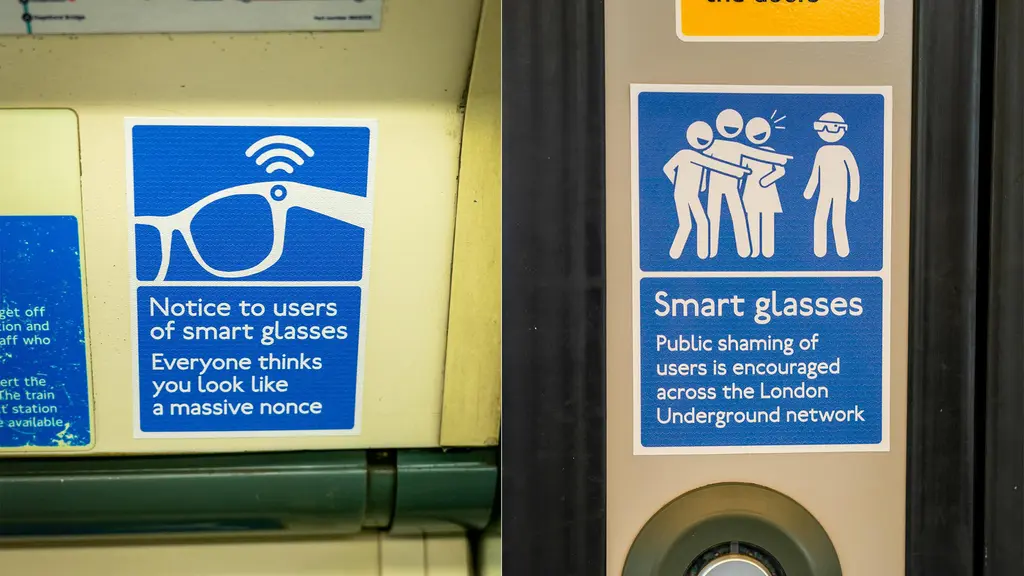
Activists slam “pervert glasses” in new guerrilla campaign
Everyone Hates Elon — Stickers have appeared on the London Underground network, criticising the wearable technology’s covert filming capabilities.
Written by: Isaac Muk

Behind the curtain at Alternative Miss World 1981
Olympia glamour — Running a subversive take on the traditional beauty pageant, the Andrew Logan organised event prioritised underground creativity and invention. Photographer David Corio went behind the scenes at its biggest edition.
Written by: Miss Rosen

Dan Lacey: “BMX is forever evolving”
Overground — Steph Pomphrey caught up with the two-wheel legend after his latest meet in east London, chatting about fatherhood, music and action sports within the outdoor industry.
Written by: Steph Pomphrey

The battle for the soul of lockpicking
Under locksport and key — In recent years, breaking locks for fun has grown from a niche hobby into an activity followed by millions of people. As it has matured, so have tensions over who sets the rules.
Written by: Jack Dennison-Thompson


