Five giant missiles have been delivered to Downing Street
- Text by Michael Segalov

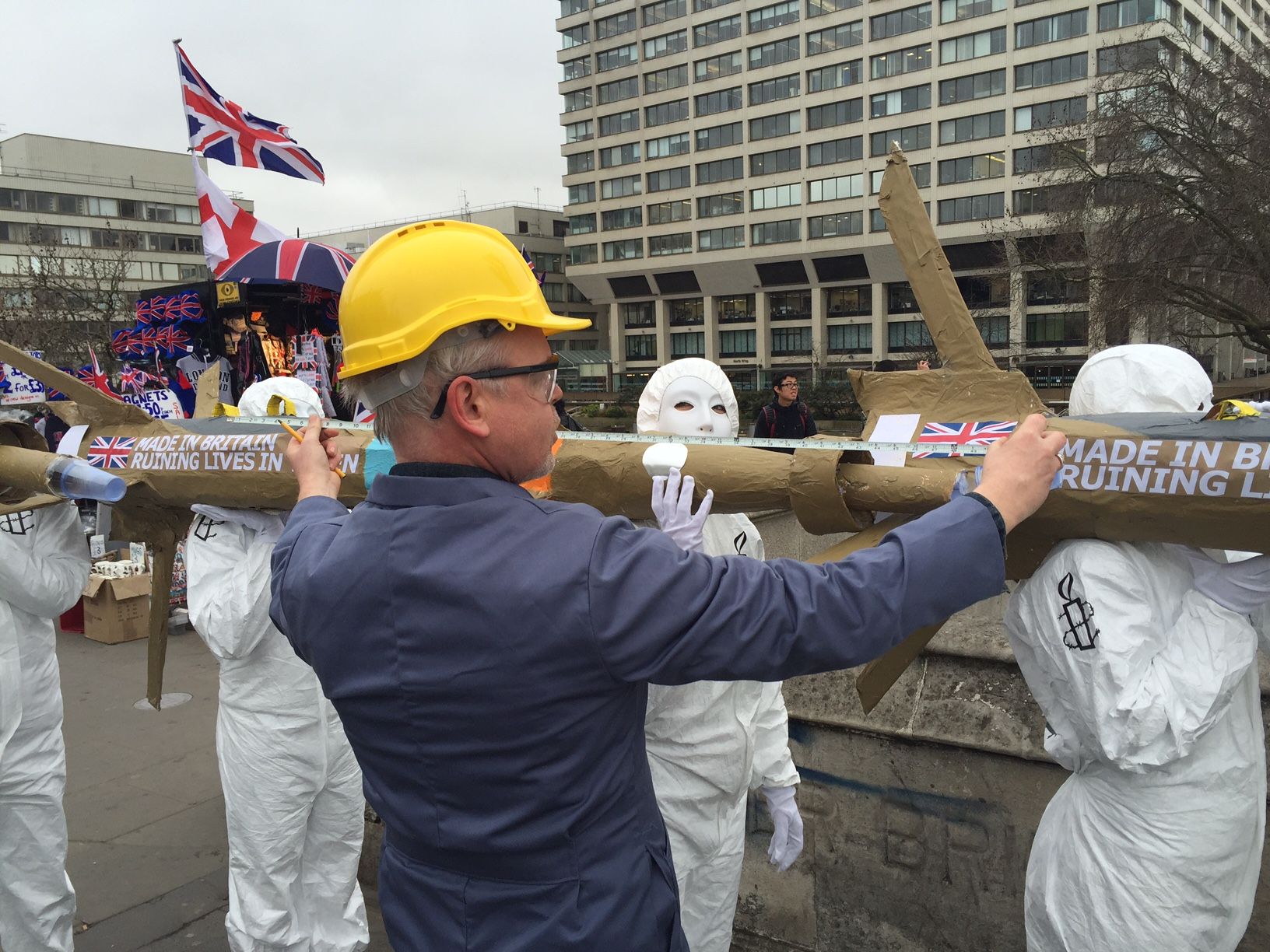
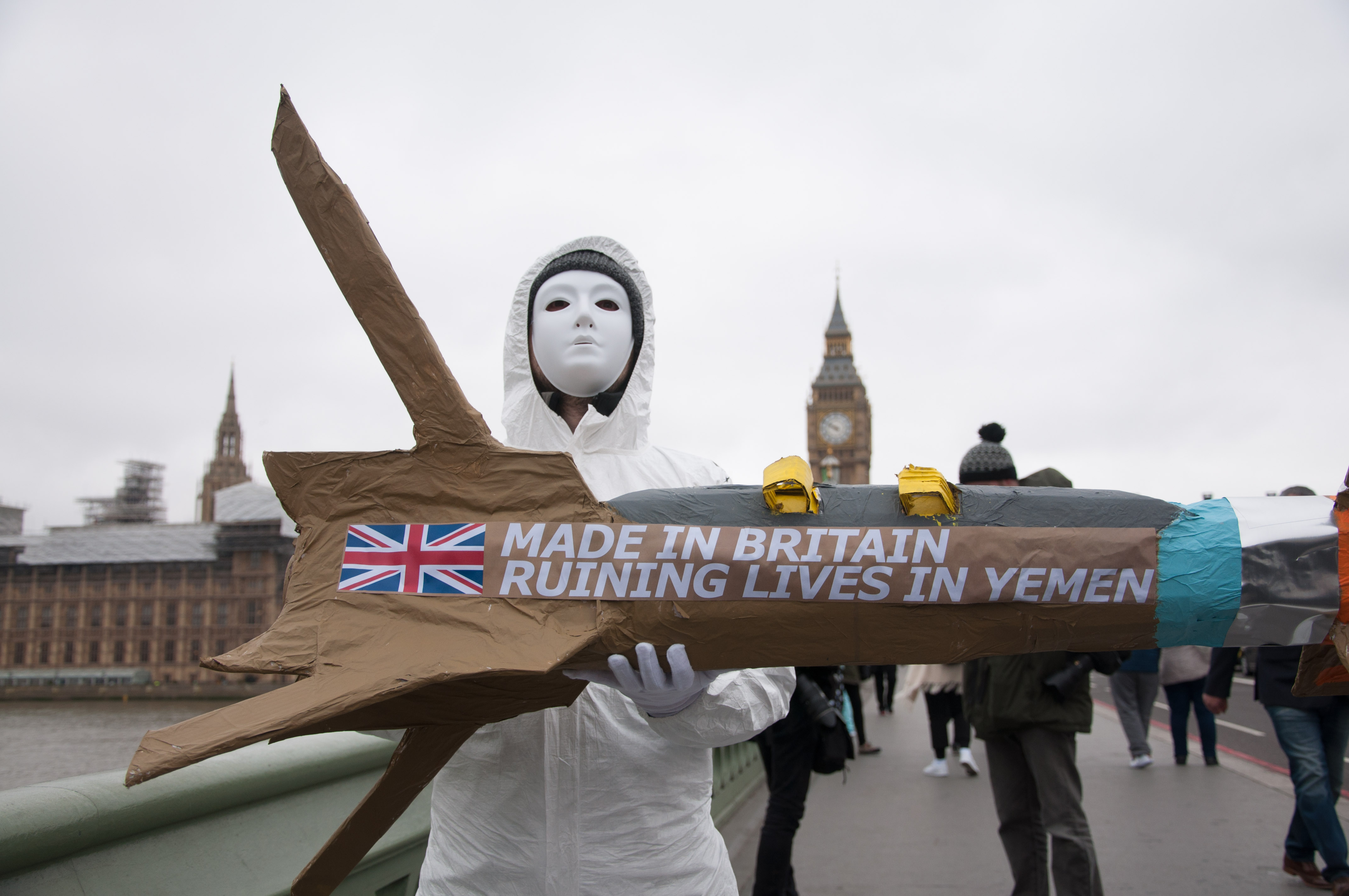
Campaigners from Amnesty International delivered five giant dummy missiles to Downing Street today, in a bid to draw attention to the UK government’s refusal to halt exports of UK-manufactured arms to Saudi Arabia, despite the clear risk that they could be used to commit war crimes in Yemen.
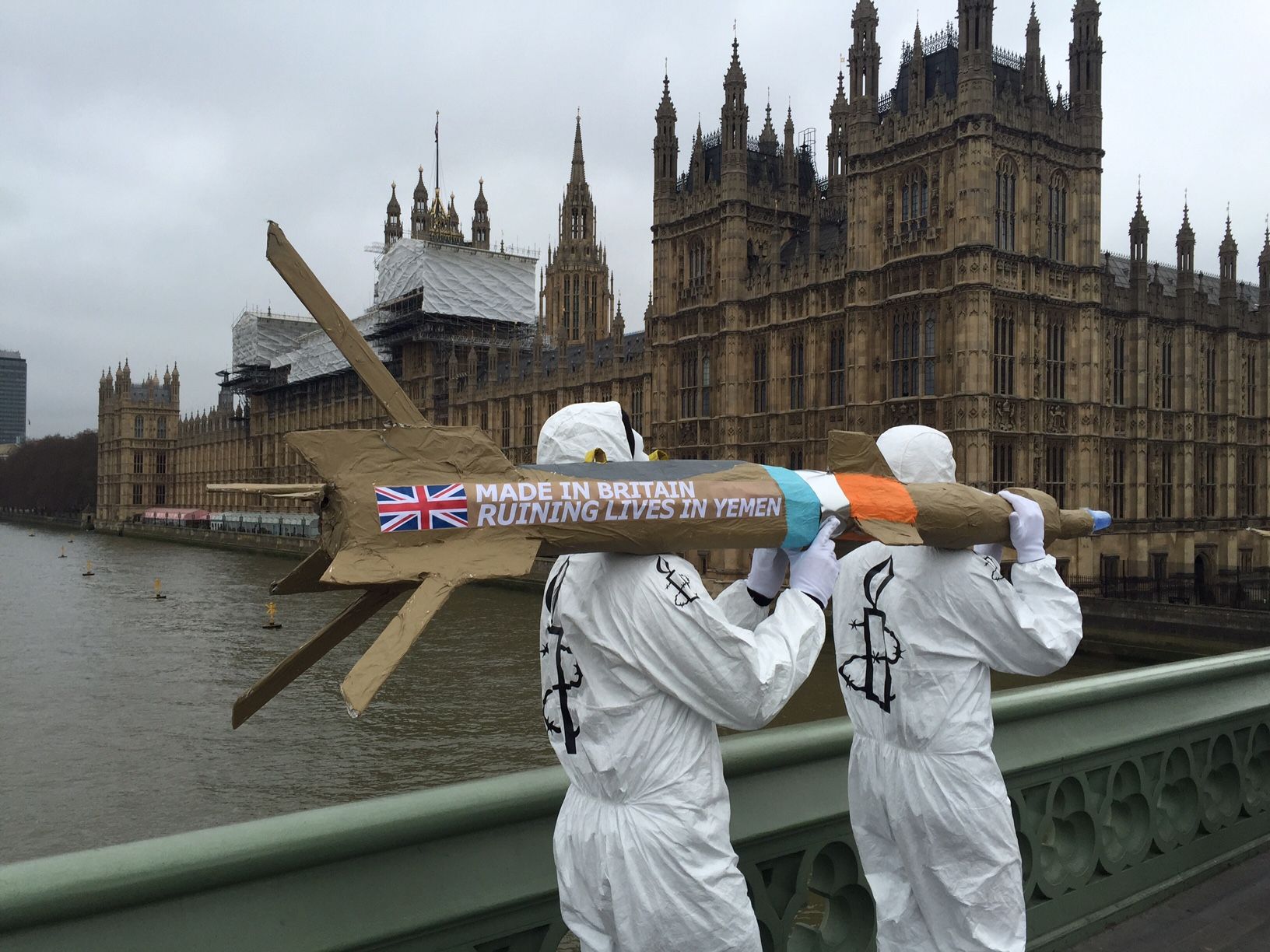
The missiles – 1.8-metres-long replicas of the 500lb “Paveway-IV” weapon, currently used by Saudi Arabia’s UK-supplied Eurofighter Typhoon war planes, bore the message “Made in Britain, destroying lives in Yemen”. Last year the UK transferred 58 combat aircraft and 2,400 missiles to Saudi Arabia, with the majority of this weaponry sold after Saudi Arabia’s deadly intervention in the conflict in Yemen.
More than 3,000 civilians – including 700 children – have been killed in Yemen in the last year alone. At least 2.5 million people have been forced to flee their homes, and at least 83 per cent of the country’s population are in dire need of humanitarian aid. It’s not hard to see why people are angry.
“It’s absolutely shocking that the UK is still selling billions of pounds’ worth of weapons to Saudi Arabia even as the civilian casualties have mounted and mounted in Yemen”, Amnesty International UK’s Arms Programme Director Oliver Sprague told HUCK.
“It’s hardly a matter of pride that misery in Yemen is Made in Britain. How much more devastation and carnage do we need to see in Yemen before the British Government keeps to its commitment to laws on arms trade, and suspend arms sales for the Saudi war machine?”
Since a bloody conflict erupted in Yemen a year ago, thousands of Yemeni civilians have been killed and injured, many in devastating airstrikes conducted by a Saudi Arabia-led military coalition. The UK is a major supplier of weaponry to the Royal Saudi Air Force – issuing licences for arms exports valued at £2.8bn between April and September last year, a period when civilian deaths in Yemen soared. The Prime Minister wasn’t there to sign for his delivery, but campaigners hope their attempt gives him pause for thought.
Enjoyed this article? Like Huck on Facebook or follow us on Twitter.
You might like

Jesse Glazzard’s messy portrait of queer friends, lovers and chosen family
The Sound of Dirt and Beauty — The photographer’s debut monograph explores tender, unpolished moments shaped by the people who he surrounds himself with, while offering a window into the UK’s working-class LGBTQ+ community.
Written by: Sunny Sunday

Behind the curtain at Alternative Miss World 1981
Olympia glamour — Running a subversive take on the traditional beauty pageant, the Andrew Logan organised event prioritised underground creativity and invention. Photographer David Corio went behind the scenes at its biggest edition.
Written by: Miss Rosen

What life on the Strait of Hormuz is really like
Southern Winds — Bandar Abbas based photographer Morteza Niknahad has been capturing the diverse communities and stories of his local region since he first picked up a camera. His new series highlights the human impact of war.
Written by: Isaac Muk

Nick Haymes’s intimate portrait of his family’s life
Chronograph — Over 25 years, the photographer documented his son’s lives as they grew into adults. The resulting photobook is an exploration of the passage of time, as well as the optimism of youth.
Written by: Miss Rosen

Kristina Rozhkova’s scatty, confronting portrait of captivity
Gut Feeling — The Russian artist’s 2024 arrest and subsequent detention opened her eye towards the omnipresent dynamics of power and control. Her new photobook is a stark exploration of being trapped.
Written by: Isaac Muk

UK’s first ever Latino film festival is coming to London
LoLaFF — Taking place between October 2-6, it will feature 55 filmmakers from Latin America, with an opening night at the Barbican.
Written by: Isaac Muk


