Forgotten shots of Europe’s underground music legacy
- Text by Miss Rosen
- Photography by Bruno Stettler

On October 1, 1977, the Clash played Switzerland for the very first time. Their 15-track set at Kaufleuten in Zürich began with “London’s Burning” and “Complete Control” — and somewhere in the audience, 16-year-old Bruno Stettler was taking his very first concert photographs.
Over the next decade, Stettler would go on to take 20,000 photographs at nearly 100 rock concerts around town, capturing the raw intimacy of live shows long before they became overproduced spectacles.
In his new book, Als War’s Das Letze Mal (Sturm & Drang), Stettler takes us on a magical trip through the looking glass, back in the late 1970s and ’80s, when legends like Bob Marley, David Bowie. Iggy Pop, Debbie Harry, Patti Smith, Nina Hagen, and Kraftwerk called the shots.

Blondie. Zürich. 24. 9. 1978
“Today Zürich is one of the world’s leading cities but at that time it was really a terrible, grey sad city,” Stettler says. “Nothing happened. Nothing was allowed. Dancing was forbidden on Easter, Christmas, and other holidays. There were no parties, no clubs. Everything needed to be closed after midnight. Going to concerts was the only possibility.”
Back then, Stettler could see bands like Black Sabbath, AC/DC, the Ramones, Queen, and the Who for $20. “And those concerts were never sold out,” Stettler reveals. “People didn’t know music history was going on because there was no promotion in the newspaper or on television. You needed to know yourself which band and why – their importance.”
At that time, security at concerts was not a concern, and flash photography was openly allowed. Stettler liked to make his way down to the second or third row, away from the hardcore fans blocking the first row: “I wanted to be close to the stage.”

Musical Youth. Zürich. 1983

Mistery Action. Mario 3. 11. 1979.
“At that time, they were not afraid that a fan would attack the band, and the band wanted to be quite close to the audience. They wanted to touch the fans so they played quite close to the audience. I would be four to six metres from the band — that was perfect.”
Stettler sold his photographs through a mail-order business, making thousands of prints from the original 9×13 format negatives before putting the work into storage for 20 years. When he unearthed them 10 years ago, he discovered some of the negatives had been damaged by water and mould. Yet the results, once seen when digitised, was a stroke of luck, creating a surreal, hallucinogenic effect that only serves to amplify how deliciously trippy these shows must have felt at the time.
“When I was at the concert of Bob Marley or ABBA, I was completely in the moment,” Stettler says. “I never thought about the future or the past. I was into the present, into everything. This was the best moment that could ever happen on earth.”
“When I started to look at some of the pictures, I realised they are not the same. Something had happened with my photographs, they started to change into art.”

David Bowie. München. 1983

Disco Three. Zürich. 6. 11. / 8. 11. 1983

Public Enemy. Montreux. Ca. 1986

Iggy Pop. München. 1983

Ramones. Zürich. 1980

Judas Priest. Zürich 17. 4. 1980
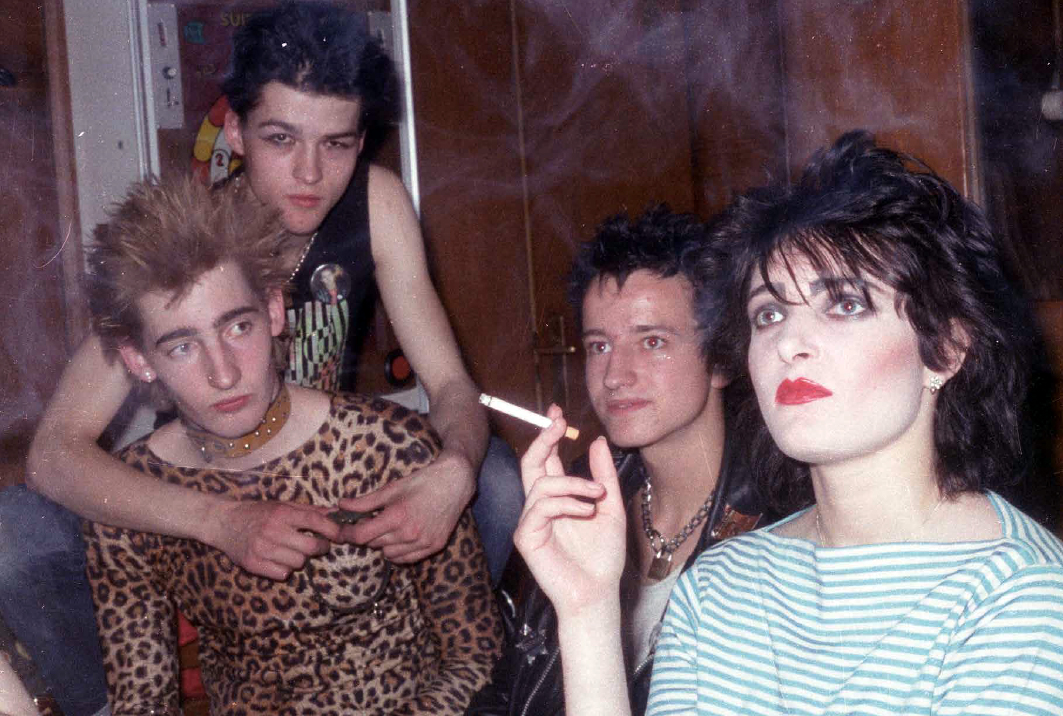
Siouxsie & the Banshees. Baden. 9. 7. 1979
Als War’s Das Letze Mal is published on Sturm & Drang.
Follow Miss Rosen on Twitter.
Enjoyed this article? Like Huck on Facebook or follow us on Twitter.
You might like

Jesse Glazzard’s messy portrait of queer friends, lovers and chosen family
The Sound of Dirt and Beauty — The photographer’s debut monograph explores tender, unpolished moments shaped by the people who he surrounds himself with, while offering a window into the UK’s working-class LGBTQ+ community.
Written by: Sunny Sunday

Behind the curtain at Alternative Miss World 1981
Olympia glamour — Running a subversive take on the traditional beauty pageant, the Andrew Logan organised event prioritised underground creativity and invention. Photographer David Corio went behind the scenes at its biggest edition.
Written by: Miss Rosen

New exhibition highlights British radical living over 200 years
Earthly Paradise — Taking place at the William Morris Gallery, it explores the homes and lives of artists, writers, musicians and more, as well as the conditions that allowed them to thrive.
Written by: Isaac Muk

What life on the Strait of Hormuz is really like
Southern Winds — Bandar Abbas based photographer Morteza Niknahad has been capturing the diverse communities and stories of his local region since he first picked up a camera. His new series highlights the human impact of war.
Written by: Isaac Muk

Green Man is more than a music festival
Planting roots — For nearly a quarter century, the fiercely independent weekender has been flying the flag for Welsh arts and music. As an ecosystem now bubbles around it, Anna Stafford meets the people who keep the fire burning.
Written by: Anna Stafford

Nick Haymes’s intimate portrait of his family’s life
Chronograph — Over 25 years, the photographer documented his son’s lives as they grew into adults. The resulting photobook is an exploration of the passage of time, as well as the optimism of youth.
Written by: Miss Rosen


