Ugandan trans woman Cleo Kambugu Kentaro is fighting for her right to love
- Text by Michael Segalov
- Photography by Dominic Nahr

“I was born in Bakuli, a suburb of Kampala, the capital of my home country Uganda. Growing up was difficult; I was an effeminate presenting boy born in a polygamous family of twelve. My mother’s first-born son, I had the weight of many expectations on my shoulders.
“In Uganda there’s no language for trans people as existing beyond a binary, so as a child I didn’t have words to express my gender. I knew that I didn’t fit into the box of ‘gay boy’, but I didn’t know how to define myself. It was male or female, heterosexual or straight. What I felt went against African norms of modern boyhood and manhood.
“You’re never given a template as a trans person that explains how to define yourself, what your gender is, or what a relationship and sex might look like. As a child I had some freedom, but was often referred to as boy-girl, Nyabo. I was called several female names; stale jokes used by friends, family, and bullies alike. When puberty hit, I came unstuck, and was expected to subscribe to gender roles distinct to masculinity.
“I went on to study biological sciences, where I got to learn about the physiological basis of how broad gender and sexuality can be. I’d go online, and link up with people on forums, and it’s through this I got to know what it all meant.
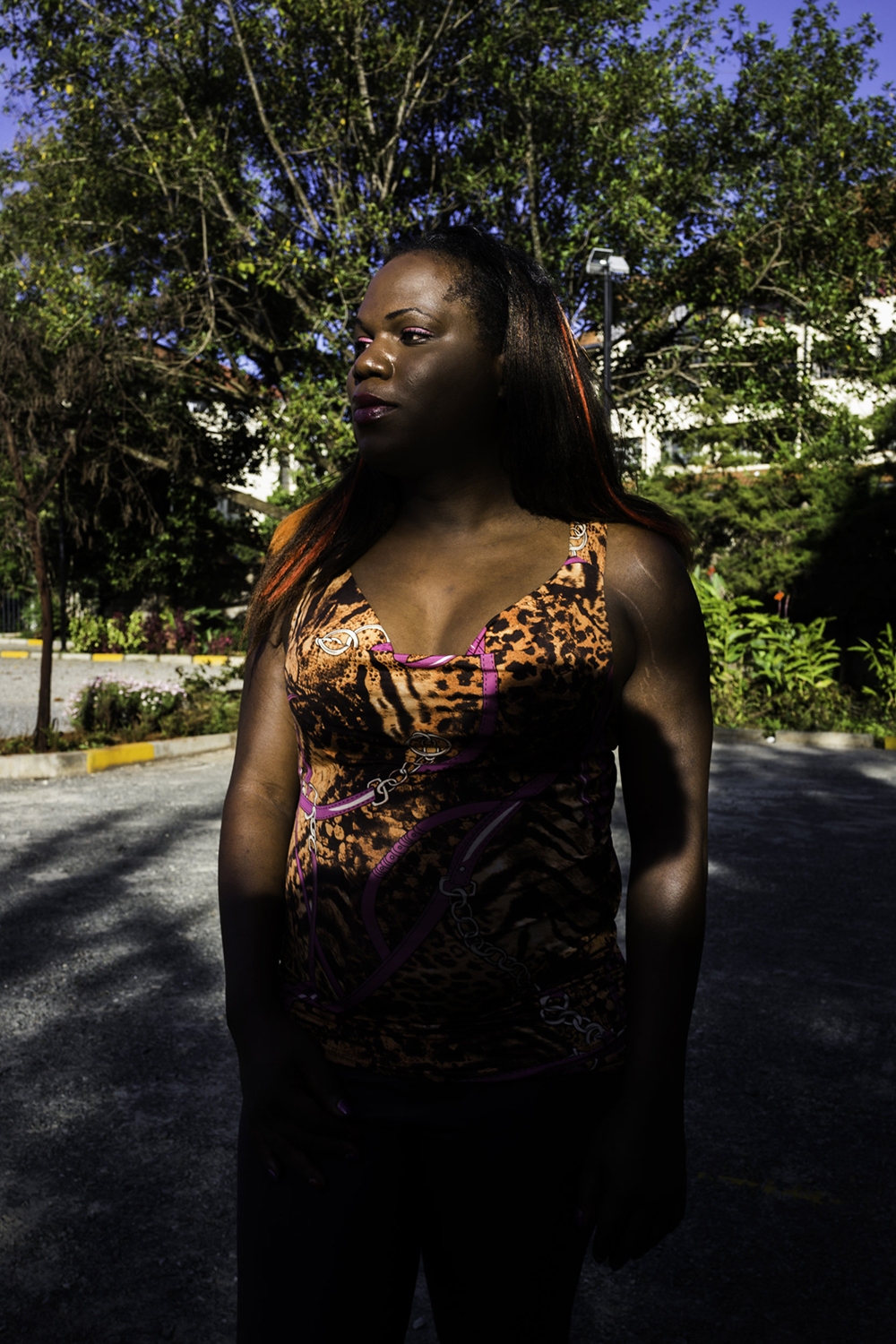
“It wasn’t until I was twenty-three, and stumbled into a queer bar in Kampala, that I began to find a community of people who were like me. I felt liberated.
“I could lean on someone; tell them what I was going through. We didn’t have all the answers, sure, but it helped us start to navigate what it means to be trans in Africa today. What I loved was how the community we formed back then was trying so hard to change the lives of people who identify as queer in our country. For those short, blissful moments, we would forget our lonely lives.
“We had this bubbling passion, to make sure nobody else had to go through what we did: the loneliness, lack of confidence, contemplation of suicide, no healthcare. It’s not that queer people aren’t able to succeed here; society stops us.
“Then, in 2013, the Anti-Homosexuality Act was set to pass. We didn’t know if being gay would see you killed or imprisoned for life, but it wasn’t looking great. The Speaker of our Parliament went to Canada for a Commonwealth Summit. She was asked about the bill, and defended it, promising that she would give Ugandans the hate of homosexuality as a Christmas gift.
“I wrote an article, appealing to the humanity of Ugandans, and soon people started to look for me. They didn’t think a trans woman would be able to write anything as articulately as I had; we’re rejected by society, pariahs with no standing or voice.
“In my first year of my postgraduate studies, I started medically transitioning. We do not practice ‘transgender medicine’ here, so I consulted a physician through a friend. He was sceptical at first, afraid for his reputation, but we were able to relate from an academic perspective, and agreed for him to provide medical advice off the record.
“He wasn’t sure it would work, but when he saw what happened – me becoming relaxed, comfortable in myself, and changing physically – he began to understand gender dysphoria.
“But sadly not everyone in Uganda sees things the same way. Right now I live and work in Nairobi. Geographically Kenya might be close to Uganda, but people here think differently when it comes to gender and sexuality. At home they have no idea; a trans person is a gay person who is just too fabulous.
“In Nairobi, there is at least an understanding of what it means to be trans, the separation of gender and sexuality. But there’s still a long way to go; the health service here remains ignorant, being recognised as a citizen after transition is no mean feat.
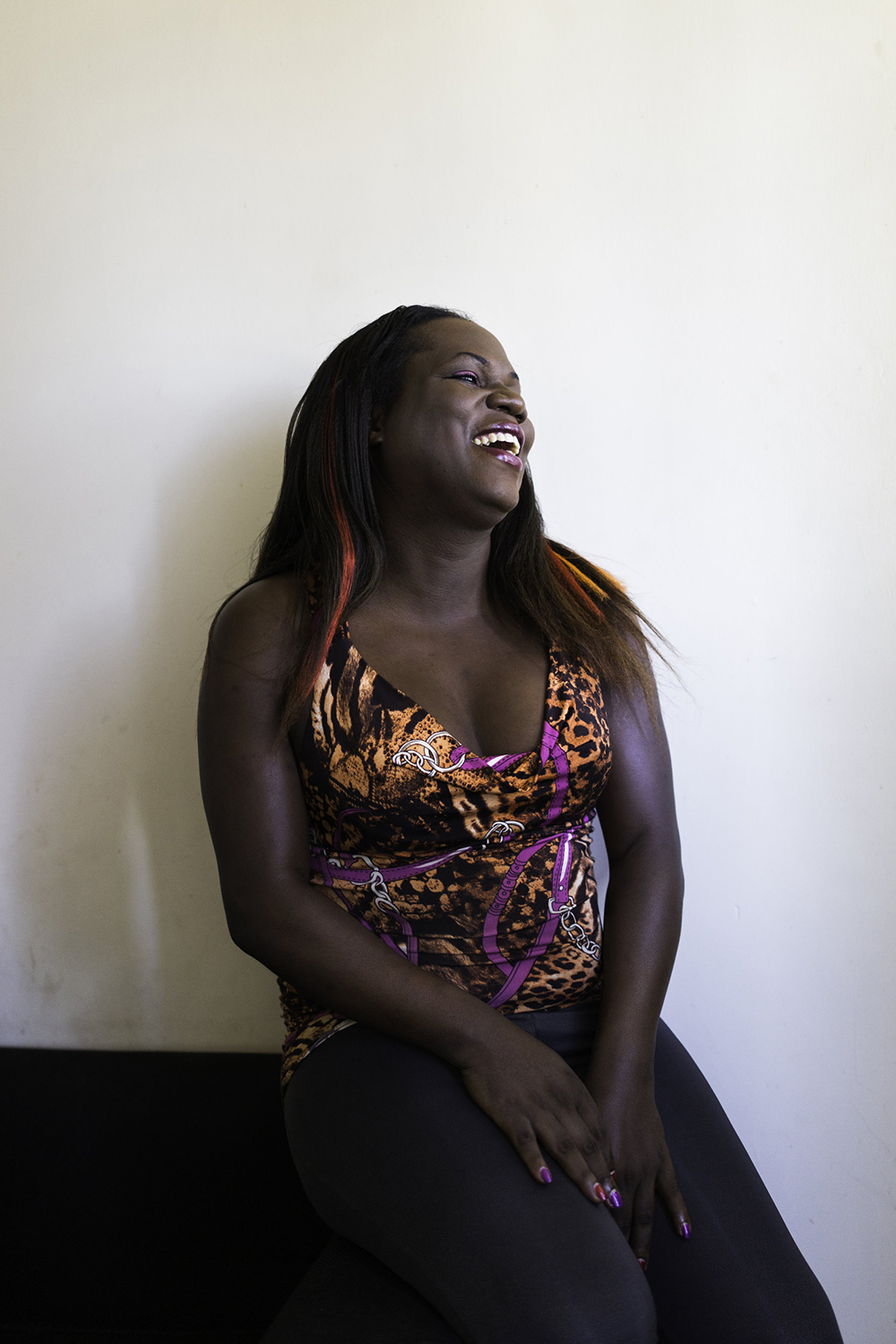
“The struggle for LGBT rights here in East Africa is very particular to our conditions; we’re fighting in a whole different context. We don’t talk about sex in Africa, so breaking down the stigma of being lesbian, gay or bisexual is tough. It’s what made the HIV struggle so difficult.
“But I want to be the first accepted trans woman in Uganda. For that to happen, Africa needs to openly talk about gender and sexuality, what it means to be an African woman, or man. And, uncomfortable as you may find it, we need to talk about sex.
“People ask me vulgar questions; how do I make love? How can my heterosexual boyfriend love me? What’s inside your underwear? I answer, to try and accommodate their ignorance. I educate them. They may ask to ridicule me, but my firmness in answering should make them sit up, and realise there’s no wrongness in me.
“It’s through this education that we can build an Africa with humanity, and it shouldn’t be difficult. As a continent we know what confrontation and exclusion can do; we’ve lived through genocide and apartheid. Our people remember what it feels like to be subhuman, to be a slave.
“Now we’ve made a film, The Pearl of Africa, an intimate documentary that will show you who I am. It’s a key part of my daringness, my drive to force a change. My partner and I will face some serious backlash at home, but I’m tired of sitting around and waiting.”
This article originally appeared in Huck 54 – The Defiance Issue. Grab it in the Huck Shop now or Subscribe today to make sure you never miss another issue.
Enjoyed this article? Like Huck on Facebook or follow us on Twitter.
You might like

Is Field Maneuvers the most fun time ever? Yes probably
Collective joy — Huck’s art director Samuel White went to the 2026 edition, braving a wet start and interviewing FLINTA* collective and arm wrestling legends Uhaul Dyke Rescue in the process.
Written by: Samuel White

Jesse Glazzard’s messy portrait of queer friends, lovers and chosen family
The Sound of Dirt and Beauty — The photographer’s debut monograph explores tender, unpolished moments shaped by the people who he surrounds himself with, while offering a window into the UK’s working-class LGBTQ+ community.
Written by: Sunny Sunday
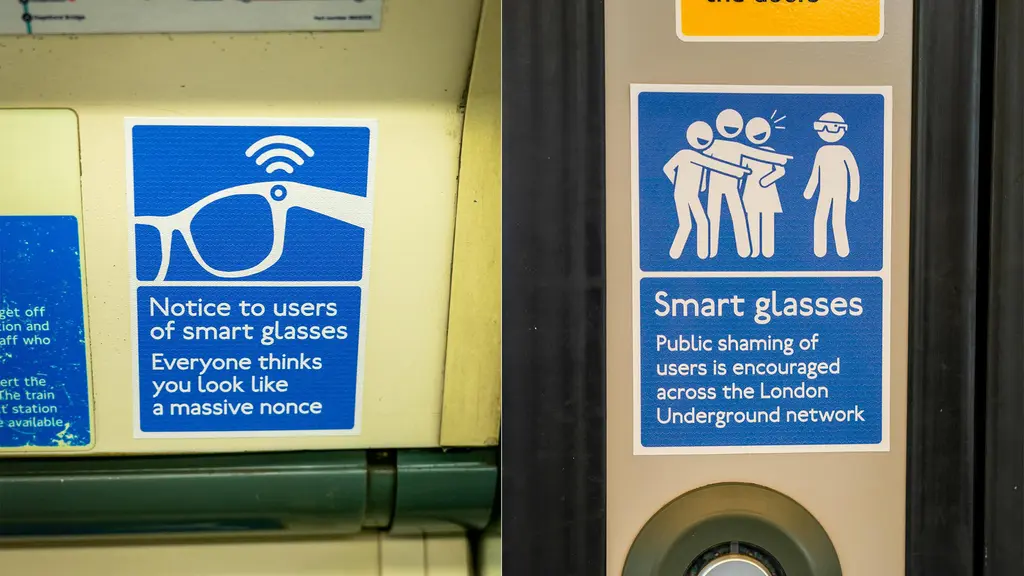
Activists slam “pervert glasses” in new guerrilla campaign
Everyone Hates Elon — Stickers have appeared on the London Underground network, criticising the wearable technology’s covert filming capabilities.
Written by: Isaac Muk

New exhibition highlights British radical living over 200 years
Earthly Paradise — Taking place at the William Morris Gallery, it explores the homes and lives of artists, writers, musicians and more, as well as the conditions that allowed them to thrive.
Written by: Isaac Muk

Pink Floyd’s Roger Waters joins team of new Palestinian resistance documentary
Freedom Theatre — Directed by Rishi Pelham, the film spotlights a theatre operating in the Jenin refugee camp.
Written by: Ella Glossop

Just Stop Oil holds first protest in 17 months
No new drilling — Having previously said that it was “hanging up the hi-vis”, the climate activist group has blocked a road outside Parliament to protest Andy Burnham opening the door for new oil and gas extraction licenses in the North Sea.
Written by: Ella Glossop


