Ghosts of a lost East London: The last match day at West Ham’s Boleyn Ground
- Text by Michael Fordham
- Photography by Michael Fordham

For better or worse we spent so much of our youth over there.
We watched it become something it never was. And without noticing it we became part of that change ourselves. It was about football. And it was much more than that. You found out about who you were over there. It was as much about identity and dressing devilishly than about what happened on the pitch. It was who you were. And if you weren’t that you were something else. That was important. Especially when you were sixteen years old and it was 1984.


There was something about Upton Park – something about the angles of the paving stones; something about the cut of the pointing; something ramshackle, improvised, unruly. The manor reflected perfectly the character of West Ham United Football Club. It was tinged with same sense of ragged swagger. That’s what we identified with. It wasn’t all about the legends of Moore, Hurst, Bonds, Brooking and McAvennie (peace be upon them). It was more about the light and shade of an East End Saturday – the way that at sunset the terraces off Green Street and the Barking Road looked beautiful and melancholy. Especially if we’d lost. And we often had.


It was all about the smells too. The tangy saltiness of the onions and the burgers and the horse shit and the sticky lager on the carpets of the boozers. It was about the laughter and bowl and the buzz of an away day. It was about taking the piss out of the coppers and slagging off the opposition. It was all about the milling about and the running and the coming and going and how your weekend could be defined by what happened on those terraces, which train you ended up on, and whether or not the northern coppers really hated you.
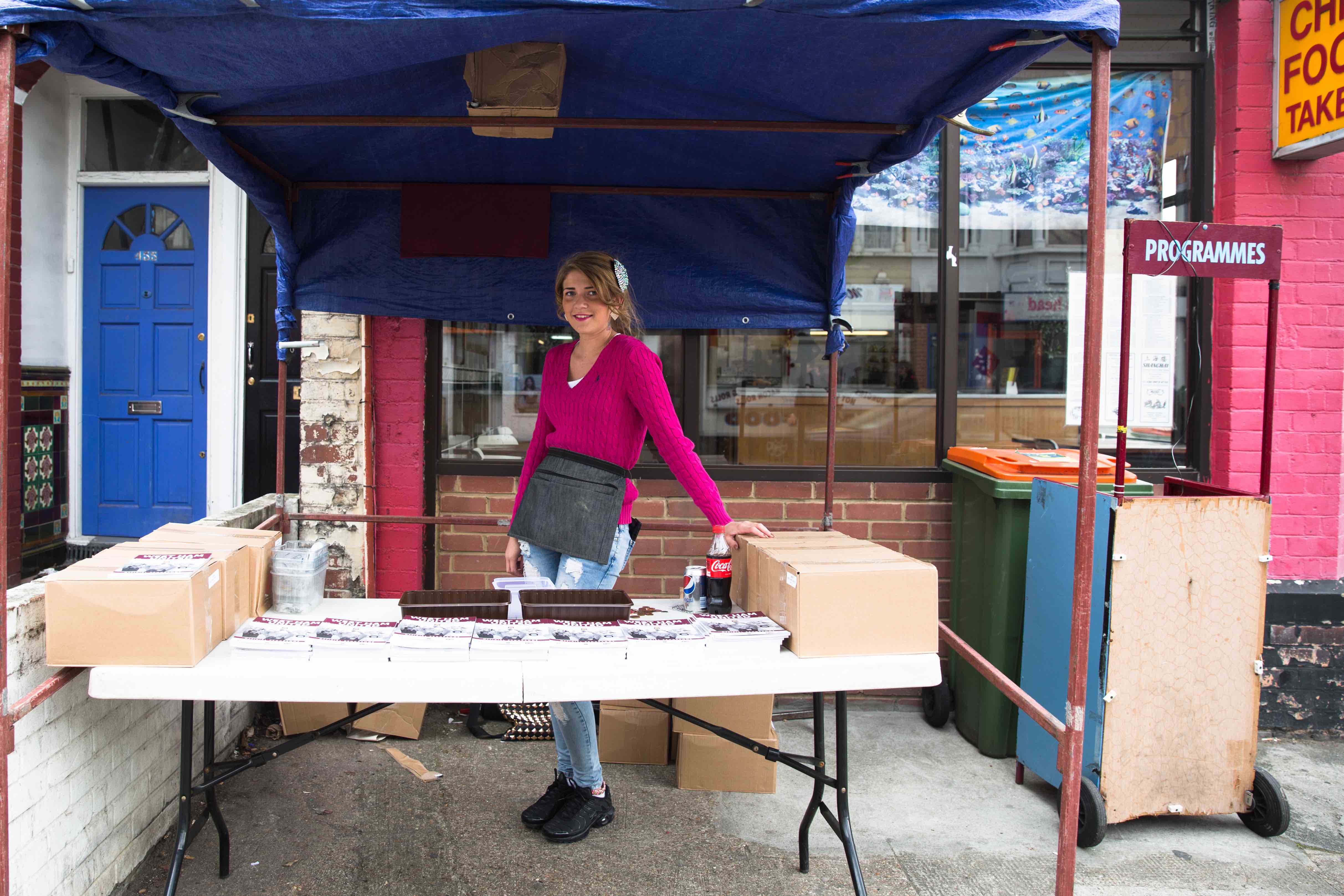

How many times did you slog home, changing trains at Mile End listening to the scores on someone else’s radio? How many times were you treated like shit by some constabulary or other, herded on to some unheated milk train or other, some eighteen stone scaffolder from Basildon passed out pissed on you, reeking of Embassy No 9 and Hofmeister? How many times did you remember that you must remember to do something else with your Saturdays? But then you forgot. You always did.


Over There: The Last Day at the Boleyn is the first in a series of hand made little books about football from the perspective of East London. The first edition documents the last day at the ancestral home of West Ham United: Upton Park and the Boleyn Ground.
Enjoyed this article? Like Huck on Facebook or follow us on Twitter.
You might like

Jesse Glazzard’s messy portrait of queer friends, lovers and chosen family
The Sound of Dirt and Beauty — The photographer’s debut monograph explores tender, unpolished moments shaped by the people who he surrounds himself with, while offering a window into the UK’s working-class LGBTQ+ community.
Written by: Sunny Sunday

Behind the curtain at Alternative Miss World 1981
Olympia glamour — Running a subversive take on the traditional beauty pageant, the Andrew Logan organised event prioritised underground creativity and invention. Photographer David Corio went behind the scenes at its biggest edition.
Written by: Miss Rosen

Dan Lacey: “BMX is forever evolving”
Overground — Steph Pomphrey caught up with the two-wheel legend after his latest meet in east London, chatting about fatherhood, music and action sports within the outdoor industry.
Written by: Steph Pomphrey

New exhibition highlights British radical living over 200 years
Earthly Paradise — Taking place at the William Morris Gallery, it explores the homes and lives of artists, writers, musicians and more, as well as the conditions that allowed them to thrive.
Written by: Isaac Muk

What life on the Strait of Hormuz is really like
Southern Winds — Bandar Abbas based photographer Morteza Niknahad has been capturing the diverse communities and stories of his local region since he first picked up a camera. His new series highlights the human impact of war.
Written by: Isaac Muk

Nick Haymes’s intimate portrait of his family’s life
Chronograph — Over 25 years, the photographer documented his son’s lives as they grew into adults. The resulting photobook is an exploration of the passage of time, as well as the optimism of youth.
Written by: Miss Rosen


