The white South Africans longing for Apartheid's return
- Text by Michael Segalov
- Photography by Jonas Kakó

Just a half an hour’s drive outside of Johannesburg sits the small, quiet village of Kleinfontein. In some ways it’s a place little different from other rural South African communities: vast open space is in abundance, everyone knows each other’s business, there’s a sense of community spirit that runs through the streets.


But look a little closer at this village of 1200 people, and there’s something disconcertingly different about this small pocket in the heart of the Rainbow Nation: every one of the villagers is white.
“Before traveling to South Africa I read a book by Kajsa Norman called Bridge over Blood River about the Afrikaner history and how they live today,” explains German photographer Jonas Kakó. “Norman traveled all over South Africa portraying the lives of Afrikaners today. After some research I heard about Kleinfontein.”


Afrikaners are a Southern African ethnic group descended from predominantly Dutch settlers first arriving in the country during the 17th and 18th centuries. This community developed their own language, national identity, history and religion – and on taking power of the South African government in 1948 began to introduce the racist regime of Apartheid segregation.
Nearly 70 years later and South Africa is a nation transformed, but some Afrikaners continue to pine for those dark days of ethnic separation. Fascinated and disturbed by this notion in equal measure, Jonas decided to find out more.
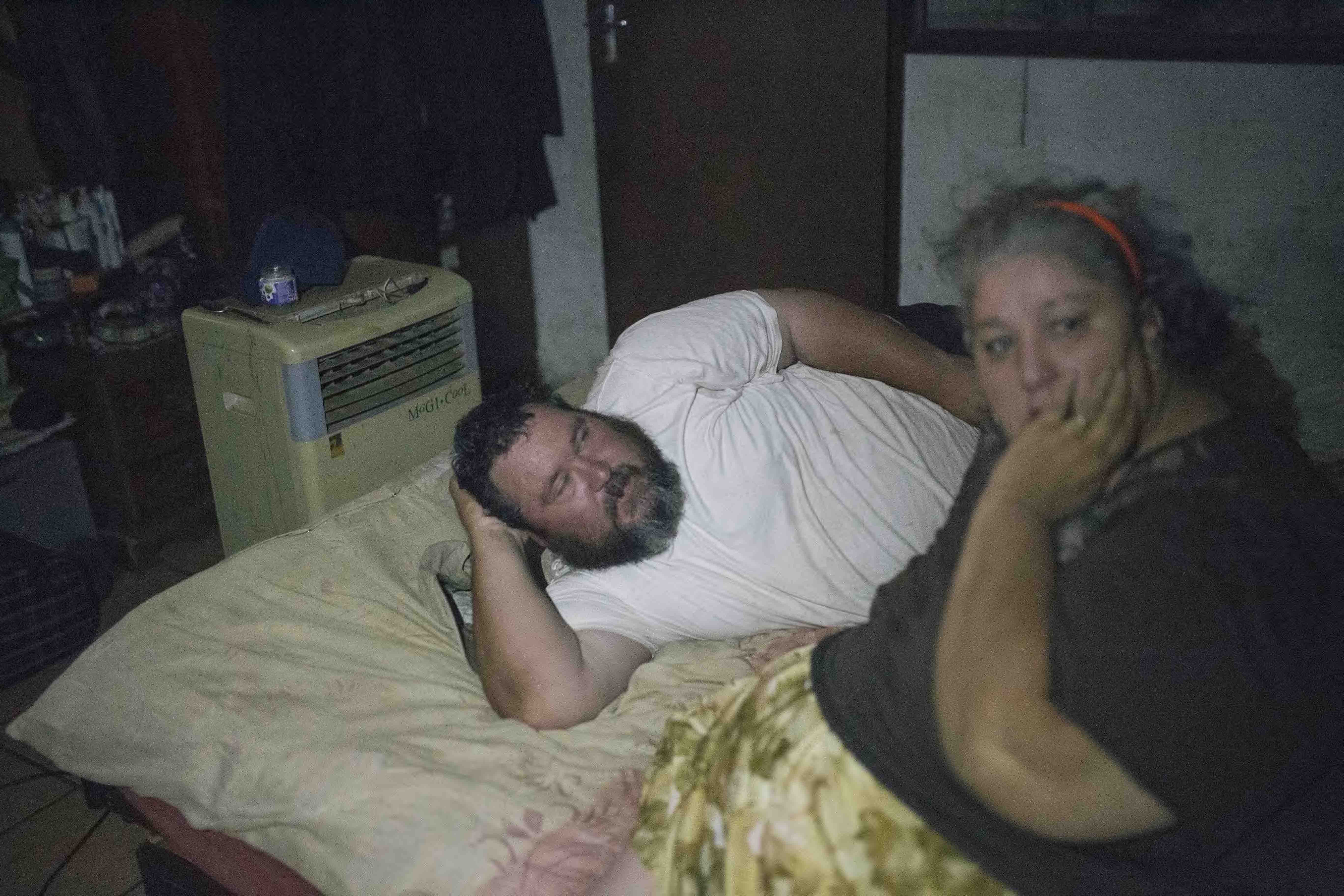
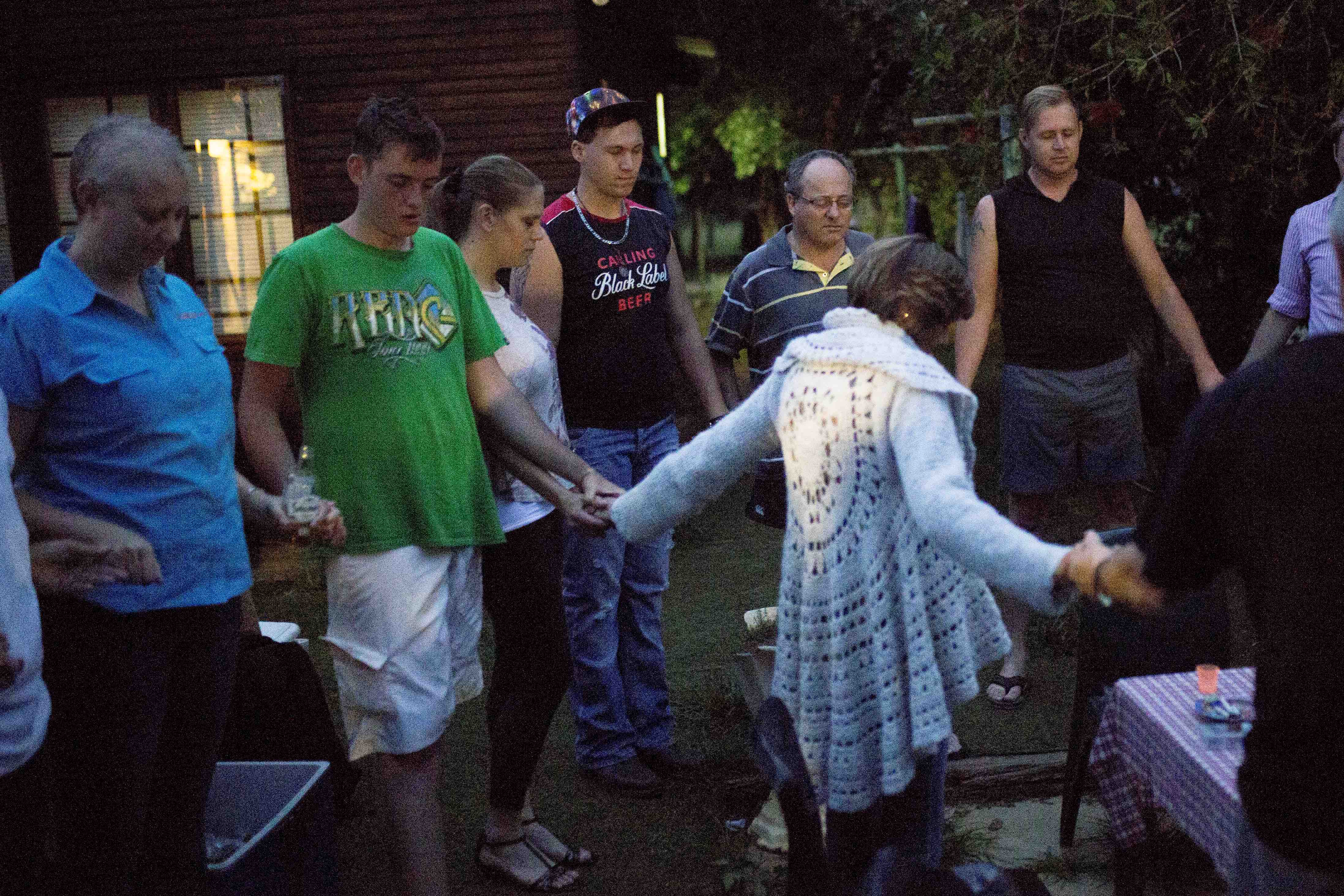 “I tried to make contact with the board of Kleinfontein upon arriving in South Africa because I read that getting in is quite difficult,” explains Jonas. “Nobody replied, so I just drove up from Durban, got to the gate, and told the guard that I was interested in doing a project about the life in Kleinfontein. After a few hours a member of the Board invited me to join him on a ‘scenic’ tour of Kleinfontein. Afterwards he allowed me to come in and explore the settlement on my own.”

The security guards and barriers at first made Kleinfontein feel far from welcoming, it is highly secure. The entire village is surrounded by a two-meter high fence which is guarded 24/7. The Board member explained to Jonas that only descendants of the ‘Voortrekkers’ or Afrikaners, Dutch colonists that came to South Africa in the 19th century, are allowed to live on the land of Kleinfontein. They have to be Christians, to speak Afrikaans, and any visitors need an invitation.
All work is done by white people: from community gardening to house cleaning and construction work. Black people are only allowed to enter the plot to make deliveries, accompanied by a security guard.


“Nobody I met in Kleinfontein would refer to themselves as racist,” says Jonas. “Many said that they only moved there for security reasons. But the whole concept of Kleinfontein is based on separation.” Residents of the village just don’t want to be part of a unified society.
“They blame the African National Congress (ANC) for the loss of Afrikaner influence and their economic downfall. They disregard the fact that it is still young, and the good economic situation of white people during apartheid was based on racist and colonialist exploitation of black people. Many see the current political situation in South Africa as a threat to their culture. They blame the government for their unemployment.”

Jonas could easily see some difficulties in being Afrikaners in South Africa today, but still seeing to apartheid as a good idea and not seeing the cruelty of it? “What else is there but to call it racism?”
With a population of 1200 people, there are plenty of young people living in Kleinfontein too. “For me it was worrying to see that many of the young people seem to agree with their parents’ views,” says Jonas now. “There doesn’t seem to be a lot of space to develop a reflected view on history and lived reality in Kleinfontein. Only few have the chance to go on to higher education.”


Feeling overwhelmed by the hardline and prejudiced views he found in the village’s youth, Jonas couldn’t control his delight when he met to meet two teenagers who live just outside of Kleinfontein. These girls only stepped foot in the village to swim in the pool and meet their friends. “One girl said that “Kleinfontein is not a ‘lekker’ place, the old people are crazy here!” It made me think maybe there is hope for these kids.”
There may well be young people, fast internet, a school and a community pool, but youthful faces can’t hide the fact that Kleinfontein is a village stuck in the past. “Many villagers that they would lose their culture if there weren’t places like Kleinfontein,” Jonas suggests. “They feel mixing with other cultures would result in them loosing their identity.”


As far as Jonas sees it, Kleinfontein is nothing more than an attempt to keep the old ideas of Apartheid alive, reliant on romanticised and whitewashed memories of the past.
“I was welcomed into the community very nicely. Many invited me for coffee, were eager to talk to me, to show me around the settlement,” Jonas concludes. “Overall everybody was very friendly towards me.”
“But I often felt uncomfortable talking to people, especially those my age. I hoped to hear more progressive ideas from the younger generation, but many seemed to adapt the ideas of their parents. Many times I had to hold myself back to not start a discussion, to not tell them my views. In the end it’s not my role to reform, but to document.”
Follow Jonas on Instagram.
Enjoyed this article? Like Huck on Facebook or follow us on Twitter.
You might like

Jesse Glazzard’s messy portrait of queer friends, lovers and chosen family
The Sound of Dirt and Beauty — The photographer’s debut monograph explores tender, unpolished moments shaped by the people who he surrounds himself with, while offering a window into the UK’s working-class LGBTQ+ community.
Written by: Sunny Sunday

Behind the curtain at Alternative Miss World 1981
Olympia glamour — Running a subversive take on the traditional beauty pageant, the Andrew Logan organised event prioritised underground creativity and invention. Photographer David Corio went behind the scenes at its biggest edition.
Written by: Miss Rosen

New exhibition highlights British radical living over 200 years
Earthly Paradise — Taking place at the William Morris Gallery, it explores the homes and lives of artists, writers, musicians and more, as well as the conditions that allowed them to thrive.
Written by: Isaac Muk

What life on the Strait of Hormuz is really like
Southern Winds — Bandar Abbas based photographer Morteza Niknahad has been capturing the diverse communities and stories of his local region since he first picked up a camera. His new series highlights the human impact of war.
Written by: Isaac Muk

Nick Haymes’s intimate portrait of his family’s life
Chronograph — Over 25 years, the photographer documented his son’s lives as they grew into adults. The resulting photobook is an exploration of the passage of time, as well as the optimism of youth.
Written by: Miss Rosen

Kristina Rozhkova’s scatty, confronting portrait of captivity
Gut Feeling — The Russian artist’s 2024 arrest and subsequent detention opened her eye towards the omnipresent dynamics of power and control. Her new photobook is a stark exploration of being trapped.
Written by: Isaac Muk


