Behind the scenes at America’s new legal cannabis farms
- Text by Ellie Howard
- Photography by Kristen Angelo

As the daughter of a pot farmer, Kristen Angelo practically grew up in a grow room. The Seattle-based photographer was exposed to cannabis culture at a young age as her family resided on Vashon Island, an enclave of bohemian-living that’s long been associated with guerilla farming. But in the 90s, the Island became swept up in a drug war that ended with Angelo’s father incarcerated in Federal Prison, for what the lead detective considered “the most sophisticated growing operation” he had seen in nearly a decade.
Today, as legislation surrounding cannabis is in a state of flux, Angelo has embraced photography as a way to challenge stigma around the plant. By cutting through the trippy visuals and over-sexed boob/bud shots and instead profiling growers and their operations as sophisticated agricultural operations, Angelo is documenting a major grassroots social and political movement in a decade of major change.
Intrigued as to the life of a professional cannabis photographer, Huck caught up with Kirsten to discuss the highs of the job, what makes her work stand out from the excess of weed porn on the internet and what’s exciting her about the industry most.


It’s not a job title you hear being thrown around often, but what’s it like being a professional cannabis photographer?
I hesitate to reference the ever-omnipresent mantra ‘do what you love, love what you do’ but it’s true; being a cannabis photographer is as cool as it sounds, and I’m completely enamoured with it. I’m passionate about the legalisation movement. Also, I’m an artist, when you can use that as a catalyst for a socially impactful stance, it’s incredibly satisfying.
I shot my first legal cannabis farm in November 2014, and it quickly evolved into my sole photographic project. I’ve been very fortunate in that I’ve been able to position myself uniquely within a newly emerging industry – it was uncharted territory and with that comes an anything goes mentality. I identified an untapped niche and pursued it relentlessly. I built a strong network and earned the trust of farmers throughout the region. I spent a year building a substantial portfolio and began sharing my work. I subsequently received an influx of inquiries for editorial and commercial work thereafter.


You grew up on Vashon Island, which has long been praised for its organic farming methods and community spirit. Can you fill me in on the history of the island, its culture and what it was like growing up there?
Vashon embraces every bit of the island life mentality. It’s a quiet, quirky, creative, and tight-knit community of around 10,000. Everyone knows you by name. Accessible only by way of a ferryboat, we were somewhat sheltered from the stress of mainland life. My family life was a happy one. We were raised with a lot of love and a lot of laughter.
You mentioned on your website that the island was subject to a drug war in the 90s. How has this affected the island?
The US war on drugs narrowed its focus on cannabis in the 90s. There were a number of drug raids on island pot growers during that time; my family was the target of one of them. I was 17 at the time, so I don’t think I was really equipped to perceive it from a broader community perspective. It was very much a pivotal and life-defining moment for me.

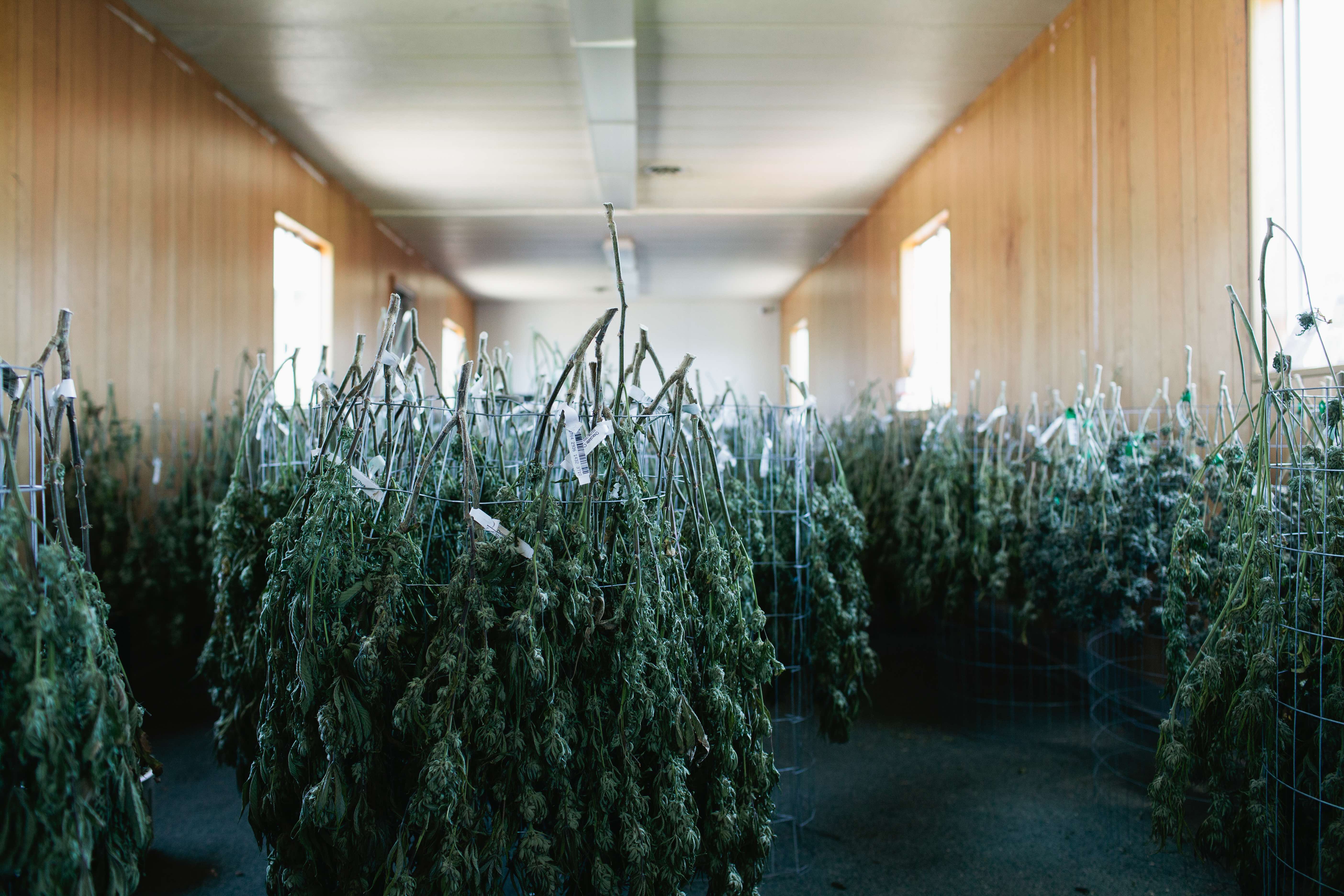
Most cannabis photography perpetuates stereotypical weed culture, which isn’t exactly helpful when introducing it to the mainstream. You’re doing something else entirely. How has the reaction been?
Where political and social issues are concerned, a transformative visual narrative can disarm adversaries and enlighten the undecided. I’m committed to creating a strong body of work that depicts an honest and purposeful portrayal of the subjects and environments I photograph for that reason. If my work is found relatable, strikes a cord, or is socially and politically impactful even if of minuscule proportion, that’s enough for me. I’ve experienced a collective embrace of my artistic approach and aesthetic among the cannabis and photographic communities. It’s a bit surreal and well, validating on a personal level, I suppose.
Do you feel preconceptions about growers and users are shifting?
I believe the traditional social stigma of cannabis is dissipating altogether. We know the war on drugs was a systematic failure, we’re seeing advances in medicine for a plethora of ailments and conditions, and we’re building a profitable industry that’s fueling the economy.


You’re working with a lot of growers, what has proved the most exciting project so far?
It would be incredibly difficult to choose just one. It’s not so much the projects that are exciting to me as it is the subjects. One of the great things about freelancing is the freedom to take on subjects you find to be the most compelling, and with that comes an emotional investment. I am less interested in documenting corporate cannabis and more intrigued with the underdogs of the industry. Those who’ve helped pave the way before legalization gained momentum, those who’ve endured and overcome tribulation, those who don’t shy away from getting their hands dirty. Those are the stories that inspire and ignite me to create an impactful sequence of images time and time again.
Cannabis has proved to be a very controversial plant; it’s simultaneously praised, abused and demonised. Now it’s being given due attention, how does it feel to be documenting its rise at a time when laws are shifting?
Empowering. Vindicating. Poetic.


See more of Kristen Angelo’s work on her official website, or follow her on Instagram.
Enjoyed this article? Like Huck on Facebook or follow us on Twitter.
You might like

In photos: Lives of solitude at the world’s edge
Coirón — Pie Aerts’s new photobook documents years spent in close quarters with puesteros in Patagonia – a group of aging gauchos who live almost completely isolated existences.
Written by: Isaac Muk

The raw, fledgling intimacy of Peter Hujar’s contact sheets
Hujar:Contact — A new photobook highlights the process of the legendary queer photographer, and his process of growing into the artist he ultimately became.
Written by: Miss Rosen

Jesse Glazzard’s messy portrait of queer friends, lovers and chosen family
The Sound of Dirt and Beauty — The photographer’s debut monograph explores tender, unpolished moments shaped by the people who he surrounds himself with, while offering a window into the UK’s working-class LGBTQ+ community.
Written by: Sunny Sunday

Behind the curtain at Alternative Miss World 1981
Olympia glamour — Running a subversive take on the traditional beauty pageant, the Andrew Logan organised event prioritised underground creativity and invention. Photographer David Corio went behind the scenes at its biggest edition.
Written by: Miss Rosen

New exhibition highlights British radical living over 200 years
Earthly Paradise — Taking place at the William Morris Gallery, it explores the homes and lives of artists, writers, musicians and more, as well as the conditions that allowed them to thrive.
Written by: Isaac Muk

What life on the Strait of Hormuz is really like
Southern Winds — Bandar Abbas based photographer Morteza Niknahad has been capturing the diverse communities and stories of his local region since he first picked up a camera. His new series highlights the human impact of war.
Written by: Isaac Muk


