Mental illness doesn't kill people, terrorists do
- Text by Emily Reynolds
- Illustrations by Laurene Boglio

The death of Jo Cox – the first British MP to be killed since Ian Gow was killed by a car bomb planted by the IRA in 1990 – has been a shocking and completely unexpected incident in UK politics. Cox, an MP for the Labour party in Batley, was shot and stabbed dead outside a meeting she was holding for her constituents in Birstall, Leeds. She was just 41, with two young children.
A 52 year old local man, Thomas Mair, was subsequently arrested.
We don’t yet know the full details of the incident, and the shout of “Britain first” that was allegedly called out as she was attacked is still that – alleged. Britain First, the far-right organisation that shares the name of the shout, have claimed Mair has no links to their group, though this has not yet been verified. The long-term political implications of the incident are still yet to be seen.
But what is clear is that the killing did not take place in a political vacuum. A pro-EU, left wing politician, known for her vociferous and steadfast defence of refugees and other minorities, being killed by a man with strong links to extreme right wing groups is not an incident that can be separated from the political environment in which it happened. Don’t tell me not to politicise this killing – this killing is political.
Yet despite these links – despite the fact, according to the SPLC, Mair spent nearly $700 on materials including manuals on explosives and guides on how to build guns from neo-Nazi group National Alliance – factions of the media have immediately apportioned much of the blame to “mental illness”. The Sun described Mair as a “crazed loner”; The Telegraph quoted the “psychotherapy and medication” Mair had been treated with (a quote, it turned out, that had originally said “physiotherapy”).
The racialized element of this trope is well trodden ground – if a Muslim or person of colour had shot Jo Cox, it seems doubtful that their mental health would be the first point on the media’s agenda. Take the 2014 beheading of pensioner Palmira Silva in North London; though the perpetrator of that attack genuinely was acting alone – and, unlike Thomas Mair, had no links to any kind of extremist group – the Sun ran the headline ‘Muslim convert beheads woman in garden’.
A wider culture of radicalisation was immediately blamed – a culture, it turned out, that the perpetrator had nothing to do with. It’s a pretty stark contrast to the ‘crazed loner’ they blame for the killing of Jo Cox – a man who really does have a long history of extremist beliefs, and who was seemingly part of a thriving, vibrant network of fellow fascists across the world.
It’s a narrative that feeds into racist cultural expectations of how different groups behave and what the motivation for that behaviour is. Calling someone a ‘terrorist’ rather than a ‘loner’ means that their motivations are evil rather than misguided; they’re more responsible, in other words. A ‘loner’, obviously, works alone; their behaviour is not systemic. They’re not part of a group that can be characterised as sinister and dangerous, used to further racist agendas and used to demonise entire demographics.
This kind of rhetoric also assumes that mental illness itself is devoid of any political context, as if it somehow exists in a vacuum, floating around without any interaction with any social or political factors. Much of the language around mental health is conceptual, but the realities of living with mental illness, and the impact it has on individuals, communities and societies are very much grounded in physical reality. Mental illness can be seen as a medical problem, yes, and a personal one, but it’s also a structural one.
This Conservative government have been responsible for some of the worst cuts to mental healthcare services in Britain for years; mental health trusts saw an 8 percent fall in budget between 2010 and 2015, and in a Freedom of Information finding, the BBC said that 2015 budgets fell by 2 percent when adjusted for inflation. Less than a tenth of the overall NHS budget is spent on mental health services, a situation a group of mental health professionals described in an open letter to the Guardian as “profoundly disturbing”.
A recent National Health Service report also found that despite 1 in 4 people experiencing mental ill health during their lives (the vast majority of whom never commit an act of violence, by the way), 75 percent of people receive no help at all. Notable was the impact of background on mental illness – people living in low income households or deprived areas were more likely to experience the negative effects of mental illness than those couched by the privilege of higher incomes.
Accessing services is getting harder and harder – a consequence of the cuts – with many people finding themselves turned away from GP surgeries, A&E and even specialist mental health trusts when they experience ongoing crises. Middle class sufferers of mental illness can often afford to pay for private therapy or medical treatment – something that simply is not an option for people in lower income brackets.
The cause and effect nature of this relationship is a debate for another time. What is clear now, however, is how impossible it is to separate mental health and structural inequality – something you absolutely cannot depoliticise.
We don’t yet know why Thomas Mair killed Jo Cox. Mental illness and fascism aren’t two mutually exclusive factors; even if Mair has experienced mental health problems, that doesn’t mean his motivations were not also, or even primarily, driven by his extreme political beliefs. So to take mental illness and use it as a scapegoat to avoid facing up to wider political realities, and to further the already toxic narrative much of our media has towards race, is not only disingenuous and dishonest, it’s also just plain wrong.
Emily Reynolds is a journalist who writes about mental health, technology and culture. Her first book, A Beginner’s Guide To Losing Your Mind, is out in 2017. Follow her on Twitter.
Enjoyed this article? Like Huck on Facebook or follow us on Twitter.
You might like

Sports Banger is throwing a party to mark 90 years since the Battle of Cable Street
“Fascists hate dancing” — The October event will bring DJs, live music, sound system culture and anti-fascist politics together in East London.
Written by: Ella Glossop
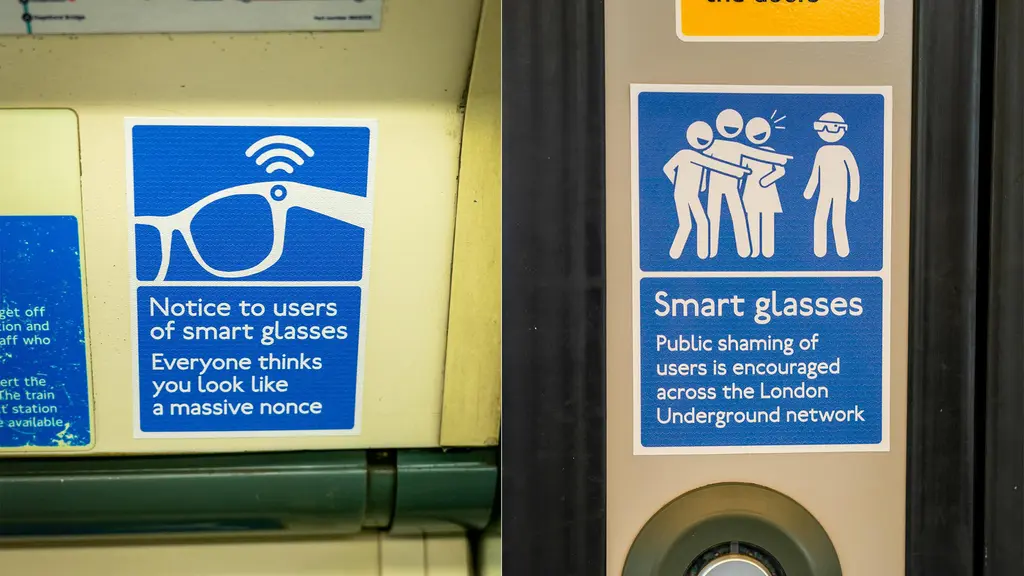
Activists slam “pervert glasses” in new guerrilla campaign
Everyone Hates Elon — Stickers have appeared on the London Underground network, criticising the wearable technology’s covert filming capabilities.
Written by: Isaac Muk

New exhibition highlights British radical living over 200 years
Earthly Paradise — Taking place at the William Morris Gallery, it explores the homes and lives of artists, writers, musicians and more, as well as the conditions that allowed them to thrive.
Written by: Isaac Muk

Pink Floyd’s Roger Waters joins team of new Palestinian resistance documentary
Freedom Theatre — Directed by Rishi Pelham, the film spotlights a theatre operating in the Jenin refugee camp.
Written by: Ella Glossop

Just Stop Oil holds first protest in 17 months
No new drilling — Having previously said that it was “hanging up the hi-vis”, the climate activist group has blocked a road outside Parliament to protest Andy Burnham opening the door for new oil and gas extraction licenses in the North Sea.
Written by: Ella Glossop

In photos: The enduring resistance of Notting Hill Carnival
Carnival of Resistance — A new photobook by Wayne Campbell and Wayne Crichlow reflects on the protest beginnings of Europe’s biggest street festival, along with the traditions keeping its original spirit alive today.
Written by: Isaac Muk


