Last week’s election should be a warning to Labour
- Text by Fatima Ibrahim
- Illustrations by Zach Sebastian

This week, for the first time in fourteen years, we’re waking up to a Labour government. For people of my generation, who have grown up under Tory rule, this is a huge moment. We came of age under austerity, and have watched with horror as the Conservatives dismantled our institutions, stripped our communities of resources and left our public services to crumble. All the while, we’ve listened to scientists sounding the alarm time and time again over the climate crisis, while our government simply looked the other way.
But let’s be clear. Keir Starmer was elected last week by default, not because he offered a bold vision that voters enthusiastically endorsed, but because of the total collapse of the Tory party, who have received their lowest share of the vote since 1945. Just under the surface of Starmer’s majority are results that spell out a serious warning to Labour – that they need to start delivering real change, and fast.
Across the country, where voters were offered a real alternative – from Greens to Independents to Labour candidates who supported bold climate action, a ceasefire in Gaza and a properly funded NHS – they overwhelmingly voted for them.
Take Bristol Central – the seat formerly represented by Labour’s shadow cabinet member Thangam Debbonaire, who was ousted by Green insurgent Carla Denyer with a massive majority of 10,000 and a swing of over 30%. Such a swing away from Labour in an election where Labour have in most places achieved a landslide win is remarkable.
“Voters were let down by Labour’s failure to condemn Israel’s atrocities in Gaza; uninspired by the party’s economic vision; and disappointed by Starmer’s U-turn on his key climate pledge, to invest £28 billion in green infrastructure.” Fatima Ibrahim
There were a number of factors at play in Bristol, which is one of the youngest seats in the country, and one of the places Green New Deal Rising deployed our organising. Voters were let down by Labour’s failure to condemn Israel’s atrocities in Gaza; uninspired by the party’s economic vision; and disappointed by Starmer’s U‑turn on his key climate pledge, to invest £28 billion in green infrastructure.
But when we knocked on doors as part of Green New Deal Rising’s operation, we also heard that voters were motivated by Denyer’s vision for Britain. Her commitment to a Green New Deal, to tackle the climate crisis, bring down bills, and create secure, well-paid green jobs.
This story has been replicated across the country. Denyer isn’t the Greens’ only new MP – they quadrupled their seats to four, electing Sian Berry in Brighton, Adrian Ramsay to Waveney Valley, and Ellie Chowns to North Herefordshire.
Elsewhere, progressive independents surged, with Jeremy Corbyn beating Labour by over 8,000 votes in Islington North. In Ilford North, independent Leanne Mohamad came within 500 votes of beating Labour’s Wes Streeting, and in Chingford and Woodford Green independent Faiza Shaheen pushed Labour into third place.
“It’s clear that there is a huge appetite across the country for what these candidates offered: real action on climate change, a wealth tax to pay for it, and an end to Britain’s complicity with Israel’s atrocities in Gaza.” Fatima Ibrahim
It’s clear that there is a huge appetite across the country for what these candidates offered: real action on climate change, a wealth tax to pay for it, and an end to Britain’s complicity with Israel’s atrocities in Gaza. And on both the left and the right, it’s clear that the British public are not content with the status quo being offered to them by Labour and the Tories.
Now, Starmer must show that he has the answers – or he risks setting the stage for a resurgent far-right over the next five years. He has to resist the knee-jerk reaction to pull further to the right, especially when the biggest upsets of this election came from the left. The one unifying story however, is that people want serious change. Some looked towards the Greens for that change, and others towards Reform. But deep down, the things that matter to them are the same: investment in their communities, good jobs, warm homes, and a future worth working for.
More of the same simply won’t cut it. We need to see a Green New Deal to halt catastrophic climate change, end the cost of living crisis, and rebuild our crumbling public services. These policies are popular and would transform the lives of people across this country.
But Starmer’s record tells us that he won’t be bold unless we force him to be. And so we know that for our movement, the real work starts now – holding Labour’s feet to the fire to ensure they deliver the change that we need. We’ll organise in our thousands to make sure that Labour is ambitious in power. Because of our relentless challenges and disruptions, the Labour Party knows who we are — from Keir Starmer to Rachel Reeves- and that we aren’t going away until we win. We’ll stand in the way of corporates and elites, from energy bosses to bankers, that try to block change. And we will provide a crucial counter-weight to those who would seek to exploit Britain’s crises in service of racist, reactionary politics.
At this election we set out to prove that climate justice is non-negotiable, that social movements can win, and that young people will be heard. We proved all of it. Green New Deal Rising activists knocked on 10,000 doors and challenged twelve front-line politicians. We delivered tens of thousands of leaflets, and spent over a thousand minutes talking to voters on the phone. In an election where climate was barely mentioned, we disrupted Labour’s manifesto to demand proper funding for the climate crisis. We have achieved huge victories. Now, we will take this momentum forward into the first 100 days of a Labour government – and win the real change that we need.
Read more Huck Election content here.
Enjoyed this article? Follow Huck on Instagram.
Support stories like this by becoming a member of Club Huck.
You might like
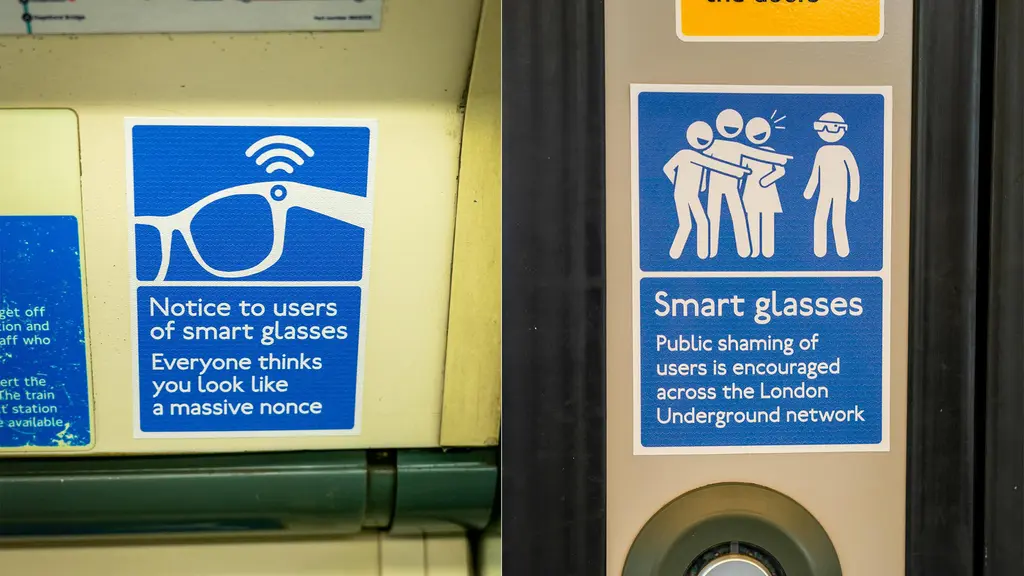
Activists slam “pervert glasses” in new guerrilla campaign
Everyone Hates Elon — Stickers have appeared on the London Underground network, criticising the wearable technology’s covert filming capabilities.
Written by: Isaac Muk

New exhibition highlights British radical living over 200 years
Earthly Paradise — Taking place at the William Morris Gallery, it explores the homes and lives of artists, writers, musicians and more, as well as the conditions that allowed them to thrive.
Written by: Isaac Muk

Pink Floyd’s Roger Waters joins team of new Palestinian resistance documentary
Freedom Theatre — Directed by Rishi Pelham, the film spotlights a theatre operating in the Jenin refugee camp.
Written by: Ella Glossop

Just Stop Oil holds first protest in 17 months
No new drilling — Having previously said that it was “hanging up the hi-vis”, the climate activist group has blocked a road outside Parliament to protest Andy Burnham opening the door for new oil and gas extraction licenses in the North Sea.
Written by: Ella Glossop

In photos: The enduring resistance of Notting Hill Carnival
Carnival of Resistance — A new photobook by Wayne Campbell and Wayne Crichlow reflects on the protest beginnings of Europe’s biggest street festival, along with the traditions keeping its original spirit alive today.
Written by: Isaac Muk

Tens of thousands gather to remember Jason Arday at London vigil
Stand Up to Racism — It took place in Trafalgar Square, with speakers paying tribute to the former Cambridge professor’s life and achievements, while calling for accountability over the reporting he faced from the mainstream press.
Written by: Ella Glossop


