Celebrating Latin American photography in NYC
- Text by HUCK HQ
- Photography by Tatiana Fernández Geara (main image)

The South Bronx neighbourhood of Melrose is a bustling, working-class melting pot, populated – predominantly – by members of New York’s Latino community.
So, when it came to selecting a location for NYC’s first ever Latin American Foto Festival, presented by the Bronx Documentary Center, the residential area (which was first incorporated into the city as a sleepy, German-American village back in the 19th century) always felt like the perfect choice.
From July 12th, 2018, the buildings, parks and sidewalks of Melrose will play host to a number of different instillations, transforming the neighbourhood into one vast, immersive gallery, showcasing the work of some of Latin America’s most exciting photographers.
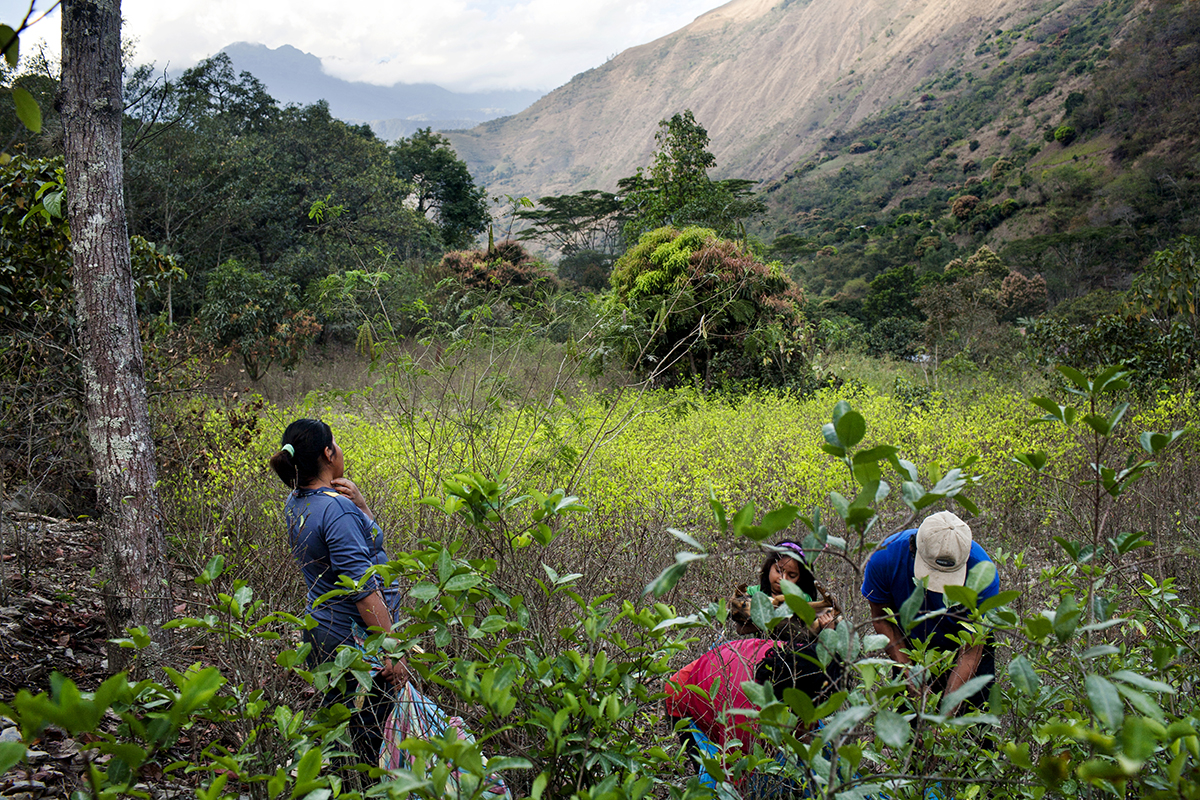
A family harvesting coca leaves in the town of Santa Rosa, Peru, July 28, 2012.
In the sacred valley of the Incas to cultivate coca plants it is legal as long as farmers sell it or buy it from ENACO (National Coca Enterprise), something farmers don’t entirely agreed with, since the company fixes the prices and buys coca leaves at low rates. Also, the leaves can not be brought outside the valley. © Carlos Villalon
For Michael Kamber – co-founder of the Bronx Documentary Center and co-curator of the festival along with Cynthia Rivera – it’s an overdue celebration of stories that can often go neglected.
“New York has a large and growing Latino population. NYC Latinos have close connections with countries all over the Caribbean and Latin America,” he explains.
“Having photographers from the region visit New York and show work on important social issues will help to inform New Yorkers as well as maintain ties and create understanding.”
Calling on photographers from across seven different countries, the festival seeks to encompass as much of the Latin American experience as possible. If it’s a success, Kamber adds, the plan is to expand the scope even further next year.

Carmen Petzey, 16-years-old © Carmen Petzey / Fotokids Guatemala

“Llano” is an epic 10-year journey along the paths of the Llaneros, a people who live and travel along the savannas of the Orinoco basin in Colombia and Venezuela © Juanita Escobar
Featuring the likes of Erika P. Rodriguez, Sharon Castellanos and Mauricio Palos (to name just a few), the festival covers subject matter that ranges from the devastation of Hurricane Maria in Puerto Rico, to the violent persecution that journalists face in Mexico.
“The BDC wants the Latin American Foto Festival to help create cultural bonds and exchanges between New York residents and their counterparts throughout the Caribbean and Latin America,” Kamber adds.
“We believe this will be the beginning of creative relationships and ‘intercambios’ for both adults and teenagers in our programs here at the BDC.”

Loma de Cabrera, Dajabón – Nov. 9, 2014: Elena Julienne walks from her house to her stand to sell artisan products, including milk fudge, toasted cashew nuts, and coconut sweets. Originally from Haiti, Julienne is married to a Dominican man and has been selling sweets by this road for 14 years. © Tatiana Fernández Geara
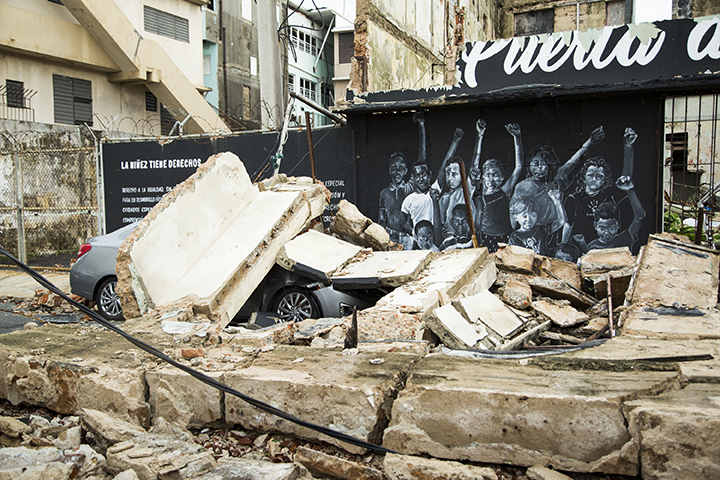
Collapsed abandoned building on top a car left by hurricane Maria ravaged the island in Puerta de Tierra, San Juan, P.R., Thursday, Sept. 21, 2017. Maria landed as a category 4 storm early Wednesday leaving the entire American territory without power and mostly with out communications © Erika P. Rodriguez

© Misha Vallejo

© Francesca von Rabenau O’Reilly,
For more information on the festival, visit the Bronx Documentary Center website.
Enjoyed this article? Like Huck on Facebook or follow us on Twitter.
You might like

Jesse Glazzard’s messy portrait of queer friends, lovers and chosen family
The Sound of Dirt and Beauty — The photographer’s debut monograph explores tender, unpolished moments shaped by the people who he surrounds himself with, while offering a window into the UK’s working-class LGBTQ+ community.
Written by: Sunny Sunday

Behind the curtain at Alternative Miss World 1981
Olympia glamour — Running a subversive take on the traditional beauty pageant, the Andrew Logan organised event prioritised underground creativity and invention. Photographer David Corio went behind the scenes at its biggest edition.
Written by: Miss Rosen

New exhibition highlights British radical living over 200 years
Earthly Paradise — Taking place at the William Morris Gallery, it explores the homes and lives of artists, writers, musicians and more, as well as the conditions that allowed them to thrive.
Written by: Isaac Muk

What life on the Strait of Hormuz is really like
Southern Winds — Bandar Abbas based photographer Morteza Niknahad has been capturing the diverse communities and stories of his local region since he first picked up a camera. His new series highlights the human impact of war.
Written by: Isaac Muk

Nick Haymes’s intimate portrait of his family’s life
Chronograph — Over 25 years, the photographer documented his son’s lives as they grew into adults. The resulting photobook is an exploration of the passage of time, as well as the optimism of youth.
Written by: Miss Rosen

Kristina Rozhkova’s scatty, confronting portrait of captivity
Gut Feeling — The Russian artist’s 2024 arrest and subsequent detention opened her eye towards the omnipresent dynamics of power and control. Her new photobook is a stark exploration of being trapped.
Written by: Isaac Muk


