Could legal contracts for sexting end revenge porn?
- Text by Brit Dawson
- Illustrations by Jayasri Fogarizzu (IG: redfoxoxo)

“It was really isolating,” says 22-year-old Frances*, whose nudes were sent around her school when she was just 14. “Other girls told me that I knew the risks and brought this on myself. I felt completely alone and unable to trust anyone.”
Frances’ photos were shared without her consent by an ex-boyfriend. “I wasn’t very well-liked in school at the time,” she tells Huck, “so I felt lucky to be dating this guy. When he asked for nudes, I felt pressured into it.” After breaking up a few weeks later, the boy sent Frances’ nudes to others in his year. “They were around the whole school in no time,” she says.
After being subject to “slut-shaming and victim-blaming” by her peers, Frances was discouraged from reporting the incident to the police. “I was scared that if I told either my school or the police that I’d end up even more ostracised at school.”
Sadly, Frances’ experience is far from isolated. In 2017, there were an estimated 3,000 websites dedicated to intimate image abuse, with this figure likely rising over the last three years. A recent report by the Guardian revealed that over 500 children were targets of revenge porn in 2019, while in 2020 alone, the Revenge Porn Helpline has removed over 22,000 photos, registering its busiest year on record. Experts are now warning that revenge porn is “the new normal” in a post-lockdown world.
“We see a wide range of drivers for the sharing of intimate images,” says Sophie Mortimer, who manages the Revenge Porn Helpline. “It can be content shared by a former partner after a relationship breakdown; as a means of coercive control both during and after relationships; many people share content simply to collect more content; also sextortion, where images are coerced from individuals for the purpose of blackmail.”
Revenge porn was outlawed in England and Wales back in 2015, and although there has been a rise in police reporting since then (3,307 cases were recorded in 2017 to 2018), one in three allegations are ultimately dropped. Some victims cite a failure to guarantee anonymity as the reason for withdrawing their complaint, while others say it’s because of a lack of police support.
Now, there’s an app which hopes to change this. Initially launched in the summer, e-gree allows its users (aged 18+) to create personalised legal contracts for almost anything – including, but not limited to, dating, breaking up, and sexting. All users need to do is head into the app, pick the category that suits them, adjust a few details, and get the other person (or people) to sign.
What to do if you have had intimate images shared online without your consent:
🧡Keep calm, collect evidence
🚔 Report to police
💥Report content (we can help!)
💬 Talk to the Helpline for more help and support👉 https://t.co/pXHL5GZRXK pic.twitter.com/uqqk7WSbM0
— rphelpline (@RPhelpline) November 11, 2020
The advantage of this, according to e-gree’s chief legal officer, Keith Fraser, is that you don’t need to involve a lawyer. “Today’s legal system is expensive, intimidating, and non-responsive,” he explains. “We envisaged a better way.”
While admittedly ‘unsexy’, signing a contract before exchanging nudes could offer a watertight way of ensuring photos remain private. “The sexting e-greement (which became available in September) ensures that a party understands that they can be legally liable for damages resulting from their misuse of the other person’s intimate details, disclosures, and photos,” explains Fraser.
While this sounds good in theory, it also raises a number of problems. The first relates to e-gree’s USP as a cheap legal source. If one party breaks the contract and distributes images without consent, the victim will have to go to court. “That’s often complicated and costly,” says Honza Červenka, a solicitor at McAllister Oliviarius, “especially if the other party is out of state or in a foreign country, as is often the case with online interactions.”
Another point of contention around the app is that revenge porn is already illegal, with or without a pre-signed contract. “It’s a criminal offence in the UK to share this content without consent, and that doesn’t seem to stop people,” says Mortimer. “Why would this make the difference?”
Červenka says people’s “lax attitude to contracts they sign online” may stop the e-greement from being a deterrent. He cites the terms and conditions signed by users who upload content to porn sites, suggesting that people publish photos and videos without permission despite ticking a box that asks them for confirmation of this.
There’s another, more insidious problem. “Such legal ‘solutions’ do appear to place the responsibility on an individual to not allow themselves to be a victim,” Mortimer explains, “rather than on a perpetrator not to be a perpetrator, and that can’t be right.”
Survivors of sexual abuse are often victim-blamed for the crime they were subjected to and told to adjust their behaviour to prevent it from happening again. By encouraging potential victims to take preventative action when sharing their nudes, it suggests that the onus is on them to protect themselves, rather than on perpetrators to – simply – not break the law.
“It’s such a shame that we have to have these measures in place to stop violations like this from happening,” says Frances. “People do revenge porn as a way of controlling and violating their victim with no regard for how it will affect the other person, so I don’t think a legal contract would impact it that much.”
Dee-Jay Johnstone, 23, who waived her anonymity as a revenge porn victim last year, has a more optimistic view of e-gree’s services. “I would use it now,” she tells Huck, “but only because of my experience with revenge porn.”
In 2018, Johnstone’s nudes were uploaded to a folder on a website called Mega.NZ – a file-hosting service based in New Zealand. She says her “heart stopped” when she found the photos of herself after being sent the link by both strangers and people she knew. “The worst part was that I had no idea who had done this to me,” she explains. Despite reporting it to the police several times, no action was taken. “I gave up completely. For all I know, my pictures are still being shared frequently.”
Make revenge porn a criminal offence in Ireland · https://t.co/dMQxXF9hyX https://t.co/A2gZQb9CPf
— Emma Sterner-Radley 🏳️🌈 (@EmmaSterner) November 21, 2020
Johnstone believes that e-gree “could definitely help lower the rates [of revenge porn] if people used it right,” but she has doubts about people’s willingness to sign these types of contracts. “I think some men would simply stop talking to girls if they even asked them to do something like this.”
Legal contracts aside, both Frances and Johnstone highlight education as a key deterrent for revenge porn. “There should be an organisation that goes around workplaces, schools, and police stations to talk to people about the real-life effects of revenge porn,” says Johnstone.
Mortimer sees ending revenge porn as coming down to a matter of law. Among other things, she calls for the disclosure of private images to be made a sexual offence, urges the government to future-proof the law “to take account of developments in technology which make these harms easy to cause and avoid accountability for” and for the outlawing of revenge porn threats – something domestic abuse charity Refuge is currently fighting for via its Naked Threat campaign.
Amendments to the law and an increase in education is vital in protecting people from the detrimental impact of intimate image abuse, which, Mortimer explains, can include “deep distress, depression, anxiety, self-harm, and suicidal ideation”.
Frances is no stranger to these long-term effects. “I felt so violated and out of control that it led to an eating disorder,” she says. “After having so many people make fun of my body for things I couldn’t help, it was a way of taking back control for myself. Even years later, this experience has impacted my mental health, in terms of trusting people in romantic ways and how I approach sexual situations.”
With e-gree just a few months old, it’s too early to analyse its impact on rates of revenge porn. But Červenka sees the app’s proposal as “a step in the right direction”. He concludes: “If e-gree became universal, got the buy-in from porn websites and online dating apps, and generally became commonplace, it could well change societal attitudes and make perpetrators think twice before they upload non-consensual pornography online.”
For the time being though, he says: “We should hold porn websites accountable for the abuse they perpetrate through their business model.”
*Name has been changed to protect identity.
If you’ve been a victim of revenge porn, you can contact the Revenge Porn Helpline here, and the National Domestic Abuse Helpline here.
Follow Brit Dawson on Twitter.
Enjoyed this article? Like Huck on Facebook or follow us on Twitter.
You might like

Jesse Glazzard’s messy portrait of queer friends, lovers and chosen family
The Sound of Dirt and Beauty — The photographer’s debut monograph explores tender, unpolished moments shaped by the people who he surrounds himself with, while offering a window into the UK’s working-class LGBTQ+ community.
Written by: Sunny Sunday
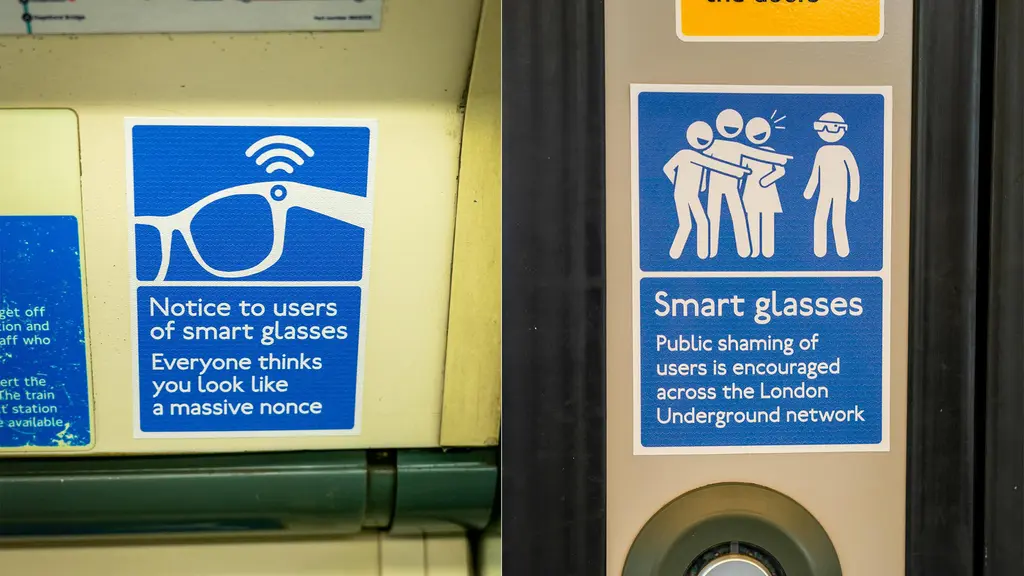
Activists slam “pervert glasses” in new guerrilla campaign
Everyone Hates Elon — Stickers have appeared on the London Underground network, criticising the wearable technology’s covert filming capabilities.
Written by: Isaac Muk

New exhibition highlights British radical living over 200 years
Earthly Paradise — Taking place at the William Morris Gallery, it explores the homes and lives of artists, writers, musicians and more, as well as the conditions that allowed them to thrive.
Written by: Isaac Muk

Pink Floyd’s Roger Waters joins team of new Palestinian resistance documentary
Freedom Theatre — Directed by Rishi Pelham, the film spotlights a theatre operating in the Jenin refugee camp.
Written by: Ella Glossop

Just Stop Oil holds first protest in 17 months
No new drilling — Having previously said that it was “hanging up the hi-vis”, the climate activist group has blocked a road outside Parliament to protest Andy Burnham opening the door for new oil and gas extraction licenses in the North Sea.
Written by: Ella Glossop

In photos: The enduring resistance of Notting Hill Carnival
Carnival of Resistance — A new photobook by Wayne Campbell and Wayne Crichlow reflects on the protest beginnings of Europe’s biggest street festival, along with the traditions keeping its original spirit alive today.
Written by: Isaac Muk


