“Magazines are cultural artefacts”: magCulture’s Jeremy Leslie on the enduring importance of print

We love magazines — Despite the ever creeping digitalisation of the world and culture, physical objects are taking on different, yet vital, roles in culture today. Ella Glossop chats to one of London’s biggest proponents of the art about why we need to support independent publications.
For something that has been repeatedly declared dead, the print magazine has proven difficult to kill.
The numbers tell one story: annual UK magazine circulation revenue has almost halved over the past five years. But they also tell another. Those who continue to buy magazines are doing so with greater intent, with readers increasingly willing to pay for titles they value. Print’s future may lie less in mass appeal, but in depth, quality and community. As our feeds become more shaped by algorithms optimised for speed and engagement, what print offers is increasingly rare: slower, more considered storytelling, curated by people rather than machines.
That shift has helped redefine what a magazine is. “Magazines today fulfil a very different role to the one they’ve done in the past,” says Jeremy Leslie, founder of magCulture. “Today they are cultural artefacts.”
At the centre of this change are shops like Clerkenwell’s legendary magCulture. The iconic London store, which opened in 2015, has spent the past decade celebrating independent magazines from around the world, presenting them as objects worthy of collecting, returning to and living with. This summer, it brought that ethos to a wider audience with a six-week residency in Selfridges as part of the department store’s Club Culture programme, introducing independent print to one of London’s busiest retail spaces.
We spoke to Leslie about the enduring importance of magazines, what human curation offers in an algorithm-led world, and how print can continue to thrive alongside digital.


How has the cultural role of magazines changed in a digital world?
Magazines today fulfil a very different role to the one they’ve done in the past. Today they are cultural artefacts. They retain something they’ve always had, which is that they record the time in which they were published. They’ve lost that surface-level information and entertainment role and are now proper cultural artefacts. They record their time and delve into what people think and what people are experiencing around the subjects at hand, rather than simply giving basic information.
You described magazines as recording their time. What do you mean by that?
A magazine is a great time capsule of the era in which it was produced. Obviously, in terms of the movies that might be on the front cover, they record the time in which they were made. But they also record it through the illustration, the typography, the design and the visual style. All these different elements come together. Although making a magazine is a far slower process than much of our media today, there’s still a speed to it, which means that the production process picks up quirks and design trends. It presents things almost unconsciously from the people making it. When you look at something 10 or 20 years later, it’s a record of 2026.
What can people get from a print magazine that they can’t get online?
It’s not a matter of denying the role and importance of digital channels, but magazines are an oasis outside of that. They provide a more mediated, more considered, more edited set of proposals and ideas that have a beginning, middle and end. That offers something different to our digital world.
What difference does it make to sell magazines in a retail environment like Selfridges?
Our magCulture shop has now been around for 10 years, and it’s established itself as having a role within publishing. It’s become a destination for people who love magazines and love print, and that’s great. But it’s so important to reach beyond what can sometimes be quite a specific bubble. Selfridges is in a different part of town. It occupies a unique space between the tourists and visitors to London on Oxford Street, while just behind it is Marylebone, with lots of smaller independent brands. Together they present a really exciting opportunity to introduce the magazines we celebrate to a completely new audience.
Why is it important for people to support independent magazine shops?
People talk about globalism being over, but clearly it isn’t. Look at our high streets. The end of globalism hasn’t quite happened. Our high streets are either dominated by international brands or they’re empty. I think it’s more important than ever to support independent shops. Independent media and independent magazine shops need that support in order to keep those vital independent voices out there. Yes, they’re speaking to the converted, but they’re also hopefully bringing in new people who don’t yet know about these voices.
Do you think magazines offer an alternative to algorithm-driven culture?
The promise of the internet and all our digital channels, apps and social media was that it would open up and free the world. I think, increasingly, the algorithms that power all those channels are actually closing down our world. The idea that information was free and open to everyone has largely been stamped on by the internet giants, and now it’s a matter of algorithms dictating what we do and don’t see. That’s hugely frustrating.
I think it’s really important that we have forms of media that are free to publish what they want to publish and get it in front of people who might be interested in it, rather than being dictated by some kind of artificial intelligence that’s simply feeding you the same things again and again. Of course, there are elements online that need to be censored – we can have that argument – but there’s also a lot that should simply be shared, and it isn’t.
Magazines, in that respect, are far more open. They operate according to long-standing editorial rules about what’s acceptable and what’s not, and they’re able to present work that would very quickly be censored or closed down online. I think magazines have a fantastic role in doing exactly what they’ve always been good at and exactly what they’ve always done.


Ella Glossop is Huck’s social editor. Follow her on Bluesky.
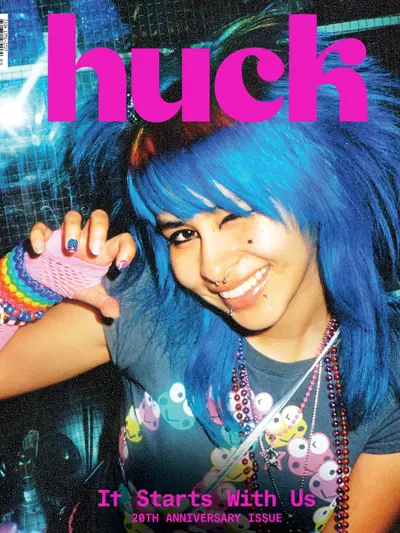
Buy your copy of Huck 83 here.
Enjoyed this article? Follow Huck on Instagram and sign up to our newsletter for more from the cutting edge of sport, music and counterculture.
Support stories like this by becoming a member of Club Huck.
You might like

Tech once promised connection. Print magazines are delivering it
Touch paper — After years of retrenchment in the journalism and media industry, physical magazines are making a comeback. In Real Life Media founder Megan Wray Schertler diagnoses the state of the industry, while explaining the radical history of print and why we need it today.

Tank tops and akimbo wielding as Lara Croft came to town
Tomb Raider 30 — As the legendary video game celebrated her 30th birthday, around 80 superfans took part in a cosplay competition at her birthplace of Derby. Hatti Rex and Emily Rose England met some of the participants and found out what gaming’s greatest woman character means to them.

Halloween in Brooklyn, photographed over 50 years
Spirits and soul — Larry Racioppo’s new book documents half a century of the October festivities in New York, while tracing the city’s ever-changing character.

Cruising on the West Side Piers, New York’s wild side
West Side Highway — In the late 20th century, the area was an if-you-know-you-know hotspot for the city’s gay scene. William Howell’s new photobook immortalises it.

Ahilya Bamroo is Gen Z India’s authentic ambassador
Reel relatable — The influencer turned actor speaks about trolls, beauty standards and youth activism.

What went down at Huck’s 20th birthday party
84 issues and counting — We took over east London’s Jaguar Shoes with friends old and new to celebrate two decades and our new issue, with Tony Bontana taking the decks for a special set.


