Misan Harriman: “The humanity I bear witness to is extraordinary”
- Text by Isaac Muk
- Photography by Misan Harriman

Shoot the People — Following the premiere of a new film exploring the photographer’s work and driving forces, we caught up with him to chat about his rapid rise, shooting protests and the need for powerful documentarians in times of struggle.
On May 25, 2020, along with millions of others, Misan Harriman watched the video of George Floyd being murdered by police officer Derek Chauvin in Minneapolis, Minnesota. The 10-minute-long clip, captured by a 17-year-old bystander, led to an outpouring of emotion across the world, with millions taking to the streets to protest against racism and police brutality, including Harriman himself, who brought his Leica to demonstrations in London and began shooting portraits of attendees at marches.
Just less than half a decade later, Harriman has firmly established himself as one of the most important lensmen of social and protest movements in the modern day, with his distinctive black-and-white portraiture capturing the power of collective solidarity and the injustice-fighting individuals who take part. His pictures were widely shared on social media, while he also became the first Black man to shoot the cover of British Vogue in the publication’s century-plus long history.
Now, his rise is examined in new film Shoot the People, directed by Andy Mundy-Castle, which explores the mind behind the lens. To do so, Harriman dives into the history of change making protest campaigns, such as the Soweto Uprising and the anti-Apartheid movement through interviewing activists, photographers and their contemporaries who have played key roles in shaping his own eye. And of course, the documentary contextualises them within the present day, from those Black Lives Matter protests to the ongoing Palestinian solidarity campaign.
Following its première at SXSW London earlier this month, we caught up with the photographer to hear about the film, his rapid rise, and need for independent photojournalism to bring change in the modern day.


Congratulations on Shoot the People. I didn’t know that you were working a corporate job before you picked up a camera. What was going through your mind when you first stepped out to take pictures at a protest?
I was, yeah, doing what we’re socially programmed to do. I was deeply traumatised, like many of us. It was during lockdown – we were living through a kind of zombie apocalypse movie already, and seeing someone that looks like me lying in a pool of his own piss, asking for his mama as his life was extinguished, was just too much to bear. I didn’t know what to do, so I asked my wife and she said: “Look to your camera.” So, I took my camera and didn’t know whether there would be five or 5,000 people on the streets of London, but of course there were loads.
The truth is I think I was shooting my own trauma in many ways – a lot of the faces, I could see myself in their eyes, and I guess they could see themselves in my eyes. So it was a deeply painful period, but an important period to bear witness as an artist. I think we get lost in the vibes of clout and Instagram filters, and I’m not interested in entertaining people through my art – I’m interested in showing them what we are, so we can build community and build better. On the streets now, people say things like: “Thank you, you care so much about the climate, the queer community, women and race.” But for me, that’s the fucking basics. The idea that my children are going to inherit a world where you can’t love who you want, where you can’t live in the body that you want, where Black and Brown people are considered to be less human, where Arab babies are being annihilated before our very eyes, is not acceptable.
I agree. I remember those early protests well, and it felt like a moment where we were standing on the cusp of change. In many ways it seems like we’ve only gone backwards since then – what do you think its legacy is, and did anything positive come out of it at all?
In the film, there’s a scene in Johannesburg and it’s such an important one because it shows that change happens. The wheels turn slowly, but I was stood in the University of Johannesburg, and even within my lifetime it used to be an all-white university. To see what it looks like now, it’s a reminder that change can happen.
I think regarding Black lives, mattering is a minimum – we’re beloved and worthy. So, I’ve been amazed by the people of this country, because in those protests, I’d see a lot of white people, Disabled people and elderly people saying: “We’re with you. We want to build this community where those that look different to us are parts of this global village.”
“I think we get lost in the vibes of clout and Instagram filters, and I’m not interested in entertaining people through my art – I’m interested in showing them what we are, so we can build community and build better.” Misan Harriman

It’s the same with the ongoing Palestine protest movement, isn’t it? They’ve been going on for nearly two years now, and a big cross section from all walks of society.
It’s so beautiful. I remember when I photographed this rabbi and imam – two people that on paper are supposed to hate each other, at least according to a lot of the British press – and they’re holding a sign demanding for aid and a ceasefire. They’ve become brothers, I see them on loads of protests, and it’s a sign that we’re more similar than we are different. If my art is a testament to that, maybe it can help people go on a journey and stay away from the algorithms of rage that keep us apart.
On the topic of algorithms, your profile and work blew up rapidly through social media. I think it’s interesting, because many photographers lament rapid communication and social media’s role in the decline of photojournalism. I think your story shows that there is still a desire for photography that cuts through the noise, and a modern way to practice photojournalism.
I agree with those photojournalists, in the sense that the commissioning of real photojournalism is gone. They get paid next to nothing, and then you’ve got guys that don’t care what they’re shooting and send it to the wires. I figured out as someone that consumes so much online, that if I’m going to go down this road, I need to self-publish. And I’m going to believe that the average man and woman will see my work and decide how they feel and how they engage with it. I’m reaching over 30 million people a month now in terms of interactions, so a lot of people are looking for this testimony through art.
In the film there’s a part where you say that you’re 90% an activist and 10% a photographer, which I thought was interesting, because one of the traditional pillars of photojournalism is that you’re meant to be a fly on the wall, and you’re not meant to put your opinion into the photographs that you take. Does that ever cross your mind when you’re behind the camera, and do you think about your role?
There’s a great scene in the film when I asked the gentleman who looks after Peter Magubane’s archive whether Peter considered himself an activist, and he goes: “No, he was a freedom fighter.” An activist isn’t too strong a word, and if you see what that man went through – he had his nose broken by police – but he never hated the people that hated him. He could never let hate cloud his lens. That’s the same as me – sometimes the humanity I bear witness to is extraordinary, and sometimes it reminds us of the worst of who we are. But that’s my job, I can’t get too emotionally involved, I would lose the ‘decisive moment’. I can give my opinion when I talk on camera, but when I’m listening to the streets, my job is bear witness.


There’s another great Peter Magubane quote in the film, in which he says that “a struggle without documentation is no struggle at all”. In times when protesting has become more dangerous, and surveillance technology’s use is increasing, how do you marry that need to document, with the risk that exact documentation could put people at risk of losing their jobs, or being used against them in court?
Because there is a cost to liberation. It’s as simple as that. I think of my friends in Youth Demand or Palestine Action. Some of them are in prison now for throwing soup at a Van Gogh painting. 23 years old. They are telling us that our futures are under threat from the climate crisis, and they’re willing to bear the scars. I’ve never heard of any kind of resistance for change without a cost.
So many people now, because they know that I’m not working for a major news organisation, they’re like: “Thank god.” Because they know that I’m going to do right by what I see, and that they aren’t going to see my images next to a Suella Braverman statement calling them “hate marches”. So, whether I like it or not, I’ve become quite integral to making sure that truth isn’t a needle in a haystack.
Of course, a big protest movement had broken out in Los Angeles right now, which has spread across the USA. Do you think this could be a moment where we might see change?
It’s the chaos theory of the Trump administration, right? The idea that Mexican people are being called illegal aliens – look at the history of Mexico and America. The Latine community is being harassed this way is an affront to the very foundation of that very young country. I think California has been picked up because of the size of its economy and because it’s generally a liberal state. What scares me the most is that there are way too many guns in that country for my liking, and it doesn’t take much for it to properly kick off.
One of the first scenes that everyone saw was the news reporter being shot by a rubber bullet.
We are in uncharted territory. This is a time for filmmakers, photographers and artists to recognise that we are needed, and in the première of Shoot the People, there were so many people who were emotional, because the film felt like a companion to the journey that they are already on, and reminding them through history, interviews and my own personal journey that we can all grow and learn how to build community better.
I can relate to that. Protest movements aren’t something that usually makes it to the big screen.
Not at this scale, and I wonder what the industry’s going to make of it. One of my mentors said to me: “You know how rare it is to be e a living artist and have something like this made? Usually, you have to be dead.” If you think of the big ones, there was I’m Not Your Negro, which was about James Baldwin, and he was long gone. The Ernest Cole doc came out earlier this year, and he’s also gone. But I’m here doing whatever I can, and this film is there to say: “Walk with me, please. Let’s do better than what we are witnessing.”
Shoot the People premiered at SXSW London 2025. Follow Misan on Instagram.
Isaac Muk is Huck’s digital editor. Follow him on Bluesky.
Buy your copy of Huck 81 here.
Enjoyed this article? Follow Huck on Instagram and sign up to our newsletter for more from the cutting edge of sport, music and counterculture.
Support stories like this by becoming a member of Club Huck.

You might like

Londoners unite to protest the killing of George Floyd
‘The UK is not innocent’ — This week, thousands took to the city’s streets to march against racism and police brutality. Photographer Theo McInnes joined them.
Written by: Huck

Capturing the everyday reality of lockdown in Soweto
Township blues — South Africa is one of the world’s most unequal countries - and the inequalities have only grown starker during Covid-19. In 'the everyday waiting' photographer Jabulani Dhlamini sheds light on the situation in one of the country’s poorest neighbourhoods.
Written by: Eva Clifford

Inside South Africa’s radical anti-apartheid zine
The legacy of Staffrider — Published between 1978 and 1996, Staffrider introduced a sense of unity that was nationally outlawed. Here, the people who made it happen reflect on its significance.
Written by: Cassidy George

Has lockdown created more empathy for prisoners?
Life inside — Lockdown could have created a greater understanding of the conditions prisoners face. So why are punitive policies even more popular?
Written by: Andy West

Jesse Glazzard’s messy portrait of queer friends, lovers and chosen family
The Sound of Dirt and Beauty — The photographer’s debut monograph explores tender, unpolished moments shaped by the people who he surrounds himself with, while offering a window into the UK’s working-class LGBTQ+ community.
Written by: Sunny Sunday
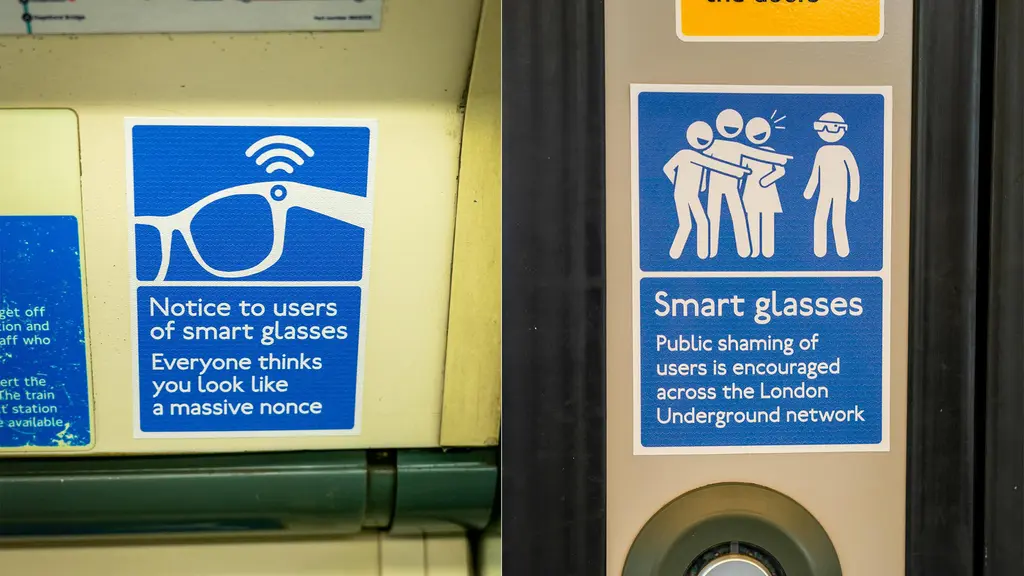
Activists slam “pervert glasses” in new guerrilla campaign
Everyone Hates Elon — Stickers have appeared on the London Underground network, criticising the wearable technology’s covert filming capabilities.
Written by: Isaac Muk


