A personal journey through the depths of Peru
- Text by Niall Flynn
- Photography by Moises Saman / Magnum Photos

Moises Saman’s relationship with his Peruvian heritage has always been, by his own admission, somewhat complicated.
Though he was born in Lima (his dad’s side of the family all hail from Callao, just west of the country’s capital), his family moved when he was just two-years-old, resulting in him spending the majority of his childhood in the suburbs of Barcelona with his father and Catalonian mother. He wouldn’t return to the South American country until his early 30s.
For the photographer, Peru was a source of conflict in his formative years. Growing up in Spain, Saman – not quite Peruvian, yet certainly not Spanish either – grappled with a desire to truly fit in, to mixed results. By the time his parents’ marriage came to an end, the notion of ‘home’ had become truly elusive.

“I wasn’t interested in my Peruvian side back when I was growing up,” he explains, speaking from his current home in Tokyo. “I went to school in Spain – I wanted to embrace that part.”
“I wanted to be like the other kids, but I was always a little bit somewhere in between. I didn’t look quite Spanish. I wanted to fit in and be Catalan, in my Spanish life and background.”
So, when Magnum got in touch last year regarding him contributing to their extensive project – a series which set photographers the brief of exploring what the word means to them – Moises was left with much to mull over.

PERU. September, 2017 © Moises Saman

PERU. September, 2017 © Moises Saman
As one of the foremost conflict photographers of his generation, rootlessness is an integral part of Saman’s life in photography: he has lived and worked in Egypt, Iraq, Afghanistan and Lebanon (to name just a few), while also counting New York and Tokyo as places he’s lived during his life.
In fact, it was the dislocation that he felt growing up in Spain that ultimately pushed him into pursuing photography. “It was probably the most significant factor,” he says. “It absolutely pushed me. I left home at 17 and I never really went back, at least not until many years later.”
After much debate, Saman eventually decided on returning to the part of himself he had most alluded: Peru. Journeying out with a close friend, he spent two weeks travelling the country, forging links with the land and culture, as well as estranged family members from his father’s side (“it definitely opened up the dialogue around issues of family”).

PERU. September, 2017 © Moises Saman
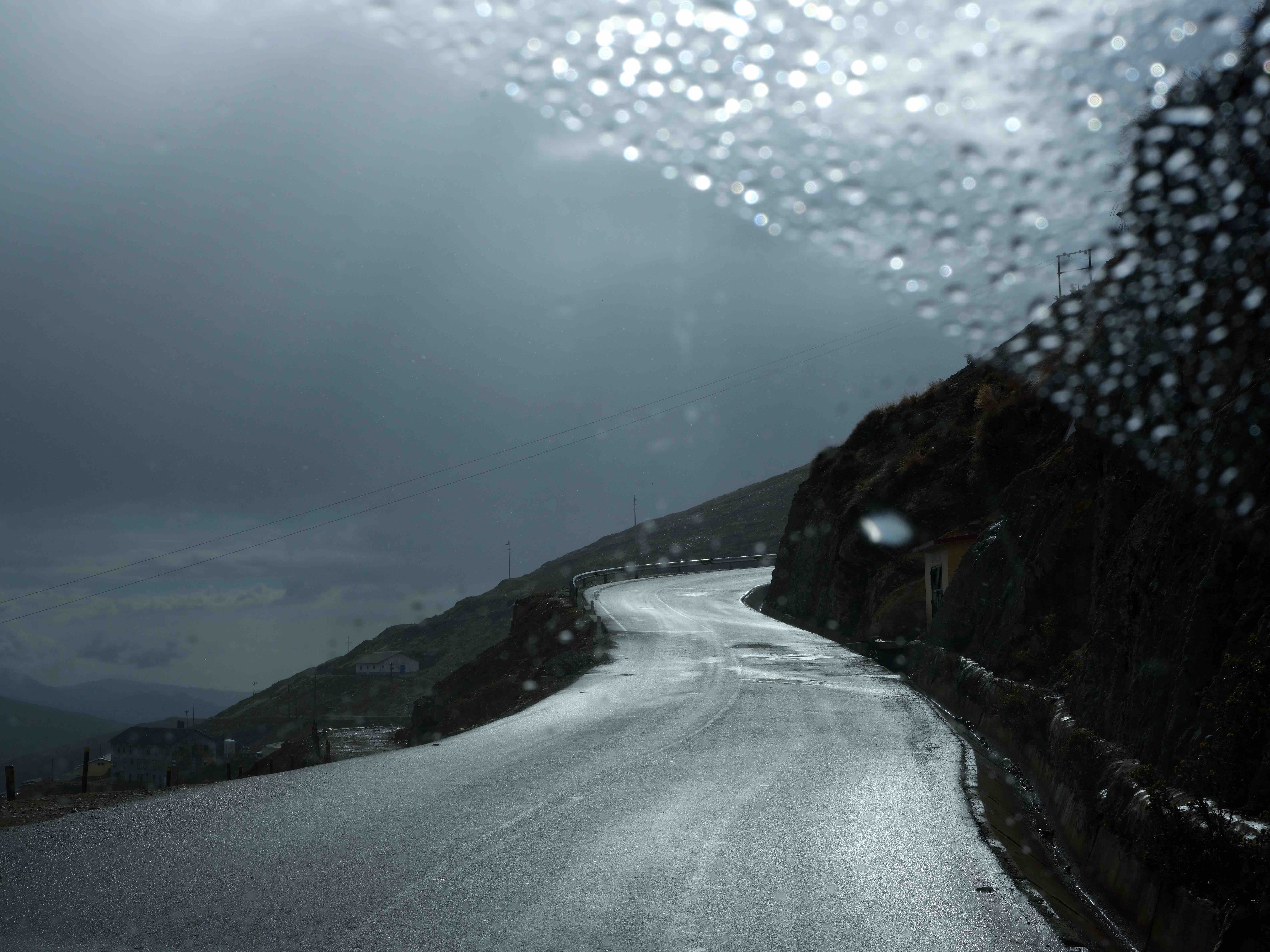
When it comes to the images, the relationship he shares with his country of birth is certainly prevalent. Though taken from a distance – and with an affecting sense of detachment – Saman’s photos also depict an intimacy and familiarity in tandem. His home is one of constant development: always fluid, never truly one thing or the other.
“Since I started going back, it’s a place that has had quite a pull on me. It’s somewhere that I’m absolutely drawn to, even though my work and my life could not be further away from Latin America.”
“Peru is a place with which I feel a real connection, but it’s a strange connection – it feels familiar, but it really isn’t. It was about going to a home where there’s a familiarity everywhere, yet, at the same time, it feels quite foreign. I guess it’s still a discovery for me.”

PERU. September, 2017 © Moises Saman
HOME, a collaboration between Fujifilm and Magnum Photos runs from 18 – 27 May, 2018 at The Vinyl Factory, London. The photobook can be ordered from the Magnum website.
For further information on the project and international exhibitions, see here.
You might like

Jesse Glazzard’s messy portrait of queer friends, lovers and chosen family
The Sound of Dirt and Beauty — The photographer’s debut monograph explores tender, unpolished moments shaped by the people who he surrounds himself with, while offering a window into the UK’s working-class LGBTQ+ community.
Written by: Sunny Sunday

Behind the curtain at Alternative Miss World 1981
Olympia glamour — Running a subversive take on the traditional beauty pageant, the Andrew Logan organised event prioritised underground creativity and invention. Photographer David Corio went behind the scenes at its biggest edition.
Written by: Miss Rosen

New exhibition highlights British radical living over 200 years
Earthly Paradise — Taking place at the William Morris Gallery, it explores the homes and lives of artists, writers, musicians and more, as well as the conditions that allowed them to thrive.
Written by: Isaac Muk

What life on the Strait of Hormuz is really like
Southern Winds — Bandar Abbas based photographer Morteza Niknahad has been capturing the diverse communities and stories of his local region since he first picked up a camera. His new series highlights the human impact of war.
Written by: Isaac Muk

Nick Haymes’s intimate portrait of his family’s life
Chronograph — Over 25 years, the photographer documented his son’s lives as they grew into adults. The resulting photobook is an exploration of the passage of time, as well as the optimism of youth.
Written by: Miss Rosen

Kristina Rozhkova’s scatty, confronting portrait of captivity
Gut Feeling — The Russian artist’s 2024 arrest and subsequent detention opened her eye towards the omnipresent dynamics of power and control. Her new photobook is a stark exploration of being trapped.
Written by: Isaac Muk


