My battle with the Home Office to save my sisters fleeing war
- Text by Daisy Schofield
- Illustrations by Han Nightingale

Two million people have been displaced by the war in Ukraine. As the crisis continues to unfold, people scrambling to find safety are being met with racism at the border and callous immigration systems.
Ukrainians attempting to reach the UK are hampered by bureaucratic and technical issues in securing a visa under the new Family Scheme. At the time of writing, just 300 Ukrainian refugees have been granted visas to come to the UK.
Below, a 26-year-old Ukrainian living in London, who asked to remain anonymous, shares her battle with the Home Office as they prevent her two younger sisters – age eight and 19 – from entering the UK.
—
I was born in Ukraine, and have lived in the UK for the past 13 years, but my whole family is still in Ukraine, spread out across the country. Seeing the war is surreal; it’s devastating.
My grandmother lives alone in a tower block in central Kyiv. She never made it to the bomb shelter; everyone in her building left but it was just too much for her to be able to get to the nearest bunker. The shelling has been continuous from Friday night till Monday morning. She’ll spend the nights either in the corridors, by the elevator shaft, or in a bathtub, to avoid windows and be in the parts of the building that are stronger.
She turned 88-years-old on Thursday [3 March]. She baked a little cake to celebrate, rationing whatever she can – half an egg, 50 grams of flour. She’s been completely on her own, apart from some volunteers who came in on Wednesday [2 March] to give her her medicine.
My brother is 23; he has been getting conscription letters since December [2021]. So it started quite early, but nobody anticipated it would get this bad this early. He was with my dad and my half-sister, who is eight-years-old, and my stepsister, who is 19-years-old, in Odessa. But it’s not safe in Odessa; there are talks about it being the next in line [for attack], given the fact that we still have the naval base there. [On 7 March, President of Ukraine Volodymyr Zelenksy warned that Russia is gearing up for a “historic” attack on Odessa.]
My dad stayed behind to help, while my brother and my sisters left the bunkers in Odessa, and drove out to the Romania–Ukraine border. My sisters took the car and crossed the border, driving across Romania into Bulgaria a few days ago. They are sleeping on the floor of a friend’s house, mainly running around trying to sort out their situation.
When I asked the Home Office about the Family Scheme, they said my sisters can’t apply until I get my BRP [a Biometric Residence Permit, which holds a migrant’s immigration status and entitlements while they remain in the United Kingdom] back, as they will need to use my BRP number on their applications.
My BRP was stolen last December, and I have been waiting for a replacement since then. I still haven’t received the replacement BRP, and on Friday, I was told that the replacement can take up to six months. It’s been three months already.
Because the Home Office has prevented my sisters from coming to me, I wanted to meet them in Bulgaria. But the Home Office told me that they can’t provide me with a letter of compassion that would guarantee my right to get back into the country. They say that right now, if I leave, my application for the replacement BRP might get revoked.
I still haven’t made the decision whether to go to them, because I’m trying to think into the future. What will happen, where do we all go and whether it’s worth waiting for the replacement BRP. Or do I just scrap all of that and go, and whatever happens happens?
People on the ground in Ukraine are completely stressed out, not sleeping, not eating – but they’re kind of holding up. But the moment people cross the border, I think they all break down. Nobody I speak to cares where they go. They don’t care where they are; I think it’s just too overwhelming. They’re glad to be in some kind of safety, but nobody really cares about any kind of basic human needs.
Nobody wants to see their siblings as refugees. If that is the sentiment, that we are unwelcome, if they can’t be compassionate… I don’t necessarily even want to keep them here [in the UK]. I would rather get up and go somewhere where they are more reasonable. I don’t ever want my sisters to feel like a burden.
(As told to Daisy Schofield)
A Home Office spokesperson said: “Last week we announced a new sponsorship route which will allow Ukrainians with no family ties to the UK to be sponsored to come to the UK.
“This is alongside our Ukraine Family Scheme, which has already seen thousands of people apply, as well as changes to visas so that people can stay in the UK safely.
“The routes we have put in place follow extensive engagement with Ukrainian partners. This is a rapidly moving and complex picture and as the situation develops we will continue to keep our support under constant review.”
Interview has been edited for length and clarity.
Search for Sanctuary is a series shedding light on the stories of those fleeing the war in Ukraine. See more of the series here.
Enjoyed this article? Like Huck on Facebook or follow us on Twitter.
You might like
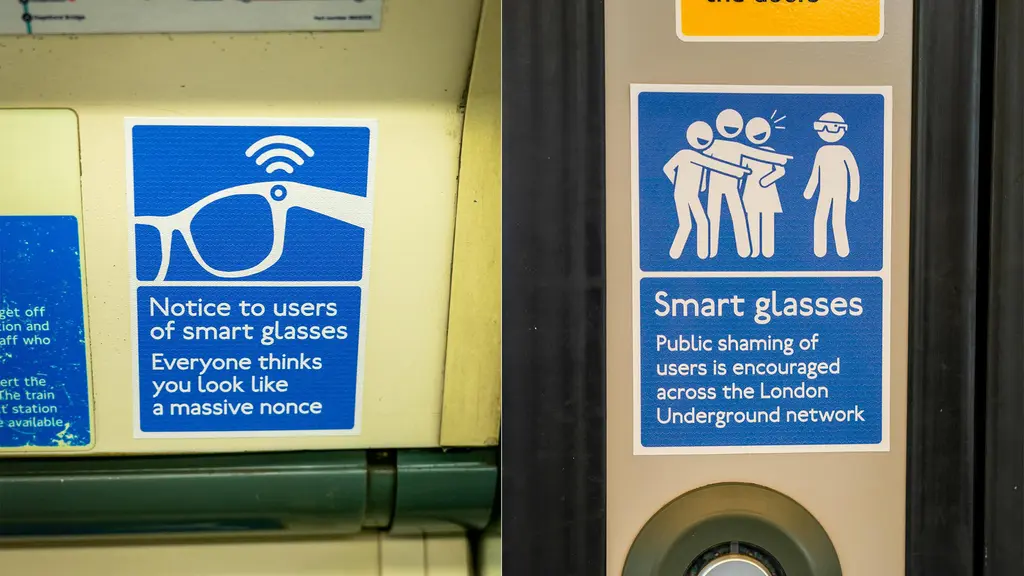
Activists slam “pervert glasses” in new guerrilla campaign
Everyone Hates Elon — Stickers have appeared on the London Underground network, criticising the wearable technology’s covert filming capabilities.
Written by: Isaac Muk

New exhibition highlights British radical living over 200 years
Earthly Paradise — Taking place at the William Morris Gallery, it explores the homes and lives of artists, writers, musicians and more, as well as the conditions that allowed them to thrive.
Written by: Isaac Muk

Pink Floyd’s Roger Waters joins team of new Palestinian resistance documentary
Freedom Theatre — Directed by Rishi Pelham, the film spotlights a theatre operating in the Jenin refugee camp.
Written by: Ella Glossop

Just Stop Oil holds first protest in 17 months
No new drilling — Having previously said that it was “hanging up the hi-vis”, the climate activist group has blocked a road outside Parliament to protest Andy Burnham opening the door for new oil and gas extraction licenses in the North Sea.
Written by: Ella Glossop

Kristina Rozhkova’s scatty, confronting portrait of captivity
Gut Feeling — The Russian artist’s 2024 arrest and subsequent detention opened her eye towards the omnipresent dynamics of power and control. Her new photobook is a stark exploration of being trapped.
Written by: Isaac Muk

In photos: The enduring resistance of Notting Hill Carnival
Carnival of Resistance — A new photobook by Wayne Campbell and Wayne Crichlow reflects on the protest beginnings of Europe’s biggest street festival, along with the traditions keeping its original spirit alive today.
Written by: Isaac Muk


