The new faces of black radical activism in the United Kingdom
- Text by Alex King
Young people across the UK are hungry for change. From the rise in tuition fees to cuts to youth projects and growing youth unemployment, young people are struggling to make their voices heard and protect the rights and services they rely on.
For young black and brown people, the outlook is even more bleak: not only do they stand to lose most from shrinking services and dwindling opportunities, but have to contend with institutional racism, police violence and abuse of stop and search powers, Islamophobia and discrimination in their daily lives.
Generation Revolution, directed by Usayd Younis and Cassie Quarless, profiles the young black and brown activists leading the charge against racism and creating new spaces to express grievances and pressure for change.

The Black Lives Matter protests in the US are a big inspiration, but the UK’s young, radical activists are doing much more than just showing solidarity with movements across the pond. They’re connecting the dots of institutional racism worldwide and mobilising around a wide range of international and local struggles, from austerity to homelessness and gentrification.
The film documents this exciting and innovative new wave of activism by following lead figures in three groups, The London Black Revolutionaries, who favour dramatic and fiery direct action; R Movement, which favours learning, discussion ad community outreach; and The Black Dissidents, a new group challenging oppression on multiple fronts simultaneously: race, class and gender.
We reached out to Usayd and Cassie to find out more about what’s firing up the new generation, why they’ve embraced direct action and where the movement goes from here.

What motivated you to document the UK’s black and brown activists? What impressed you about the actions they were making?
We’re so used to hearing negative stories about young black and brown people in this country; from ‘riotous’ teens to adopting a ‘gang culture’. Most of the depictions we see reinforce stereotypes that are extremely one-dimensional or simply untrue. When it comes to activism it is so often framed as violent or ineffective, but all we had to do was look to our peer groups to find a wealth of inspiring and powerful actions. We are witnessing an extremely important global moment of young black and brown people standing up for positive change, and we’re so lucky to have been able to document some of what has been happening here in London.

Briefly, why do you feel there is such a hunger among young black and brown activists for radical action?
People are angry and there don’t seem to be any solutions being offered by mainstream institutions and the political class. It feels like black and brown people are still being treated as second class citizens in this country. In recent years we’ve seen a spike in Islamophobia – it feels like every week there is a new video of a brown person being abused on public transport. Black people are still being disproportionately criminalised, not to mention killed by the police – just last week Liverpool teenager Mzee Mohammed died after being restrained by police.
In a more general sense we are seeing the stripping back of institutions that are vital for our survival as people. Healthcare, education, justice – you name it. We are in the midst of a wide-scale privatisation of our social institutions. As young people we don’t seem to be able to shake off debt, whether that is university, payday or personal loans. So many of our peers are underpaid, unemployed or in precarious jobs.
There is a hunger for radical action amongst black and brown activists because these issues require inherently radical solutions. We’ve seen that slow-paced ‘reform’ isn’t achieving change for the common good. In fact quite the opposite! We may have the advantage of having the space for wider dialogue, but our material conditions are often worse than the previous generation.

How have your perspectives on radical direct action changed since you began shooting the film?
We believe that if anything it is more necessary now than ever. Radical direct action should be one of the many tools that activists should have in their arsenal. It is incredibly effective and necessary, but it should never stand alone.
We think that the work that Sisters Uncut is doing is stellar and should serve as an example to everyone. Direct action coupled with strong community work and a clear and coherent narrative! In their fight against cuts to domestic violence services they have brought the fight against austerity and patriarchy in our society very effectively. Whether it be crashing a red carpet event or occupying empty estates to house survivors of domestic abuse.

The film captures both the highs and lows of each group: the successful actions and the internal conflicts. What do you make of the future of young black and brown activism in the UK?
Wherever there are people there will be issues. What’s more important to note is that although the collective journey that these young people are on has been difficult, it doesn’t necessarily knock their belief in the possibility of a better world and our common duty to strive for one. This film is rooted in the reality of activism, as opposed to the fantasy of how it might look from the outside.
I think that the future for black and brown activism in the UK is very bright. We were really astounded by the turnout for the #BlackLivesMatter protests after the killings of Alton Sterling and Philando Castile in the US. So many people were out calling for justice not just as a matter of solidarity for black people in the States but as something that we acknowledge is severely lacking here. It was great to see people making those connections and shouting about the global nature of White Supremacy and Anti-Blackness.
Of course movements aren’t built in a day and it’s incumbent on all of us to capture some of that energy. There are a lot of people who have been doing great work for a long time. Some of them are in the film, a lot of them aren’t.

What effect do you hope the film has on viewers? Is there a call to action there?
We hope that people seeing the film will be inspired to get active in their communities. We want to encourage conversations about the issues that the groups in the film are fighting for, but also about how the groups are organised. Being active doesn’t necessarily mean being out in the streets all the time. As you see in the film, a lot of activist work happens behind closed doors. People associate activism with banner making and loudhailers but a lot of the time it can be trying to stop a family from getting evicted, offering a bit of support to homeless people, helping to educate the younger generation.
What’s important is that people see just how powerful they are, how much of an impact they can have in making a real difference for their communities – and then doing it!
Generation Revolution is released in UK cinemas November 11 2016.
Enjoyed this article? Like Huck on Facebook or follow us on Twitter.
You might like
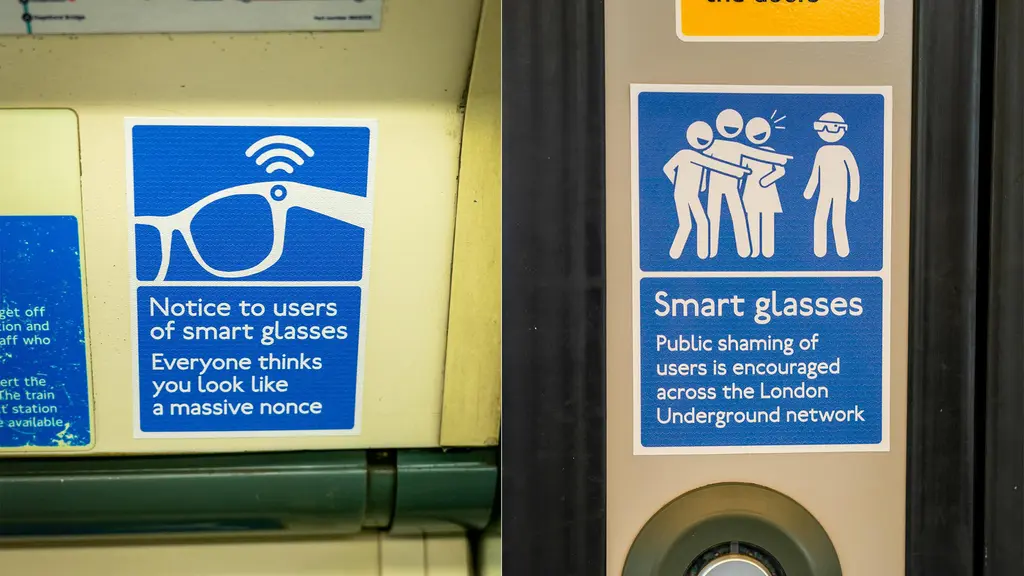
Activists slam “pervert glasses” in new guerrilla campaign
Everyone Hates Elon — Stickers have appeared on the London Underground network, criticising the wearable technology’s covert filming capabilities.
Written by: Isaac Muk

New exhibition highlights British radical living over 200 years
Earthly Paradise — Taking place at the William Morris Gallery, it explores the homes and lives of artists, writers, musicians and more, as well as the conditions that allowed them to thrive.
Written by: Isaac Muk

Pink Floyd’s Roger Waters joins team of new Palestinian resistance documentary
Freedom Theatre — Directed by Rishi Pelham, the film spotlights a theatre operating in the Jenin refugee camp.
Written by: Ella Glossop

Just Stop Oil holds first protest in 17 months
No new drilling — Having previously said that it was “hanging up the hi-vis”, the climate activist group has blocked a road outside Parliament to protest Andy Burnham opening the door for new oil and gas extraction licenses in the North Sea.
Written by: Ella Glossop

UK’s first ever Latino film festival is coming to London
LoLaFF — Taking place between October 2-6, it will feature 55 filmmakers from Latin America, with an opening night at the Barbican.
Written by: Isaac Muk

In photos: The enduring resistance of Notting Hill Carnival
Carnival of Resistance — A new photobook by Wayne Campbell and Wayne Crichlow reflects on the protest beginnings of Europe’s biggest street festival, along with the traditions keeping its original spirit alive today.
Written by: Isaac Muk


