
Photos documenting Sierra Leone’s amputee football team

From 1991 to 2002, a devastating civil war in Sierra Leone killed more than 50,000 people and led to thousands of innocent civilians having their legs, arms or hands forcibly amputated by rebel soldiers or removed by landmines. It’s estimated that 27,000 Sierra Leoneans were disabled or had one or more of their limbs amputated during this bloody period of history.
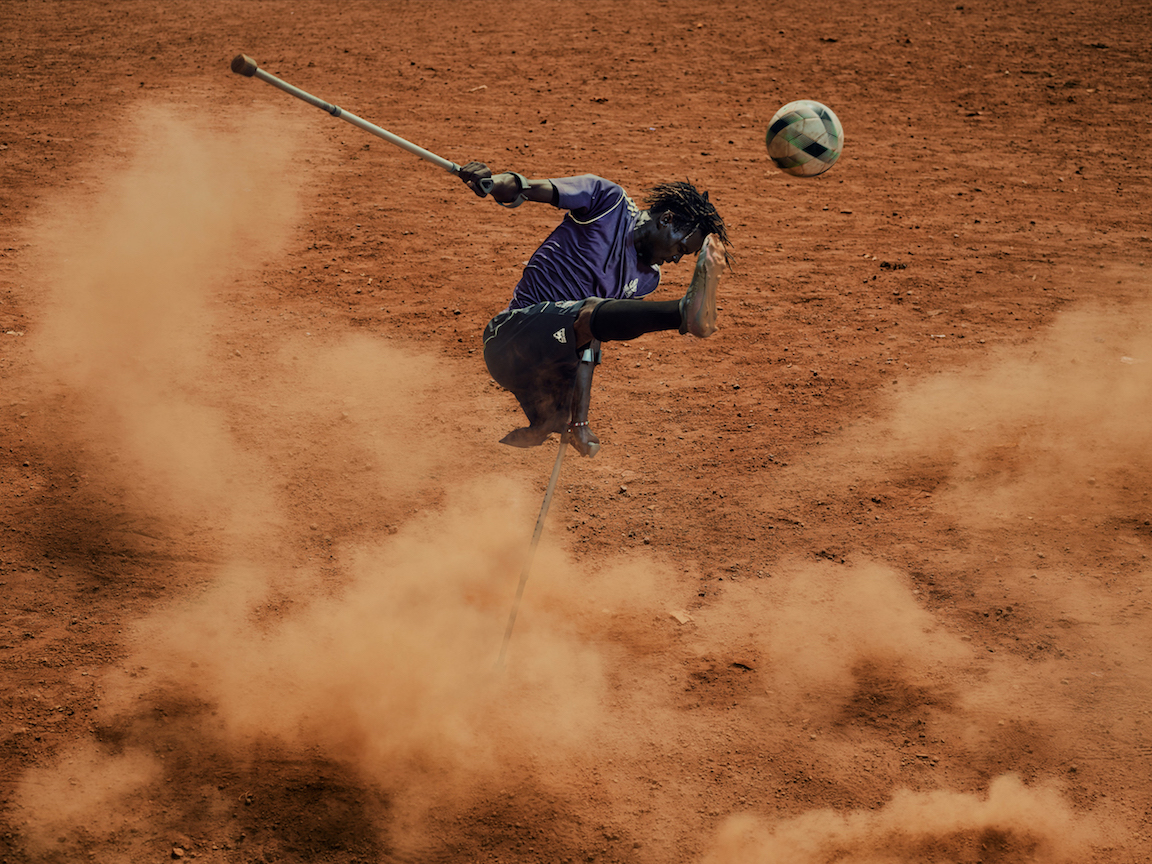
The Flying Stars are a football team born out of the atrocity of this war, with all of the team members victims of civil war amputations. Earlier this year, photographer Todd Antony travelled to Sierra Leone as part of a project documenting the team, who are, he says, recognised as heroes within their community. “When you see them play football, it’s quite phenomenal,” Antony says.
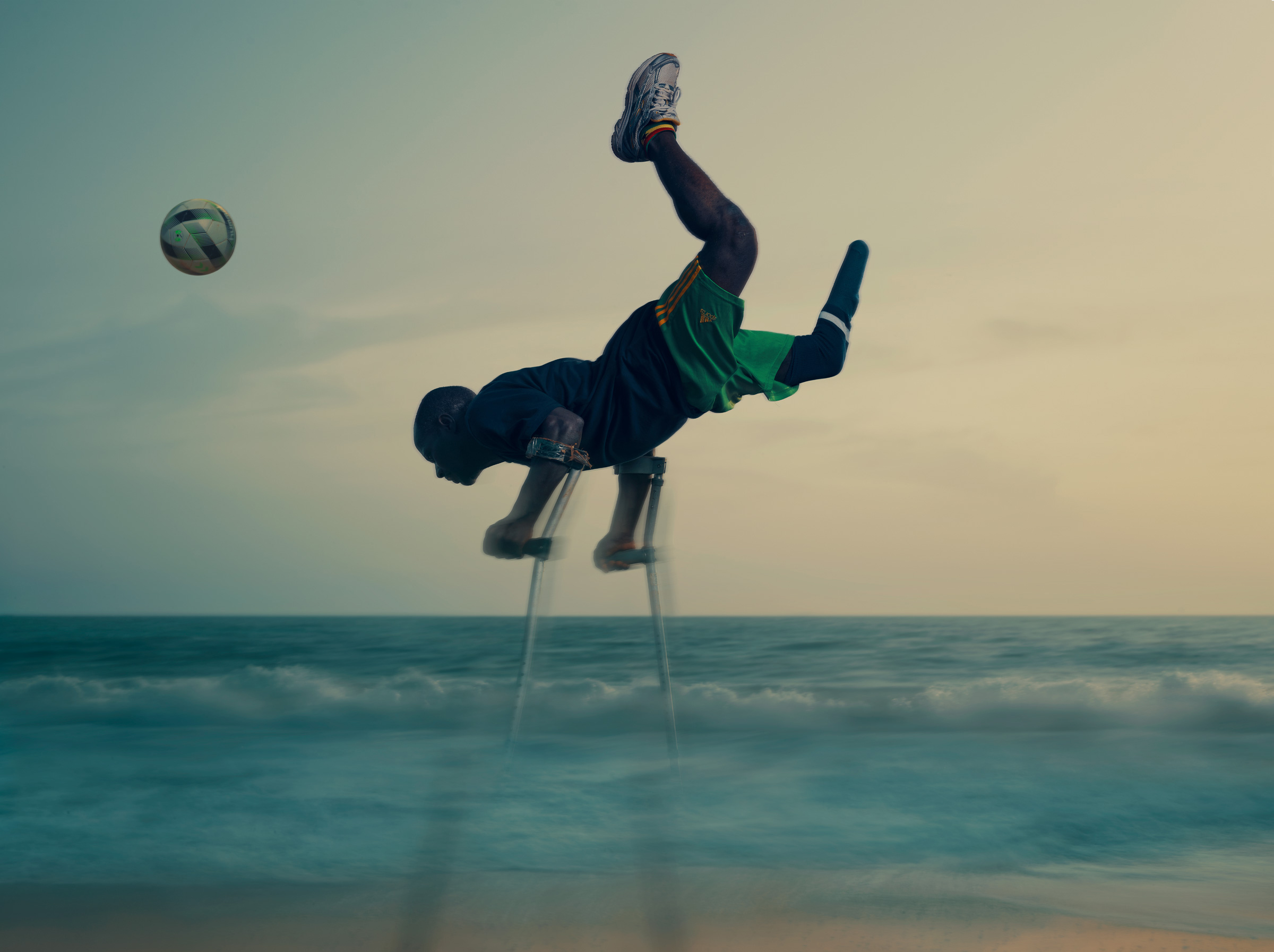
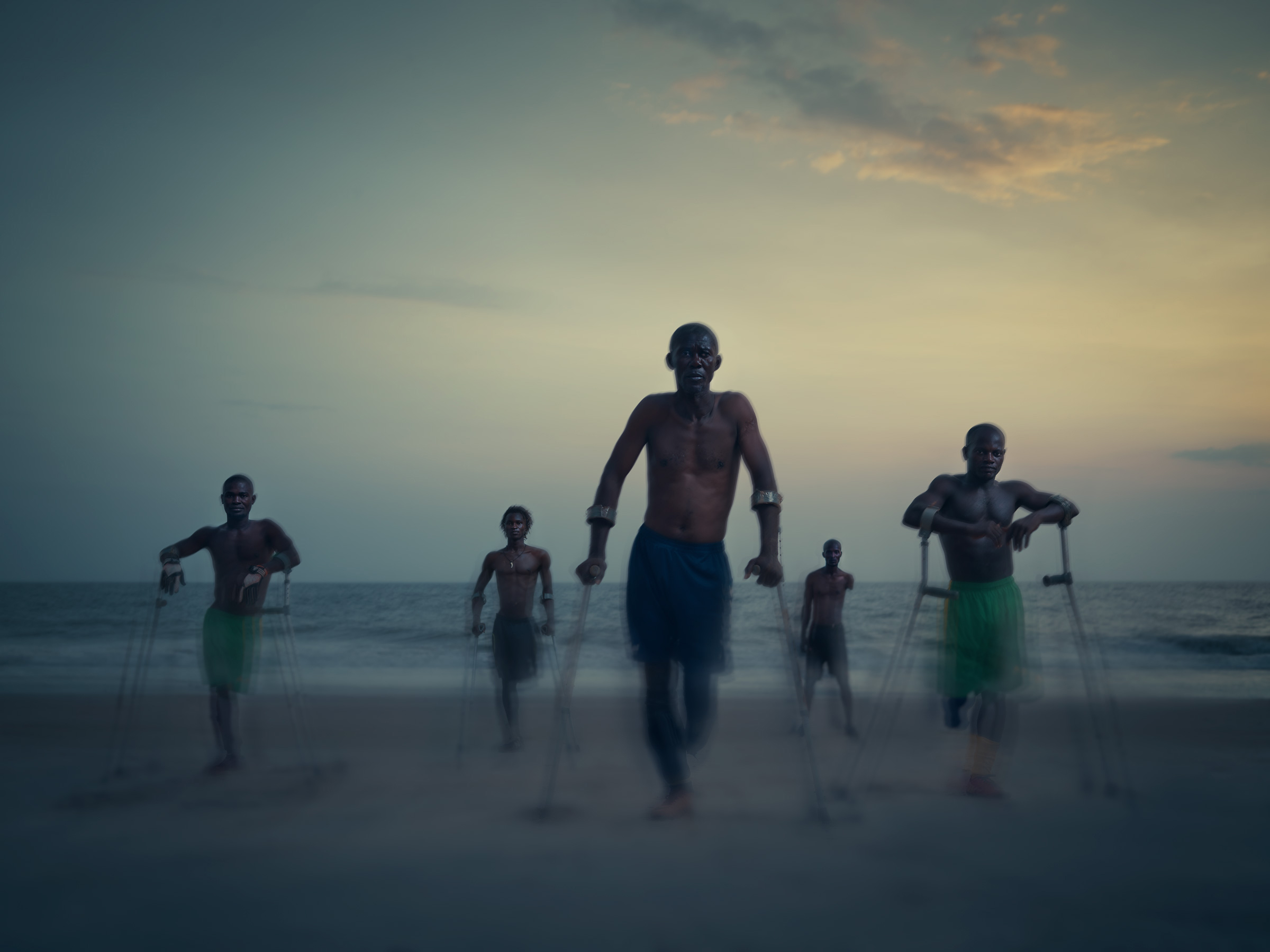
In a number of images from the series, Antony deployed a slow shutter speed to imbue the photographs with a surreal, ghostly quality. According to Antony, this was to escape the visual stereotypes usually associated with images of Africa, “and also to elevate the players, because they’re bloody incredible people that have lived more in their life than we could ever comprehend.”
Antony says that the team were welcoming, and willing to share their stories with him to include as part of the project. One player, Osman Turay, told Antony how he’d lost his leg at six years old when he was shot in the leg running away from rebels with his mother. Turay also recalled how his relatives were rounded up into a house by rebels, who locked the door of the property before burning it down.

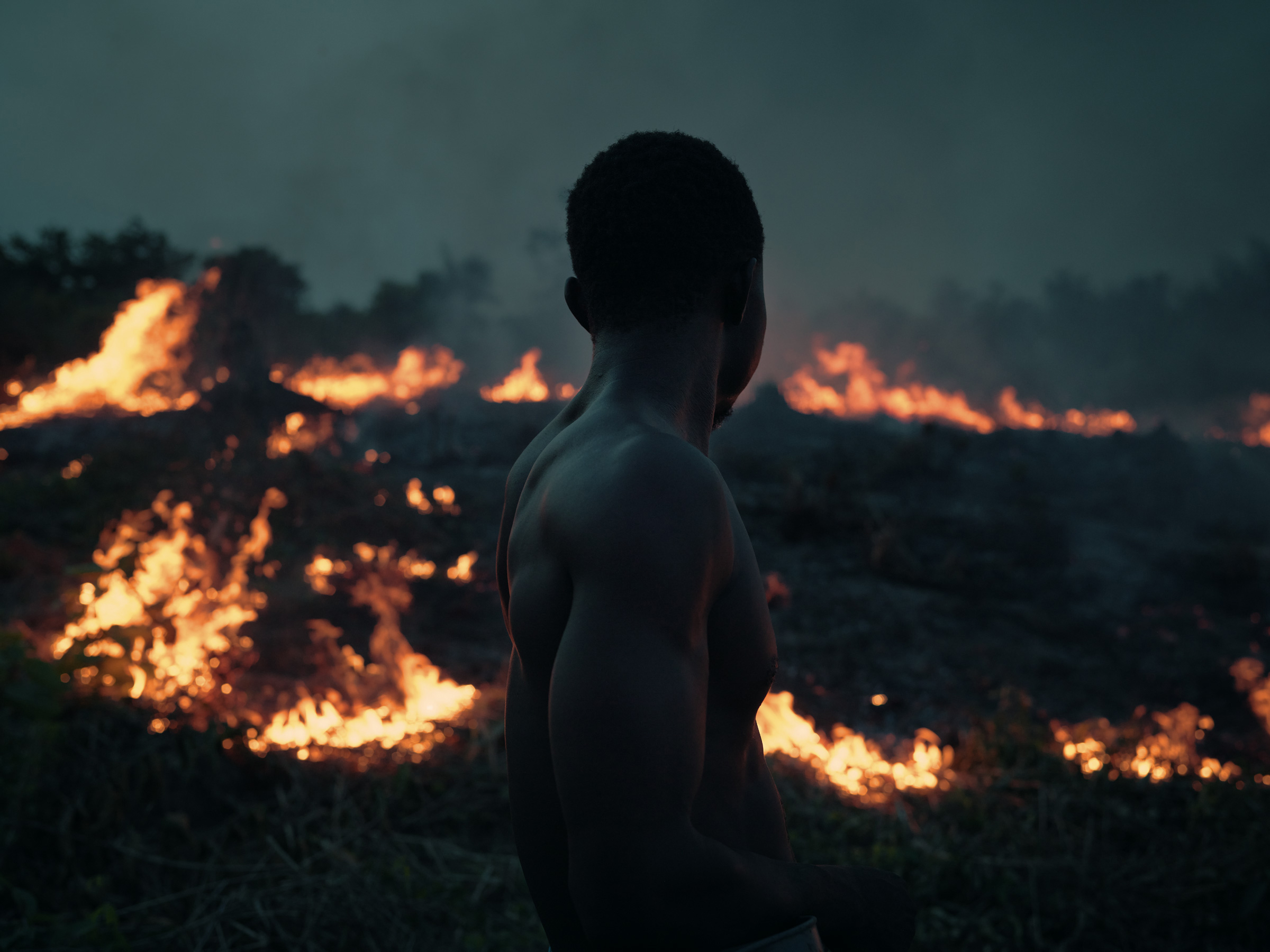
Umaru Sandi in the fields around the amputee resettlement village he lives in. They slash and burn the jungle to plant crops for the upcoming wet season.
“Football really does help them,” says Antony. “Especially in Sierra Leone – I think it’s a little bit better now than it was – but it used to be that amputees were looked down on quite heavily. Being around their fellow teammates and football, they can share that emotional and physical pain with each other… seeing them all together training on a Sunday, just the laughs and camaraderie, is really lovely to see.”
With no support from the government, The Flying Stars have no funding for things like crutches, ferrules (the hard rubber feet on the bottom of the crutches) or transport to play matches with other disabled teams. Sierra Leone is the sixth poorest country in the world, and yet purchasing a set of crutches there costs 10 to 15 times more than in countries like the UK or US. Antony has since set up a fundraiser in an effort to supply the team with new sets of crutches, spare ferrules, and transport for matches.
Football offers the players a way to “rebuild their emotional confidence as well as having a goal to push towards,” adds Antony. “I just want to get this series out there to as many people as possible and to show how incredible these guys really are.”

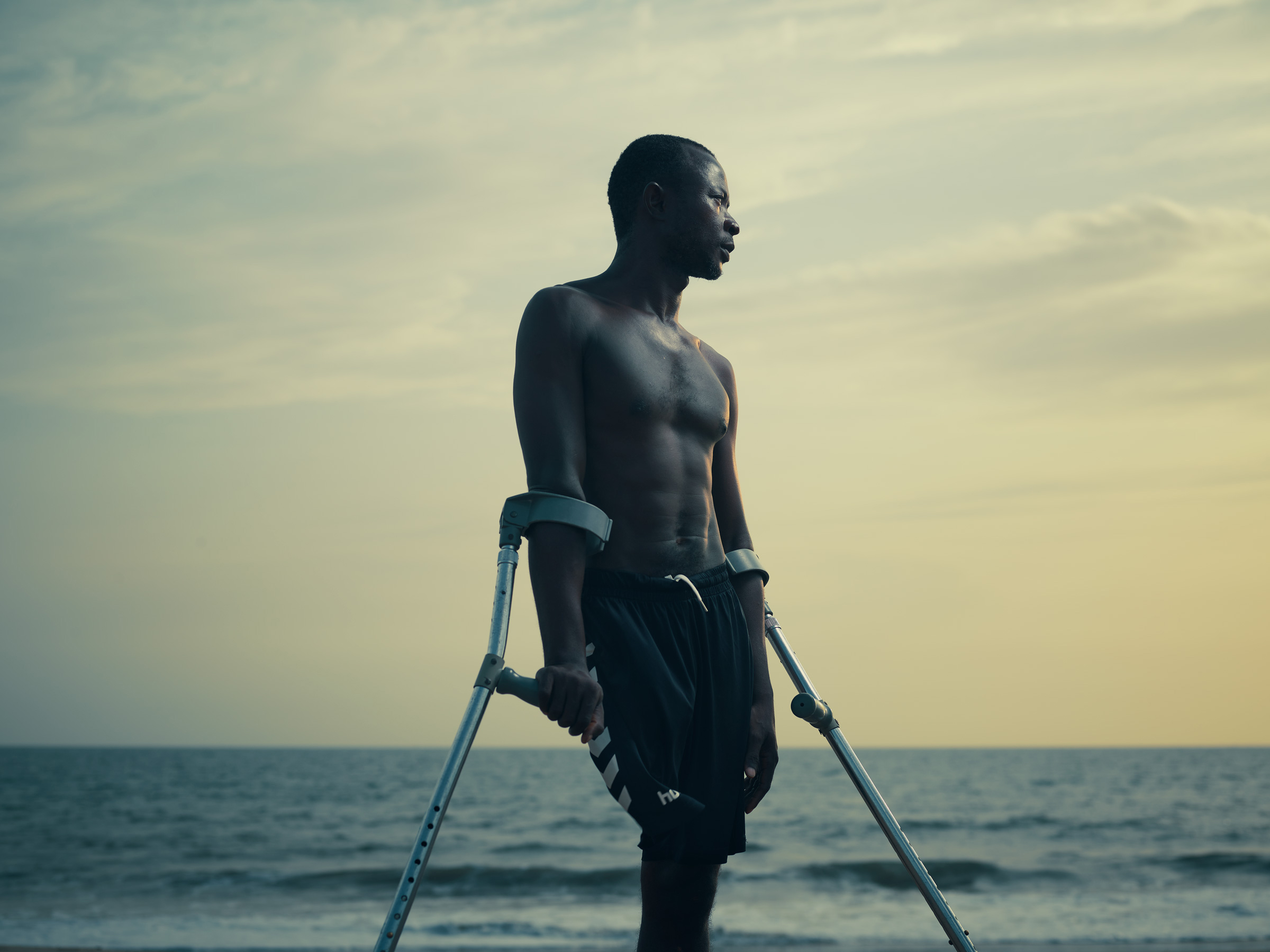
Osman Turay
Donate to The Flying Stars’s GoFundMe page to help raise money for crutches and spare ferrules for the team.
Enjoyed this article? Like Huck on Facebook or follow us on Twitter.
You might like

Inside the grunge golden age with Hole’s former bassist
My ’90s Rock Photographs — Melissa Auf der Maur’s new photobook is a sprawling visual memoir of her time at the heart of the US scene, from Tinker to The Smashing Pumpkins.

Introducing ‘The Chaos Isles’, a new photozine by Huck and Yushy
Normal Island — From unlicensed raves to the solstice at Stonehenge, furries to giant vegetable growers, Yushy is one of the UK’s best lensmen of its wild side. ‘The Chaos Isles’ will be sent out exclusively to Club Huck+ members.

Join Club Huck+ to get the most from Huck
Dispatches from the sharp edge of culture — Members get our print magazine, special photozines, The Huck Long Read newsletter, discounts from our friends and partners, digital versions of back issues and priority access to events.

Signs of solidarity as London marks three years of genocide in Palestine
Never forget — 250,000 people gathered on Saturday as Israeli attacks have continued in Gaza and the West Bank. Daisy Schofield photographed the diverse people and placards in attendance.

Landmark new exhibition is celebrating 50 years of female punk
God Save the Queens — The Museum of Youth Culture is bringing together rare photography, archive material and a one-night-only supergroup featuring members of X-Ray Spex, The Slits and The Raincoats.

Halcyon, end of summer days in ’80s Massachusetts
Bell Pond — Stephen DiRado’s new photobook is a nostalgic look at blissed out moments of young love, family and coming of age at a swimming pond in Worcester, Massachusetts.


