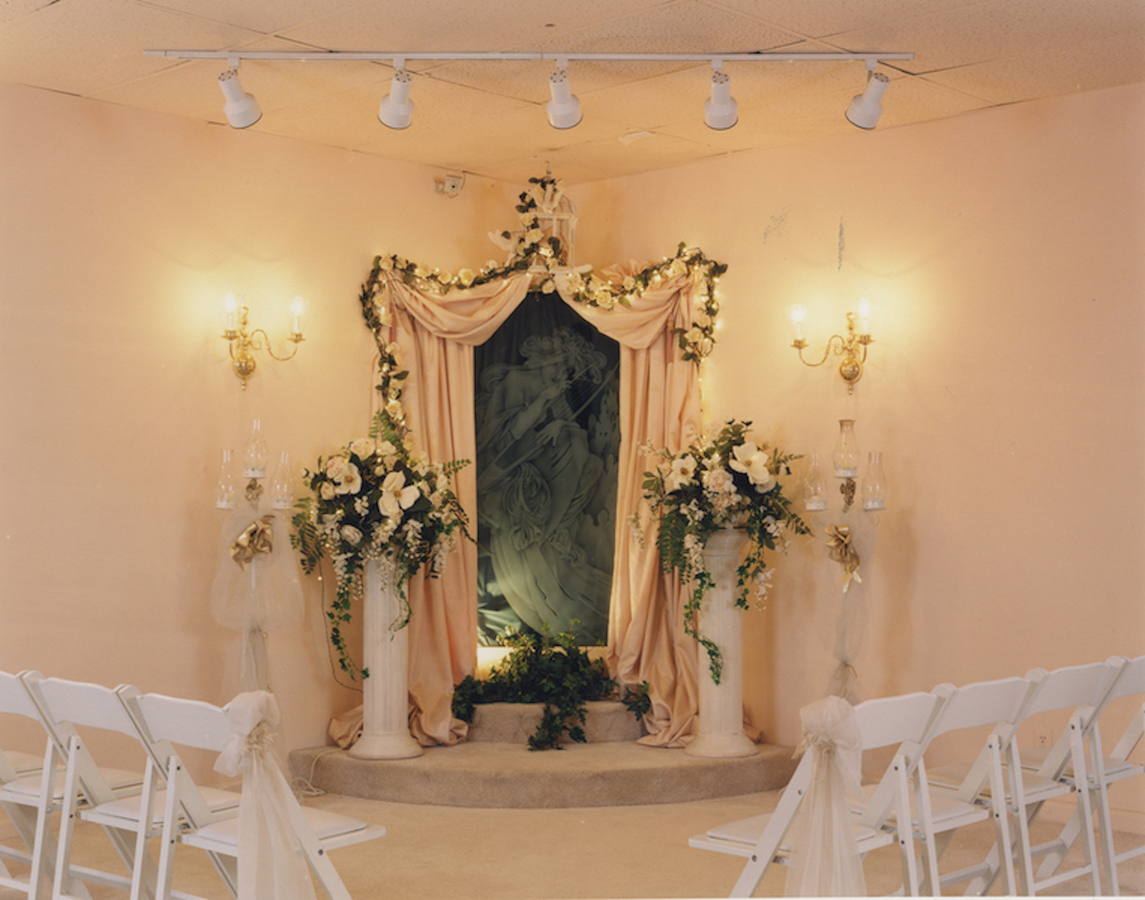
Photos of Las Vegas’ kitsch wedding chapel interiors
- Text by Huck
- Photography by Jane Hilton

For the ease of acquiring a marriage license and the relatively low costs involved with throwing a ceremony, Las Vegas is often dubbed the “wedding capital of the world”. Wedding chapels are ubiquitous in the city: in fact, most of Vegas’s major hotels have them, while many of the local restaurants offer marriage ceremonies. And, for those couples looking for a speedier service, drive-thru weddings are also available.
Photographer Jane Hilton first became fascinated with these ceremonies during a business trip to Vegas in the early ’90s. The British photographer was shooting for a commercial client in the desert, staying in the now-defunct Hacienda resort in Vegas.
“It was Valentine’s Day,” she recalls, “and I leaned out of my bedroom window, and saw this sea of brides and grooms. I later found out that two and a half thousand people got married in Vegas that day alone.”
Hilton would return to the state “two to three times a year” over the next seven years as part of a project documenting Vegas weddings. “It was a great thing to photograph, because unlike some other subject matters, where access is very difficult, people are in a happy place on their wedding day,” she says.
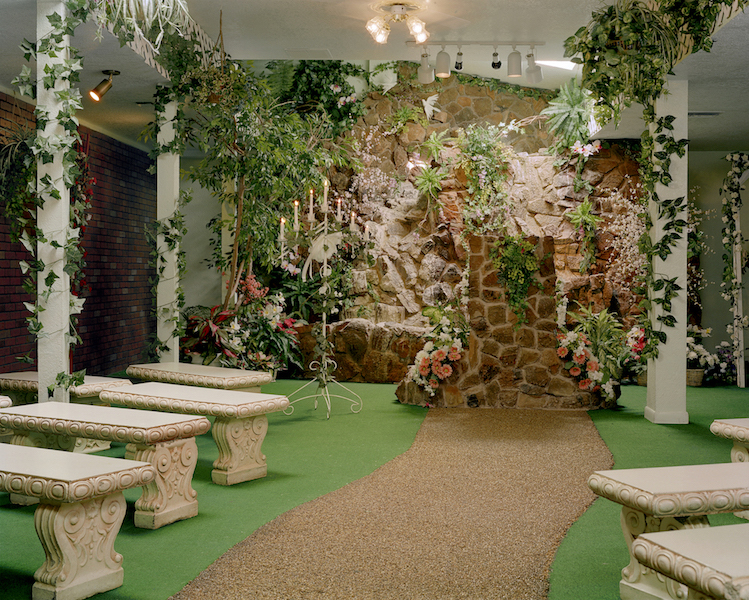
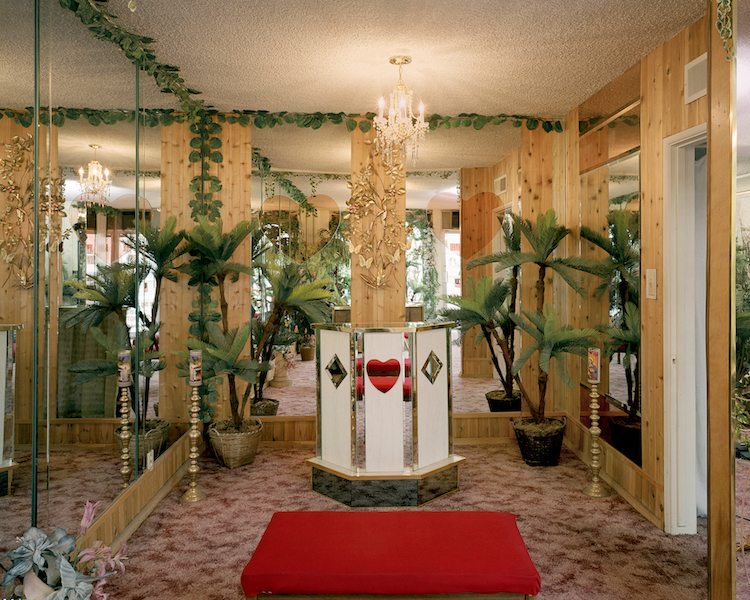
After photographing over a 100 weddings, on a trip in 1997, Hilton decided to take a different approach, capturing the venues empty – the very opposite of how they’re designed to be seen. “I really loved the actual spaces couples chose to get hitched in,” says Hilton. “They’re peculiar, kitsch, and jubilant.”
From Hawaiian, to Fairy Tale, to Gothic or Halloween, Vegas is famed for its themed weddings. Among those Hilton captured was a Star Trek themed venue decked out in silver, where fans of the franchise would go to get married after the convention, and one of the many Elvis-themed events, usually taking place at the Graceland chapel.
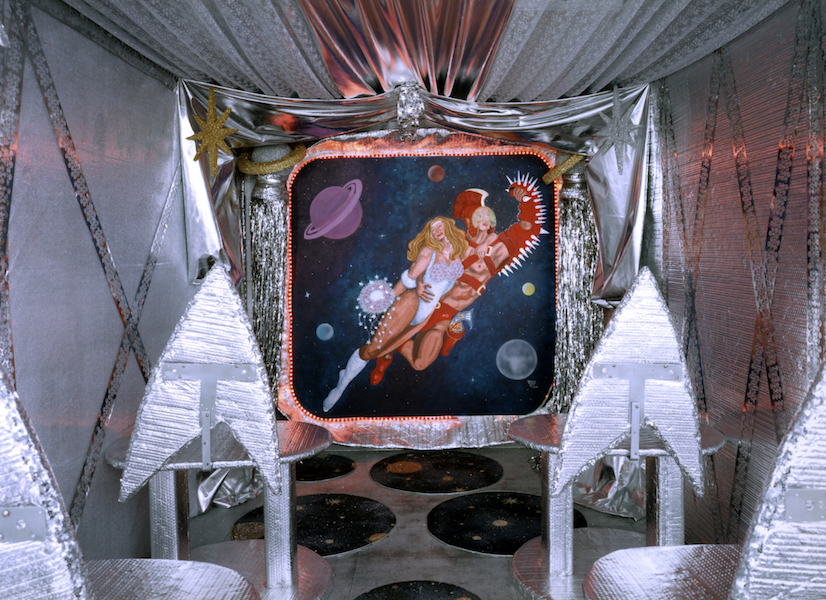
These photos of vacant chapels are now displayed as part of a new exhibition, titled For Better or For Worse, currently on display at Solaris Gallery. As Hilton explains, amid the pandemic, the photos take on a new resonance: “You’re looking at where people had all those celebrations with so many guests, often hugging and kissing. And now, that industry in particular has been damaged, badly. So the photos take on an eeriness.”
Revisiting the images decades later also prompted Hilton to reflect on the “implosion” of America, with the Financial Crash, and Trump’s presidency. “The American Dream is literally in tatters,” she says. “So now, when I’m looking at the wedding chapels, I feel they reflect that kind of isolation and disquietude… [The country] is going to have to rebuild.”
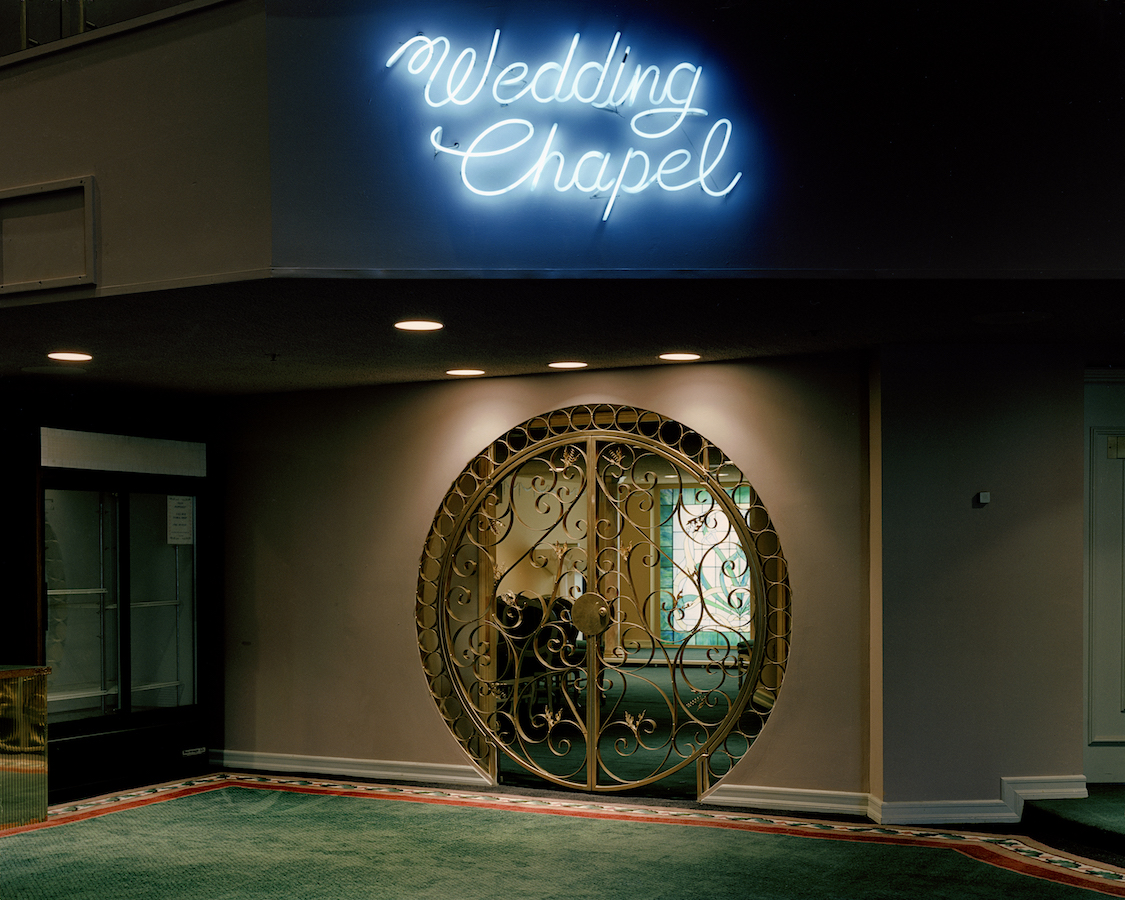
For Better or For Worse is on now at Solaris Gallery until Saturday 31st July.
Enjoyed this article? Like Huck on Facebook or follow us on Twitter.
You might like

Jesse Glazzard’s messy portrait of queer friends, lovers and chosen family
The Sound of Dirt and Beauty — The photographer’s debut monograph explores tender, unpolished moments shaped by the people who he surrounds himself with, while offering a window into the UK’s working-class LGBTQ+ community.
Written by: Sunny Sunday

Behind the curtain at Alternative Miss World 1981
Olympia glamour — Running a subversive take on the traditional beauty pageant, the Andrew Logan organised event prioritised underground creativity and invention. Photographer David Corio went behind the scenes at its biggest edition.
Written by: Miss Rosen

New exhibition highlights British radical living over 200 years
Earthly Paradise — Taking place at the William Morris Gallery, it explores the homes and lives of artists, writers, musicians and more, as well as the conditions that allowed them to thrive.
Written by: Isaac Muk

What life on the Strait of Hormuz is really like
Southern Winds — Bandar Abbas based photographer Morteza Niknahad has been capturing the diverse communities and stories of his local region since he first picked up a camera. His new series highlights the human impact of war.
Written by: Isaac Muk

Nick Haymes’s intimate portrait of his family’s life
Chronograph — Over 25 years, the photographer documented his son’s lives as they grew into adults. The resulting photobook is an exploration of the passage of time, as well as the optimism of youth.
Written by: Miss Rosen

Kristina Rozhkova’s scatty, confronting portrait of captivity
Gut Feeling — The Russian artist’s 2024 arrest and subsequent detention opened her eye towards the omnipresent dynamics of power and control. Her new photobook is a stark exploration of being trapped.
Written by: Isaac Muk


