In Pictures: The evolution of Mongolia’s fledgling skateboarding scene
- Text by Alex King
- Photography by Percy Dean

For centuries, Mongolia was one of the most isolated countries on Earth. And it remains one of the most sparsely populated, with its traditionally nomadic people living a unique existence amid the infinite steppes.
But since the fall of the Soviet Union, the last two decades have seen it become one of the fastest growing countries in the world as international companies have sought to grab its precious natural resources.

Photo by Cyril Weiner

Photo by Cyril Weiner
Back in 2004, an international crew of skateboarders witnessed the rapid pace of change firsthand. After making a pilgrimage to a giant skate park in Ulaanbaatar they’d seen in photos, they arrived to discover it had been gobbled up by the city’s frenetic development.
But being skaters, this was just the beginning of the real adventure. Criss-crossing the country to explore Mongolia’s fledgling scene, their adventure became the photobook Dirt Ollies and film Mongolian Tyres.

Photo by Cyril Weiner

Photo by Cyril Weiner
Ten years later, the same team have collaborated on From Dirt to Dust, which looks at how Mongolia has changed over the last decade and skateboarding’s role in the urban revolution of the country.
Skateboarding is their lens to document the huge changes sweeping the country, as a once nomadic people increasingly floods to the country’s only major city, Ulaanbaatar – bringing elements of their ancient culture with them, but leaving much behind.

Photo by Percy Dean

Photo by Cyril Weiner

Photo by Cyril Weiner
It’s accompanied by the short film, Out of Steppe, which looks at the contrast between skateboarding in the sweeping steppes and forgotten Mongolian towns with the blossoming urban scene.
With contributions from writers, photographers, skateboarders and an architect, From Dirt to Dust presents a multilayered meditation on the immense physical and social changes underway.

Photo by Cyril Weiner
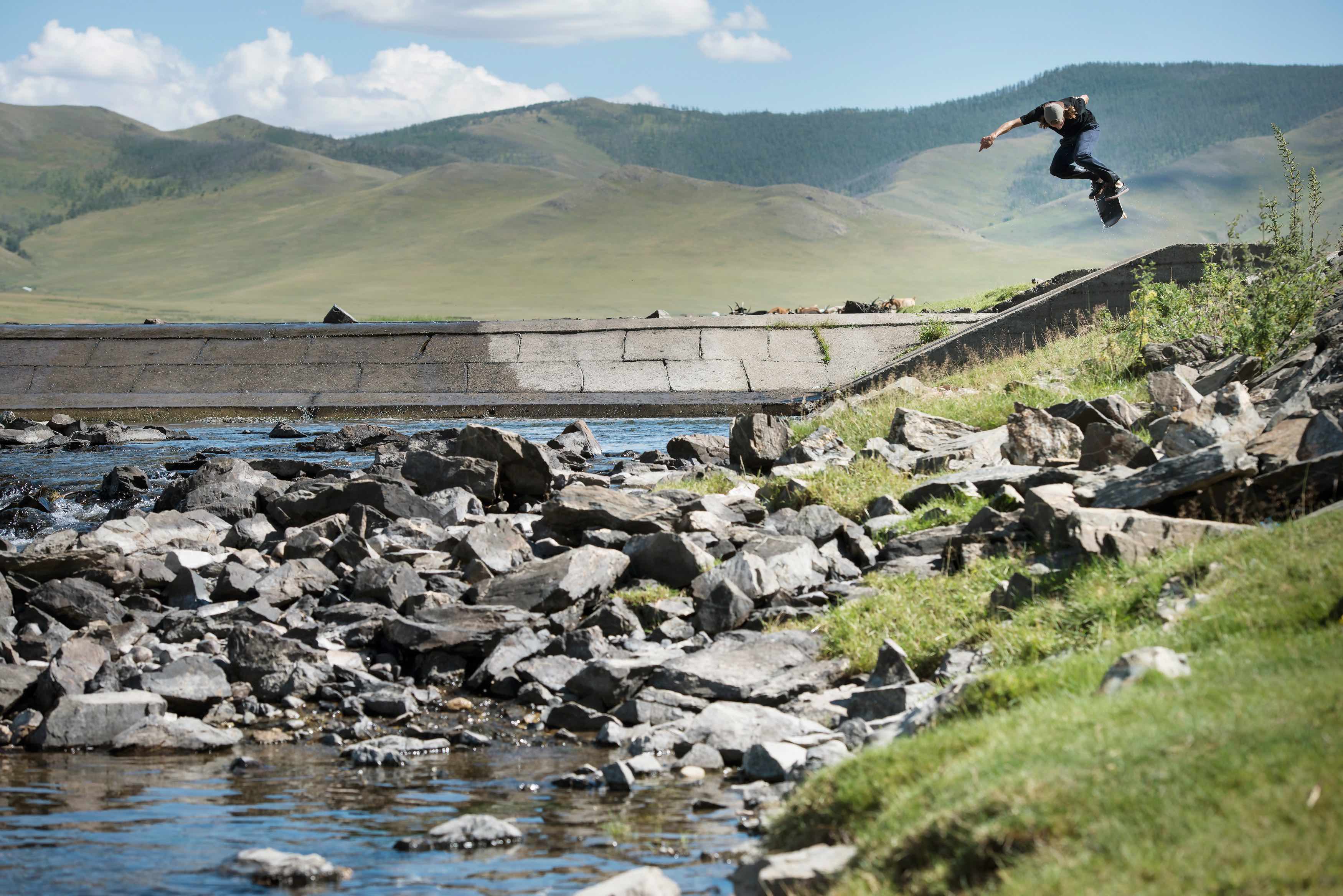
Photo by Percy Dean
As Mongolia emerges gingerly into a modern globalised world, skateboarding is one of many pieces of the puzzle as a new democratic/post-Soviet generation works out how to carve out its own distinct identity, which also respects Mongolia’s rich cultural traditions. It’s also at the heart of battles over who has space to express themselves in the anarchic development of its urban landscape and who gets a say over the path their fast-moving country takes.
From Dirt to Dust is out now, published by 19/80 Éditions and Carhartt WIP.
You might like

Nick Haymes’s intimate portrait of his family’s life
Chronograph — Over 25 years, the photographer documented his son’s lives as they grew into adults. The resulting photobook is an exploration of the passage of time, as well as the optimism of youth.
Written by: Miss Rosen

Kristina Rozhkova’s scatty, confronting portrait of captivity
Gut Feeling — The Russian artist’s 2024 arrest and subsequent detention opened her eye towards the omnipresent dynamics of power and control. Her new photobook is a stark exploration of being trapped.
Written by: Isaac Muk

UK’s first ever Latino film festival is coming to London
LoLaFF — Taking place between October 2-6, it will feature 55 filmmakers from Latin America, with an opening night at the Barbican.
Written by: Isaac Muk

Shawn Walker’s layered, psychedelic vision of Harlem’s streets
From BeBop to Illusion — Using glass as a means to illuminate the city’s different layers, the longtime photographer and filmmaker is publishing his first monograph at the age of 86.
Written by: Miss Rosen

In photos: The enduring resistance of Notting Hill Carnival
Carnival of Resistance — A new photobook by Wayne Campbell and Wayne Crichlow reflects on the protest beginnings of Europe’s biggest street festival, along with the traditions keeping its original spirit alive today.
Written by: Isaac Muk

Washing strangers’ feet at Houghton Festival
Pedilavium — As part of artist Henry Krokatsis’s performance piece at the weekender, we sat down with over 30 others to clean the dusty digits of passersby, while reflecting on the power of collective ritual and human connection.
Written by: Isaac Muk


