In Pictures: Pioneering black photography collective Kamoinge
- Text by Adam White
- Photography by Schiffer Publishing

Named after the Kenyan Gikuyu word for “a group of people working together”, Kamoinge began as a rally against the tradition of black communities being photographed exclusively by white males. A collective was quickly born, with black photographers in 1960’s Harlem banding together to empower both themselves and those within their communities – telling their own stories, as opposed to having them told for them.
Kamoinge rapidly grew, no longer exclusively driven by New York photography, but expanding into suburban communities, the deep south of the USA, the deserts of Mali and Rwanda, and other areas where black faces and culture play defining roles.
Speaking to the New York Times in 2011, Kamoinge member Russell Frederick said, “What we’re documenting isn’t just black history. It’s American history; it’s global history. It’s something that everybody needs to see. It has been about dignity. It has been about our people. It’s about capturing what has been taking place within the community and a people misunderstood.”
Now a 384-page photo book has brought together many of the images taken by the collective since their inception. Timeless: Photographs by Kamoinge exposes an underrepresented and important touchstone within art history, as well as the complex, compelling and multi-faceted nature of wider black culture over the last fifty years.

Woman Shouting by Ray Francis (1963); Courtesy Schiffer Publishing.

Untitled by Perth Amboy (2000); Courtesy Schiffer Publishing.

Dawn by Dan Dawson (1966); Courtesy Schiffer Publishing.

Women in Mourning by Beuford Smith (2000); Courtesy Schiffer Publishing.

Stars Among Stars by Radcliffe Roye (2012); Courtesy Schiffer Publishing.

Lower East Side NYC by John Henry (1960); Courtesy Schiffer Publishing.

Warmdaddy in the House of Swing by Frank Stewart (1996); Courtesy Schiffer Publishing
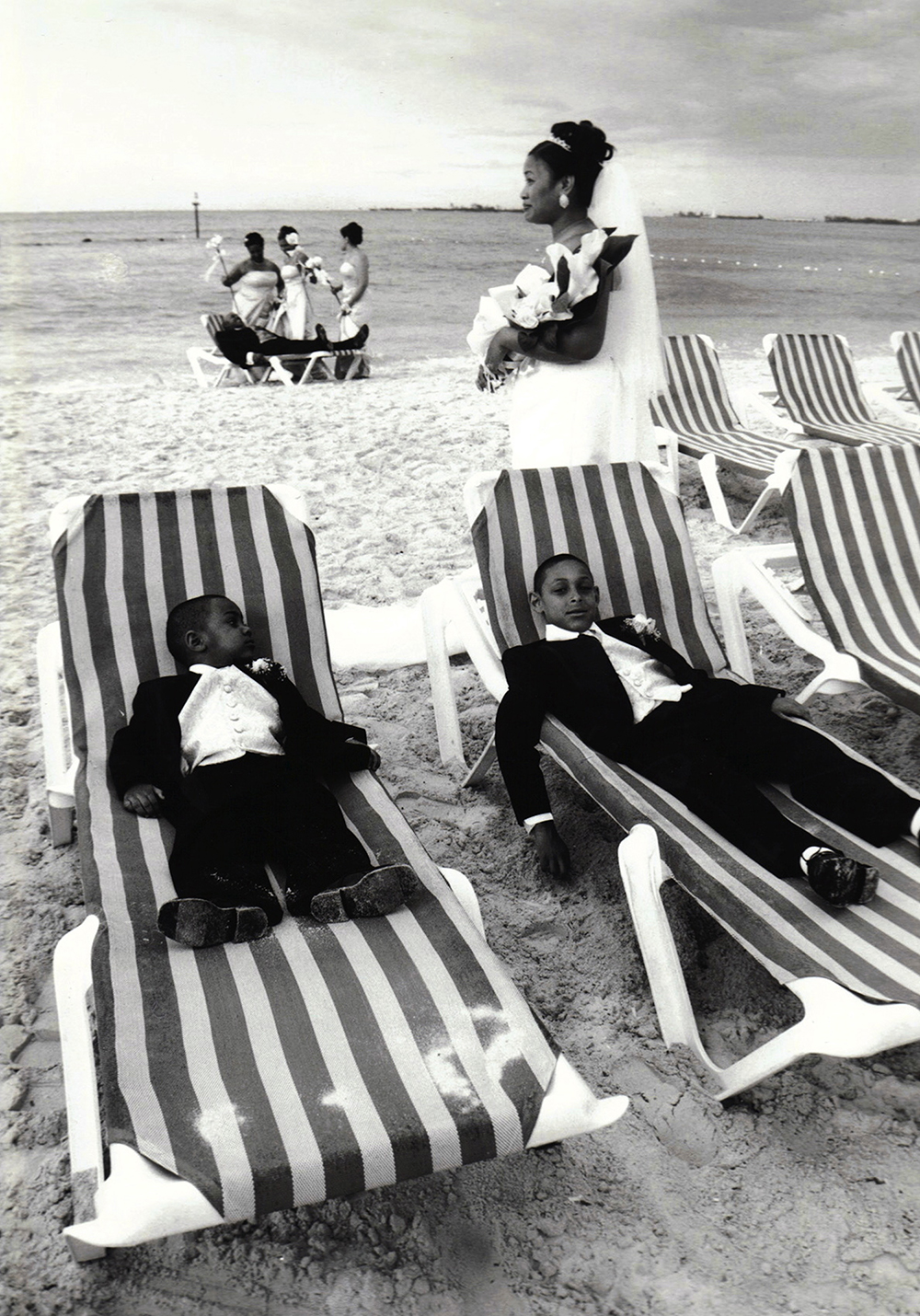
Bride on the Beach by June DeLairre Truesdale (2007); Courtesy Schiffer Publishing.

Dakar Roadside by Ming Smith (1972); Courtesy Schiffer Publishing.
Timeless: Photographs by Kamoinge is published by Schiffer Publishing, and is available from their website.
Enjoyed this article? Like Huck on Facebook or follow us on Twitter.
You might like

Landmark new exhibition is celebrating 50 years of female punk
God Save the Queens – The Museum of Youth Culture is bringing together rare photography, archive material and a one-night-only supergroup featuring members of X-Ray Spex, The Slits and The Raincoats.
Written by: Ella Glossop

Halcyon, end of summer days in ’80s Massachusetts
Bell Pond — Stephen DiRado’s new photobook is a nostalgic look at blissed out moments of young love, family and coming of age at a swimming pond in Worcester, Massachusetts.
Written by: Miss Rosen

Photographing America’s 20th century rebels
Rebels With a Cause — A new monograph looks back at Jean-Pierre Laffont’s extensive archive documenting counterculture, art, activism and more, shaping the country as it is today.
Written by: Isaac Muk

The groundbreaking photography of Gordon Parks
Voices in the Mirror — A new exhibition dives deep into the legendary lensman’s archive, who captured the Civil Rights Movement and Black America like no other.
Written by: Miss Rosen

A chaotic portrait of an ’80s American farming family
Holy Cow! — Melonie Bennett grew up on a farm in Maine in the ’80s, and documented her family’s idiosyncratic daily life. She presents those humorous, everyday memories in a new exhibition and photobook.
Written by: Miss Rosen

Nick Danziger’s striking vision of everyday British life in the ’90s
The British 1994-1999 — The renowned photojournalist returned to his birth country on the cusp of the Millennium, capturing its contradictions with humour and wit.
Written by: Miss Rosen


