
Coirón — Pie Aerts’s new photobook documents years spent in close quarters with puesteros in Patagonia – a group of aging gauchos who live almost completely isolated existences.
Pie Aerts first visited Patagonia in 2019. He had just quit his job in the Dutch corporate world, and along with his camera, Aerts travelled the entire length of the region, which stretches across Chile and Argentina at South America’s farthest tip. But among Patagonia’s vast expanses and dramatic peaks, he encountered a recurring figure who he couldn’t get out of his mind – the gaucho.
“They would emerge silently from the distance, almost like solitary silhouettes riding with cattle or alone,” Aerts remembers. “They intrigued me so I kept looking for them, but every time I found the courage to approach, they would disappear into the distance again.”
The photographer found himself particularly interested in a specific localised group of gauchos, puesteros, who live across the Greater Magallanes area at the very southernmost provinces of Patagonia. Named after their tiny workstations and homes – puestos – these often semi-nomadic animal herders and pastoralists commonly live and work without anyone else, managing huge private ranches that they do not own. Many had travelled from further north in Chile in search of gold or work between the ’50s and ’70s while they were teenagers, and ended up staying to work as ranchers.


In the 19th and 20th centuries, the area was one of the world’s most important wool factories. It saw a boom in sheep herding as the area was colonised, forcing the displacement local indigenous people from their land and genocide of their people. The puesteros often herd hundreds of sheep, cows, horses and other livestock, while protecting them from poachers and other animals. On top of that, they manage the huge estates, or estancias, which have historically been owned by a very small handful of families who are usually tied to a colonial past. As the estancias grew aggressively in this period, it led to rural workers in the area become forced into low-wage work, with no ownership of the land they tend.
“Puesteros have traditionally been marginalised and suppressed,” Aerts explains. “And they have this long history of living in complete isolation, because they have been mistreated throughout the decades by the people they work for.”
Establishing contact with them proved difficult. With puesteros often keeping no company other than their horses and dogs for several months at at a time, most were reluctant to meet with someone from the outside world. “About three to four years into the project we got to a turning point, where I felt for the first time that they were not only accepting my presence, but embracing it in a way that they could feel it was sincere,” he says. “It was almost like a friendship after being with these guys for so many years.”


The result of his years-long persistence, along with the trust and friendship he built up with the puesteros, is his debut monograph Coirón, which is published by GOST. Featuring intimate shots taken inside their private quarters, it saw Aerts be given intimate access into their lives that few others have ever seen. It makes for an evocative portrait of a lifestyle that the wider world knows little about, while also provoking a thoughtful, existential meditation on the passing of time, ageing and how living alone almost completely removed from society can shape a person.
There are shots of the puesteros at work with their horses, close-ups of the interiors and ephemera they fill their downtime with, and dramatic landscape photographs of Patagonia’s wild emptiness. It’s a portrait of life that feels removed from time, yet completely attached to it. “There’s zero distraction, which makes it much easier to just exist in the current moment,” he says. “Many of these places are completely disconnected from the internet and any form of mobile reception. Once you live it with them, you follow the sequence of each day, which is extremely similar – almost every day is the same, but you get into this surreal, almost grounding rhythm in which you just live life.”
Throughot Coirón, the photographer brings to light their stories, which are often complex and layered. As the ranchers grow older, their bodies also slowly wane, and they slowly become incapable of doing the labour-intensive work that they have for decades. While some have wives and children living in towns far away from them, who they visit after months of working the land, most do not have a family.


“None of them have a relationship and none of them have kids, apart from one in the story,” Aerts says. “So when you talk about these bigger human concepts such as ageing or retiring and the passage of time, you feel they exhibit at greater fear to retire than to die, because they are stuck in this lifestyle where there’s no provisions, no safety net and no social welfare system that catches them when they fall. So, when they are no longer able to do this backbreaking labour, no one is taking care of them.”
As such, many puesteros are hesitant to return to mainstream society when their bodies do eventually fail, where there is more infrastructure to support them. Some have small amounts of money in pension pots, but not all do. Though there are increasingly initiatives to provide them with retirement housing and care, spaces are extremely limited and can take several years to get one.
“Many are forced to move into towns and cities without any plan,” Aerts adds. “We’ve been there when one of these gentlemen who had nothing in place went to pick up his life savings and to our complete surprise he just went straight onto a bar and started drinking it.”


And among the stillness of the photos, lurking in the background is a changing Patagonia. It’s no longer the world’s main wool producing engine, and modernisation is creeping into the region, despite its remoteness. Tourism is increasingly one of rural Patagonia’s biggest areas of economic growth, which means that the majority of resources invested into the area is spent on conservation.
“It comes at the cost of these men,” says Aerts. “It comes at the cost of a culture that is not built for this crazy influx in tourism – many young kids that come from the countryside move to the city, so it really is the last generation of puesteros. At this pace they are losing the human element that makes Patagonia so special, because the focus on protecting the national parks and wildlife too much. So my hope is that it rebalances into a willingness from the government to protect that cultural identity of the region.”
Being able to capture that culture up close is an important part of that mission, but what will stay the longest with Aerts is the friendships he made. “We had the most incredible experiences of just sitting through the coldest and windiest nights, just playing cards, getting drunk, talking about life with the cameras completely off,” he continues. “Sometimes we got stuck in that rhythm for a couple of days, in which we weren’t making a story anymore – we were just living.”


Coirón by Pie Aerts is published by GOST Books.
Isaac Muk is Huck’s digital editor. Follow him on Bluesky.
Buy your copy of Huck 83 here.
Enjoyed this article? Follow Huck on Instagram and sign up to our newsletter for more from the cutting edge of sport, music and counterculture.
You might like

What life on the Strait of Hormuz is really like
Southern Winds — Bandar Abbas based photographer Morteza Niknahad has been capturing the diverse communities and stories of his local region since he first picked up a camera. His new series highlights the human impact of war.
Written by: Isaac Muk

Meet the riding clubs using horses to heal
The Outsiders Project — A growing number of stables and clubs are providing vital youth services, including equine-assisted therapies, for young people, and opening up horse-riding for all.
Written by: Shannon Mahanty

Guts, glory and goat tossing at the World Nomad Games
All eyes on Bishkek — From kok boru to eagle hunting, Kyrgyzstan’s global showcase spotlights ancient sports and celebrates local traditional culture, while also stiffening the regime’s ambitions, reports Antoine Goullin.
Written by: Antoine Goullin

Richard Avedon’s complex portrait of ageing in a disposable society
Immortal — Bringing together the legendary fashion photographer’s shots of artists, directors, musicians and more, a new photobook explores the work in his archive that interrogate, critique, and celebrate the passage of time and its effect on people.
Written by: Miss Rosen

The disappearing world of mountain farmers in the Alps
Photographer Roland Reinstadler discusses his project documenting a farming community from Northern Italy who are fighting to maintain ancestral traditions in an extreme environment.
Written by: Miss Rosen
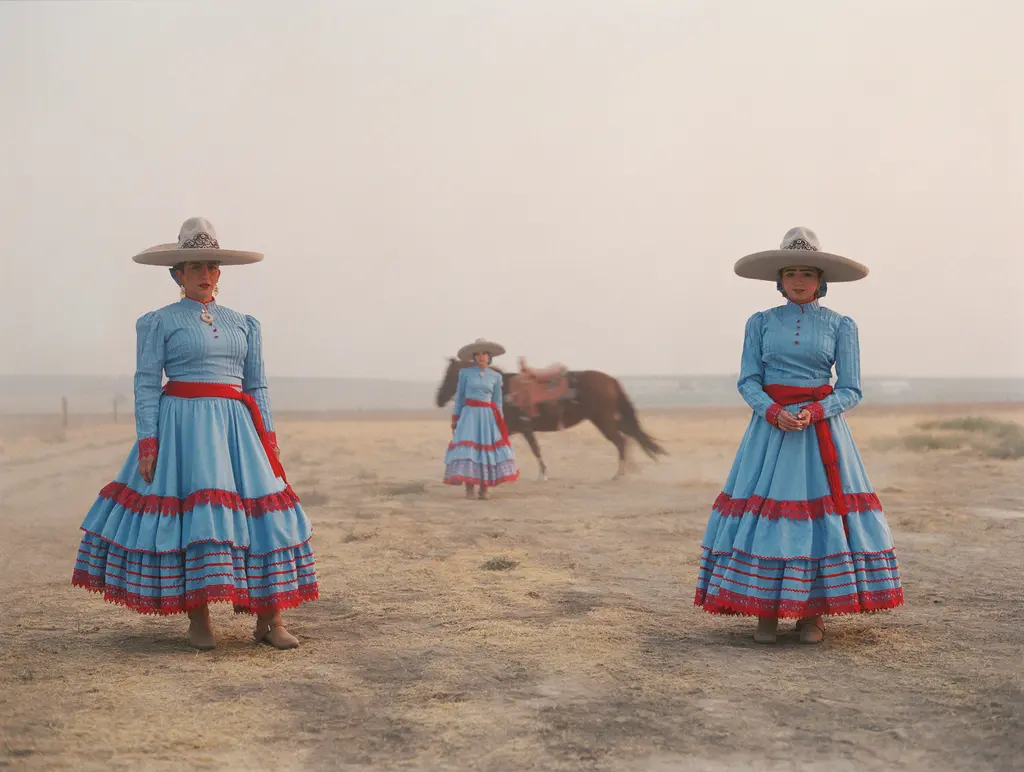
Striking portraits of side-saddled, Mexican rodeo women in the USA
Escaramuza — Photographer and competitive horse rider Constance Jaeggi travelled across America to meet and document the women taking part in charrería – Mexico’s national sport – uncovering stories of migration, culture and identity in the process.
Written by: Isaac Muk


