Southbank Activists
- Text by Bryony Beynon
- Photography by Samuel Ashley

“Bu-reau-crats.”
A boy standing no higher than my chest spits out the three syllables like a piece of discarded gum. He can’t be more than 10 years old, kitted out in beanie, shoelace belt and short trousers. He and several hundred others have just skated the best part of four miles down the middle of one of the busiest roads in London. They’re about to deliver 27,286 handwritten objection forms – which oppose the Southbank Centre’s plans to redevelop the famous Undercroft skate spot – to Lambeth Council’s planning department. His perfectly white, nearly knee-length shirt flaps in the breeze like a flag. It reads: “Long Live Southbank.”
Henry Edwards-Wood, filmmaker and de facto spokesperson for the campaign, is surveying the scene at the Lambeth Town Hall steps. We’re watching a hyped-up crowd of jubilant kids pose for cameras, decks aloft. He’s out of breath from the ride – “It’s usually short intense bursts of activity, and that was pretty long!” – but could just as easily be out of breath from the campaign itself. Monitoring the constantly changing goalposts of such a high-profile planning application is no mean feat. The Long Live Southbank (LLSB) activists have gone further by taking on the subterfuge of the Southbank Centre’s PR machine with a series of beautifully-shot campaign films called things like Revelations of A Cultural Vandal and The Bigger Picture. This no-punches-pulled approach has earned LLSB a loyal following of young people, many of whom say this is their first experience of community activism.
Reuben Russo, LLSB’s Junior Spokesman is 15 years old and appears better versed in the issues at play than many of those pushing the Festival Wing. Of course there are lawyers working on LLSB too, and having so many high-profile skaters lend support doesn’t harm the campaign’s ‘cool factor’ either. But helping out LLSB just before Christmas, I saw a willingness to volunteer in a lot of kids that stands in stark contrast to the toxic assumptions made about London’s young people, particularly in the climate of fear and suspicion post-2011 Riots.
It feels like no coincidence that we’re stood in Brixton, once such a hotbed of squats, murals and dissenting voices, now being trammelled by “redevelopment”. Everyone who passes seems to have a story to share, as though the sight of a crowd of gleeful, energised young people has stirred something in the collective memory on a dull January day. One man spontaneously tells me the story of his sudden redundancy due to the office he works in “turning into flats”, as though the building themselves were shape-shifting mutants undergoing that grim metamorphosis from public into private. For a few minutes we stand together in silence, watching the crowd of teenagers lift their heavy boxes of signatures to waves of cheers.
Henry points to the swarm on the steps. “And they say kids don’t care about politics!” He’s got a point. In the case of the Festival Wing plans, the raw passion of anyone under thirty seems to be a close-to-worthless currency, unless it’s amenable to being sculpted into a useful engagement statistic for a management report. The Southbank Centre has made many public moves to consult young people on their views for the new Festival Wing plans – which they say they must redevelop into commercial units in order to pay for ongoing arts and cultural activity (due to public funding cuts) – but LLSB feel the moves are tokenistic and any plans for relocation (Southbank Centre have also offered to relocate the skate spot to another location down the river) miss the point completely. This is a battle for more democracy in public planning and LLSB feel that the voice of young people is not being taken seriously.
Government policy is actively hostile towards young people: they’re alienated by reductive acronyms like ‘NEETs’ (a young person, according to the Government, who is Not in Education, Employment or Training); patronised by the cringey ‘hug a hoodie’ rhetoric; and at the mercy of propositions for ‘super-ASBOs’ that would allow for the arrest of children as young at 10 years old. Not to mention the recent announcement that under-25s will no longer be able to claim housing or unemployment benefit from 2015. Direct action in the face of this hostility goes unreported too often – thousands of the feet on the street during the student protests of 2010 belonged to college students and teenagers outraged at the scrapping of EMA (Education Maintenance Allowance).
One of the abiding slogans of the campaign has been “Politically Active Young People”. Linking the actions of young skaters hell-bent on preserving their cultural inheritance to other wider social issues is a very shrewd move. It rightly situates the campaign within the debate about the last vestiges of public space in the city. That game of carving up and selling off is, of course, Boris Johnson’s favourite, which makes his recent clambering aboard the LLSB bandwagon all the more bizarre, but it is nothing if not a very clear demonstration of how close the moral argument is to being won. Let’s hope the energy of this next generation blossoms further, and that they’re reminded at every step that men like Boris can be useful, but people in positions of power should always be questioned and challenged. You don’t need to be able to quote Marx to bring practical energy to other struggles, like housing, which involves similar hand-to-hand combat with developers and councils. With that kind of intergenerational solidarity going on, who knows what would be possible?
***
Later on at Lambeth Town Hall, an old gent in a battered suit approaches us amid the meleé, wanting to know what the fuss is about. Henry begins to reel off a word-perfect summary of what’s happening, but before he can finish he’s cut off by the old man’s slow, croaky yet persistent voice:
“Ah,” he says. “Bu-reau-crats.”
You can find out more about the contentious plans for the redevelopment of the Undercroft on the LLSB website and the Southbank Festival Wing website.
Bryony Beynon is a London-based writer and activist who heads up social projects like Hollaback London, targeting street harassment and DIY Space For London, an organisation aiming to provide a non-profit venue for bands and other cultural activity in the city.
You might like
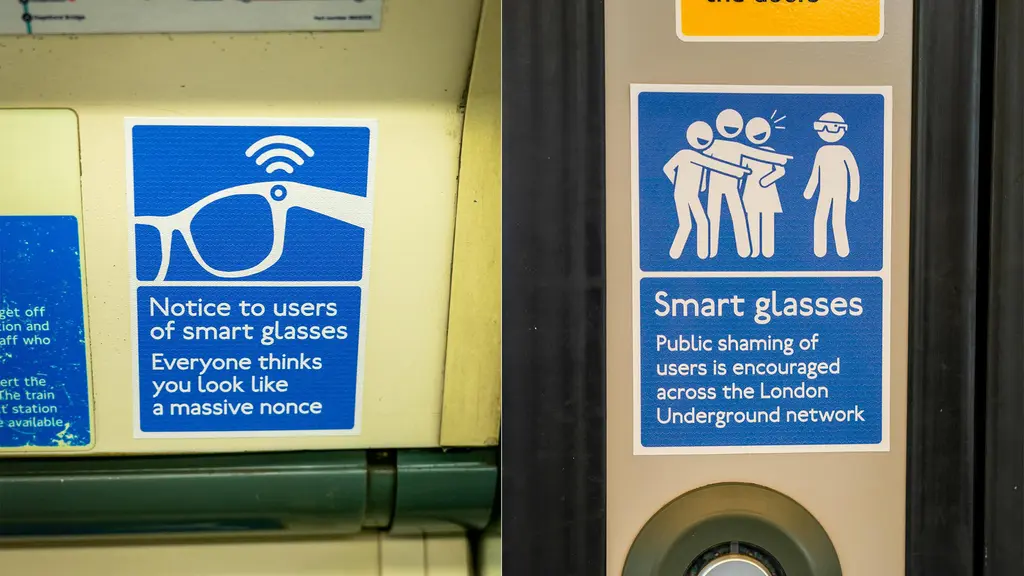
Activists slam “pervert glasses” in new guerrilla campaign
Everyone Hates Elon — Stickers have appeared on the London Underground network, criticising the wearable technology’s covert filming capabilities.
Written by: Isaac Muk

Behind the curtain at Alternative Miss World 1981
Olympia glamour — Running a subversive take on the traditional beauty pageant, the Andrew Logan organised event prioritised underground creativity and invention. Photographer David Corio went behind the scenes at its biggest edition.
Written by: Miss Rosen

Dan Lacey: “BMX is forever evolving”
Overground — Steph Pomphrey caught up with the two-wheel legend after his latest meet in east London, chatting about fatherhood, music and action sports within the outdoor industry.
Written by: Steph Pomphrey

The battle for the soul of lockpicking
Under locksport and key — In recent years, breaking locks for fun has grown from a niche hobby into an activity followed by millions of people. As it has matured, so have tensions over who sets the rules.
Written by: Jack Dennison-Thompson

New exhibition highlights British radical living over 200 years
Earthly Paradise — Taking place at the William Morris Gallery, it explores the homes and lives of artists, writers, musicians and more, as well as the conditions that allowed them to thrive.
Written by: Isaac Muk

Pink Floyd’s Roger Waters joins team of new Palestinian resistance documentary
Freedom Theatre — Directed by Rishi Pelham, the film spotlights a theatre operating in the Jenin refugee camp.
Written by: Ella Glossop


