Syd Shelton on capturing the theatre of the street
- Text by Miss Rosen
- Photography by Syd Shelton

While making what he describes as “very ivory tower type, abstract paintings” in the vein of Bridget Riley, British photographer Syd Shelton had an epiphany. “It had no relation to my views of the world,” he says. “I was quite radical and an activist, and very abstract paintings had no real means of expression.”
It was this realisation in the early 1970s which prompted Shelton to turn photography. Over the past five decades, he has traveled the world, photographing people he encountered along the way. In the new book, Street Portraits 2 (Café Royal Books), Shelton looks back at some of his favourites.
“I’ve always loved the idea of using the street as a studio,” he says. “There’s a conversation between you and the person you’re photographing. It’s not just a question of looking and grabbing. There is a real relationship and an implicit trust.”

Campaigner fighting to save the Sydney suberb of Wooloomooloo, 1976
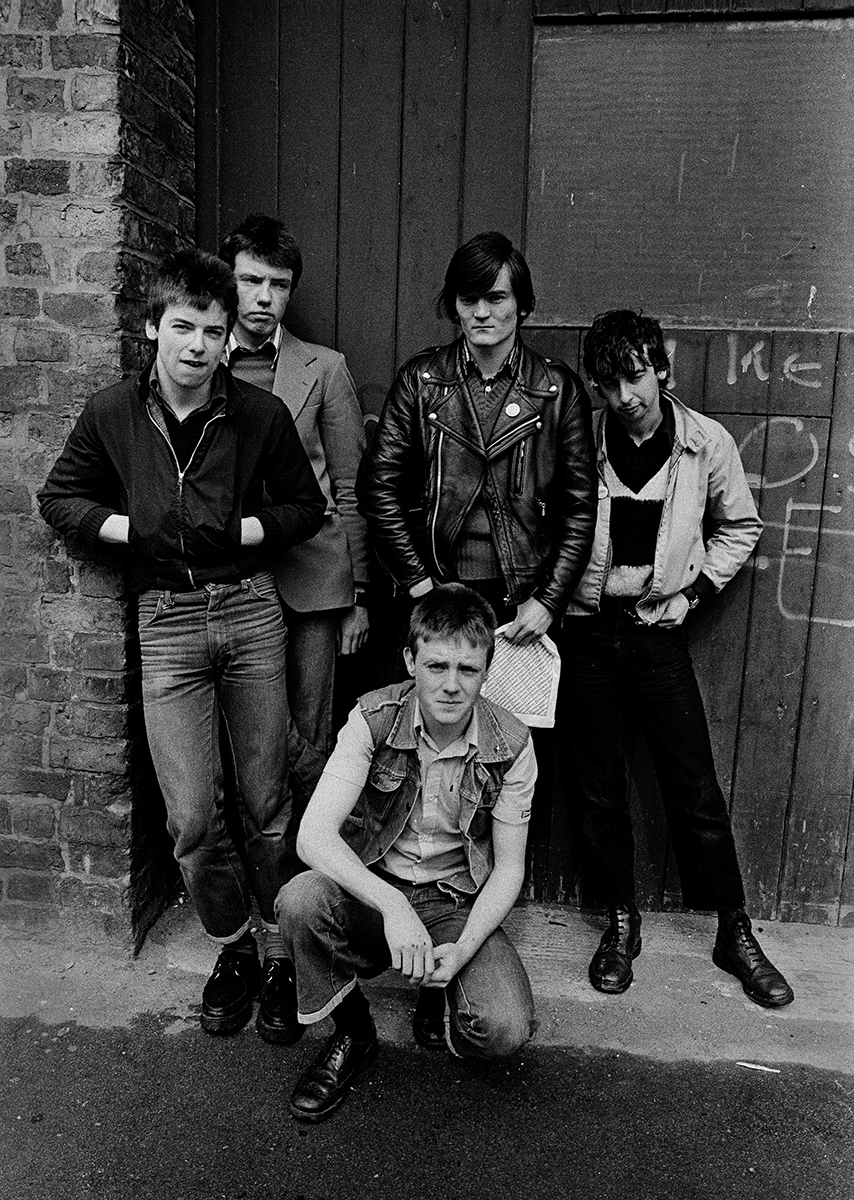
The Undertones, Chester 1981
Shelton developed this technique in 1973, while photographing the people of the Redfern, an inner-city suburb of Sydney that became the first land settlement between the Aboriginal Movement and the Australian government. “That’s when I became interested in portraiture and started making my living as a photographer,” Shelton says.
In 1976, Shelton returned to the UK and quickly got involved in Rock Against Racism: a political and cultural movement organised in response to rise of the far-right and the National Front. Over the next five years, Shelton would be at the frontline making street portraits and documenting events and protests, such as the Battle of Lewisham in 1977.

Tulse Hill Comprehensive School Brixton, London 1977
At the same time, Shelton could be found practicing street portraiture in a little alley underneath a railway arch in East London. “It was a shallow theatrical space and I used to call it my studio because I’d take so many people there to photograph,” he says. “The light was magic.”
Working on film, Shelton had to be economical and learned to wait for the photograph to reveal itself. Shelton points to the photo of Linda in the white shoes and says, “I was with her for ages before the camera came out. We talked to each other and started to get real images that were not self-conscious.
“Sometimes the first photograph you take is exactly right and the person gives you something of themselves without even realising it. It’s never the same thing twice. Sometimes you take a long time to get pictures, and sometimes you don’t get any.”
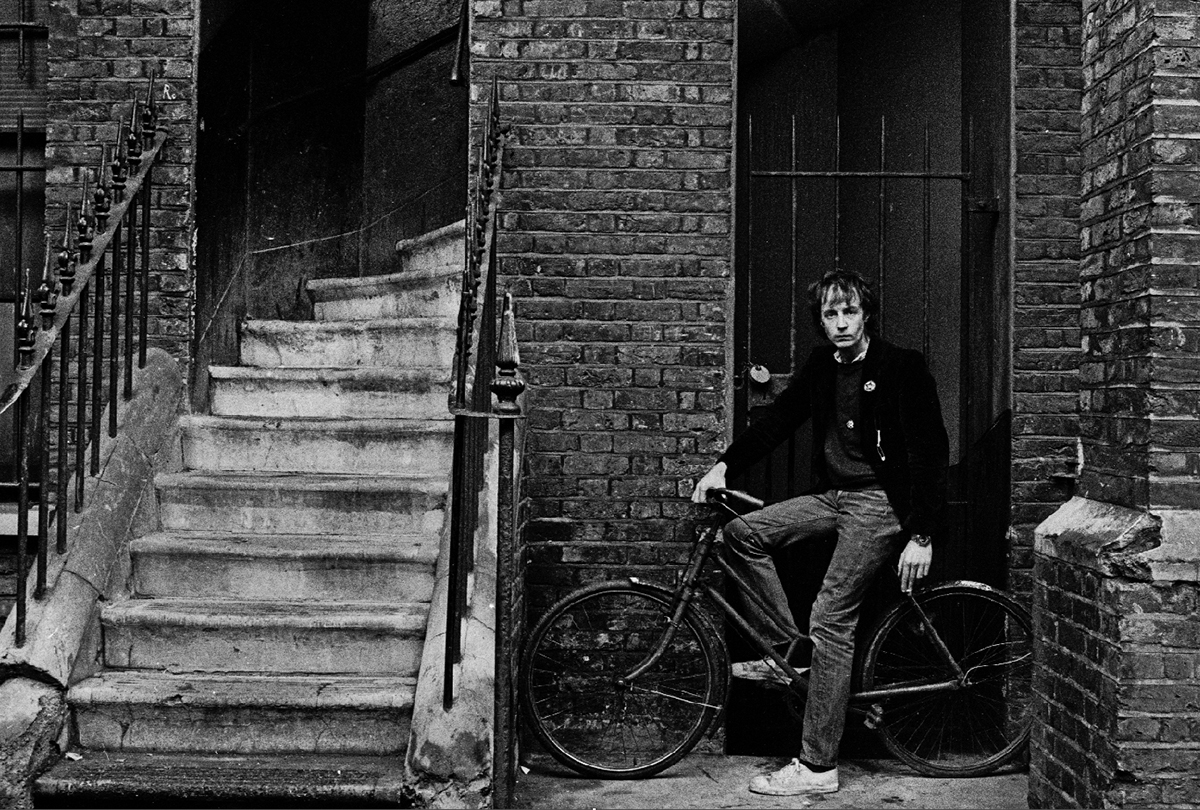
Self portrait in Charing Cross Road, London 1978
Shelton remembers the times spent pounding the streets of East London for hours on end, looking for people to photograph. “I would walk through Globe Town, which is mostly council housing estates I found a space with graffiti and it was like a backdrop,” he says.
“Just by chance, this young guy wearing a mask came along and I asked if we could do some pictures in the alcove. He was only 14 or 15, and he never told me anything about himself other than he was going home from school,” Shelton says. “He never took his mask off. And still we could relate to each other.”

Globe Town in the days of the Virus, East London 2021

Linda, Hare Row, East London

Housing Campaigner, Brick Lane Estate, East London
Street Portraits 2 is out now on Café Royal Books.
Follow Miss Rosen on Twitter.
Enjoyed this article? Like Huck on Facebook or follow us on Twitter.
You might like

In photos: Black Texas life since emancipation
Kinship & Community — A new photobook and exhibition showcases the rich culture, history and community of African American folks in the Lone Star State, whose existence in the region predates colonial Britain.
Written by: Miss Rosen

London’s largest indoor skatepark to be demolished for padel courts
Better Extreme — The Barking skatepark’s fate follows that of similar indoor spaces in recent years, with operators GLL citing falling visitor numbers as the reason behind the decision.
Written by: Isaac Muk

Youthful joy & end-of-era poignancy at a London school prom
Leavers — For several years, Lewis Khan documented young people as they celebrated the last of their school days and the completion of their exams. The series is now collated in a new self-published photobook and short film.
Written by: Zoe Whitfield

Harry Gruyaert’s vintage, kaleidoscopic scenes of New York
A Sense of Place — For 50 years, the Belgian photographer and Magnum Photos member has been capturing NYC’s colourful chaos. A new photobook and exhibition showcase his unique, technicolour view of the city.
Written by: Miss Rosen

In the pit at one of the UK’s last stock car & banger speedways
Stock Car Racing Isn’t Dead — Photographer Liam McCarthy spent time in and around the Arlington Raceway’s circuit, capturing the diehard community that keeps the sport alive.
Written by: Isaac Muk

Inside Lower Duck Pond, the nicest town on the internet
/r/HaveWeMet — With a population of 2,500 and no fixed location, the subreddit is a space for roleplaying citizens to solve mysteries, host fictional events and ultimately connect. In an internet that’s often divided and toxic, Vicky Jessop hangs out in one of its most wholesome corners.
Written by: Vicky Jessop


