
Tell Spring Not to Come This Year

Saeed Taji Farouky’s recently completed documentary Tell Spring Not to Come This Year is screening on Saturday and Tuesday at the Sheffield Doc Fest.
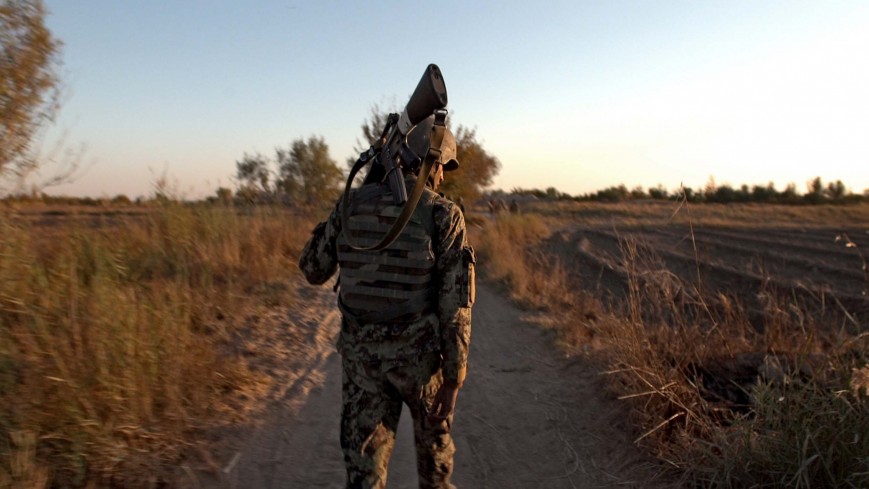
The film, which follows one unit of the Afghan National Army for one year, finally tells the story of the war from the perspective of Afghan nationals who have chosen to fight the Taliban and other perceived enemies.
We caught up with the director in advance of the film’s UK premier.
How did the idea for the documentary come about?
I always try to look at the major, generation-defining news stories and find the perspective that we’re not seeing. In our era of perverse “preventative wars” and “wars for peace”, that untold story is usually the perspective of the people under attack, the people that The West has decided to go to war with. Our exposure to the experiences of the people of Iraq and Afghanistan during these wars has been so minimal it’s obscene, so it was clear to me that I should make a film about the people of Afghanistan. But for years I didn’t know how to tell that story in a different way. Then, out of nowhere, Mike McEvoy contacted me through a mutual friend to say he had an idea for a film. His email to his friend asked “do you know anyone who can make this film who doesn’t mind being shot at?” and that was our introduction.
How easy was it to get access to the Afghan army unit upon which you focus?
Mike had worked with this unit of the Afghan army for 9 months as a liaison officer with the British military. So when we went to apply for embed permission, Mike already had a very good relationship with both the Afghan MoD, and the soldiers we filmed. That relationship was everything, because without it there’s no way we would have been given an unprecedented embed permission to film anything we wanted over a period of one year, and there’s no way all those soldiers would have trusted us to film with them. Having said that, we were still test-running a brand new system of embedding. We were one of the first projects – and so far the only feature documentary – to apply to film directly and only with the Afghan army. Even after we had permission from the Afghan MoD, the US troops we met routinely had no idea who we were, where we came from, or what we were doing there. We were an unknown, and often suspect, entity to them.
Why do you think an ‘inside story’ like this has not surfaced in the mainstream media until now?
There are a few reasons. The main reason is probably the fact that the ANA doesn’t have a very good reputation with foreigners, overall, so it’s considered a much more dangerous embed to film with only Afghan troops. They aren’t as well trained or armed, and don’t have the same medical facilities that UK or US troops have. Second, most foreign journalists I spoke to before filming were terrified of “insider attacks.” Yes, this is an issue, but from my experience I’d say the threat to journalists was massively overestimated, and was often self-perpetuating. Finally, I think the majority of foreign journalists simply aren’t interested in the experiences of Afghans in this war. If they work for massive news corporations, they also don’t have the time or resources to challenge the momentum of war reporting, which is almost always done within a narrative of heroism and sacrifice on the part of the invader.
What is your prognosis for the future of Afghanistan, based on your time there on the ground?
I’m no expert, but from my amateur perspective I don’t think the insurgency will be beaten militarily. It’s an ideology and unfortunately NATO troops trained the ANA to fight a traditional war for territory. The Taliban doesn’t function like that. If I had to make a guess, I’d say the war will continue looking like it does for several years until an Afghan President emerges who has the strength to say Afghanistan is fighting the wrong war. Secret negotiations with more moderate elements of the Taliban will probably continue at the same time, while the extreme elements continue to challenge the government violently. I suspect eventually the mainstream Afghan Taliban will be seduced into the political process but an extreme element will always exist. This isn’t an untenable situation, after all it’s very similar to what we see in Northern Ireland today. The most important thing now is to reduce the overall level of violence for the ordinary Afghan civilian.
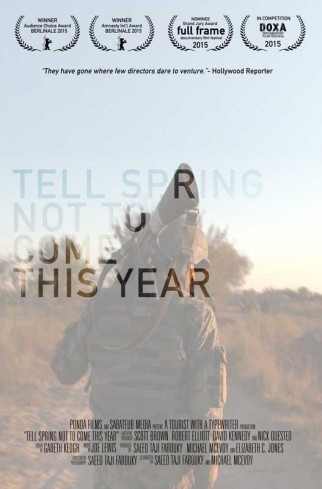
The film premiered recently at the 2015 Berlinale in the Panorama section and went on to win both the Audience Choice Award for Panorama, and the Amnesty International Human Rights Film Award. The film screens on June 6th at 15:30 and June 9th at 17:45.
Full Docfest Details Here
Here’s the trailer.
You might like

Exploring girlhood and land ancestry in Sudan’s cotton fields
Cotton Queen – A new feature debut from filmmaker Suzannah Mirghani explores the legacy of colonialism and the fight for self-determination through the tender eyes of a teenage girl.

Pink Floyd’s Roger Waters joins team of new Palestinian resistance documentary
Freedom Theatre — Directed by Rishi Pelham, the film spotlights a theatre operating in the Jenin refugee camp.

UK’s first ever Latino film festival is coming to London
LoLaFF — Taking place between October 2-6, it will feature 55 filmmakers from Latin America, with an opening night at the Barbican.

Youthful joy & end-of-era poignancy at a London school prom
Leavers — For several years, Lewis Khan documented young people as they celebrated the last of their school days and the completion of their exams. The series is now collated in a new self-published photobook and short film.

A major Nan Goldin exhibition is coming to London
You Never Did Anything Wrong — Opening at the Hayward Gallery in November, the show will debut a new film from the artist and activist, alongside a slate of recent work.

Rab’s adventures on film at Love Trails Festival
Adventure Film Night — Taking place between July 2-6, Rab are screening six documentaries at the festival that explore the remarkable world of the adventure sport community.


