Telling the untold stories of the Boston Marathon bombing
- Text by Lars Hamer, Cian Traynor
- Photography by Boston Theater Company
- Illustrations by Dylan O'Down

Finish Line is a documentary-style play telling stories of bravery, resilience and recovery surrounding the 2013 Boston Marathon bombing.
Rather than re-create the event or focus on the Tsarnaev brothers, who were responsible for the attack, co-creators Joey Frangieh and Lisa Rafferty decided to hone in on those who gained strength from the tragedy.
Specifically, they wanted to share the stories of those who ran 26.2 miles, turned around and ran back to save the lives of others.
The duo enlisted the help of volunteers to conduct interviews in order to paint a comprehensive picture of how the tragedy affected people.
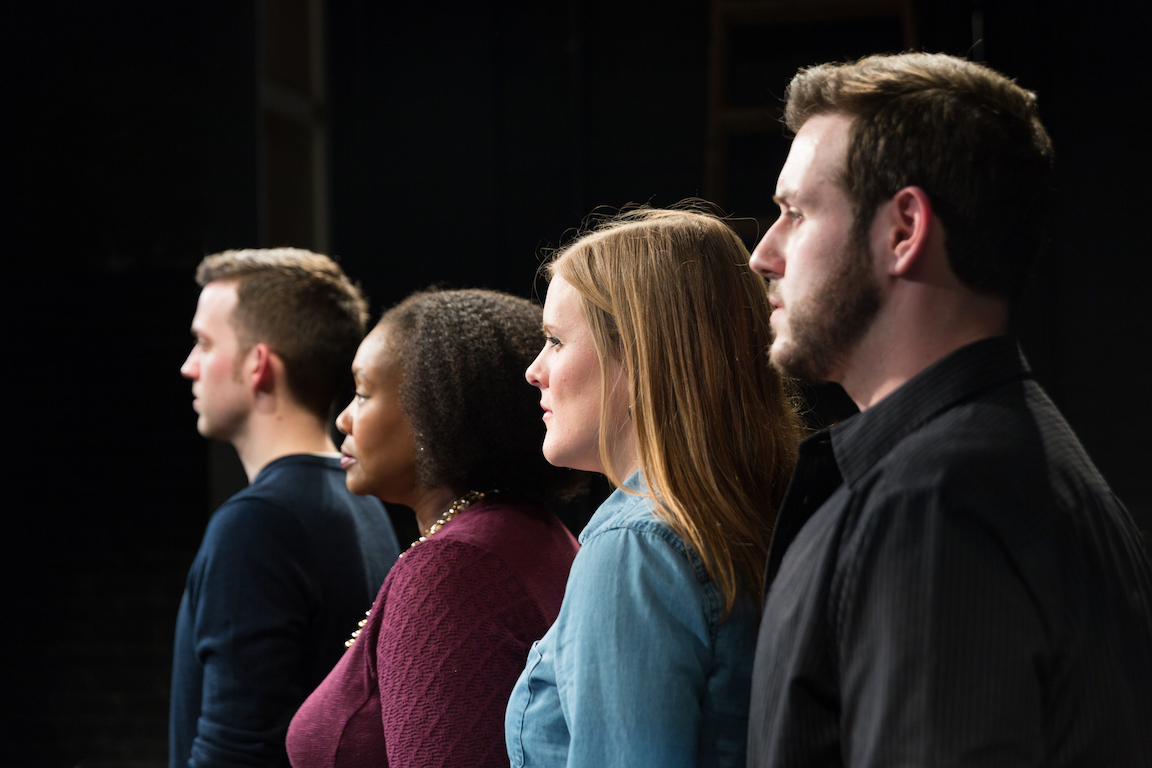
Actors rehearsing Finish Line
Where possible, survivors would interview other survivors so that the end result feels like a production made by the community for the community.
Produced by the Boston Theater Company, the play begins on the day of the bombings and ends at the marathon finish line one year later.
The show’s 10 actors studied audio of the interviews so that every line, pause and emphasis remains true to the source material.
Joey Frangieh, artistic director of the production company, took a break from a run of preview performances at Boston’s NonProfit Center to talk about pulling it all together.
Why did you decide to use theatre to tell this story?
There is something raw, real and dangerous about live theatre. There is no art form more personal than actor-to-audience, human-to-human. To see a tangible, living, breathing person performing is the most real form of art. In a live performance, what you see is what you get. If an actor forgets a line, trips, burbs… it’s all right in front of you.
What does the play set out to achieve?
The bombings were a horrific act and 15 April, 2013 will go down in history as an awful, awful day. But the community that came together to support those affected and the bravery of so many first responders was, and continues to be, inspiring.
Finish Line is being is told through the exact words of runners, EMTs, police officers, doctors, nurses, spectators, clergy, students and many others who were impacted, directly or indirectly.
This is not my story we are telling. It is the story of the 26,000 runners who entered a race in 2013. It is the story of the 500,000 spectators, the 646,000 Bostonians, the 6.7 million people living in Massachusetts, and the 318 million people who live in the United States. It is the story of a city, a state and a country that didn’t allow an act of violence to define it.
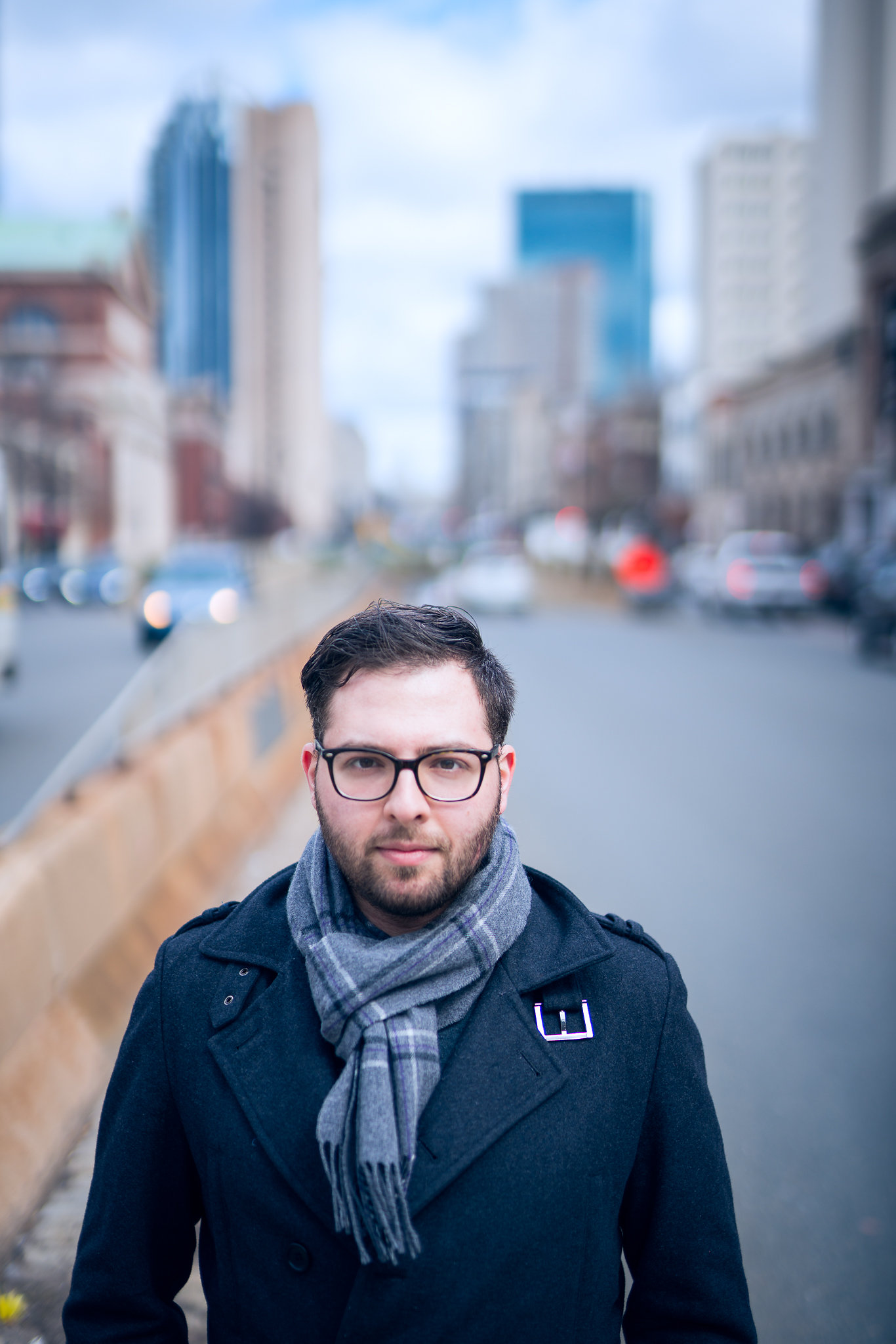
Co-creator Joey Frangieh
What was it like combing through all the interview material?
Very inspiring. At times, it is difficult to listen to the interview material because they are so emotional. But we have all been continuously inspired by all these stories. I often find myself sitting down to work for a few hours on the Finish Line script and all of a sudden, I realize it has been something crazy like 10 hours.
How easy or difficult was it to hone in on the moments you would use?
This was the most difficult part of the process. We have 88 interviews ranging from 20 minutes to an hour. If we used all of them, the play would be over 40 hours long. Although only about 30 interviews are depicted in the show, all 88 impacted the script.
What most surprised you in the process of piecing together all these perspectives?
A handful of people who shared their stories with us have said, “Thank you.” Which has been incredibly humbling. They thank us for creating a platform for their stories to be heard, but we are so thankful and in debt to them for sharing their stories with us!
Would you like to see more art explore the aftermath and reaction to disasters? If so, in what mediums and where?
I started BTC to give a voice to those who aren’t always heard, to highlight stories and themes that represent what is at the core of the human condition and to encourage audiences to question. I fully support art as a form of coping with disasters.
Why did you decide not to recreate the bombings?
There will always be crazy terrorists who want to watch the world burn. We have no interest in promoting them or the things that they do. The goal of Finish Line is to provide a platform to showcase powerful stories of resilience, fierce determination and bravery.
What do you want people to take away from the show?
The show is about a community that refused to allow an act of violence to define itself. It mirrors a society that said, ‘You can kill us, but you can never kill our spirit.’ We all hope that people leave with a feeling that love is in fact stronger than hate.
Finish Line: The Untold Stories of the 2013 Boston Marathon is holding previews until 23 April before making its world premiere in 2017.
Check out the Boston Theater Company‘s official site for more information.
Feature illustration by Dylan O’Dowd, licensed under Creative Commons.
Enjoyed this article? Like Huck on Facebook or follow us on Twitter.
You might like

Jesse Glazzard’s messy portrait of queer friends, lovers and chosen family
The Sound of Dirt and Beauty — The photographer’s debut monograph explores tender, unpolished moments shaped by the people who he surrounds himself with, while offering a window into the UK’s working-class LGBTQ+ community.
Written by: Sunny Sunday

Behind the curtain at Alternative Miss World 1981
Olympia glamour — Running a subversive take on the traditional beauty pageant, the Andrew Logan organised event prioritised underground creativity and invention. Photographer David Corio went behind the scenes at its biggest edition.
Written by: Miss Rosen

What life on the Strait of Hormuz is really like
Southern Winds — Bandar Abbas based photographer Morteza Niknahad has been capturing the diverse communities and stories of his local region since he first picked up a camera. His new series highlights the human impact of war.
Written by: Isaac Muk

Nick Haymes’s intimate portrait of his family’s life
Chronograph — Over 25 years, the photographer documented his son’s lives as they grew into adults. The resulting photobook is an exploration of the passage of time, as well as the optimism of youth.
Written by: Miss Rosen

Kristina Rozhkova’s scatty, confronting portrait of captivity
Gut Feeling — The Russian artist’s 2024 arrest and subsequent detention opened her eye towards the omnipresent dynamics of power and control. Her new photobook is a stark exploration of being trapped.
Written by: Isaac Muk

UK’s first ever Latino film festival is coming to London
LoLaFF — Taking place between October 2-6, it will feature 55 filmmakers from Latin America, with an opening night at the Barbican.
Written by: Isaac Muk


