The fight for long Covid to be recognised as a disability
- Text by Samantha HuiQi Yow
- Illustrations by Angelina Bambina

One afternoon in April 2020, as the world was in a frenzy trying to cope with what was quickly shaping up to be a global crisis, Lucy Bailey was on the phone with her then-work manager when she felt a headache coming out of nowhere. “All of a sudden, I couldn’t make sense of what I was saying and what she was saying,” she recalls.
The host of symptoms that followed – fatigue, breathlessness, chest pains – made it clear it wasn’t the usual flu she was down with. But the general sentiment then was optimistic and somewhat reassuring for the 32-year-old: if you’re young and healthy, the worst of a Covid-19 infection should blow over in a few weeks. So Lucy wasn’t too worried. Instead, she took some time off work and waited to feel like herself again.
Two years on, and Lucy is still waiting. In the time that has passed, she’s had to leave a job she loved in the charity sector as she was no longer able to cope with the fast-paced demands. At her lowest ebb, she was largely housebound.
She is far from the only one wondering when – and if – normalcy will return. In the UK, an estimated 1.8 million people, or two per cent of the population, report experiencing symptoms that have persisted past four weeks since contracting the virus, a condition now termed ‘long Covid’. Of these, nearly 250,000 respondents say their ability to carry out day-to-day activities has been limited by “a lot”. While the common indicators of long Covid are poor memory and concentration, extreme tiredness and shortness of breath, one study identified more than 200 symptoms across ten organ systems.
In March 2022, the All-Party Parliamentary Group on Coronavirus urged the UK government to commit more money towards studying treatments for the condition, calling the current funding pot insufficient. The limited funding means endless questions continue to circle about long Covid: will sufferers get better? What are the long-term repercussions? Are there treatments that can help? What is the way forward? But answers have been scarce, much to the frustration of long-haulers who often feel like they’re screaming into the void.
In mid-2020, national conversations centred around acute infections and overlooked the longer-term effects that many were already feeling. This lack of recognition led to the formation of Long Covid SOS – an advocacy group campaigning on behalf of the “thousands of forgotten victims” who “feel abandoned” – a figure that has only grown considerably since. Their collective effort led to a film spotlighting sufferers and an open letter addressed to the government.
Both managed to draw the attention of the public, as well as that of some policymakers, the National Health Service (NHS) and the World Health Organisation. But much more remains to be done. Despite being run by a small number of people, Long Covid SOS has taken on the task as best as they can: conducting surveys, contributing to studies and working on forming a charity arm to help people more directly, to name a few.
Whoa—@bankofengland just warned that deep concern of surging #LongCovid is taking workers out of the workforce. The spike ⬆️ in workers age 16-64 who do not work because of long term illness during the #COVID pandemic is alarming, and fast increasing. Mass infection depravity.🧵 pic.twitter.com/IN1LrAvNQA
— Eric Feigl-Ding (@DrEricDing) May 17, 2022
“There are many who are severely disabled by [long Covid] and who’ll need the most support,” Ondine Sherwood, a founding member of the group, says. “People have lost their jobs, their livelihoods and in some cases, their accommodation.”
Ondine raises the Personal Independence Payment (PIP) benefit as a scheme that can help. Under PIP, those with a long-term illness, mental health condition or disability can claim financial support to mitigate living costs. According to the Department for Work and Pensions, there are 2.9 million claimants across the UK. Yet, only 850 have long Covid listed as their main disabling condition. “If long Covid was [more] recognised as a disability, that will help with the [claiming of] benefits,” she says.
Until then, applying for PIP remains a tiring process. “Most long-haulers are not successful in their application and are treated with suspicion,” Laura (who asked to keep her surname hidden), 30, who worked as a full-time civil servant prior to her infection in September 2020, says. “I couldn’t put myself through that – cognitively or emotionally.”
For Lucy, the financial impact of long Covid is something she’s unfortunately familiar with. After leaving her job, she struggled to find another role that’d accommodate her new normal. “I was terrified about the money,” she says. “I wasn’t sure how I’d cope financially. I put a lot of pressure on myself.”
While she was successful in applying for financial help under the Employment and Support Allowance (ESA), her situation was still a challenge. “[ESA] didn’t even cover my rent,” Lucy writes. “Disability benefits are not enough to live on… But that shouldn’t be news to anyone.”
What did help was SCOPE’s Support to Work programme, which offers CV and cover letter advice and teaches interview skills. More importantly, Lucy adds that they “talk you through your rights, reasonable adjustments, what you can ask your employer for and how to do it”. With the help of the programme, she found a part-time job that has been both flexible and supportive.
The lived experiences of these long-haulers make clear that the condition can take an extreme physical toll, making work flexibility all the more necessary. “I was exercising daily with ease but now I get breathless trying to walk up the stairs,” Laura says. “My stamina for thinking, talking and screen time is also very limited.” The worst has been dealing with Post-Exertional Symptom Exacerbation, which is the worsening of symptoms triggered by exertions, occurring usually 24 to 72 hours after an activity. As a result, her life now requires “a strict and measured routine”.
Mentally, it can be equally, if not more, crushing. Natalie Holroyd, a scientist, was training for the annual London marathon when she tested positive during the first wave. Months later, the avid runner still wasn’t able to pick up where she left off. “[Long Covid] stole the most important things from my life,” she says. Not being able to run and work, two passion areas, “took away what gives [her] a sense of achievement and a sense of self-esteem”.
Like many, Natalie’s road to recovery has been complicated by multiple relapses. “I’d start to feel a lot better, then go back to work or exercise, then develop symptoms again, and think I must’ve caught Covid once more,” she says. “That kept happening for the best part of two years.”
Around the world, researchers are seeking the answers long-haulers have long demanded. One recent study wants to identify potential treatments, an area fraught with confusion. It’s a starting point, says University of Birmingham research fellow Anuradhaa Subramanian, who worked on the study.
This thread describes several of our concerns about the impacts of #COVID
🔸risk of cardiovascular damage
🔸limited availability of appropriate diagnostics
🔸 risk posed by repeat infections
🔸non-specific symptoms being ignored
🔸therapeutic options not taken up#LongCovid https://t.co/R70khWOlmX— LongCovidSOS (@LongCovidSOS) May 18, 2022
“It’s safe to say that our remit of knowledge is very limited and we’re only at the beginning of our understanding,” she concedes. But with each new discovery, they’re broadening the scope. In this case, the research identified new symptoms, like hair loss and sexual dysfunction, associated with the condition. “It’s important to understand that the extent and breadth of long Covid are more than the ones commonly reported,” Anuradhaa says, adding that although she and the team have been fortunate enough to obtain funding for the study, it’s overall an obstacle in long Covid research.
While frustrated, some long-haulers, like Ondine, understand that there’s no quick fix. “Once you start working with institutions like the NHS, you begin to realise and understand why it’s not so easy to just wave a magic wand and make everything work,” she says. But considering that people’s lives – physically, mentally, financially and more – are at stake, the urgency stands. “There’s a lot more money that needs to be spent on this because at the moment, there simply isn’t the funding available to help people.”
Two years after contracting Covid-19, Natalie, together with her husband, completed the 45-km Tongariro Northern Circuit in New Zealand. “I’m doing remarkably better than I was even a few months ago,” she says, crediting the long Covid clinic at Whittington Hospital, and a breathing and wellbeing programme run by the English National Opera. Like others managing their recovery not just from long Covid, but chronic illnesses in general, she’s pacing. “It’s a promising start… But I know I’ve to take it easy. I’ve to not get overexcited because my instinct is to jump right back into everything I’ve missed.”
But for plenty of others, there is still no end in sight. Laura is just one of many. Since testing positive 20 months ago, she has been diagnosed with myalgic encephalomyelitis (ME), also known as chronic fatigue syndrome, which can be triggered by an acute infection like Covid-19. She was, however, often written off by doctors, with one advising that her persistent symptoms are “reversible with the right attitude and behaviours”.
One study found that nearly half of long Covid patients met the criteria for ME while another estimates that the number of ME cases could double due to the pandemic. Laura stresses why this should alarm us: “ME is described by sufferers as ‘a living death’ because everything’s taken from you but you’re still alive – and that’s exactly how it feels,” she says. “People with ME are six times more likely to commit suicide. The stakes couldn’t be higher.”
Enjoyed this article? Like Huck on Facebook or follow us on Twitter and Instagram.
You might like
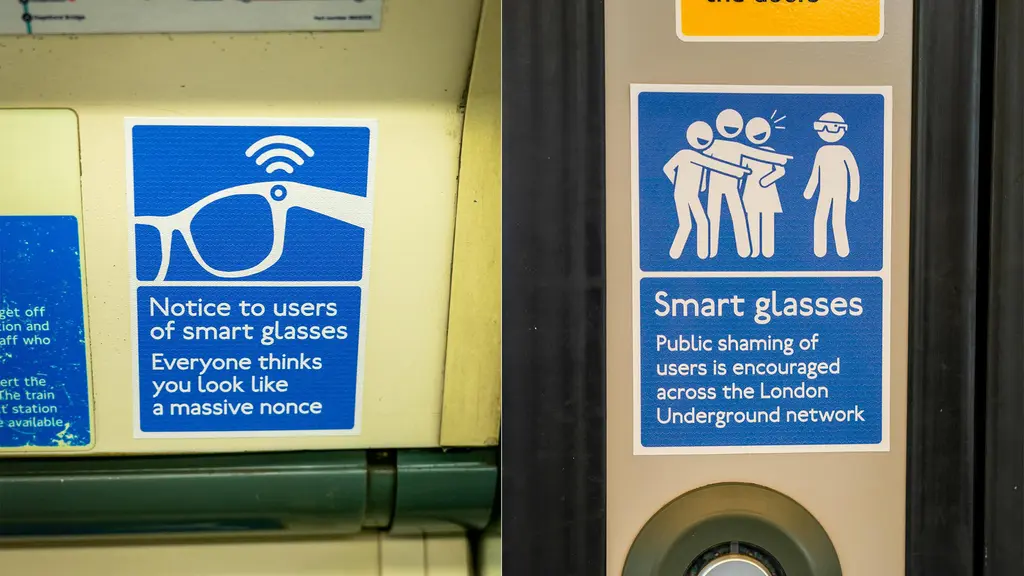
Activists slam “pervert glasses” in new guerrilla campaign
Everyone Hates Elon — Stickers have appeared on the London Underground network, criticising the wearable technology’s covert filming capabilities.
Written by: Isaac Muk

New exhibition highlights British radical living over 200 years
Earthly Paradise — Taking place at the William Morris Gallery, it explores the homes and lives of artists, writers, musicians and more, as well as the conditions that allowed them to thrive.
Written by: Isaac Muk

Pink Floyd’s Roger Waters joins team of new Palestinian resistance documentary
Freedom Theatre — Directed by Rishi Pelham, the film spotlights a theatre operating in the Jenin refugee camp.
Written by: Ella Glossop

Just Stop Oil holds first protest in 17 months
No new drilling — Having previously said that it was “hanging up the hi-vis”, the climate activist group has blocked a road outside Parliament to protest Andy Burnham opening the door for new oil and gas extraction licenses in the North Sea.
Written by: Ella Glossop

In photos: The enduring resistance of Notting Hill Carnival
Carnival of Resistance — A new photobook by Wayne Campbell and Wayne Crichlow reflects on the protest beginnings of Europe’s biggest street festival, along with the traditions keeping its original spirit alive today.
Written by: Isaac Muk

Tens of thousands gather to remember Jason Arday at London vigil
Stand Up to Racism — It took place in Trafalgar Square, with speakers paying tribute to the former Cambridge professor’s life and achievements, while calling for accountability over the reporting he faced from the mainstream press.
Written by: Ella Glossop


