The fight to save Bristol’s radical heart
- Text by Ruby Conway
- Illustrations by Moira Letby

Turbo Island is a small patch of land that exists at the intersection of two B‑roads in the radical and artsy Stokes Croft neighbourhood in Bristol in south west England. It’s a place for an eclectic meeting of bodies and communities at odd times of the day or night, usually over serendipitous conversation or to the heavy pulse of West Country DnB. Anyone who has lived in Bristol will be familiar with this distinctive plot and its legendary bonfire which has seemed to blaze here forever.
Over the years, Turbo Island has played host to a diverse intersection of people: artists, squatters, ravers, students, and homeless people. It is a symbol of the city’s radical edge; an eclectic meeting place for incidental encounters.“You can find all sorts of people there, chatting, exchanging, drinking together, celebrating, ending the party,” says Fidel Meraz, architecture professor, community activist, and local Land Trustee.
According to Rachel Kiddy, an archaeologist who carried out a legendary dig on the island back in 2008 with the local homeless community, it has been a hang-out place for homeless and local people since the 60s but the space’s origins can be traced back through the twentieth century.
Once the site of the Shoe Warehouse until it was destroyed by a bomb in 1940, Turbo Island emerged as an oasis in the rubble, becoming instantly iconic. Used as an advertising space from the 1950s, the land was deemed a conservation area in 1980 before being sold by the then Avon County Council to a private advertising company in 1985. The space, left to its own devices except for the billboard plastered on its back wall, became resemblant of a community common. Fidel describes it as a ‘grey area’ — the land’s private status working in favour of the people, allowing them to sidestep certain permissions and granting them protections from intervention.
Make Turbo Island Great Again pic.twitter.com/NIH3OJ0Nry
— Charlie Watts (@char1iewatts) November 9, 2024
As such, the space has become defacto community-owned — a place people actually feel like they have a right to use, to hang out, to party, to protest, to do art. “It allows a place to just exist as a spot and show a different side of the community that doesn’t really fit into these norms,” says Ilae Krivine, a local artist who has used the space in recent years for creative projects.
Turbo Island has seen countless iterations over the decades: as a rose garden in the 70s, as home to a display of Easter Island heads in the late 2000s, as the site of countless free parties. The fact that it cannot quite be defined, that it isn’t a space for just one thing, is a huge part of its potency. “It’s just the Wild West, you know, just true freedom,” says Ilae. Feeling this sense of license, where a space can be whatever you want, provides an important sense of a right to dwell. Such a feeling of ownership is rare.
In many senses, Turbo Island is a true ‘third space’. As defined by sociologist Ray Oldenburg in the 80s, it is a space for ‘the nurturing of human connections’ — a diverse intersection of different socio-economic backgrounds coming together outside of home and work. In today’s cities, now more populated than ever before, a true third space is something of an endangered species. As more and more of the urban sprawl has become privatised, spaces to exist in this way, particularly without consumption, have been eroded.
“Your favourite café now doesn’t want you to sit there for four hours, but wants to move you through in 20 minutes to increase that turnover,” says Leslie Kern, urbanist, academic, and author. “Or spaces that were once free or very low cost now have an expectation of an entry fee or consumption of some kind involved in them.” Countless libraries, community gardens, and affordable locals have been lost to the privatisation and commodification of such space, while those that remain have had to revise their nature to survive.
“Public space for public use is the only way,” says Benoit Bennett, a local activist heavily involved in fighting to protect the space and one of the Directors of the adjacent People’s Republic of Stokes Croft. “If you have genuinely communally owned or communally run open spaces for people, then people can actually interact freely there; we can form the actual culture together, we can get to know each other, and that’s the important thing.” Without a physical space itself, it’s incredibly hard for such a diverse intersection of people to come together in this way, to feel a sense of belonging and community enrichment. “If we don’t have communal space, we can’t really have community,” says Benoit.
Someone is playing the piano on Turbo Island at today’s party in support of the campaign to save the space for the community pic.twitter.com/ni4IUbr3pt
— Martin Booth (@beardedjourno) October 12, 2024
Turbo Island has long been under threat from the gentrification that laps against its shores. Stokes Croft, once home only to creatives and radicals, has since become a hotspot for development, sought out for its cultural capital. Over the last decade, the changing demographic of the area has led to fierce cultural clashes: the 2011 riots sparked by the eviction of the long-standing squat Telepathic Heights and the development of a Tescos supermarket; the clearing out and redevelopment of the homeless hangout The Bearpit in 2019; the paving over of Turbo Island in 2022. In August this year, it was reported that Turbo Island was going to be sold.
“There’s definitely several people talking about how if the fire goes out on Turbo, then that’s radical Bristol dead,” says Benoit. But the island’s fire continues to be furiously stoked by the many hands of the community. A huge collective campaign emerged in the wake of the news of the sale with an attempt to get the land granted village green status — a measure which would protect it from private developers. “Land can be registered as a green if it’s been used by local people for recreational pastimes for at least 20 years”, says Bristol’s City Council. Campaigners hoped the community nature of the space could be its saving grace.
Fidel, one of the Stokes Croft Land trustees, had hoped at one point that they would be able to buy Turbo Island through crowdfunding: “To maintain it for the benefit of the people who are already using it”. “We didn’t want the space to become one that excludes these [homeless] people,” he says. “We wanted a use that keeps them in the community and hopefully improves their conditions and opportunities”.
The land, which was supposed to go to auction, was sold privately to an unknown buyer back in October. Though there are no public plans for development, the clandestine nature of the purchase, which usurped a bid that local activists put in for the space has made many worried for its future.
We have just heard the news that Turbo Island has been sold outside the planned auction this evening.
— Stokes Croft Land Trust (@CroftTrust) October 16, 2024
Read our public statement below. pic.twitter.com/bXAvjesIzF
The campaign to protect Turbo Island is part of a movement to gain control of local land in Bristol; “[It is] a wider push back against gentrification in terms of land ownership and community ownership,” says Benoit. In particular, the Stokes Croft Land Trust has been operating in the area, allowing the community to own and steward those local spaces at risk of being sold for development, ‘for the benefit of those who live here, not for those who seek a fast buck,’ they write. The People’s Republic of Stokes Croft, for example, was recently able to gain ownership of its space in this way.
“I feel like we were entering a golden era of Turbo Island,” Ilfe tells me. “It was becoming a lot more of a positive thing and it’s getting cut short now.” The reality is that it’s the most disadvantaged that stand the most to lose from the sale of the space. “Most of the time, these people are from very deprived communities or communities of people who have been ostracised, marginalised, exploited,” says Fidel. And the fact that so many of the people who occupy Turbo Island often exist on the edges of society — people who are homeless and with addiction issues — has led to its othering. As gentrification intensifies, there’s an increasing unwillingness to allow these marginalised urban groups to coexist with the new norms of the area.
The resultant demonisation of Turbo Island and the tag of anti-social behaviour is nothing new. “There’s a really long history of assuming that unhoused people are responsible for crime, that they’re dangerous,” says Leslie.
“It’s a big problem we have generally that the fear of certain types of crime are a lot more prevalent than the actual crimes and that’s driven by media narratives a lot of the time,” Benoit notes. He adds that people frequently make assumptions based on someone’s appearance and context when it comes to Turbo Island, lumping everyone together as ‘crack addicts’, and assuming the worst thanks to these prescribed social narratives.
“It’s just a place where the problems are visible, not the cause of any problems,” says Benoit. The real underlying issues — affordability of housing, mental health and addiction support, social policies etc. — are, of course, a lot more complex to deal with.
“I think we can agree that not all places are for everyone, or have the same value for everyone, but we need to be mindful that those places have a value for someone,” says Fidel. “We need to respect them and we need to respect them for the collective that has an appreciation for them.” However, as our system currently stands, space is privileged to the fortunate and the forces of the market, not to those on the margins.
It’s not just the physical space of Turbo Island that holds value. Its character, culture, and collective memory all mean something to the people of the city. “It is a real cultural phenomenon,” says Ilae. Such spaces are a kind of silent heartbeat of the urban environment — they give cities their intangible life force.
When we dislocate such spaces from their spirit, their collective memory, and their people under gentrification, it’s a kind of death. J. Douglas Porteuous described this kind of gentrification-fuelled annihilation of a memory of a place as a ‘topocide’. It’s an action which is violent and devastating to a community and its people, on many levels. “Forget the people who were there. Forget the contribution that they made to the city being what it is,” says Leslie.
“Gentrification or redevelopment is now seen as necessary for the economic growth of cities,” says Leslie. “It’s believed that this is the way in which cities survive and thrive in the contemporary global economy, where cities are competing for resources, investment, jobs, tourism, middle and upper-class residents, wanting to live there and so on.” Cities as sites of connection, of people over profit, of third spaces in general, have been lost.
But as Leslie’s book, Gentrification is Inevitable and Other Lies, probes, it is far from a naturalised process. Across the globe, people are resisting at a grassroots level. In Athens’ Exarchia, a hotbed of political radicalism, people have fought the eviction of the area’s squats, in turn resisting the expansion of Airbnb and private development in the neighbourhood. Through assemblies, talks, demonstrations, and lobbying, victories have been gained, such as the protection of Strefi Hill from the Prodea Investments construction project in January this year, following 3 years of protest. In New York, Hunts Point Forward has successfully developed multiple parks and neighbourhood spaces through community-driven advocacy, while the Pratt Centre for Community Development continues to work with community-based groups, small businesses, and policymakers to create a more just city.
While sites such as Turbo Island and beyond are intertwined with much larger global forces and policies, at the local level, communities continue to do what they can to hold on to their spaces and culture; to recognise the value of diversity, connection, and expression when it comes to space. As Benoit says, “I can’t see that there’s a way forward [for Turbo Island] that doesn’t involve quite a lot of community participation in some way, whether it’s adversarial or more cooperative.” Though Turbo Island has been sold, whilst the fire still blazes there, it will not go down without a fight.
Enjoyed this article? Follow Huck on Instagram.
Support stories like this by becoming a member of Club Huck.
You might like

Landmark new exhibition is celebrating 50 years of female punk
God Save the Queens – The Museum of Youth Culture is bringing together rare photography, archive material and a one-night-only supergroup featuring members of X-Ray Spex, The Slits and The Raincoats.
Written by: Ella Glossop

Photographing America’s 20th century rebels
Rebels With a Cause — A new monograph looks back at Jean-Pierre Laffont’s extensive archive documenting counterculture, art, activism and more, shaping the country as it is today.
Written by: Isaac Muk

Hak Baker: “Being a lad is dreaming of a decent life”
Hard Feelings — The East London storyweaver joins our column on masculinity and fatherhood to chat about being raised by his mother, his family of friends, and the momentary bliss of the sesh.
Written by: Robert Kazandjian

Sports Banger is throwing a party to mark 90 years since the Battle of Cable Street
“Fascists hate dancing” — The October event will bring DJs, live music, sound system culture and anti-fascist politics together in East London.
Written by: Ella Glossop
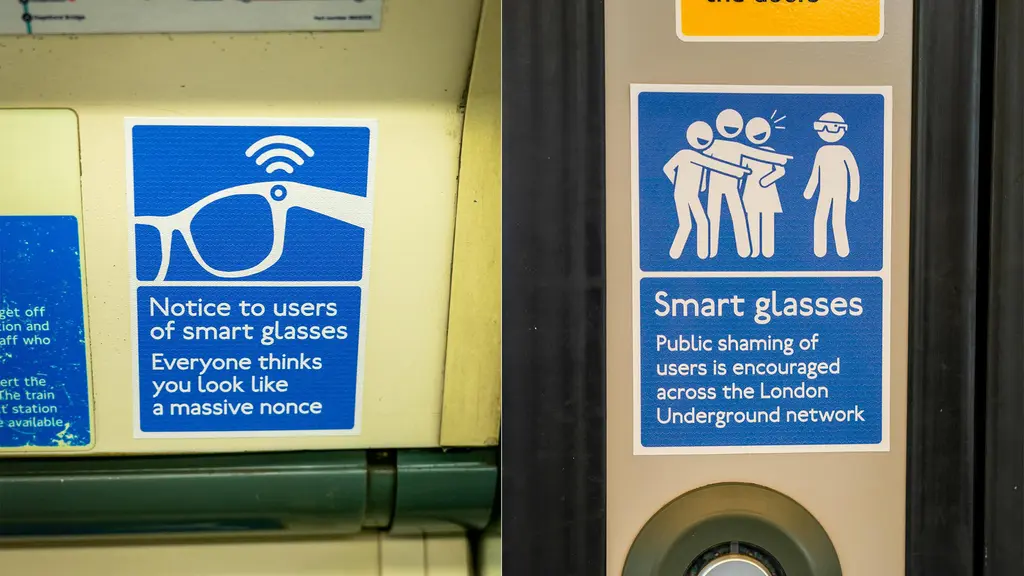
Activists slam “pervert glasses” in new guerrilla campaign
Everyone Hates Elon — Stickers have appeared on the London Underground network, criticising the wearable technology’s covert filming capabilities.
Written by: Isaac Muk

New exhibition highlights British radical living over 200 years
Earthly Paradise — Taking place at the William Morris Gallery, it explores the homes and lives of artists, writers, musicians and more, as well as the conditions that allowed them to thrive.
Written by: Isaac Muk


