The hospitality workers losing out on tips amid Covid
- Text by Polly Smythe
- Photography by Mathalicious via YouTube

Back in December 2020, Amy, 23, was working as a barista in Belfast. The Christmas rush was hectic, but she’d found a moment to chat with a customer about the gifts he was buying. As she handed him his coffee, he dropped £2 into the tip jar. When Amy asked him if he would be sitting inside, as she’d legally require his details for track and trace, he became outraged. “Forget it,” he said, putting his hand back into the jar, and removing his £2 tip.
Covid-19 has created an impossible task for hospitality workers, who find themselves responsible for regulating the same people whose tips directly subsidise their wages. In November 2020, the American non-profit organisation One Fair Wage conducted a report to explore the connection between tipping and Covid-19. Surveying 1,675 hospitality staff, the report found 83 per cent of workers felt their tips had declined during Covid-19, with 66 per cent reporting the decline was at least 50 per cent.
Although no equivalent study on tipping has been attempted in the UK, stories like Amy’s demonstrate how hospitality workers’ dependence on tips has left them uniquely economically vulnerable during the pandemic. As restaurants, cafes, bars, and pubs reopen, the constant cleaning and enforcing of rules means staff are finding themselves doing more, while earning less.
Amid the pandemic, venues have become increasingly cashless, opting instead for card payments due to hygiene reasons, ending the ease of letting workers ‘keep the change’. When tips are given via card, there’s less transparency as to where they go, leaving workers exposed to tip theft from employers. In 2015, a string of restaurant chains, such as Pizza Express, Bella Italia and Café Rouge, were found to be deducting ‘admin fees’ on tips left on cards. In other cases, tips are used to subsidise worker wages, or meet costs. “It’s our labour that people are tipping for,” says Amy, “but people type an amount in the card machine and it goes off into the void.”
On top of this, tasking hospitality workers with enforcing public-health protocols means the majority of their interactions with customers – the time usually spent developing the relationship on which tips are given – are instead taken up with explaining how to download an app, or asking customers to keep their masks on in designated areas. As Amy puts it, “If a customer is annoyed at the rules, then they’re annoyed at you.”
Daria*, a 25-year-old bartender at a central London Brewdog, estimates her tips have declined by half since the pandemic. “With social distancing and masks, it’s harder to create a rapport with people. Customers can still tell when I’m smiling behind a mask, but it doesn’t necessarily connect.” Where once, Daria was able to focus on making guests feel welcome, she now finds herself acting like, as she puts it, a “strict mum, having to tell people off, to tell them where they can’t sit”. Daniel, a 24-year-old front-of-house Byron employee, explains: “It’s much more difficult to be a friendly face to someone when you’ve got a mask covering most of it.”
Any annoyance is compounded by an irresponsible government, whose grand pronouncements of ‘back to normal’ have inflated customer expectations. In doing so, the government has created a situation where, according to Daria, “By simply providing the service you have to, you have to disappoint customers. When they realise it’s not the good old days, they’re less likely to give you a tip.”
The Government’s role in undermining the centrality of tips for service workers goes beyond their reckless messaging. In late April 2020, despite chancellor Rishi Sunak’s claim that furlough would cover 80 per cent of wages, guidelines were issued that stated: “You cannot include the following when calculating wages: any tips, including those distributed through troncs.” Troncs are a payment arrangement used to distribute tips, gratuities and service charges to all employees, as opposed to a system of staff earning individual tips. For hospitality staff like Helen, 20, who works at a Harvester in South Wales, it’s made a significant difference. “If you included tips in with wages, I was only getting about 60 per cent. Tips really do add up, even if it’s just £2,” she explains.
Helen’s frustration about the decline in tips is complicated by the fact that, as she points out, “everyone has suffered financially”. Indeed, almost 800,000 people in the UK have lost their jobs due to the pandemic. “It’s really hard to be angry about tips because you don’t want to expect it of people at all,” she says. “It’s just a shame when I feel like I’m working twice as hard.”
But, Caitlin, 25, who works in a luxury hotel in Glasgow, is convinced there is something more to the decline in tips than customers’ slashed incomes, noting that many are continuing to pay £280 a night for a room. Going from earning £200 a week in tips to a mere £20, Caitlin worries a narrative of general financial hardship obscures the dynamics really at play: that Covid-19 has disrupted the expectation for absolute deference from workers.
Prior to the pandemic, Caitlin’s job operated on a “culture of no assertion”, she says, meaning that staff were supposed to cater to the whims of the customer without question. Of course now, this has all changed. And, crucially, – particularly the white middle-class businessmen who frequent her hotel – “don’t want workers to have power, or exert power towards them,” she explains. Caitlin has found that some customers experience her enforcement of Covid-19 protocols as a personal insult, with one guest remarking to her: “Are you saying I’m dirty?”
If the pandemic has emboldened workers, it has also emboldened customers. Eat Out To Help Out allowed customers to reimagine the simple act of purchasing a pizza as a noble civic endeavour. While the Manchester branch that Daniel works in remained closed during this period, he heard from other Byron employees that the scheme meant “customers felt really entitled, as they felt like they were doing the restaurant a favour”. Helen simply described Eat Out To Help Out as a “nightmare”.
What’s more, the conditions of hospitality work under a pandemic have seen a dangerous escalation in sexual harassment: One Fair Wage reports that 41 per cent of workers found there had been a “noticeable change in the frequency of unwanted sexualised comments from customers”. Waitressing often relies on the performance of deeply gendered expectations, drawing on scripts that fulfil an element of male fantasy. The mask, as a physical barrier, punctures the illusion of fantasy, as it inadvertently “reminds men there is something in between us,” Caitlin observes, “Something that is stopping me from fully ‘exposing’ myself to them.”
It’s unsurprising, then, that a particular pattern of harassment has emerged under the pandemic: men asking female service workers to remove their masks. Daria recalls how, on a busy Saturday shift, a male customer said to her: “I want to ask for your number, but first, take down your mask.” According to Daria, “By saying ‘break the rules for me’, it’s given the customer this weird power.” Likewise, Amy, who chairs the Belfast Unite Hospitality branch, had a 17-year-old girl report that she’d repeatedly been asked by an elderly male customer “to take her mask off so he could see her smile”.
The designation of hospitality workers as de facto public health marshals is evidently incompatible with the traditional expectations customers have of them. And expecting largely minimum wage workers to lose out on a key portion of their income in order to uphold rules that are vital for the Government’s Covid-19 strategy is hardly going to make for a happy workforce. “The job has gotten harder, more dangerous, more intense,” Caitlin says. Clearly, it shouldn’t be the responsibility of hospitality workers to clean up after the Government’s mess.
Follow Polly Smythe on Twitter.
Enjoyed this article? Like Huck on Facebook or follow us on Twitter.
You might like
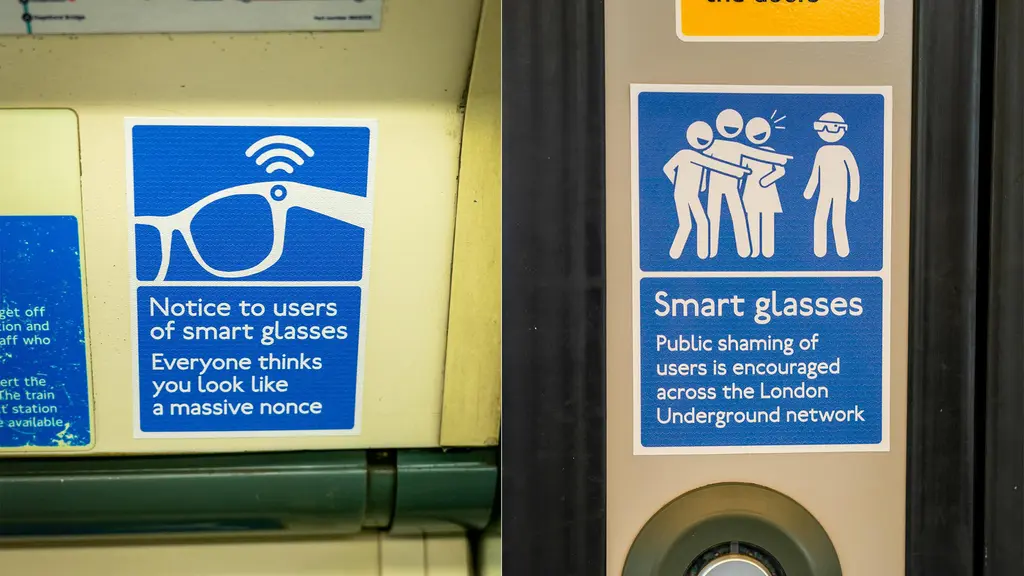
Activists slam “pervert glasses” in new guerrilla campaign
Everyone Hates Elon — Stickers have appeared on the London Underground network, criticising the wearable technology’s covert filming capabilities.
Written by: Isaac Muk

The battle for the soul of lockpicking
Under locksport and key — In recent years, breaking locks for fun has grown from a niche hobby into an activity followed by millions of people. As it has matured, so have tensions over who sets the rules.
Written by: Jack Dennison-Thompson

New exhibition highlights British radical living over 200 years
Earthly Paradise — Taking place at the William Morris Gallery, it explores the homes and lives of artists, writers, musicians and more, as well as the conditions that allowed them to thrive.
Written by: Isaac Muk

Pink Floyd’s Roger Waters joins team of new Palestinian resistance documentary
Freedom Theatre — Directed by Rishi Pelham, the film spotlights a theatre operating in the Jenin refugee camp.
Written by: Ella Glossop

Just Stop Oil holds first protest in 17 months
No new drilling — Having previously said that it was “hanging up the hi-vis”, the climate activist group has blocked a road outside Parliament to protest Andy Burnham opening the door for new oil and gas extraction licenses in the North Sea.
Written by: Ella Glossop

In photos: The enduring resistance of Notting Hill Carnival
Carnival of Resistance — A new photobook by Wayne Campbell and Wayne Crichlow reflects on the protest beginnings of Europe’s biggest street festival, along with the traditions keeping its original spirit alive today.
Written by: Isaac Muk


