The wild style of the men and women of the Congo
- Text by Miss Rosen
- Photography by Tariq Zaidi

After receiving his first camera at the age of 14, Tariq Zaidi dreamed of shooting for National Geographic. “Over the years I used to travel a lot,” he says. “My aim was to see the world, as many places as I could, travelling with a small backpack and just going.”
While traveling from Morocco to South Africa by land in 2013, Zaidi was dazzled by the sight of a Sapeur. Determined to learn more, in 2017, the photographer traveled to Brazzaville and Kinshasa to learn more about the Congolese fashion culture known as La Sape, “Société des Ambianceurs et des Personnes Élégantes” (Society of Ambiance-Makers and Elegant People).
In Sapeurs: Ladies and Gentlemen of the Congo (Kehrer), Zaidi presents a series of stunning environmental portraits and interviews with members of La Sape in both cities. “Congolese people are known for taking pride in their appearance – yet La Sape takes the art of looking good to the next level,” Zaidi says.

Nkodia Aurelie, 48-year-old businesswoman and Sapeuse for 36 years, in Brazzaville, 2019
“Being a Sapeur is about clothes, but it’s also about an attitude and a way of being in the world. It’s telling the world that no matter what my environmental condition is, I am still human, and I still have dreams and aspirations.”
Although most are day labourers, taxi drivers, and gardeners, Sapeurs don dapper designer suits that perfectly match their flamboyant personalities. And while dominated by men, in recent years more women (Sapeuses) and children have joined the scene, which Zaidi discovered by spending time with Sapeurs at home in their communities.
Creating this series posed its own unique set of challenges. Working in 35-40 degree heat, often in 60 per cent humidity, Zaidi was always on the move, walking for miles, fighting traffic, and dealing with visa problems and permits.
“It’s often difficult to get to their communities, which are usually hours away from a main road. They aren’t easy to shoot in either; the residents are often apprehensive of outsiders and security is also an issue. Many Sapeurs don’t own cell phones, so I had to send a scout to let them know I was coming,” Zaidi says.
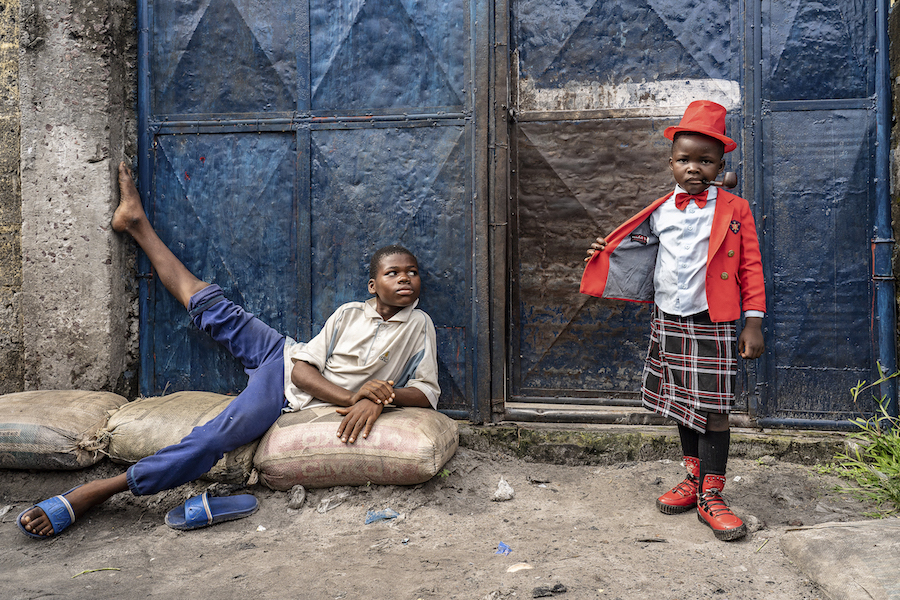
Israell Mbona, 5-year-old school student and Sapeur for three years, in Kinshasa, 2019
“Most work on Sapeurs is also just in Brazzaville, which is an ‘easier’ city to photograph in than Kinshasa, which is huge, busy and chaotic, and hard to get a visa for. This book has pictures from both cities and shows how the style is different: French-influenced classical in Brazzaville and more flamboyant and eccentric in Kinshasa – where anything goes.”
Popularised by Congolese rumba singer Papa Wemba, Sapologie is about putting together an exquisite look that suits one’s true personality. “Sapeurs are treated as rock stars in their community because they defy their material circumstances, so a lot of the thrill for them is the ‘celebrity’ aspect of it,” Zaidi says.
“But mainly it’s about asserting yourself boldly into the world. Their ideas come from themselves. They are aware of global fashion, but as Papa Wemba once said, ‘White people invented the clothes, but we make an art of it’.”

Francis Okiemi, 14-year-old school student and Sapeur for three years, and Steven Okiemi, 9-year-old school student and Sapeur for one year, in Brazzaville, 2019

Ntsimba Marie Jeanne, 52-year-old businesswoman and Sapeuse for 20 years, Okili Nkoressa,10-year-old school student and sapeur for 5 years, and Judith Nkoressa, 39-year-old policewoman and sapeuse for 18 years, in Brazzaville, 2017

Elie Fontaine Nsassoni, 45-year-old taxi owner and Sapeur for 35 years, in Brazzaville, 2017
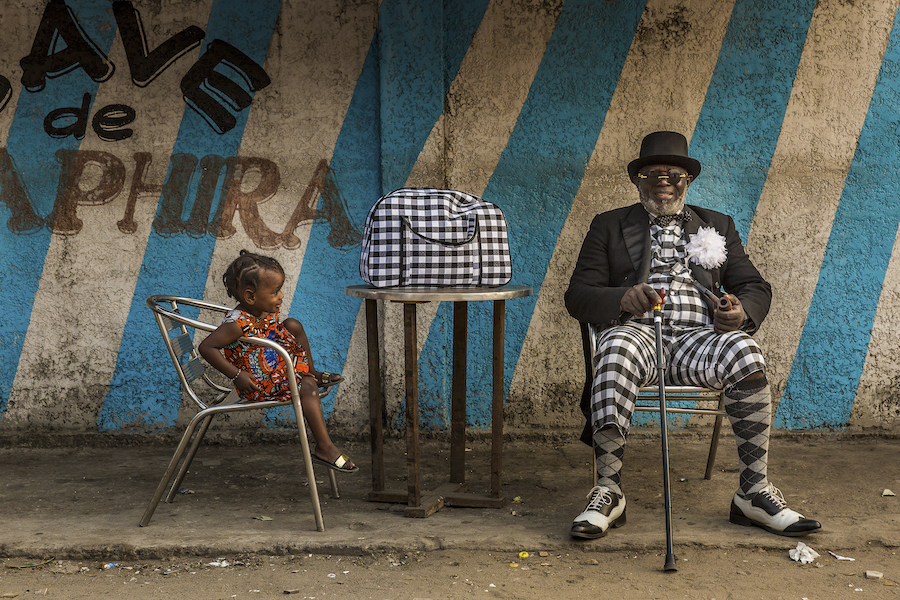
Yamea Bansimba Jean Claude, 58-year-old bricklayer and Sapeur for 50 years, in Brazzaville, 2017

Clementine Biniakoulou, 52-year-old housewife and Sapeuse for 36 years, in Brazzaville, 2017
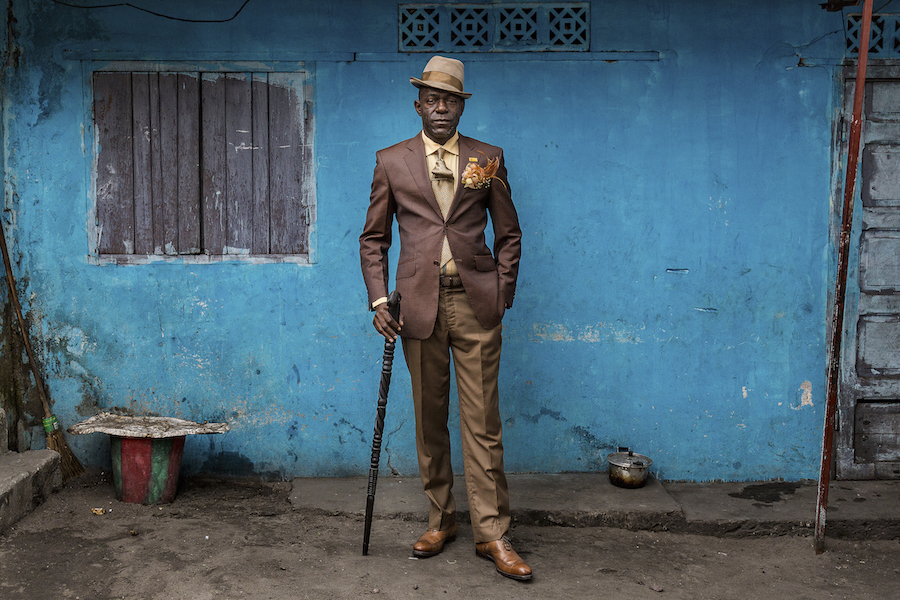
Ella Kiadi, 44-year-old businesswoman and Sapeuse for eight years, in Brazzaville, 2019

Basile Gandzion, 51-year-old human resources manager and Sapeur for 30 years, in Brazzaville, 2017
Sapeurs: Ladies and Gentlemen of the Congo is available now on Kehrer.
See more of Tariq Zaidi’s work on his Instagram.
Follow Miss Rosen on Twitter.
Enjoyed this article? Like Huck on Facebook or follow us on Twitter.
You might like

Jesse Glazzard’s messy portrait of queer friends, lovers and chosen family
The Sound of Dirt and Beauty — The photographer’s debut monograph explores tender, unpolished moments shaped by the people who he surrounds himself with, while offering a window into the UK’s working-class LGBTQ+ community.
Written by: Sunny Sunday

Behind the curtain at Alternative Miss World 1981
Olympia glamour — Running a subversive take on the traditional beauty pageant, the Andrew Logan organised event prioritised underground creativity and invention. Photographer David Corio went behind the scenes at its biggest edition.
Written by: Miss Rosen

New exhibition highlights British radical living over 200 years
Earthly Paradise — Taking place at the William Morris Gallery, it explores the homes and lives of artists, writers, musicians and more, as well as the conditions that allowed them to thrive.
Written by: Isaac Muk

What life on the Strait of Hormuz is really like
Southern Winds — Bandar Abbas based photographer Morteza Niknahad has been capturing the diverse communities and stories of his local region since he first picked up a camera. His new series highlights the human impact of war.
Written by: Isaac Muk

Nick Haymes’s intimate portrait of his family’s life
Chronograph — Over 25 years, the photographer documented his son’s lives as they grew into adults. The resulting photobook is an exploration of the passage of time, as well as the optimism of youth.
Written by: Miss Rosen

Kristina Rozhkova’s scatty, confronting portrait of captivity
Gut Feeling — The Russian artist’s 2024 arrest and subsequent detention opened her eye towards the omnipresent dynamics of power and control. Her new photobook is a stark exploration of being trapped.
Written by: Isaac Muk


