Tony Bontana is UK alt-rap’s most restless innovator

Splayed — The genre-splicing producer and Birmingham lyricist on the rise goes deep on the art of chopping beats, the catharsis of punk, and how his world collided with Beastie Boys’ Mike D and XL Recordings.
On a freezing cold Monday at the top of 2026, experimental hip-hop polymath Tony Bontana was wicked hot. Thumping 808s rattled off the walls of Brixton’s DIY dive, the Windmill. Beer and spit cascaded over a pit moshing to a warped Eiffel 65 sample of ‘Blue’ mashed with dreamwave, while Bontana belted hardcore bars into smiling faces.
Wielding his self-coined “splayed” technique, he stretched samples beyond recognition on the fly. Then tore into the sold-out gig with verses navigating the loss of his mum, working-class Britain, battered chips, the current socio-political hellscape and identity. Spitting with quick wit over off-kilter free jazz, gospel swells, funk loops and synth-soaked psychedelia.
A prolific shapeshifter, he makes music at a breakneck pace and with a punk attitude. Last year he self-released five full-length projects: TUMPIT 1 & 2, Sunday Service (written entirely on Sundays), Home for the Weekend – the debut record of his band, Pay The Stranger – and The Beautiful Malaise with London’s Psychedelic Ensemble. That was followed by a trio of left-field albums and mixtapes across 2026, including My Name, Birmingham City Council and TUMPIT 3 (Deluxe). That’s without mentioning his 55+ Bandcamp releases or collaborations with underground hip hop luminaries such as billy woods, cloud-rap pioneer Lil B, Nourished by Time and Cities Aviv.
Bontana also fronts Birmingham hardcore punk outfit SPEW, his grungegaze band Pay The Stranger, he’s label boss at Everything Is Perfect Records, a multi-instrumentalist and storyteller, focused on expanding his visual aesthetic while building out his world. His output is as restless as his imagination.
You were born in ’96, when sampling had been pushed from an alien concept into another dimension thanks to the likes of J Dilla, DJ Shadow, and The Beastie Boys. Three decades later, you’re touring with Mike D. How did that happen?
It’s a funny story that still kinda blows my mind. I was playing with YHWH Nailgun in Birmingham and these two guys from LA came down for the show. We got chatting in the smoking area after, then they DM’d to say Mike D was their dad. They’d flown over to see the gig and they’d put him onto my music. It just went from there, to me being invited to support him on an intimate run of UK shows.
Read next: Inside the Los Angeles scene kid revival


Did the Beasties impact your sound?
For sure. I grew up as an MTV kid, flicking between Kerrang! and Scuzz TV. Watching how they played their instruments and blurred hip-hop and punk just made sense in my head. I feel like that kinda allowed me to be how I am today. Then I saw the level of humour they used too, whether lyrically or visually. I speak about a lot of serious stuff in my music, but I like to have a laugh as well.
What’s the funniest song you’ve written?
‘Yowve siddit pon de replay’ because it’s objectively hilarious using Birmingham slang, the lyrics are absurd and wholly truthful.
What’s the closest to your heart?
‘Selly Oak Park’ – it’s deeply personal, and I haven’t performed it live yet. Next would be ‘Sitting on a Star (Freestyle)’. Both were written and recorded super close to my mum passing away, and they’re pretty raw reflections.
I saw you perform ‘Sittin’ on a Star’ at the Windmill, Brixton, after I’d nearly lost my own mother, and I was definitely choked up.
It’s a tough, but good, one to perform live. People often come up after a show to tell me how much that song touches them. I remember recording it, unable to get through a verse without crying. It was literally all I could do when she passed. Writing and performing gives me that instant outlet, and it really helped. It’s vital to my survival to be able to work through these emotions, to talk about them.
What made you care about music?
When I was about seven, my parents got me a guitar when I was in the hospital – I had really bad asthma – and that became like a jetpack for me. From that moment on, I was obsessed with music. My dad was crate-digging funk, reggae and Pat Metheny LPs; my mum loved bashment and Anita Baker; my older sister was into drum’n’bass; and my older brother was into The Horrors and Enter Shikari.
Did you pick up other instruments?
I played the trombone in school. But I felt most connected to the trumpet lines in brass band arrangements, so that’s how I played my trombone. I carry that philosophy into other instruments and producing. Whatever feels like the right thing to play is what comes out, whether it’s technically correct or not.
At what point did producing come in?
I got my hands on a Mac in 2018, got Ableton, started focusing on making solo stuff and writing lyrics on the bus etc. I had an older friend with a studio where I recorded sometimes, and spent a lot of time watching. I learned visually, started experimenting with equipment and beats, everything just snowballed.
“Every person should have their story documented, in whatever artistic medium feels right for them.” Tony Bontana
You’ve gained traction as a visionary beatmaker, noted for your “splayed” sampling style. Can you break that down?
“Splayed” is something we started doing in 2019, which is stretching samples into non-linear rhythms originally using a plug-in called Halftime. It’s blown out, blown apart. Where people typically put it on one section, we’re warping a whole beat. Taking away the bitrate quality of it, messing it up more to make something more beautiful
What’s it like rapping on that?
I can rap over a beat that doesn’t make sense, and a lot of rappers can’t. I’ve sent my type of beats to people, and they’re like, “Nah, I need something a bit more….. regular.”
What elements of hardcore/punk do you take into rap?
For me, it’s the attitude. The impulsivity. Being able to let an idea be what it is, without trying to extend it or build it out. That punk mentality kicks in: “If I’ve got a three-chord riff, that could be the whole song.” With hip-hop and sampling, if I’ve got a loop, that could be the song. If I’ve got one verse, that could be the song. That mentality goes both ways. Learning how to write bars and put words together has also informed how I write for punk and hardcore.
Do you feel like one is more cathartic?
Punk is for sure the most cathartic. Don’t get me wrong, I speak about very personal things in rap, but there’s a feeling that punk and hardcore gives you that ability to just release it. I don’t think you can really find that anywhere else. It’s the freedom, and there’s a lot less expectation. With rap, people are dissecting the lyrics, the flow, the production. Whereas with punk, you just take it as it is and let it hit you how it hits you.
That’s how I receive that music, even when I’m making it. If I feel it, I’m vindicated. I don’t have to overthink it, which I think is a really nice thing – being a chronic overthinker outside of music.

You’ve gained traction as a visionary beatmaker, noted for your “splayed” sampling style. Can you break that down?
“Splayed” is something we started doing in 2019, which is stretching samples into non-linear rhythms originally using a plug-in called Halftime. It’s blown out, blown apart. Where people typically put it on one section, we’re warping a whole beat. Taking away the bitrate quality of it, messing it up more to make something more beautiful.
What’s it like rapping on that?
I can rap over a beat that doesn’t make sense, and a lot of rappers can’t. I’ve sent my type of beats to people, and they’re like, “Nah, I need something a bit more….. regular”.
What elements of hardcore/punk do you take into rap?
For me, it’s the attitude. The impulsivity. Being able to let an idea be what it is, without trying to extend it or build it out. That punk mentality kicks in: “If I’ve got a three-chord riff, that could be the whole song.” With hip-hop and sampling, if I’ve got a loop, that could be the song. If I’ve got one verse, that could be the song. That mentality goes both ways. Learning how to write bars and put words together has also informed how I write for punk and hardcore.
Do you feel like one is more cathartic?
Punk is for sure the most cathartic. Don’t get me wrong, I speak about very personal things in rap, but there’s a feeling that punk and hardcore gives you that ability to just release it. I don’t think you can really find that anywhere else. It’s the freedom, and there’s a lot less expectation. With rap, people are dissecting the lyrics, the flow, the production. Whereas with punk, you just take it as it is and let it hit you how it hits you.
That’s how I receive that music, even when I’m making it. If I feel it, I’m vindicated. I don’t have to overthink it, which I think is a really nice thing – being a chronic overthinker outside of music.


What’s the message you want to send with your music?
Every person should have their story documented, in whatever artistic medium feels right for them. In a kinda morbid way, I often think that when I die, my family will have this collection of music that’s so personal they’ll be able to connect with me forever, even those I may never get to meet.
What do you want people to feel when they listen to your music?
Seen/heard/not alone.
What does the future sound like?
FREE!
I’m working on the follow-ups to My Name and The Beautiful Malaise with the Psychedelic Ensemble. It’s nice having both in tandem because they come from completely different places. I’m gonna spend as much time as possible in the studio, between travelling around Europe for shows. I feel very grateful for the position I’m in right now.
Tracy Kawalik is a freelance journalist. Follow her on Instagram.
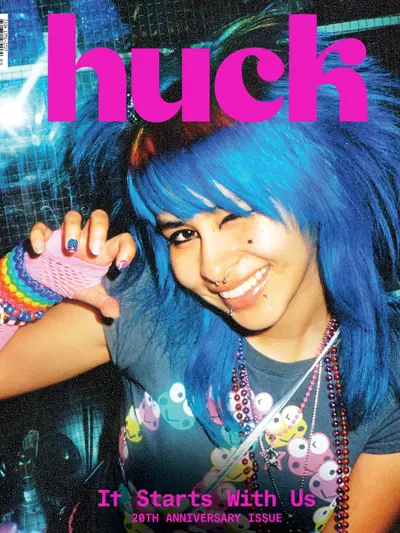
Huck 84: It Starts With Us is out now. Sign up to Club Huck+ to make sure you never miss another issue.
Enjoyed this article? Follow Huck on Instagram and join Club Huck’s mailing list for more from the cutting edge of sport, music and counterculture.
Get more from Huck
Club Huck+
Full membership
£28/year
This story is part of Club Huck+, our paid membership. Upgrade to unlock this story and much more!
- The print magazine, straight to your door
- Digital access to back issues of the magazine
- Vouchers and discounts from our partners
- Priority access to Club Huck events
- The Huck Long Read, exclusively dispatched to your inbox
- Zines and special issues
Secure checkout via Stripe. Cancel anytime.
Get more from Huck
Club Huck+
Full membership
£34/year
This story is part of Club Huck+, our paid membership. Upgrade to unlock this story and much more!
- The print magazine, straight to your door
- Digital access to back issues of the magazine
- Vouchers and discounts from our partners
- Priority access to Club Huck events
- The Huck Long Read, exclusively dispatched to your inbox
- Zines and special issues
Secure checkout via Stripe. Cancel anytime.
Already a member?
Enter your email and we'll send you a link to log in.
You might like

Billy Woods is finally having his moment
The prolific cult rapper has punctured the mainstream with his sharp, enigmatic storytelling. Here he discusses new album ‘Maps,’ AI ethics, Cormac McCarthy and more.

Inside the Los Angeles scene kid revival
The Rawring ’20s — For the cover of Huck 84, photographer Alexis Gross and writer Anna Zanes meet the latest faces of scene, who are finding freedom to express themselves through its technicolour, unafraid aesthetic.

Hak Baker: “Being a lad is dreaming of a decent life”
Hard Feelings — The East London storyweaver joins our column on masculinity and fatherhood to chat about being raised by his mother, his family of friends, and the momentary bliss of the sesh.
The Mix-Up: A lost interview with the Beastie Boys
Death, celebrity and fatherhood — Ten years ago, Huck split up hip hop's most famous trio in order to get them talking. Then they wouldn't stop. To commemorate the four-year anniversary of MCA's death, we're posting the interview online for the first time.

KOJ: “There’s an honesty about Liverpool you don’t find everywhere”
What Made Me — In this series, we ask artists and rebels about the forces and experiences that shaped who they are. Today, it’s Liverpool’s punk-grime hybridist KOJ.

In Birmingham’s punk underground, hardcore is queer
Punk Pride — In recent years, a defiantly political queercore scene has begun to emerge in the West Midlands, providing alternative spaces for the area’s LGBTQ+ youth. Stephanie Phillips speaks to those leading the charge.