The Travel Diary: Capturing Cuba through the lens of the street
- Text by Lars Hamer
- Photography by Adrian Morris

“Beneath the typical images of vintage cars, cigars and rumba music, is a country of beautiful and welcoming people,” says Adrian Morris, reflecting on his time in Cuba. “There’s still this culture that’s uniquely unspoilt and preserved.”


Cuba has been cut off from much of the world since the US stopped trade and travel between the United States. Since then, the island has long been seen as a mysterious country in the Caribbean, largely unexplored by many. With Obama intending to build bridges between the two nations, it is starting to open up to outsiders. Adrian travelled to Cuba, to photograph the people and communities of the capital, Havana, and the countryside away from the city.

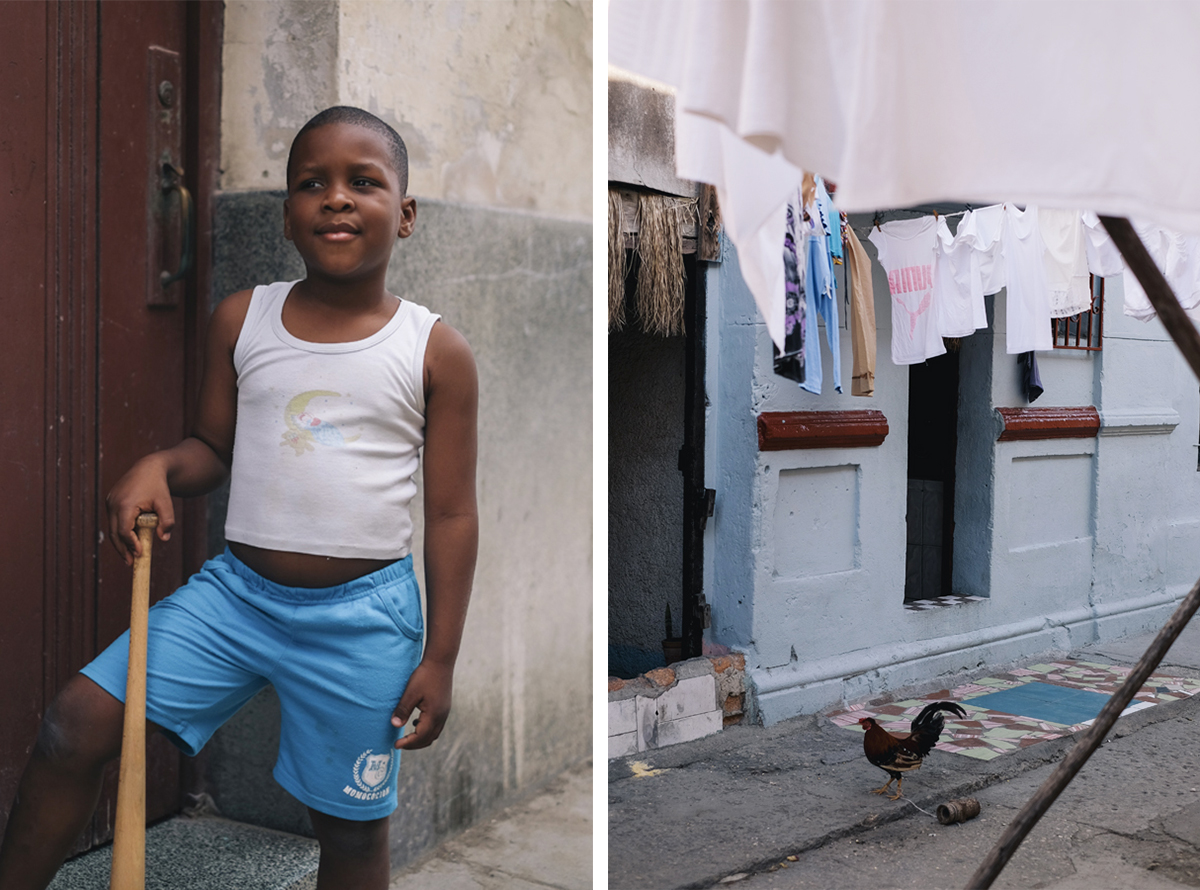
“I think everyone is interested to see how Cuba is preparing for these changes. I wanted to go and experience the country before it changes forever, while it is still the way that it is,” Adrian explains. “Being in a country where everybody is so kind and happy, regardless of what amount of money they have or possessions they own, is a very humbling and fulfilling experience.”


Adrian’s time in Havana was spent on the suburban streets, and he travelled between the rows of houses, and shops in the capital, searching for interesting stories that locals had to tell. “I walked as much as my feet would let me around Havana,” he says.


“I skated with the kids on the outskirts of town and took a train to the countryside, San Antonio Los Banos. Later I travelled to the East of Cuba through Santiago and El Oriente.”


Speaking of the moments that stood out to him the most, Adrian explains it was the citizens, going about their day-to-day. “I met this one old lady on the street, she looked so interesting, with large uneven glasses. I spoke to her about the neighbourhood and asked if I could take her picture.”


“She was really confused and kept asking why I would want a photo of her,” he continued. “I said ‘because you are beautiful’ and then her face beamed like the sun, and she embraced me with a kiss on the cheek.”


“Being in Cuba is like having a breath of fresh air”, Adrian tells me. “Seeing the way their culture is makes you reflect on your own priorities and worries.”
Adrain headed to Cuba for the Havana edition of Boat Magazine. You can check out his website here, and follow him on Instagram.
Enjoyed this article? Like Huck on Facebook or follow us on Twitter.
You might like

Jesse Glazzard’s messy portrait of queer friends, lovers and chosen family
The Sound of Dirt and Beauty — The photographer’s debut monograph explores tender, unpolished moments shaped by the people who he surrounds himself with, while offering a window into the UK’s working-class LGBTQ+ community.
Written by: Sunny Sunday

Behind the curtain at Alternative Miss World 1981
Olympia glamour — Running a subversive take on the traditional beauty pageant, the Andrew Logan organised event prioritised underground creativity and invention. Photographer David Corio went behind the scenes at its biggest edition.
Written by: Miss Rosen

New exhibition highlights British radical living over 200 years
Earthly Paradise — Taking place at the William Morris Gallery, it explores the homes and lives of artists, writers, musicians and more, as well as the conditions that allowed them to thrive.
Written by: Isaac Muk

What life on the Strait of Hormuz is really like
Southern Winds — Bandar Abbas based photographer Morteza Niknahad has been capturing the diverse communities and stories of his local region since he first picked up a camera. His new series highlights the human impact of war.
Written by: Isaac Muk

Nick Haymes’s intimate portrait of his family’s life
Chronograph — Over 25 years, the photographer documented his son’s lives as they grew into adults. The resulting photobook is an exploration of the passage of time, as well as the optimism of youth.
Written by: Miss Rosen

Kristina Rozhkova’s scatty, confronting portrait of captivity
Gut Feeling — The Russian artist’s 2024 arrest and subsequent detention opened her eye towards the omnipresent dynamics of power and control. Her new photobook is a stark exploration of being trapped.
Written by: Isaac Muk


