The travel photographer who witnessed Barcelona spring back to life
- Text by Adrian Morris
- Photography by Adrian Morris

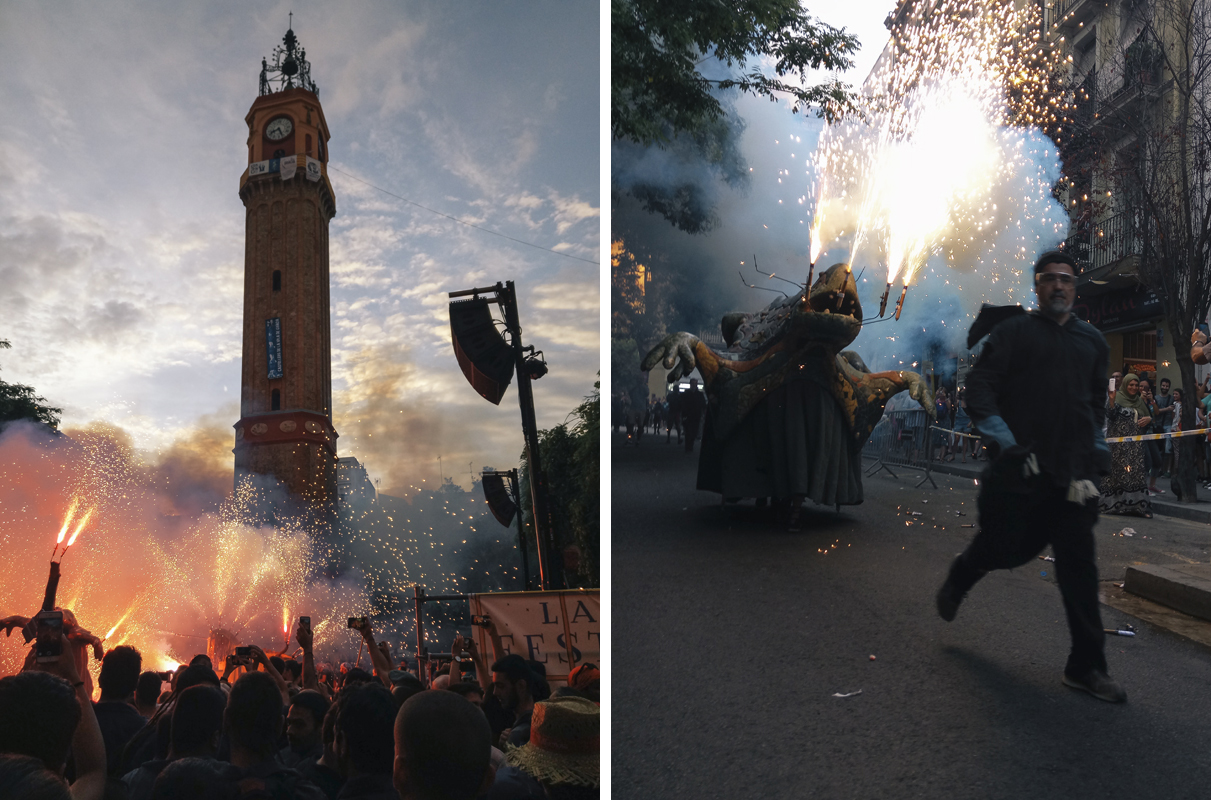
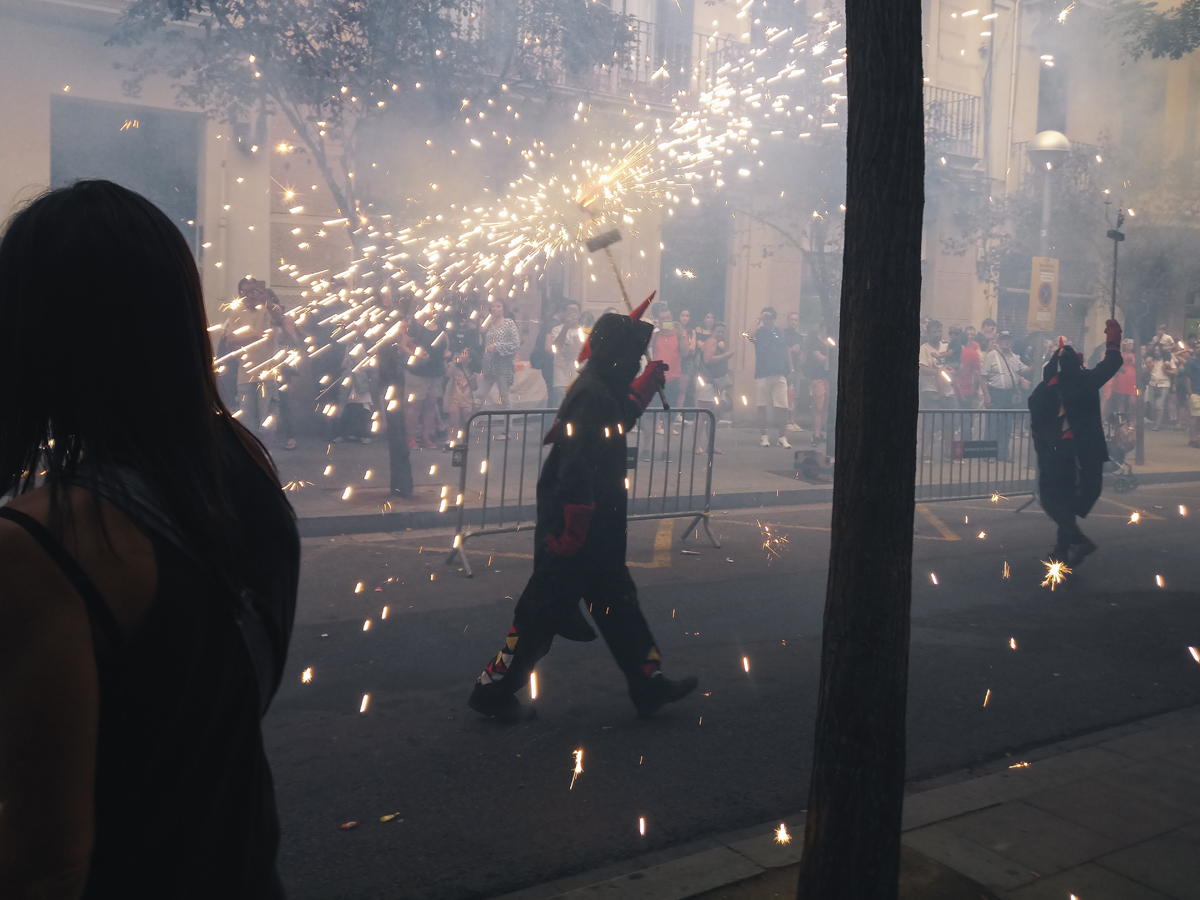
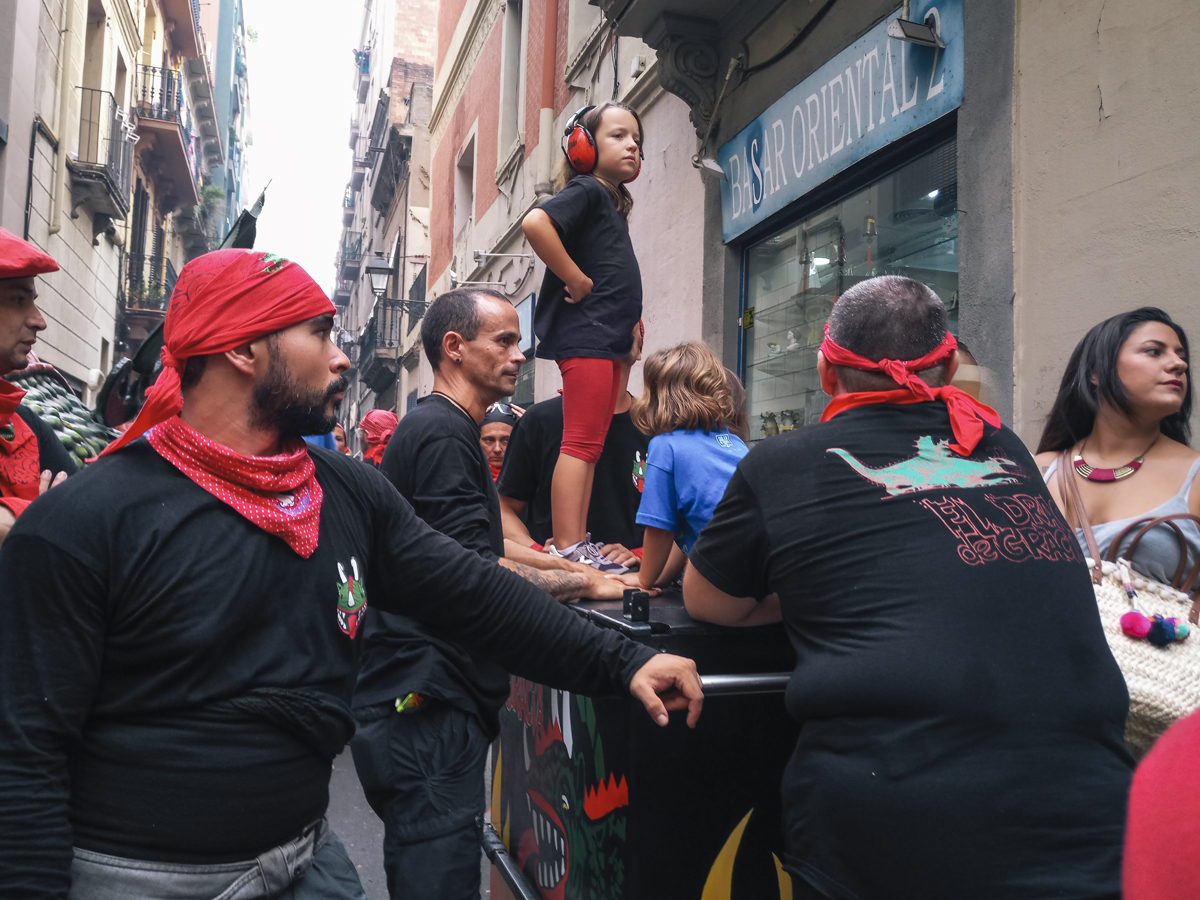
On August 16, Barcelona was alive with the sound of the Fiesta Major de Gracia – one of many street festivals that take place in the summer months in cities across Spain.
As a photographer and outsider, who now calls Barcelona home, it was an event I’ve always wanted to capture. The streets are full of energy: it’s the biggest party of the year. But the following day, everything changed when the city and its people were attacked.
I was on the beach when news started to spread. A van had driven into pedestrians, or so claimed messages over Whatsapp, but no one knew what was going on or how many people had been hurt. My girlfriend was texting manically and people were fleeing all around me after rumours started to spread that something was going to happen on the beach.
It was only later that we learned the extent of what had happened. Fifteen people lost their lives that day, and at least 130 were injured. Nine hours after the first attack, another van drove into pedestrians in Cambrils killing one woman and leaving six injured. The city was in shock.
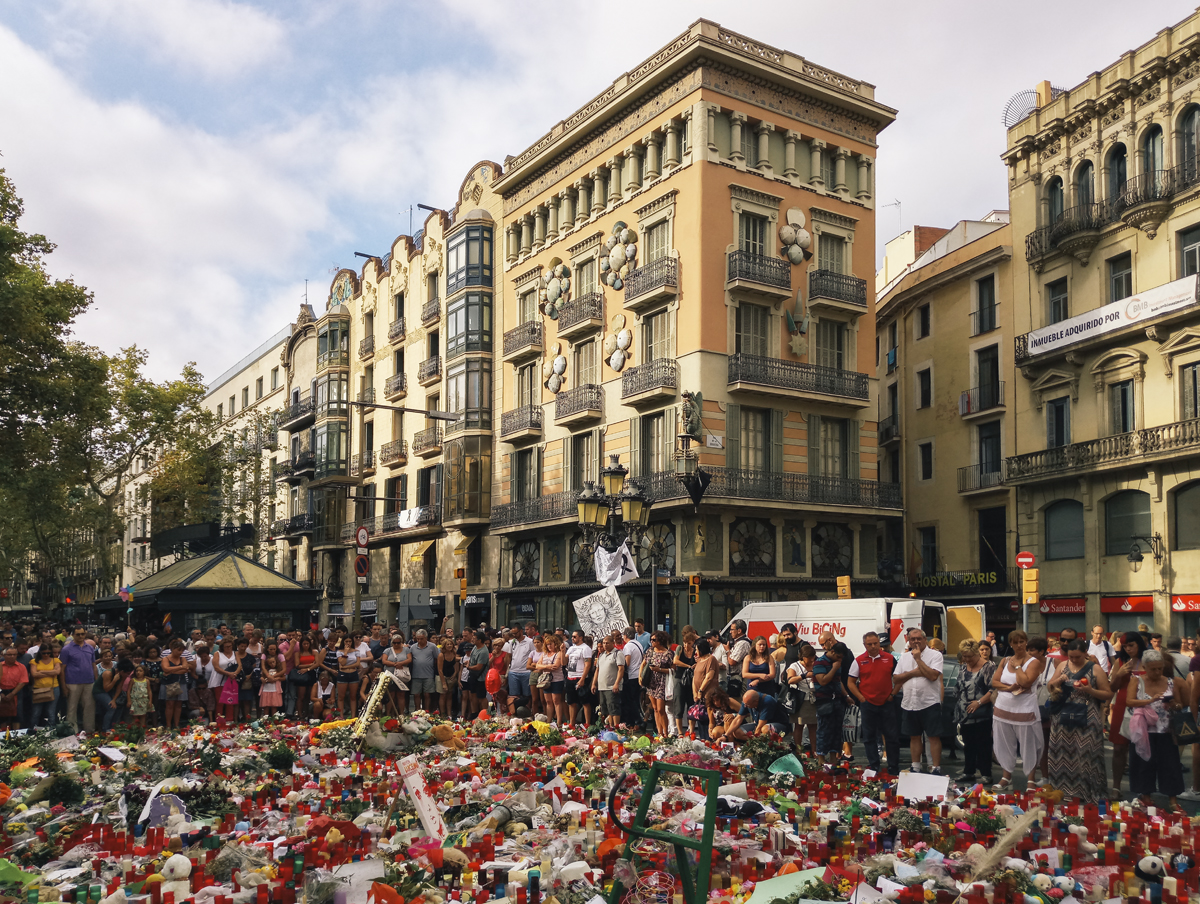
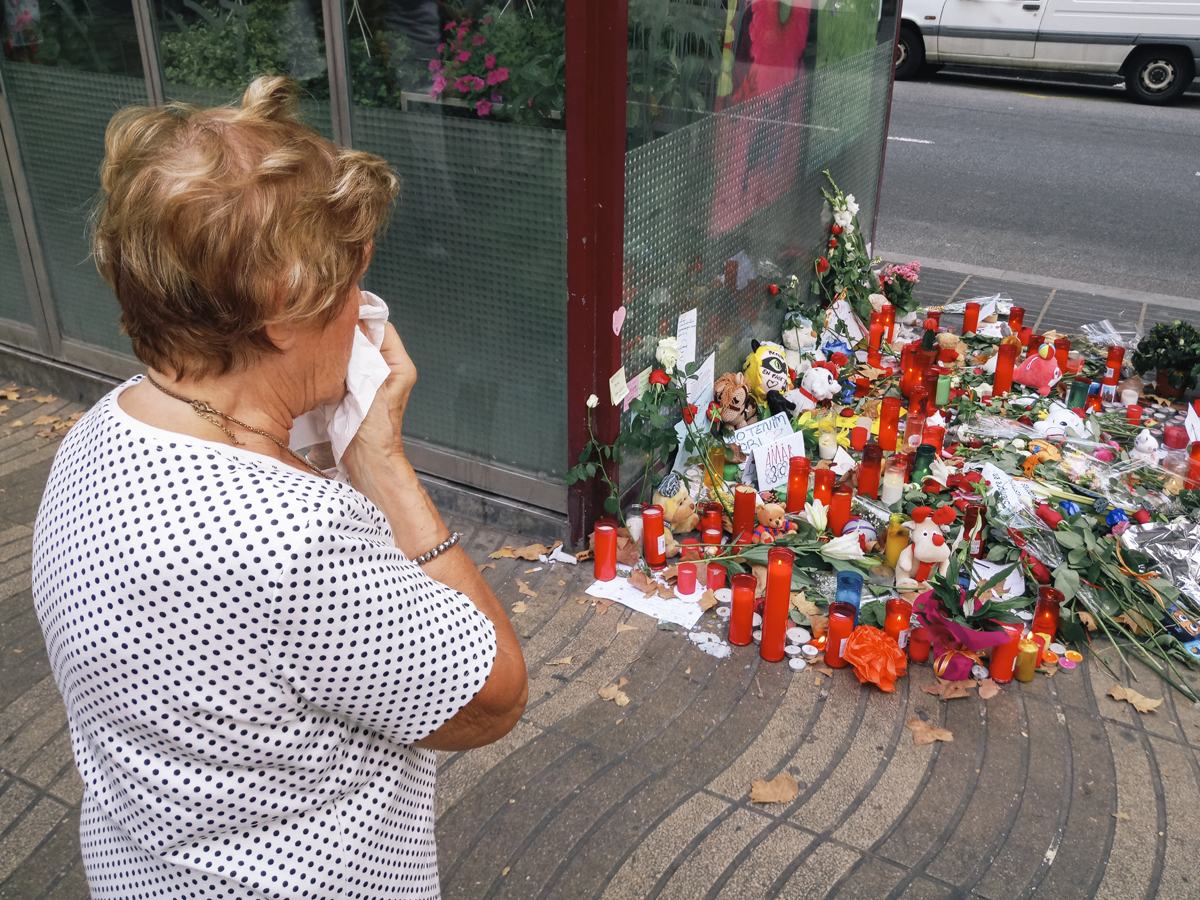
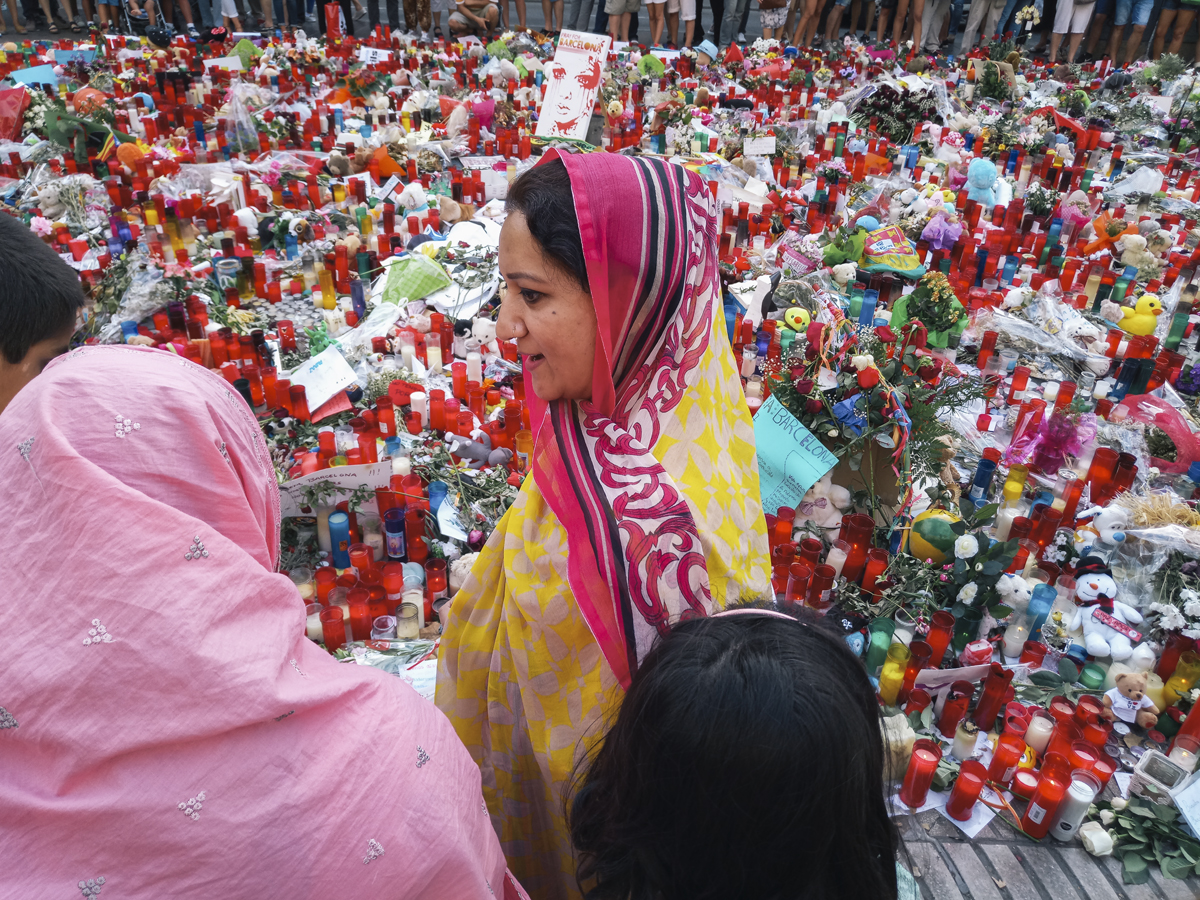
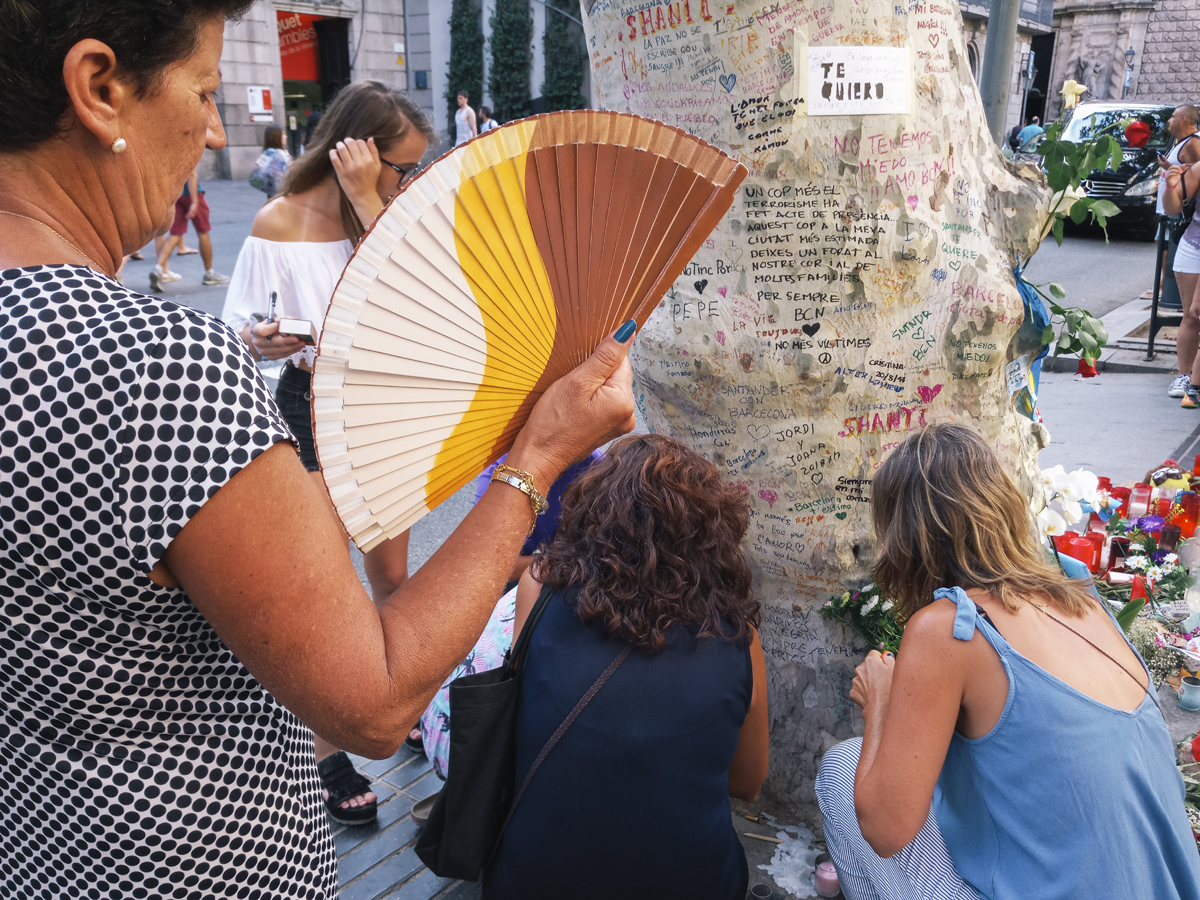
But the next morning there was a sense of calm. On La Ramblas, where the attack took place, the sidewalks were covered in flowers and candles. People were writing messages on trees and standing together in quiet contemplation.
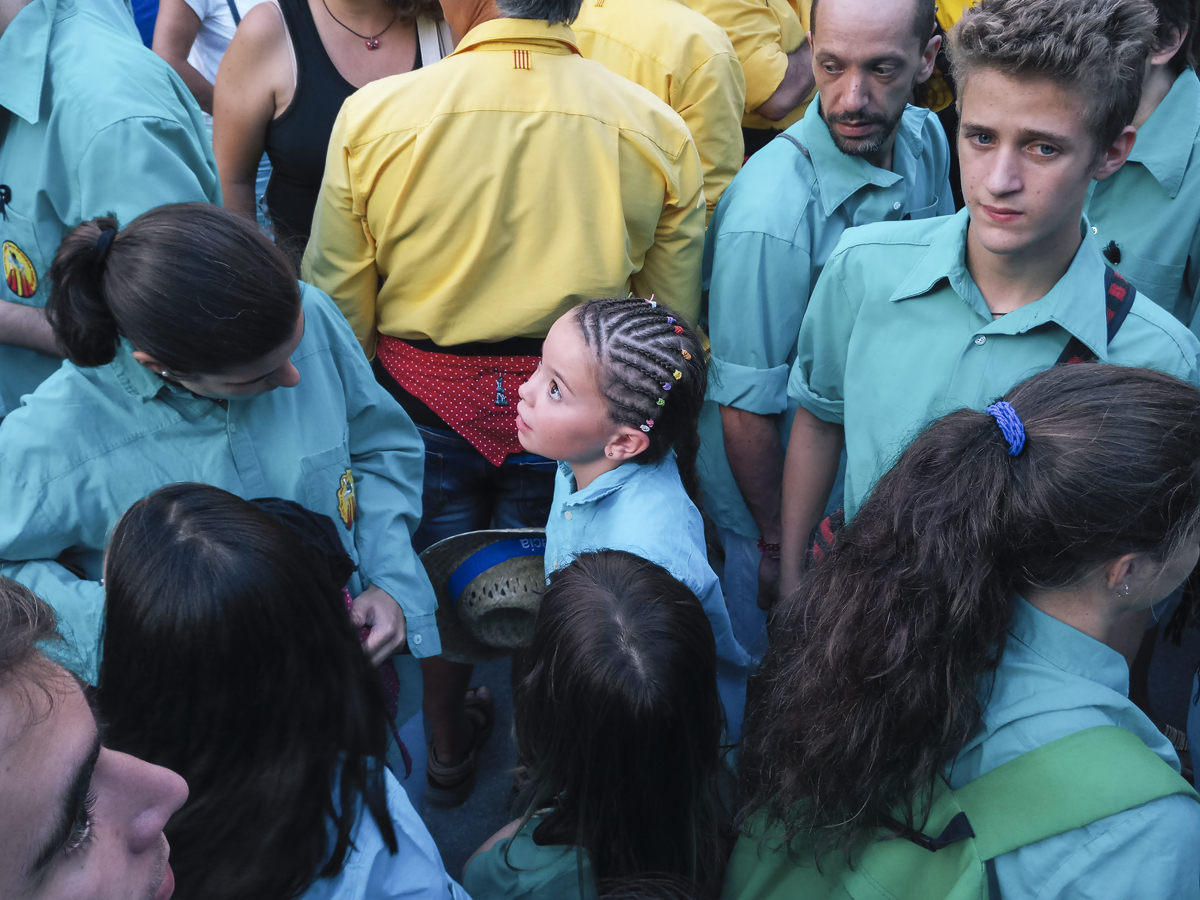
Down the road, members of the Muslim community were staging a demonstration and holding signs that read, ‘I’m a Muslim but not a terrorist.’ Spanish people mixed with tourists; Catalonian colours flew side by side with the Spanish flag.
For that day at least, everyone was united. That’s what surprised me the most: watching people put aside their differences and come together in such a large scale was a pretty powerful thing to see.
This was the first time I had taken photos of such a heavy event. As a travel photographer, I usually document adventure and try to use ‘feeling’ as a point of entry: making people feel what it was like to walk down a street, or experience a new culture.
So that’s how I approached this as well. I didn’t want to make anything appear heavier than it felt, which is something I think the news is guilty of doing.
Even though we are inundated with images every day, photography is more vital than ever. It’s through photos that you get the closest understanding of what it actually feels like to be standing there. If we only focus on negative things, then all we’re doing is breeding fear. It’s like a chain reaction.
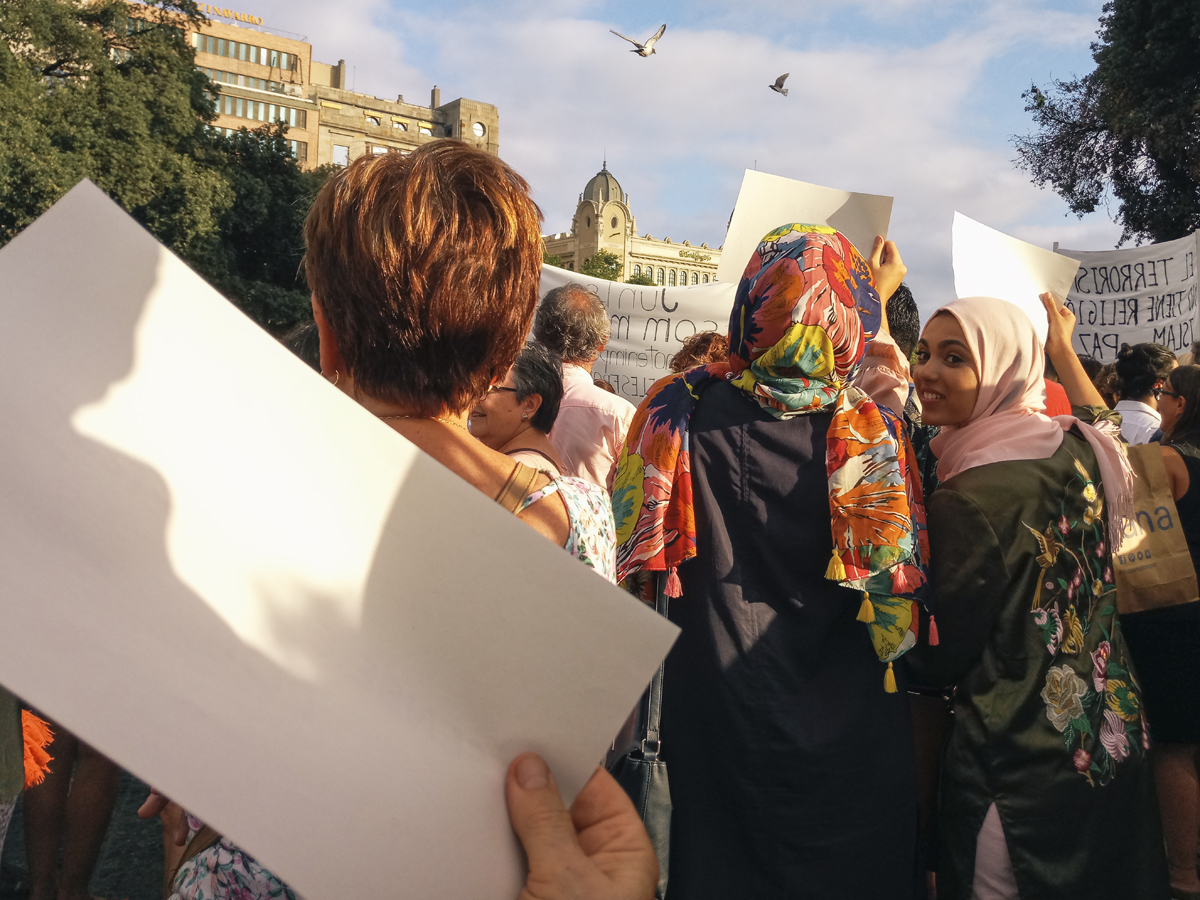
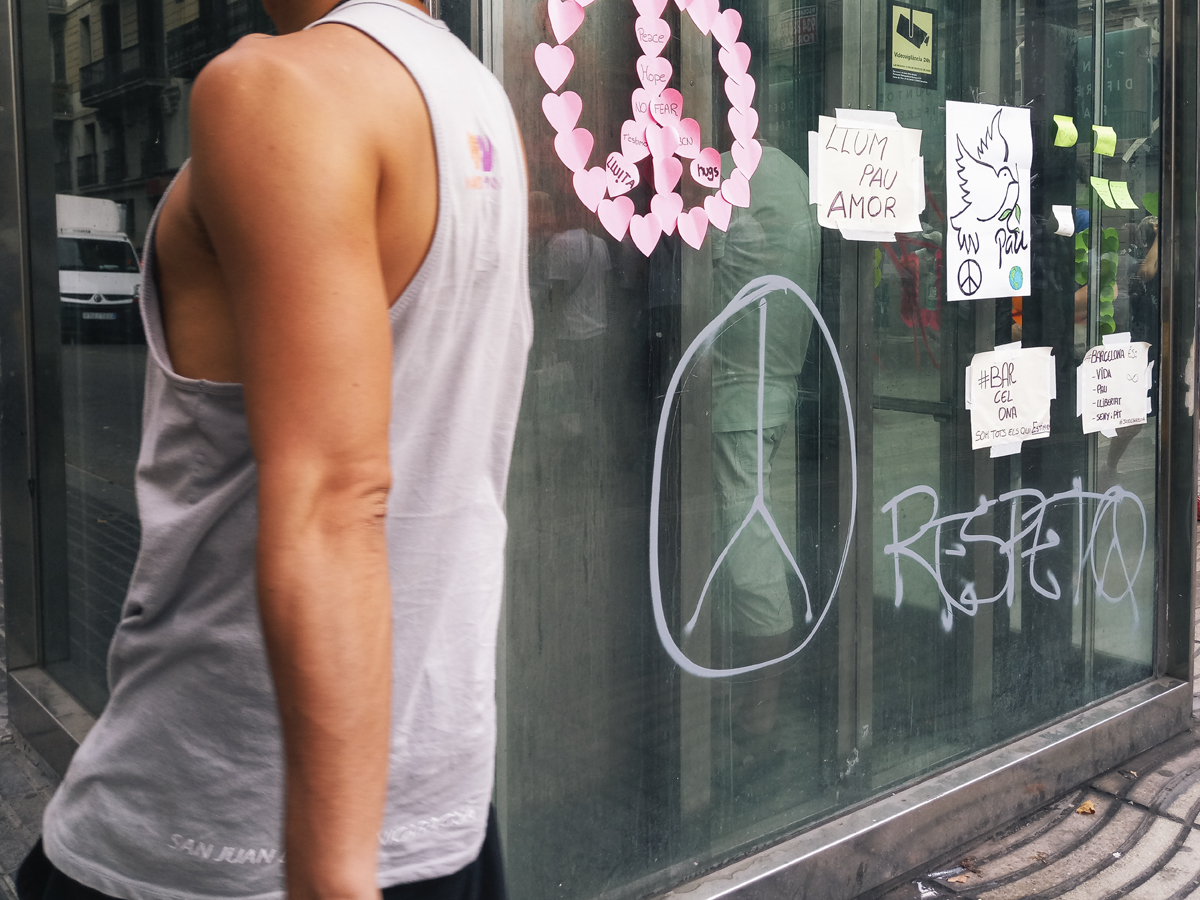
Witnessing the aftermath of an attack like this didn’t really change my perspective on anything. It makes you reassess things and value freedom. It makes you value friends and family, and enjoying life, because anything can happen at any time.
But being there as a photographer absolutely made me look at what happened differently. When you take photos you’re observant of everything happening around you.
You see every small movement, every person that’s crying, everyone that’s holding a sign. You see every person as an individual and zone in on how they’re acting.
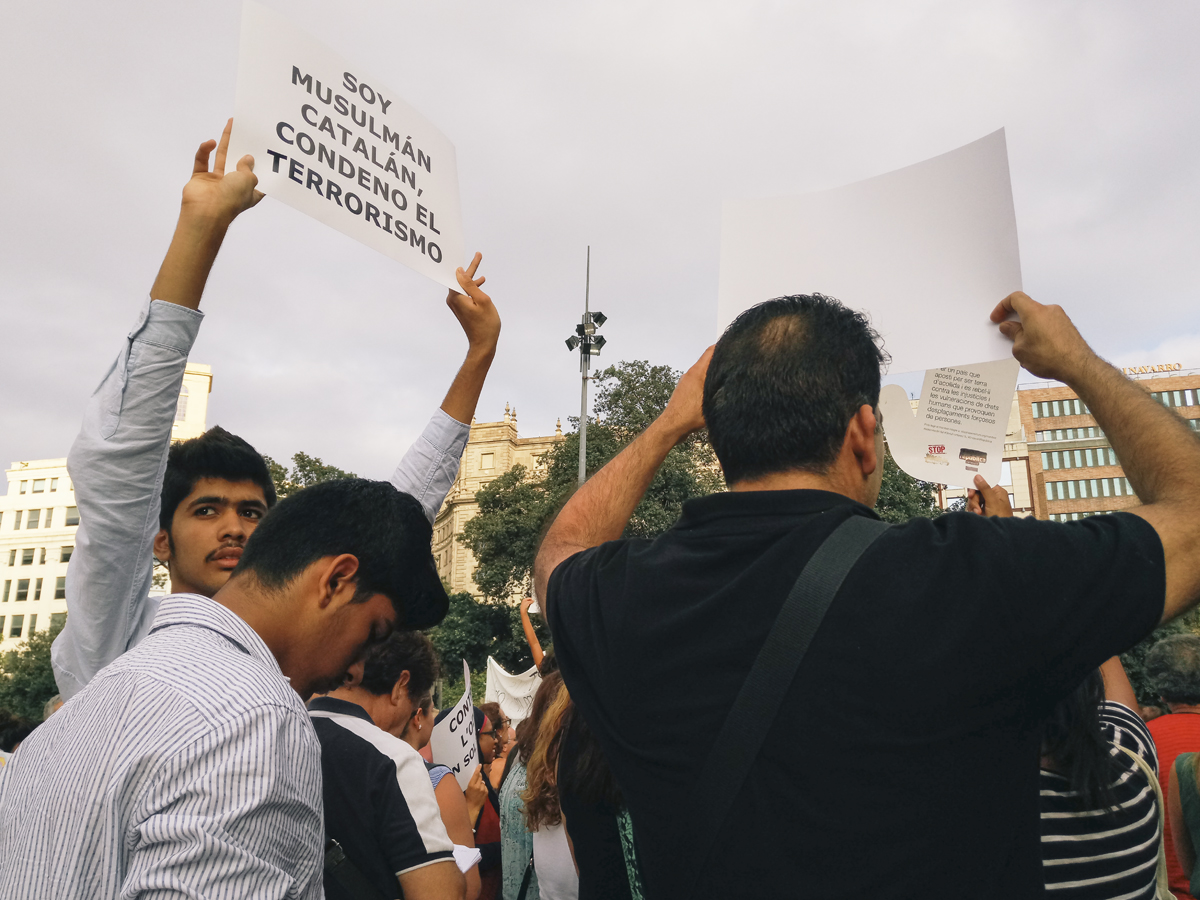
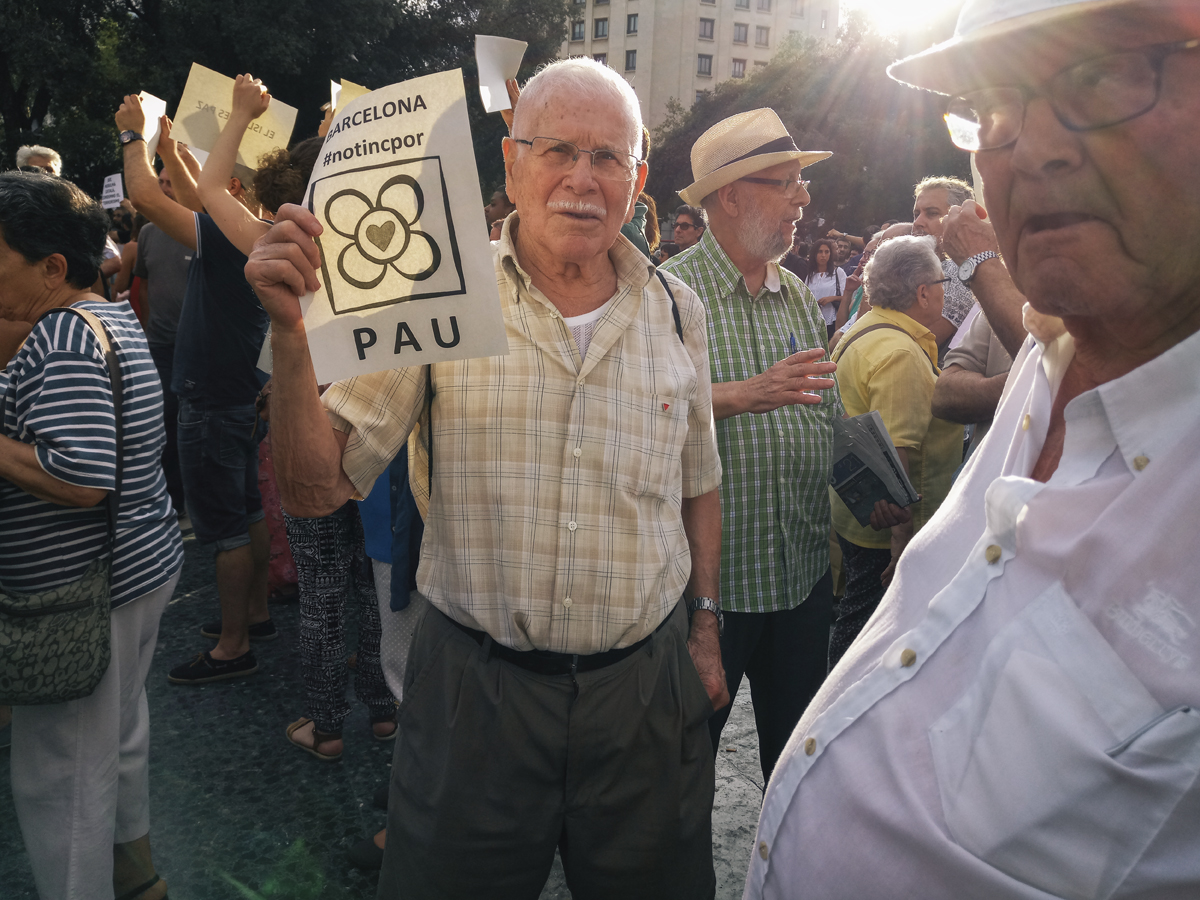
Barcelona started springing back to life days after the attack. The city went back to a state of celebration – but by then the news cycle had moved on.
I believe it’s important for people to see that the story didn’t end with mourning; that there was joy on the streets again. If anything, the city came back even stronger. People were eager to show they weren’t scared, as a tribute to those who lost their lives.
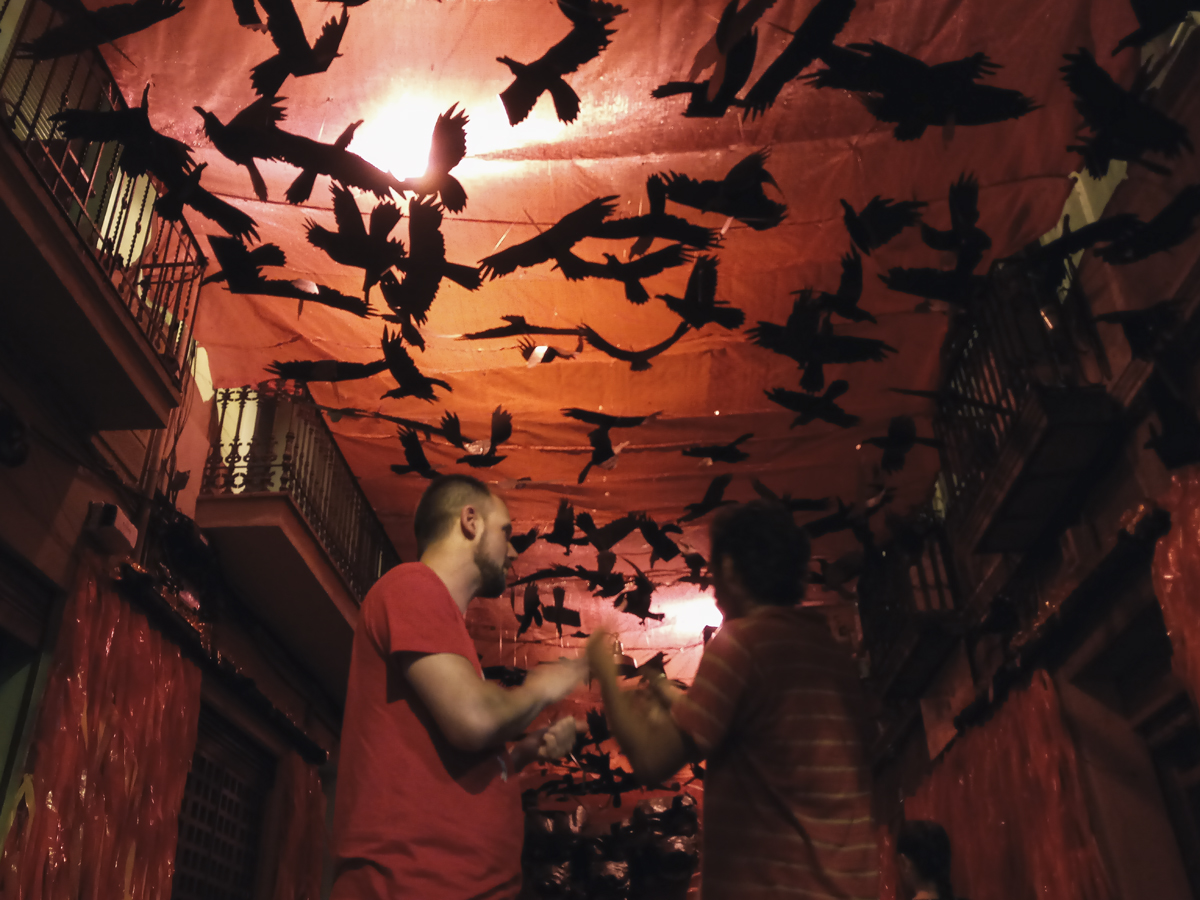
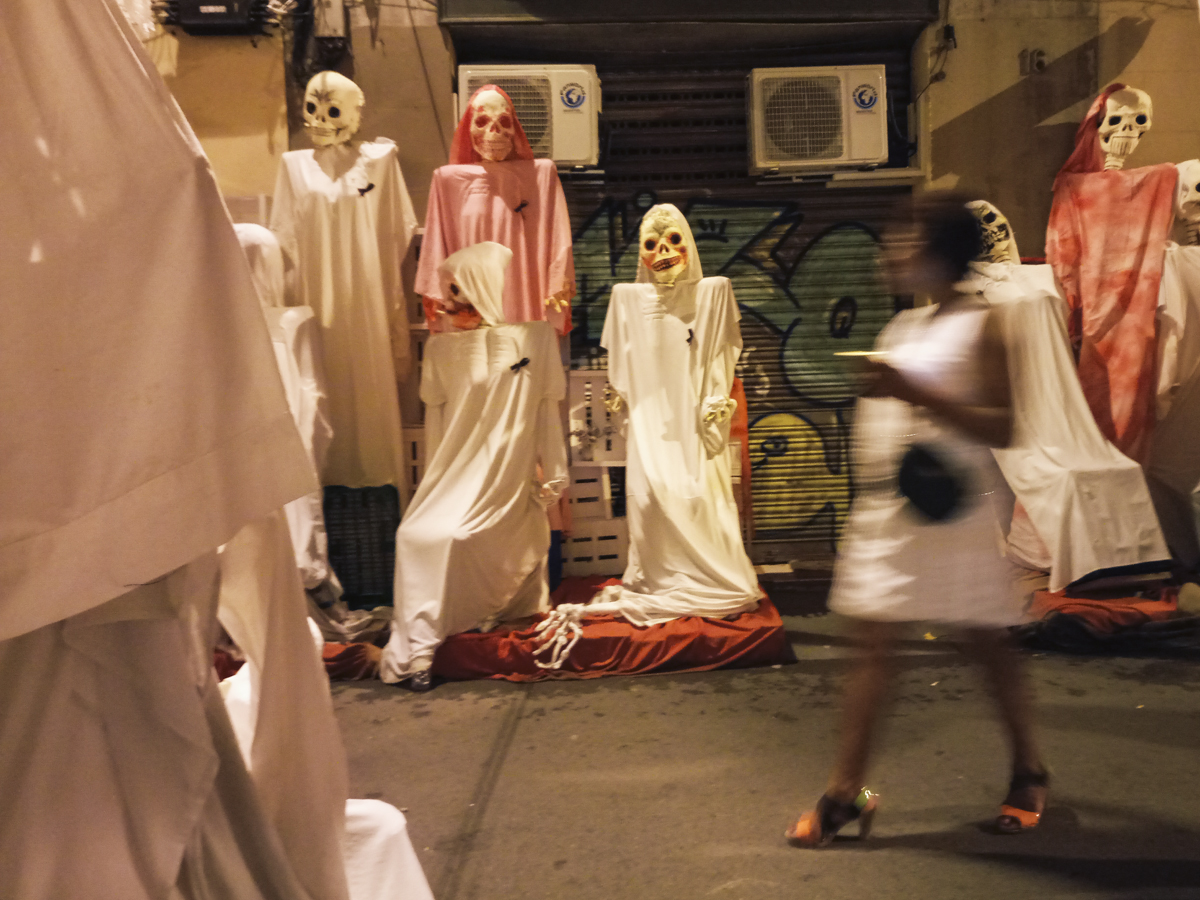
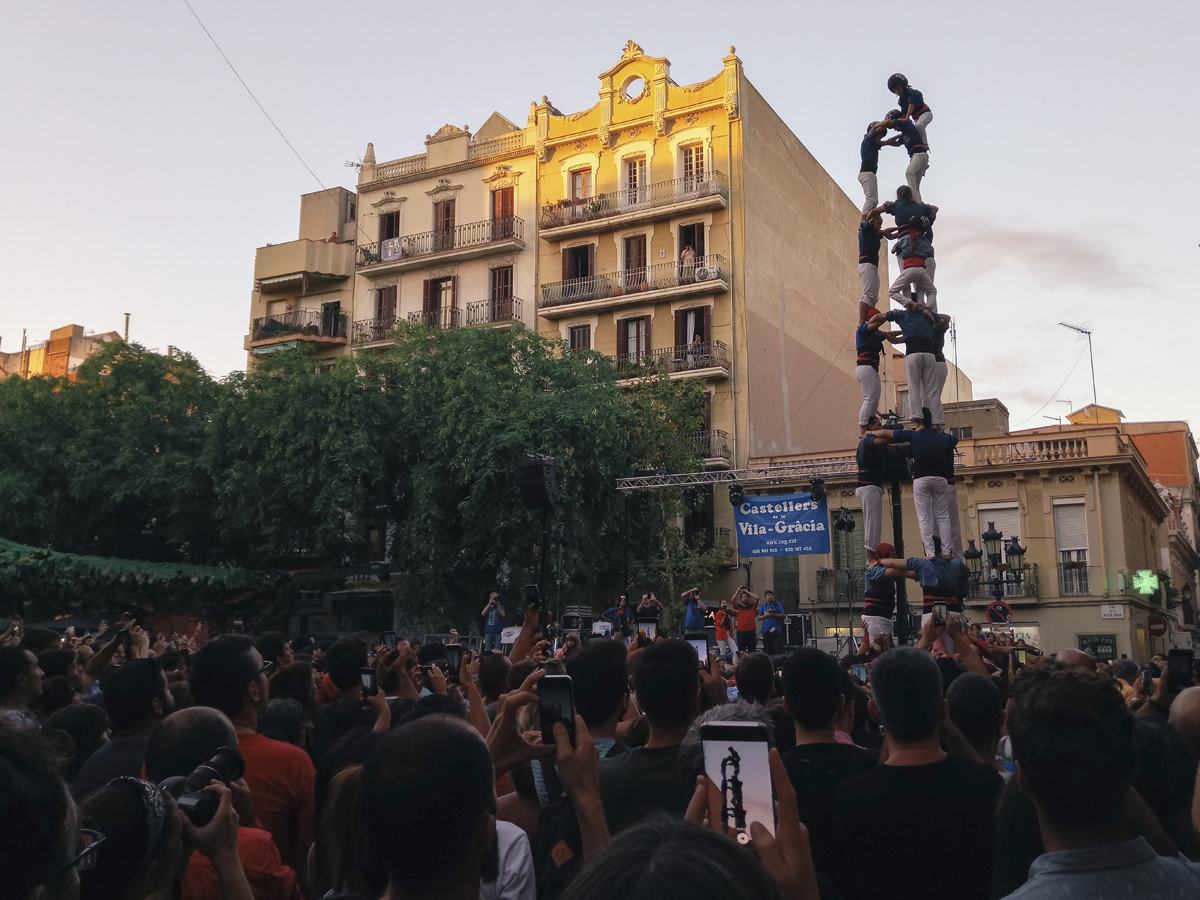
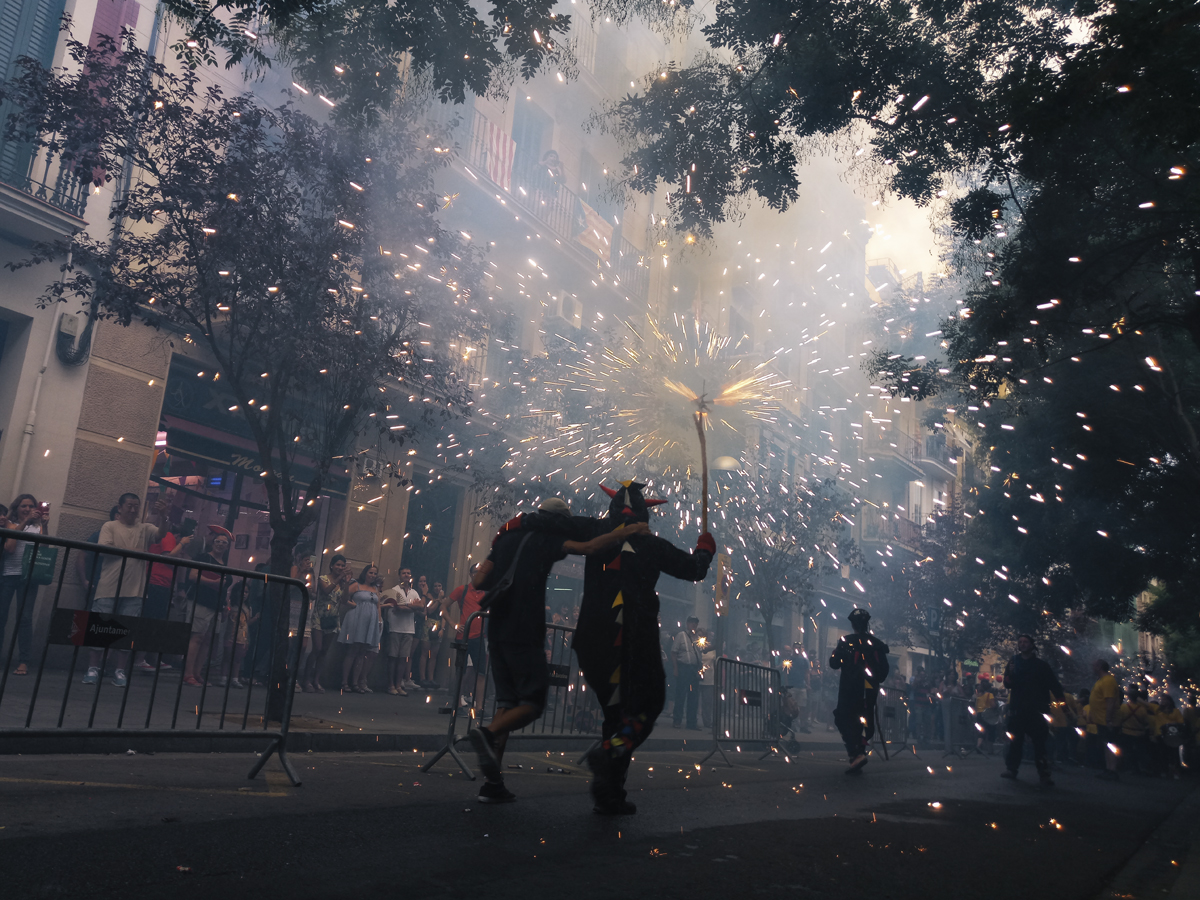
That’s the great thing about Barcelona – things always move on. The people of this city don’t let negative things affect them. All they want to do is enjoy their lives: that’s the beauty of living here.
Pivot Points: Stories of Change from Huck Photographers are shot entirely on the KODAK EKTRA Smartphone, a 21-megapixel camera with 4K video capability.
Enjoyed this article? Like Huck on Facebook or follow us on Twitter.
You might like

Jesse Glazzard’s messy portrait of queer friends, lovers and chosen family
The Sound of Dirt and Beauty — The photographer’s debut monograph explores tender, unpolished moments shaped by the people who he surrounds himself with, while offering a window into the UK’s working-class LGBTQ+ community.
Written by: Sunny Sunday

Behind the curtain at Alternative Miss World 1981
Olympia glamour — Running a subversive take on the traditional beauty pageant, the Andrew Logan organised event prioritised underground creativity and invention. Photographer David Corio went behind the scenes at its biggest edition.
Written by: Miss Rosen

New exhibition highlights British radical living over 200 years
Earthly Paradise — Taking place at the William Morris Gallery, it explores the homes and lives of artists, writers, musicians and more, as well as the conditions that allowed them to thrive.
Written by: Isaac Muk

What life on the Strait of Hormuz is really like
Southern Winds — Bandar Abbas based photographer Morteza Niknahad has been capturing the diverse communities and stories of his local region since he first picked up a camera. His new series highlights the human impact of war.
Written by: Isaac Muk

Nick Haymes’s intimate portrait of his family’s life
Chronograph — Over 25 years, the photographer documented his son’s lives as they grew into adults. The resulting photobook is an exploration of the passage of time, as well as the optimism of youth.
Written by: Miss Rosen

Kristina Rozhkova’s scatty, confronting portrait of captivity
Gut Feeling — The Russian artist’s 2024 arrest and subsequent detention opened her eye towards the omnipresent dynamics of power and control. Her new photobook is a stark exploration of being trapped.
Written by: Isaac Muk


