Protesters take on Trump after he refuses to firmly condemn neo-Nazi violence
- Text by Biju Belinky
- Photography by Timothy Fadek

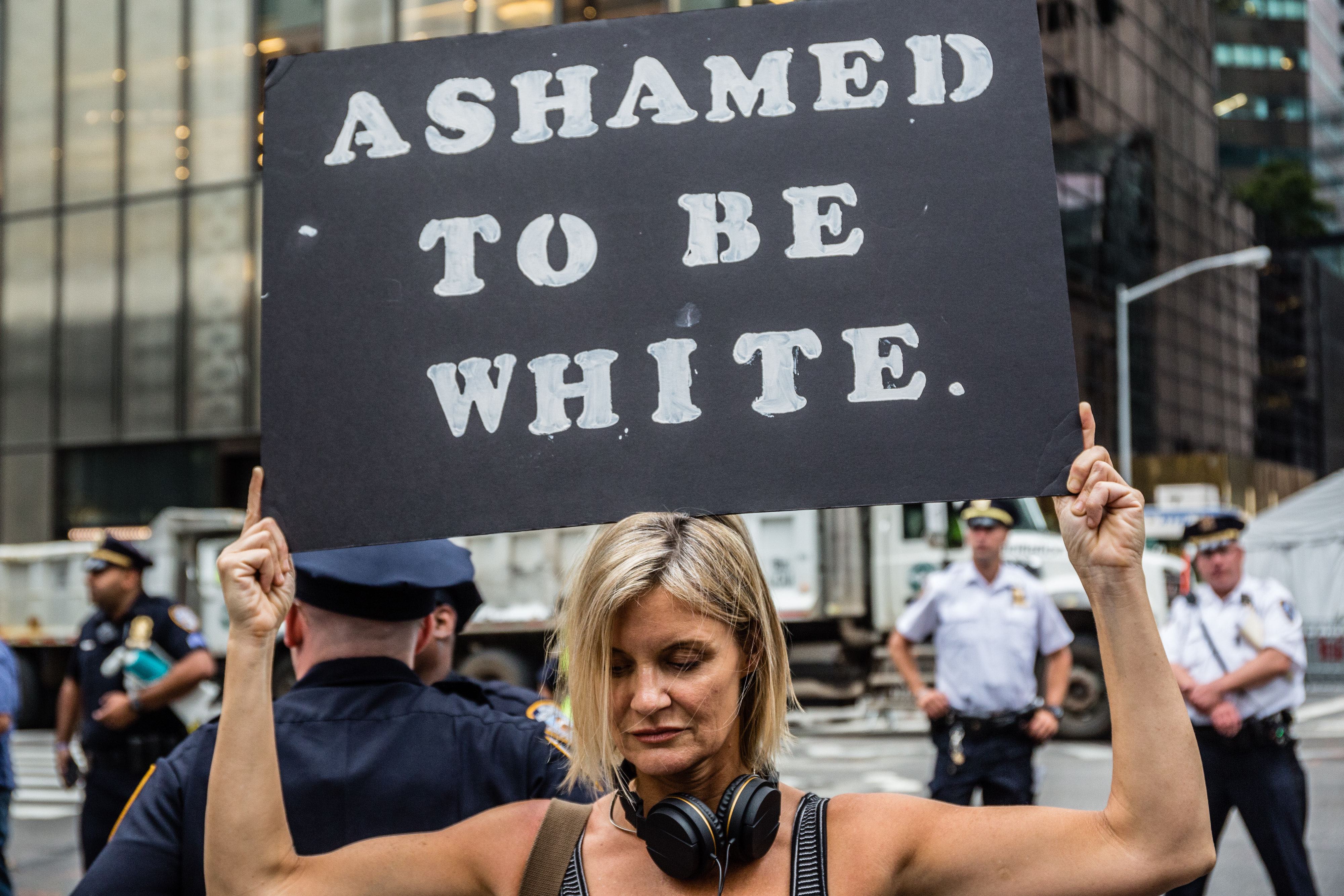
This week, hundreds of people who oppose Donald Trump’s presidency have been protesting in New York City. These demonstrations – which happened on both Monday and Tuesday – called for his impeachment, and stemmed largely from indignation at the president’s refusal to directly condemn those involved in the far-right, white supremacist rally that took place this weekend in Charlottesville, Virginia.
On Saturday, violent attacks were inflicted against anti-fascist and anti-racist counter-protesters, including the brutal beating of a young black man with a baseball bat. At one point, 20-year old drove through the crowd, leaving one counter-protestor dead and 19 injured.
The president, who is usually quick to tweet about most things, took his time responding to this open display of hate from the right wing white nationalists, which involved the slogans such as “Jews will not replace us”, as well as the chanting of a Nazi motto, “blood and soil.”
Yesterday, only a day after condemning the racist groups involved in Charlottesville, Trump went on a shambolic press conference, declaring that “both sides” were to share blame – making a distinction by calling one of the sides “bad” and the other “very violent.” Continuing, he declared that there were people among the white nationalist groups who might’ve been “nice.”
His statements received glowing reviews from former Ku Klux Klan leader David Duke, who thanked the president for condemning “the leftist terrorists in BLM/Antifa.”
As of now, the protests continue throughout the world. The nonviolent demonstrators have been reported to have made themselves heard through chants such as “No Trump, No KKK, No Fascist USA” and “shame shame shame.”
Twitter account It’s Going Down has been keeping tabs on actions being taken to support Charlottesville around the world. This post on Refinery29 has also helpfully compiled a list of resources on how to help the victims and continue fighting back. Finally, there is also a public Google Doc, compiling a series of resources about accountability and ways to support those affected and the organisations who make a difference.




Enjoyed this article? Like Huck on Facebook or follow us on Twitter.
You might like

Jesse Glazzard’s messy portrait of queer friends, lovers and chosen family
The Sound of Dirt and Beauty — The photographer’s debut monograph explores tender, unpolished moments shaped by the people who he surrounds himself with, while offering a window into the UK’s working-class LGBTQ+ community.
Written by: Sunny Sunday

Behind the curtain at Alternative Miss World 1981
Olympia glamour — Running a subversive take on the traditional beauty pageant, the Andrew Logan organised event prioritised underground creativity and invention. Photographer David Corio went behind the scenes at its biggest edition.
Written by: Miss Rosen

What life on the Strait of Hormuz is really like
Southern Winds — Bandar Abbas based photographer Morteza Niknahad has been capturing the diverse communities and stories of his local region since he first picked up a camera. His new series highlights the human impact of war.
Written by: Isaac Muk

Just Stop Oil holds first protest in 17 months
No new drilling — Having previously said that it was “hanging up the hi-vis”, the climate activist group has blocked a road outside Parliament to protest Andy Burnham opening the door for new oil and gas extraction licenses in the North Sea.
Written by: Ella Glossop

Nick Haymes’s intimate portrait of his family’s life
Chronograph — Over 25 years, the photographer documented his son’s lives as they grew into adults. The resulting photobook is an exploration of the passage of time, as well as the optimism of youth.
Written by: Miss Rosen

Kristina Rozhkova’s scatty, confronting portrait of captivity
Gut Feeling — The Russian artist’s 2024 arrest and subsequent detention opened her eye towards the omnipresent dynamics of power and control. Her new photobook is a stark exploration of being trapped.
Written by: Isaac Muk


