Photos celebrating 50 years of hip-hop style
- Text by Miss Rosen
- Photography by Main image by Janette Beckman

Hip hop’s penchant for remixing cultural touchstones crosses all disciplines – be it music, dance, video, fashion, or art – creating bridges from one generation to the next through shared references. With the new exhibition and book, Fresh Fly Fabulous: 50 Years of Hip Hop Style, Elena Romero and Elizabeth Way look back at half a century of sartorial innovation that began on the streets of the Bronx, and has risen to become a billion dollar global industry.
Spotlighting the originators, Fresh Fly Fabulous pays homage to designers like Dapper Dan, April Walker, and Karl Kani, Video Music Box’s Ralph McDaniels, and The Fever’s Sal Abbatiello, and explores the influence of queer culture, HBCUs, Ralph Lauren, and graffiti on hip hop style. There are chapters dedicated to hair, nails, and nameplates, as well as photos by luminaries including Jamel Shabazz, Janette Beckman, and Albert Watson that seamlessly blend street style with celebrity portraits.

Fresh Fly Fabulous: 50 Years of Hip Hop Style.

Salt-N-Pepa, NYC, 1987. Credit: Janette Beckman.
British photographer Janette Beckman remembers seeing Grandmaster Flash and the Furious Five when they came to play in London back in 1982. “They looked different from anyone else I’ve ever seen,” says Beckman, who had been chronicling the underground UK music scene for magazines like Melody Maker and The Face.
That Christmas, she visited New York and quickly found a new home chronicling the city’s budding hip hop industry. Working with indie labels like Def Jam, Sleeping Bag, and Next Plateau, Beckman shot album covers and promo photos for artists like Salt -N- Pepa, Gang Starr, and EPMD.
She famous photographed Slick Rick with a gold crown, rope chains, rings, pistols, and teeth. “We hadn’t seen anything like that,” Beckman says, still dazzled by her early encounters with hip hop style.

Run-D.M.C., Hollis, Queens, 1984. Credit: Janette Beckman.

The Kidd Creole of Grandmaster Flash and The Furious Five, NYC, 1980. Credit: Janette Beckman.

Slick Rick, NYC, 1988. Credit: Janette Beckman.
“The belts with name plates leather hats, sneakers with the fat laces – it was a bit of relief,” she says. “At that time, London was punk, everyone was dressed in black leather jackets, a bit disheveled. It was a new wave coming in and everyone was happy to pose. They weren’t snarling, they were just doing cool poses. It was new and exciting.”
Beckman collaborated directly with artists and groups on the photoshoots, working free from photo crews, marketing teams, and stylists. Beckman points to the way hip hop erased the distinction between the street and the stage, noting how artists donned custom Dapper Dan outfits wherever they went.
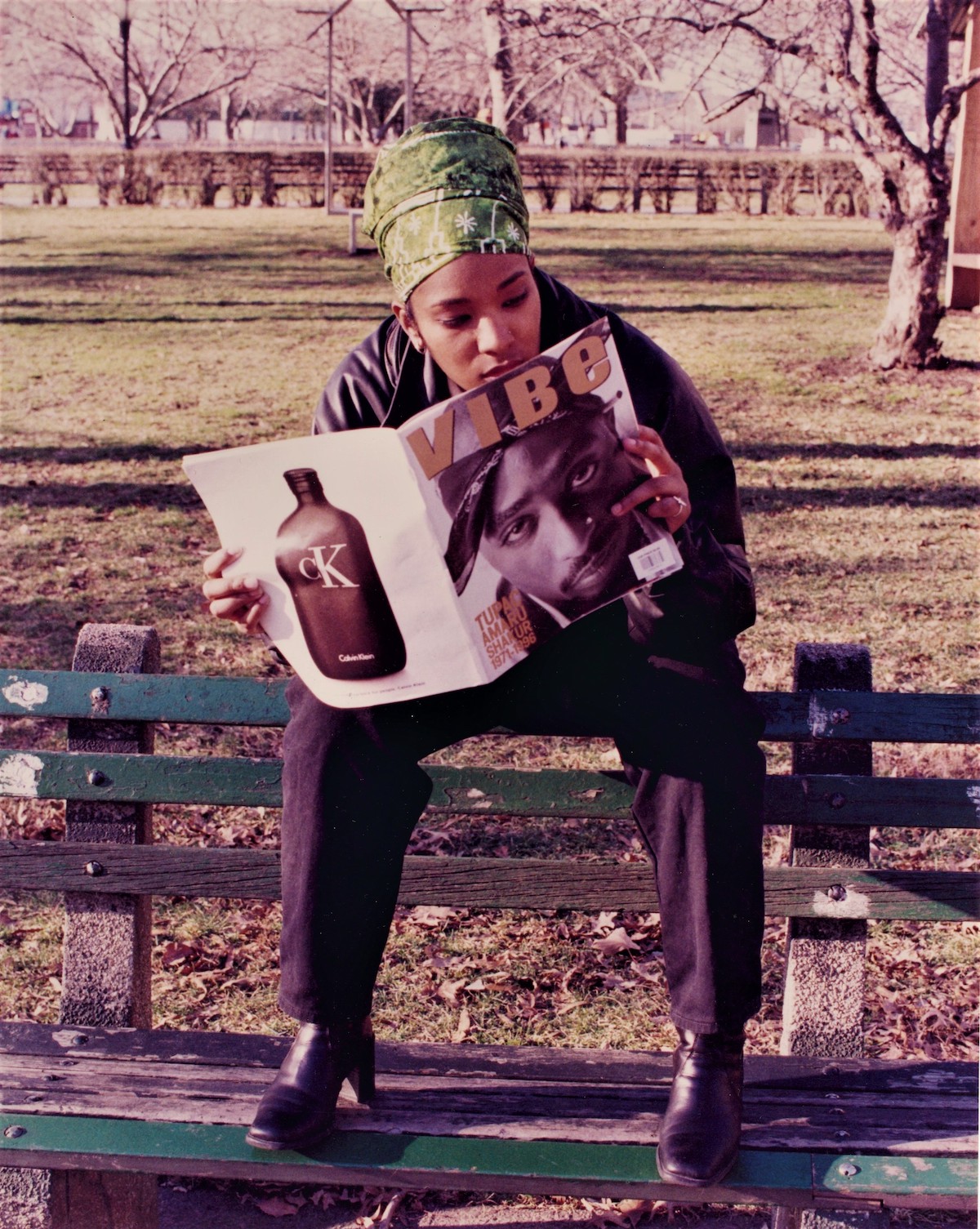
Credit: Jamel Shabazz.

Credit: Jamel Shabazz.
“I think that’s when hip hop fashion really began to influence how the crowd dressed,” says Beckman. “I took a photograph of Run-D.M.C. in 1984 and they set a standard that still works today. There were no stylists, no hair or make-up at any of my shoots. I would meet people on the street and they were wearing what they were wearing.”
Beckman points to hip hop’s passion for reinvention, whether it’s A Tribe Called Quest’s love for Afrocentric prints or a jaunt down to Canal Street for $20 Rolex knockoff of her own. “Everyone had their own look and it went with their music,” she says. “They’ve all interpreted it their own way because that’s what style is all about.”

GrandMixer DST, London, 1982. Credit: Janette Beckman.
Fresh Fly Fabulous: 50 Years of Hip Hop Style is on view through April 23, 2023, at the Museum at FIT New York.
Enjoyed this article? Like Huck on Facebook or follow us on Twitter.
You might like

Cristale: “Living in London taught me to be grateful”
What Made Me – In this series, we ask artists and rebels about the forces and experiences that shaped who they are. Today, it’s Brixton-born rapper Cristale.
Written by: Cristale

Halcyon, end of summer days in ’80s Massachusetts
Bell Pond — Stephen DiRado’s new photobook is a nostalgic look at blissed out moments of young love, family and coming of age at a swimming pond in Worcester, Massachusetts.
Written by: Miss Rosen

Photographing America’s 20th century rebels
Rebels With a Cause — A new monograph looks back at Jean-Pierre Laffont’s extensive archive documenting counterculture, art, activism and more, shaping the country as it is today.
Written by: Isaac Muk

The groundbreaking photography of Gordon Parks
Voices in the Mirror — A new exhibition dives deep into the legendary lensman’s archive, who captured the Civil Rights Movement and Black America like no other.
Written by: Miss Rosen

Space Afrika are flying the flag for the Black avant-garde
Quiet Storm — Mancunian duo Joshua Tarelle Reid and Joshua Inyang have been soundtracking their vision of industrial decay for the best part of a decade. Their latest album sees the pair join forces with global diasporic voices to create their most personal, expansive record yet.
Written by: Jack Dennison-Thompson

The long history of slop in music
Top of the Slops — The term might be everywhere now, but the act of copying and enshittifying has been around for decades, explains Ian McQuaid.
Written by: Ian McQuaid


