
A definitive guide to the history of medical cannabis

Last week, the UK staggered to its feet and commenced its wobbly-kneed ascent into the world of medical-cannabis, allowing cannabis-based medicines to become available on the NHS for the first time in half a century.
It hasn’t been an easy ride: the UK government has been sceptical about the positive effects of cannabis since the early 1900s. However, a few months ago the cards were effectively snatched out of home secretary Sajid Javid’s hands, as both rising international acceptance and pressure within the UK – mounted by the brave campaigning of both Alfie Dingley’s and Billy Caldwell’s families – began to make the country’s outlook on cannabis seem outdated, ignorant and unjust.
While it’s a start, there’s still a long way to go. The new legislation will only permit specialist doctors to prescribe it, meaning that, in reality, very few patients will be affected – medication cannot be freely prescribed without robust, accurate trial data and evidence of clinical benefit. So, given that humans have been cultivating cannabis for over 10,000 years, why has it taken so long for it to become medically accepted? And why do we still know so little about it?
ANCIENT HISTORY
The first alleged recorded use of Cannabis as a medicine was way, way back, between 2696 – 2737 BC in China by legendary Emperor Shen Nung (the same guy who is said to have invented tea). Nung was fabled as a philosopher, farmer and hemp enthusiast, whose documentation of the plant’s ‘yin energy’ for malaria, dysentery, constipation and rheumatic pains is considered the first pharmacopoeia entry (an encyclopaedia of medicines detailing their effects and uses).
Over in Africa, there are records of medicinal use of cannabis in The Egyptian Ebers Papyrus – a preserved medical document that dates to about 1550BC – for treatment in fever, pain and uterine contraction. Across the Mediterranean, Dioscorides – private physician to the Roman Emperor Nero – documented it as a treatment “for pains of the ears”. Meanwhile, from the 8th to the 18th century, evidence shows that the Arab world used it as a painkiller, anti-inflammatory and anti-epileptic.
HEADING WEST
Given that the plant is not indigenous to Europe, there is very little recorded use in the West until the 17th century, when international trade began to increase. In 1621, English Clergyman Robert Burton suggested cannabis as a treatment for depression in his book The Anatomy of Melancholy. However, it was Irish physician William Brooke O’Shaughnessy that really made the first leap into medical testing in Western medicine.
Working in India from 1833, O’Shaughnessy experimented with the indigenous Cannabis Indica – aka Hindu Kush – which had a historical use in India dating back thousands of years. O’Shaughnessy explored the varying effects of different parts of the plant, noting how its forms and potencies were more useful for medicinal effects than those that created more acute and severe intoxication. This, as we know now, is likely to be due to varying amounts of Tetrahydrocannabinol (THC), which is the psychoactive component of the plant that gets you high. The Cannabidiol (CBD) is the non-psychoactive form of the plant, which will be a major component of the recently legalised medicinal products in today’s world.
After some extremely unethical testing on animals (and, in some cases, children) he concluded cannabis a wonder drug useful in treating rabies, rheumatism, infantile convulsions, cholera, tetanus and delirium in alcohol withdrawal. The Provincial Medical and Surgical Journal (which would become the British Medical Journal) proudly awarded medicinal cannabis its front page, and it wasn’t long before its use in the UK became popular. It became regularly employed as a painkiller – even Queen Victoria’s private physician JR Reynolds prescribed it to help relieve period pain and symptoms after childbirth.
THE FALL FROM GRACE
Anxiety towards the drug started to develop throughout the 19th century. Critics began linking its usage with insanity – “the lunatic asylums of India are filled with ganja smokers” declared Mark Stewart MP in 1891 – leading to the Indian Hemp Drugs Commision report in 1894, which reflected on the social, medicinal use of cannabis in the area. The paper concluded the drug may be dangerous in excessive use, but wasn’t harmful in moderation and could be beneficial for those in malaria-endemic areas.
Nevertheless, it didn’t shirk its association with mental illness, and pharmaceutical companies dropped interest once the syringe came along. Drugs like morphine could be far easier formulated into a liquid that was easily injectable. Cannabis, on the other hand, is insoluble, and cannot dissolve readily in water – you’ll often see cannabis medication referred to an “oil.”
POLITICISATION
The most lasting and damaging marks on the reputation of cannabis came in the 1900s from Henry Anslinger – an American prohibition officer with a personal vendetta against drugs. Anslinger fanned the flames of racist propaganda and cannabis paranoia to help sway public opinion towards prohibition (until 1928, cannabis was legal around the world). He was once quoted saying: “There are 100,000 total marijuana smokers in the US and most are Negroes, Hispanics, Filipinos and entertainers. Their satanic music jazz and swing results from marijuana use.”
Racist propaganda had been sweeping the USA around this time. Cannabis use was associated with Mexican immigrants, which led to the coining of the term Marijuana. Its spelling was changed from Marihuana to Marijuana, making it rhyme with Tijuana (the city) to appear more Mexican sounding. Soon, media Tycoon William Randolph Hearst’s media outlets starting spinning stories of ethnic minorities using marijuana before attacking and cavorting with white women. (Incidentally, Hearst was also heavily invested in the cotton industry, of which Hemp was a direct competitor.)
Since then, cannabis’s reputation has largely been associated with recreational use and it’s incorrect – or, at least exaggerated – links with mental health issues.
BACK IN BRITAIN
Nevertheless, until 1973, cannabis-based products could still be prescribed on the NHS. It was only after the introduction of the Misuse of Drugs Act that cannabis was written off as “having no known or limited medical use.”
Although seemingly dead, the medical benefits of cannabis remained a conversation, largely thanks to the work of campaigners and the increased popularity of self-medication. This gave pharmaceutical developers proof of a potential market for cannabis. From there, therapeutic forms started to arise accordingly: an appetite suppressant for AIDS wasting, anti-sickness, pain management, antiglaucoma, for the treatment of asthma and Multiple Sclerosis (MS).
Further encouragement came in the 1990s following the discovery of the endocannabinoid pathway – a self-regulated pathway that is controlled by our body’s self-produced cannabinoids – which has a wide range of functions including pain management, control of movement, nerve protection and, perhaps most impressively, tumour growth control. The breakthrough stood as proof that not all cannabinoids were harmful to the human body.
For a few decades, the country was faced with a chicken and egg situation: the government would not acknowledge cannabis-based medicines until it saw evidence of clinical use, but the heavy restriction on the plant made it near impossible for companies to conduct robust clinical trials. Eventually, pharma company GW pharmaceuticals bartered with the Home Office to gain access to the plant to conduct research for their product Sativex, which, in 2010, became the first licensed product in the UK for the treatment of MS-associated spasticity.
WHAT’S NEXT?
Thanks to public pressure on MPs and the rise of a legal cannabis industry, the full potential of this drug can now be unleashed. That said, while there are many exciting discoveries to be made, there’s still so much we don’t know about what is a complicated medicine. If the government doesn’t fully engage and make an effort to fill in the gaps, then other, less reliable sources might – which could do more harm than good.
It’s time to cast away cannabis’ negative reputation that has been cultivated through its recreational use and start referring to it as a potential medicine. The UK follow the steps taken by Germany, USA and Canada, who are a couple years ahead in trying to carve out balanced medical regulation, trying to restrict abuse by recreational use, yet allowing fair accessibility for the patients that need it most. But this may only be possible if, like in Canada, there is an appropriately regulated recreational system that exists alongside, so we can start drawing a line between recreation and medicine.
While progress is progress, the UK still has much to learn and a long journey ahead of it. However, if the right people can continue a sensible discussion on a public level, we might begin to see overdue change that benefits everyone.
Jonny Winship is a writer and community pharmacist.
The information in this article is intended only as a guide. Please consult your health provider before taking action.
Enjoyed this article? Like Huck on Facebook or follow us on Twitter.
You might like

Signs of solidarity as London marks three years of genocide in Palestine
Never forget — 250,000 people gathered on Saturday as Israeli attacks have continued in Gaza and the West Bank. Daisy Schofield photographed the diverse people and placards in attendance.

Landmark new exhibition is celebrating 50 years of female punk
God Save the Queens — The Museum of Youth Culture is bringing together rare photography, archive material and a one-night-only supergroup featuring members of X-Ray Spex, The Slits and The Raincoats.

Photographing America’s 20th century rebels
Rebels With a Cause — A new monograph looks back at Jean-Pierre Laffont’s extensive archive documenting counterculture, art, activism and more, shaping the country as it is today.

Sports Banger is throwing a party to mark 90 years since the Battle of Cable Street
“Fascists hate dancing” — The October event will bring DJs, live music, sound system culture and anti-fascist politics together in East London.
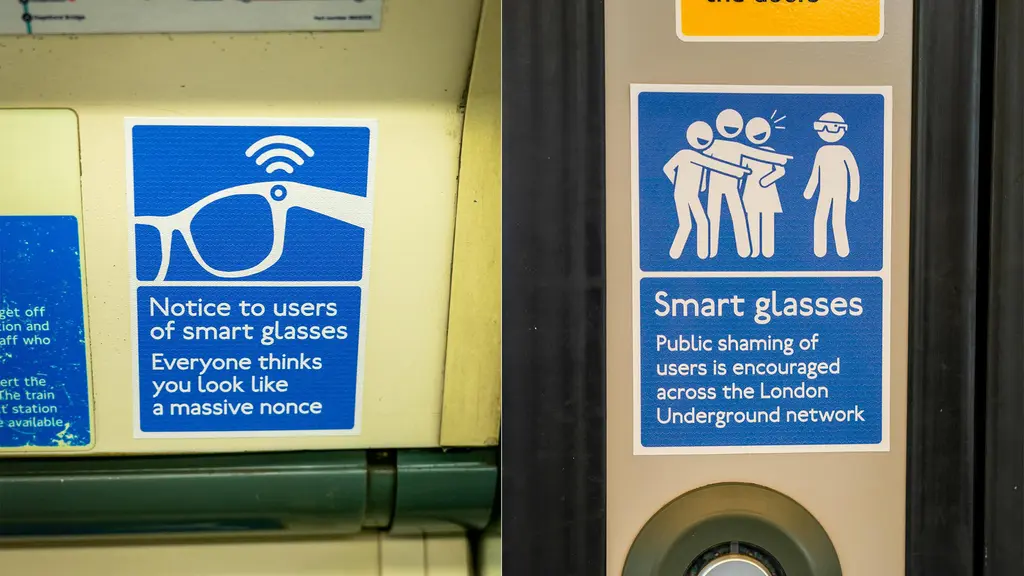
Activists slam “pervert glasses” in new guerrilla campaign
Everyone Hates Elon — Stickers have appeared on the London Underground network, criticising the wearable technology’s covert filming capabilities.

New exhibition highlights British radical living over 200 years
Earthly Paradise — Taking place at the William Morris Gallery, it explores the homes and lives of artists, writers, musicians and more, as well as the conditions that allowed them to thrive.


