The fight to boycott Israel – inside occupied Palestine
- Text by Amal Nazzal
- Photography by Omer Yildiz (main image)

This past Sunday, Palestinians began the first “National Economic Week” – a campaign to boycott Israel and promote Palestinian businesses. While the core message is not new, what is distinctive here is a campaign of activism coordinated and carried out in locations across historic Palestine. The week has seen lectures, tours and farmer’s markets and shops selling posters and stickers promoting boycott of Israeli, in favour of Palestinian, products.
Many Palestinian cities and villages in the West Bank, Gaza, Jerusalem, and lands occupied in 1948 answered the call from the activists behind the campaign and mobilised, while emphasising the urgent need for unified support for the Palestinian economy, which is inseparable from its independence and political liberation. A key part of this week of action has been about promoting support for the small Palestinian businesses and local Palestinian production sectors, to challenge monopolistic colonial-economic power.
To that end, activists have been raising awareness of the relationships and interdependencies between the colonial political project and the Israeli economic sector. The National Economic Week has also had a focus on educating Palestinians about the importance, and feasibility, of boycotting Israeli goods from the inside, to weaken Israeli colonial-economic structures.

@MariamBarghouti via Twitter
One of the most promising features of this week of activism is the participation of Palestinians within the lands occupied in 1948. It has long been assumed by many that Palestinians living inside the Israeli apartheid system have an inherently weaker capacity or ability to mobilise around and make an impact through economic-political activism. However, such assumptions are now being slowly but steadily undermined. Those Palestinians, who suffer from Israel’s policies of segregation and ethno-national discrimination as second-class citizens, are faced with a particularly challenging context for boycott activism – but it is still possible.
Throughout the week, activists have been explaining and deconstructing, through tours and Facebook-live videos, how colonialist and discriminatory policies have systematically destroyed different Palestinian production sectors and services to maintain Palestinian economic and political dependency. For example, the Palestinian market in the West Bank is the second-largest market for Israeli products after the United States of America, with exports amounting to more than four billion and 400 million dollars annually.
However, it is important to bring more awareness to the fact that 53 per cent of the Israeli products which we consume in the West Bank can be easily replaced with Palestinian products. The Palestinian alternative is produced by various Palestinian local production lines, small family businesses, and small shops in lands occupied in 1948, which are all in big need of being supported, and this is one of the main messages of the National Economic Week.
It is sometimes claimed that boycott activism by Palestinians with Israeli citizenship is a non-starter, as they are forced to use Israeli services such as utilities, transportation, health, and insurance. How can you boycott the Israeli economy while holding its passport? Here, we have to differentiate between forced and voluntary normalisation. As in some cases of colonisation, we Palestinians are forced into a coercive relationship with the occupier, such as using the occupation’s ports or trading the shekel currency – this constitutes forced normalisation. ‘Voluntary’ normalisation, on the other hand, relates largely to what we consume in our own households – basics such as milk and cheese – and here there is significant potential for boycotts.
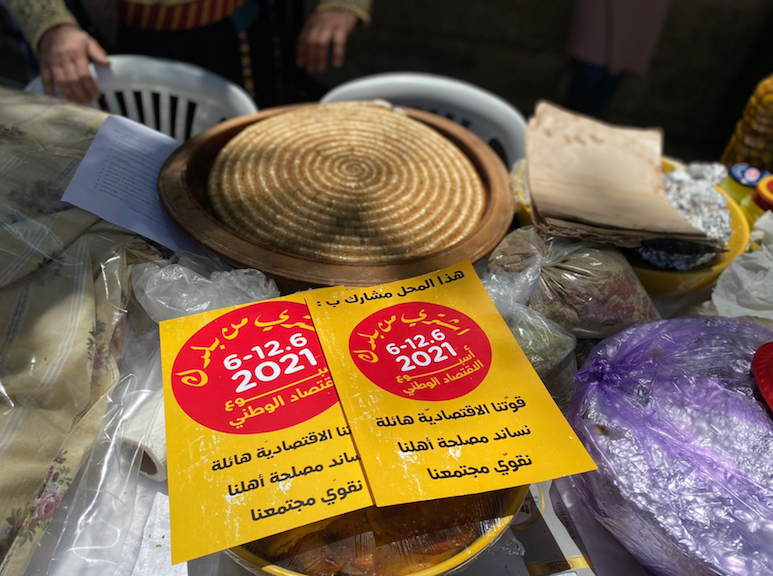
Another point which National Economic Week aims to deconstruct among Palestinians is why the Israeli products in lands occupied in 1948 outdo Palestinian products with respect to price, and how that influences the demand for such Israeli products. Here, economies of scale is an important perspective that could help us to better understand how dominant Israeli industries can control prices and market demand, which in return, weaken Palestinian production. When a big business has a high volume of operation and production, the cost per unit of the business’s output decreases, which causes competitive, low prices. The largest Israeli food manufacturer, Tnuva, for example, supplies 70 per cent of the Israeli market and can therefore offer low prices while still making a profit.
Meanwhile, in the name of so-called ‘social responsibility’, Tnuva launched an ‘adopt a soldier’ project, where it clearly states on its website: ‘Tnuva warmly cherishes IDF soldiers, as part of a long tradition of concern for our soldiers during times of war, as well as adopting various units on a regular basis’.
Boycotting the Israeli occupation is a very important part of our vision of liberation and independence, and marks a real disengagement from the Israeli economic structure. By doing so, we will fight the occupation and its economic structure as a whole, to weaken and corrode it from within. In parallel, the demand for our Palestinian products increases, the size of our national economy grows, unemployment rates decrease, and political and economic autonomy will be achieved.
Amal Nazzal is a researcher and academic at Birzeit University.
Enjoyed this article? Like Huck on Facebook or follow us on Twitter.
You might like

Landmark new exhibition is celebrating 50 years of female punk
God Save the Queens – The Museum of Youth Culture is bringing together rare photography, archive material and a one-night-only supergroup featuring members of X-Ray Spex, The Slits and The Raincoats.
Written by: Ella Glossop

Photographing America’s 20th century rebels
Rebels With a Cause — A new monograph looks back at Jean-Pierre Laffont’s extensive archive documenting counterculture, art, activism and more, shaping the country as it is today.
Written by: Isaac Muk

Sports Banger is throwing a party to mark 90 years since the Battle of Cable Street
“Fascists hate dancing” — The October event will bring DJs, live music, sound system culture and anti-fascist politics together in East London.
Written by: Ella Glossop
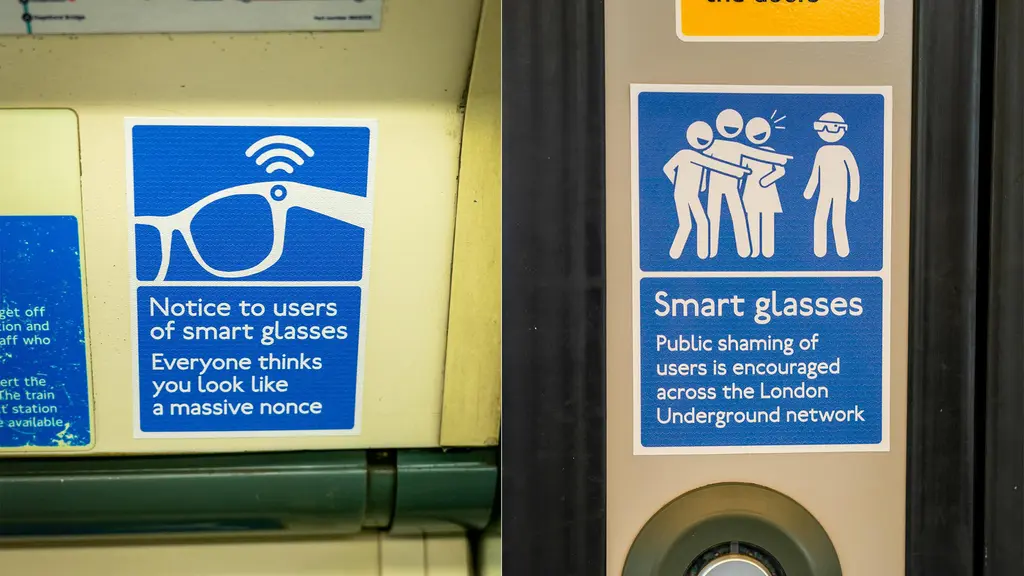
Activists slam “pervert glasses” in new guerrilla campaign
Everyone Hates Elon — Stickers have appeared on the London Underground network, criticising the wearable technology’s covert filming capabilities.
Written by: Isaac Muk

New exhibition highlights British radical living over 200 years
Earthly Paradise — Taking place at the William Morris Gallery, it explores the homes and lives of artists, writers, musicians and more, as well as the conditions that allowed them to thrive.
Written by: Isaac Muk

What life on the Strait of Hormuz is really like
Southern Winds — Bandar Abbas based photographer Morteza Niknahad has been capturing the diverse communities and stories of his local region since he first picked up a camera. His new series highlights the human impact of war.
Written by: Isaac Muk


