
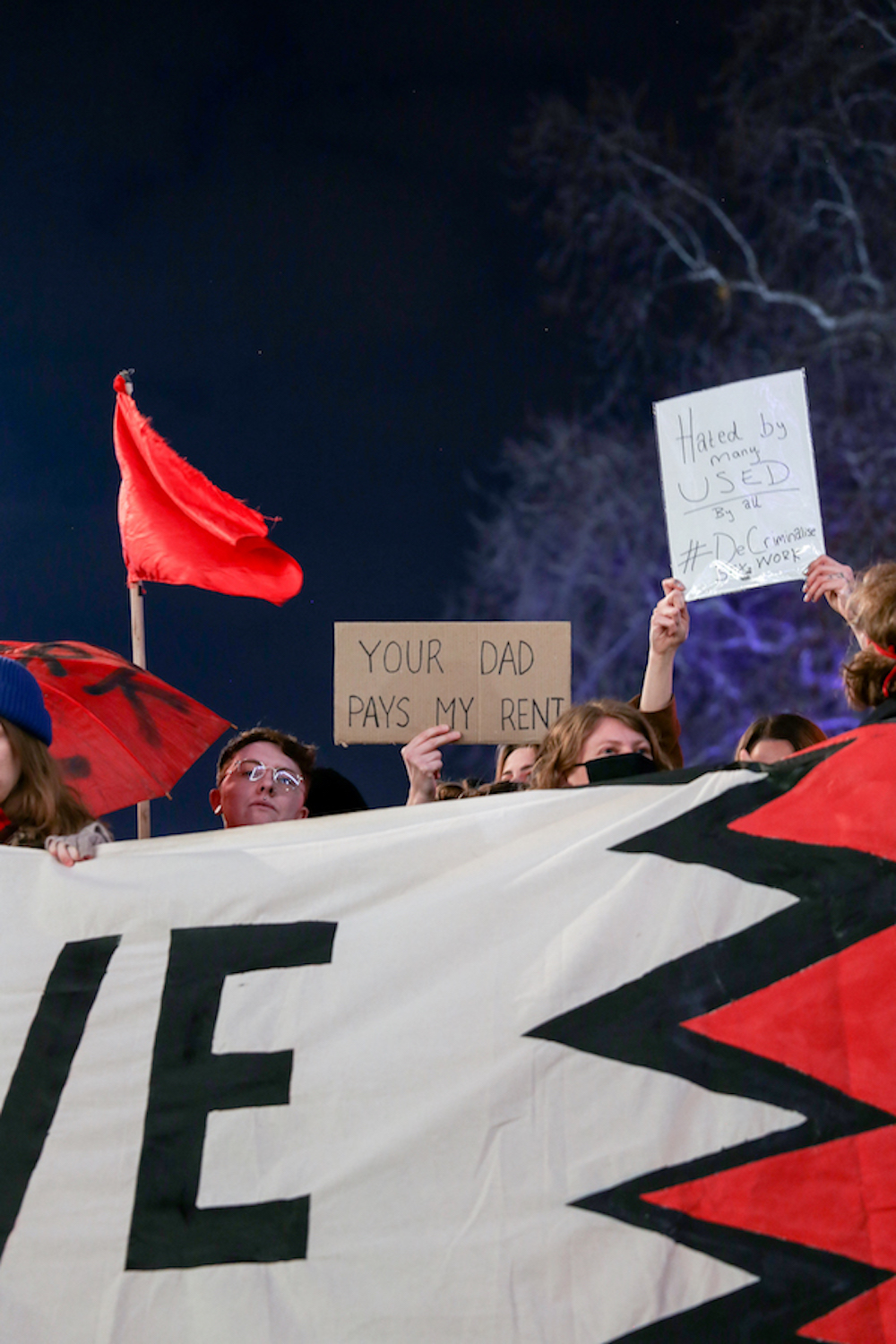
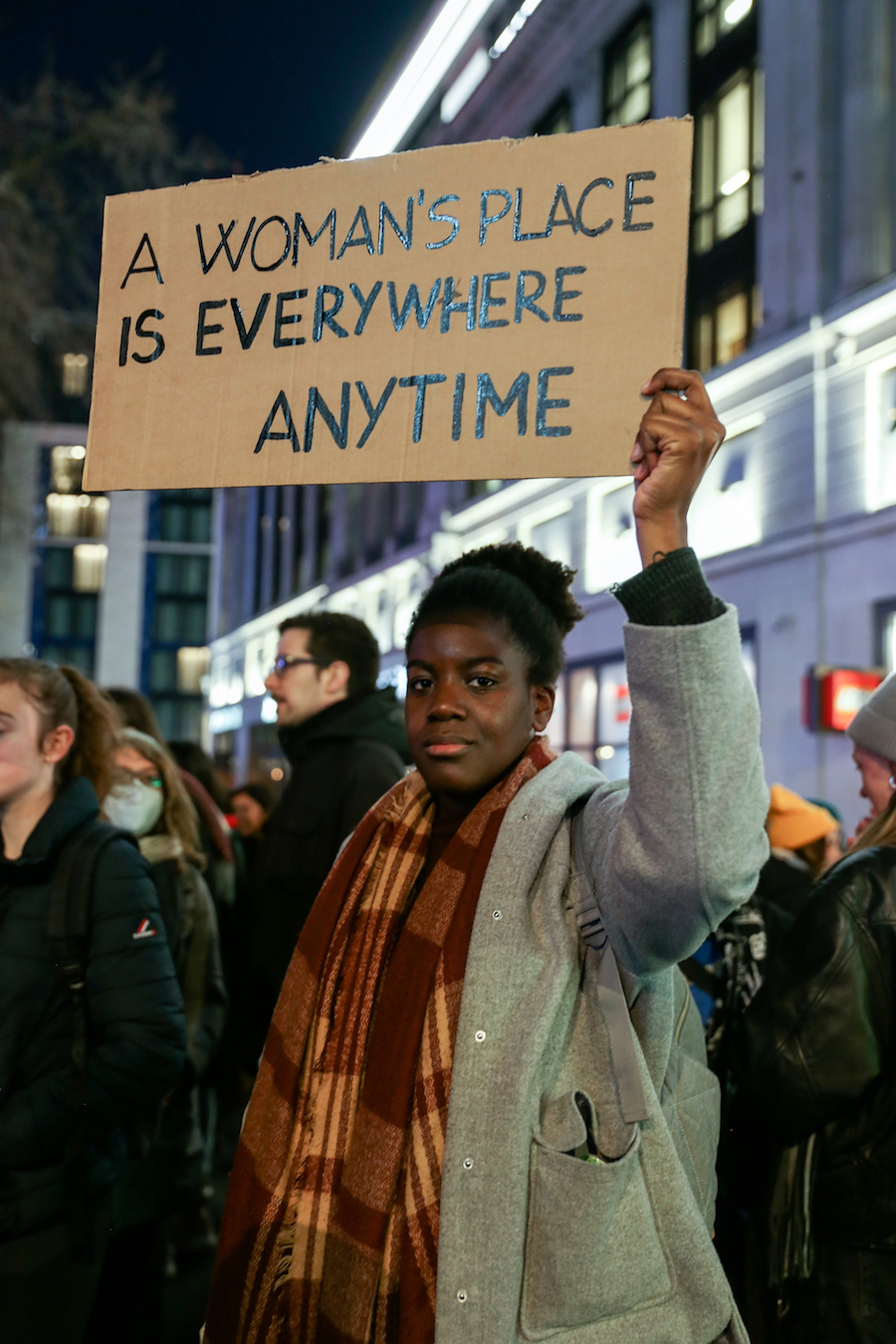
Photos from the sex worker strike in London on IWD

On 8 March 1908, thousands of women left the textile factories where they worked and took to the streets of New York with pieces of stale bread and bouquets of roses in hand. They marched for better working conditions, for an end to child labour and for the vote.
The Bread and Roses march kickstarted a feminist movement that rippled across America and the rest of the world. Since 1977, 8 March has been known as International Women’s Day and has been celebrated globally. Last night, to continue the tradition started by those New York textile workers, women came together in cities across the country for a women’s strike.
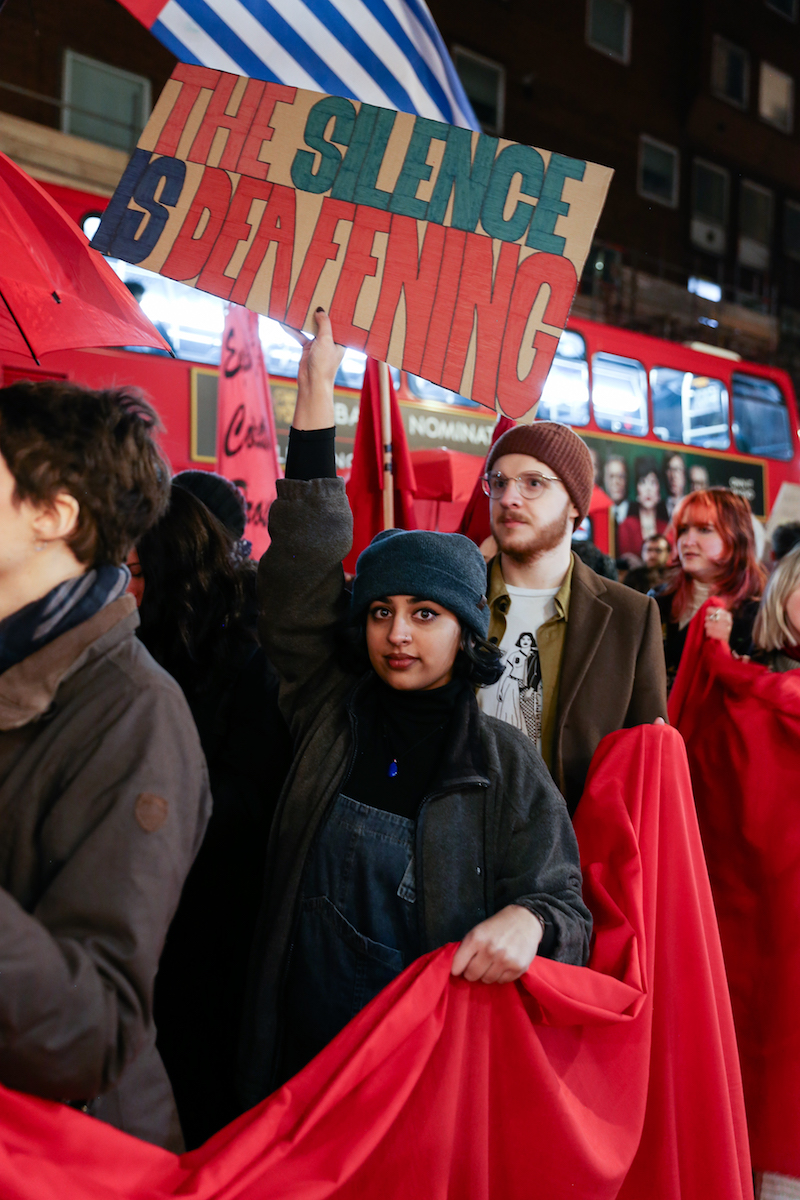
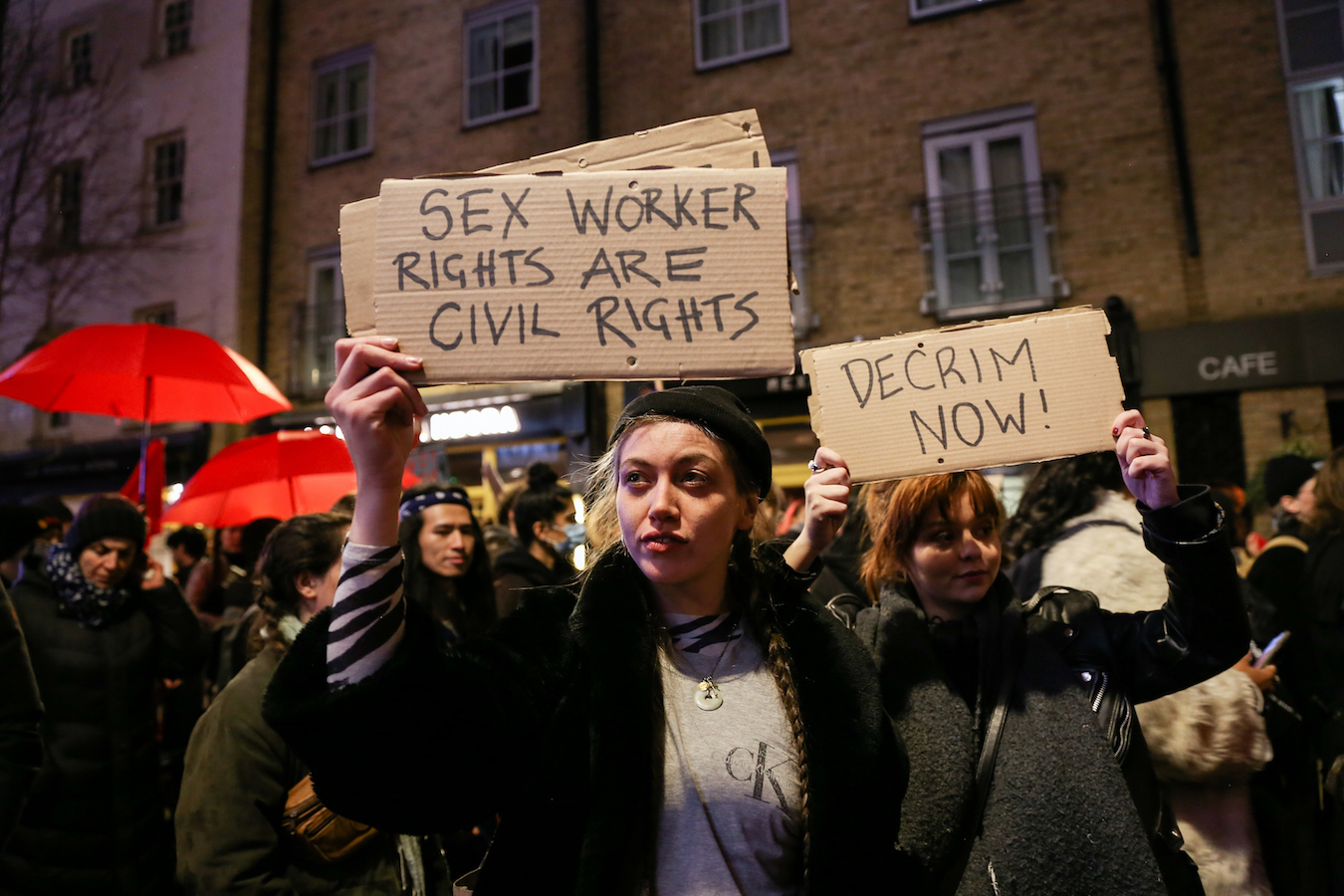
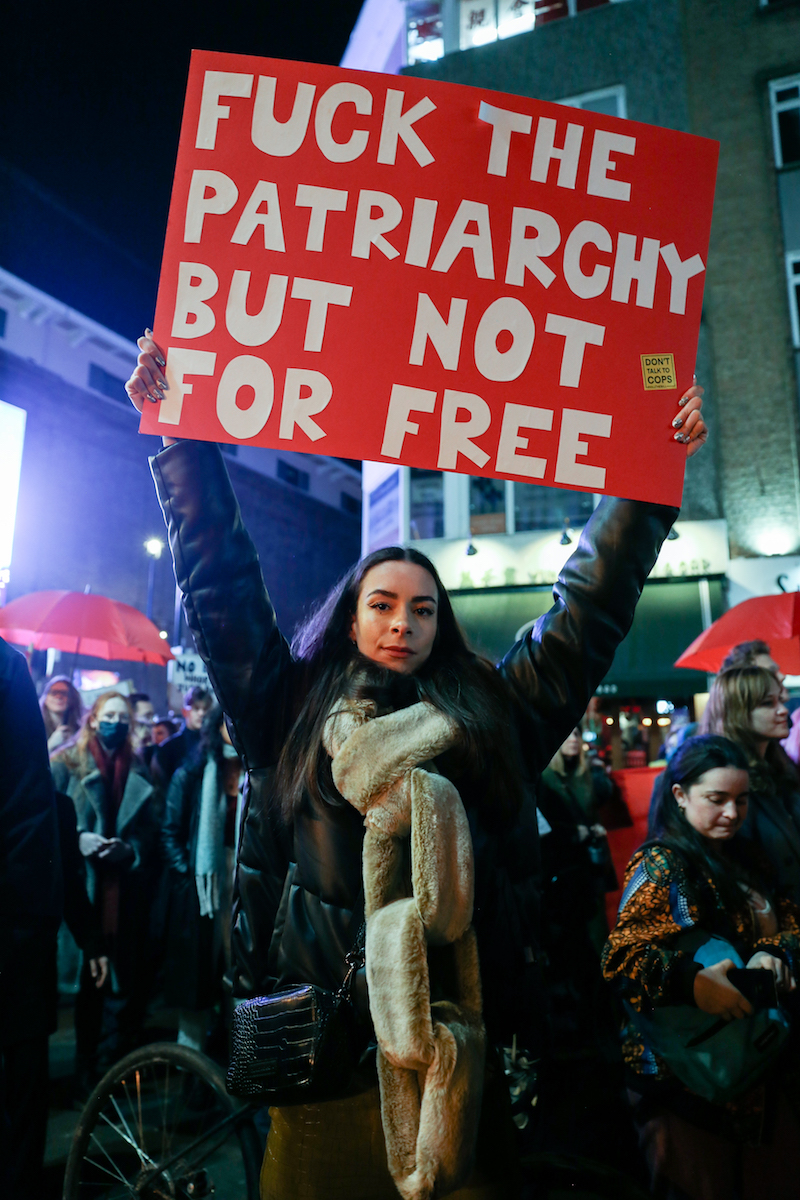
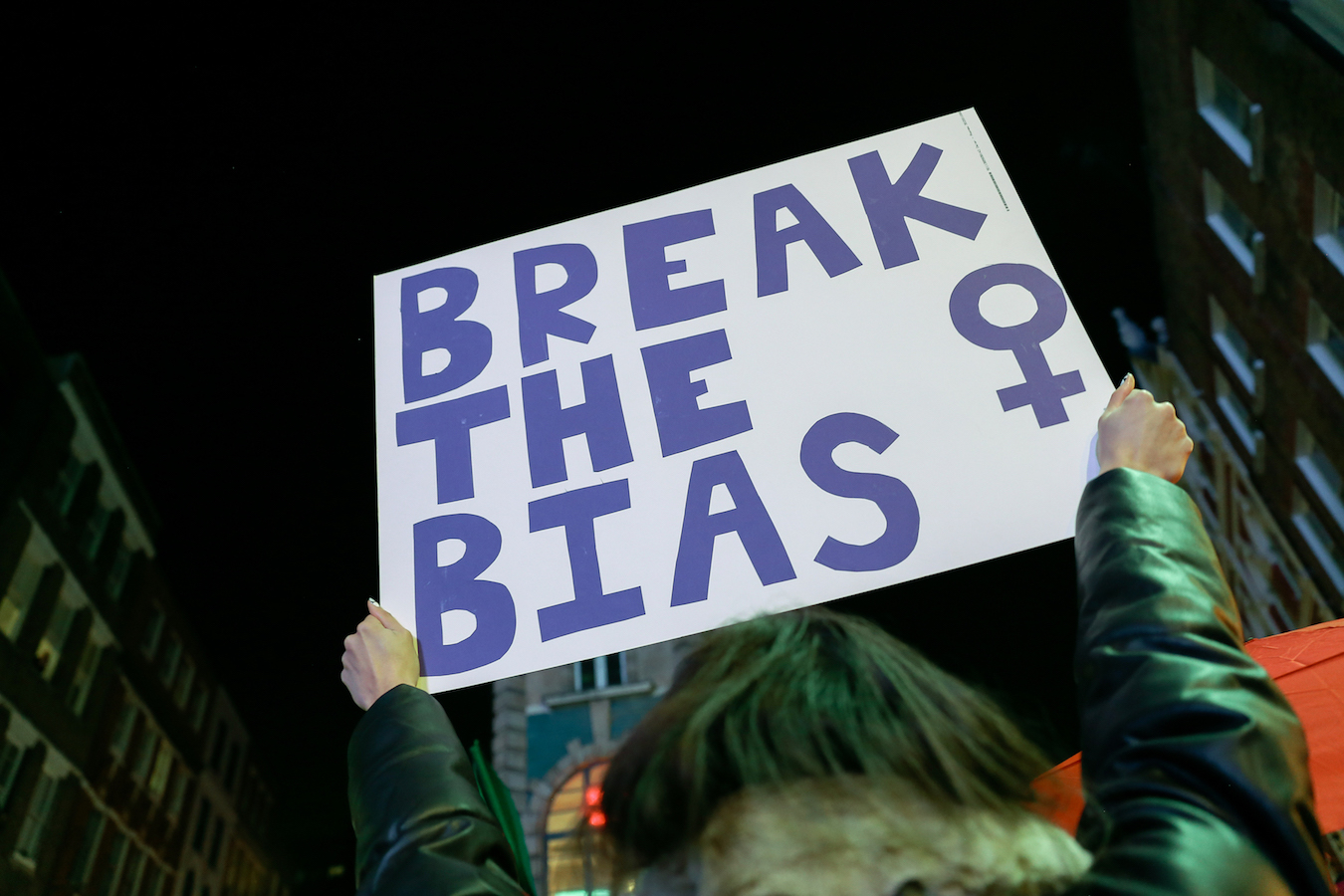
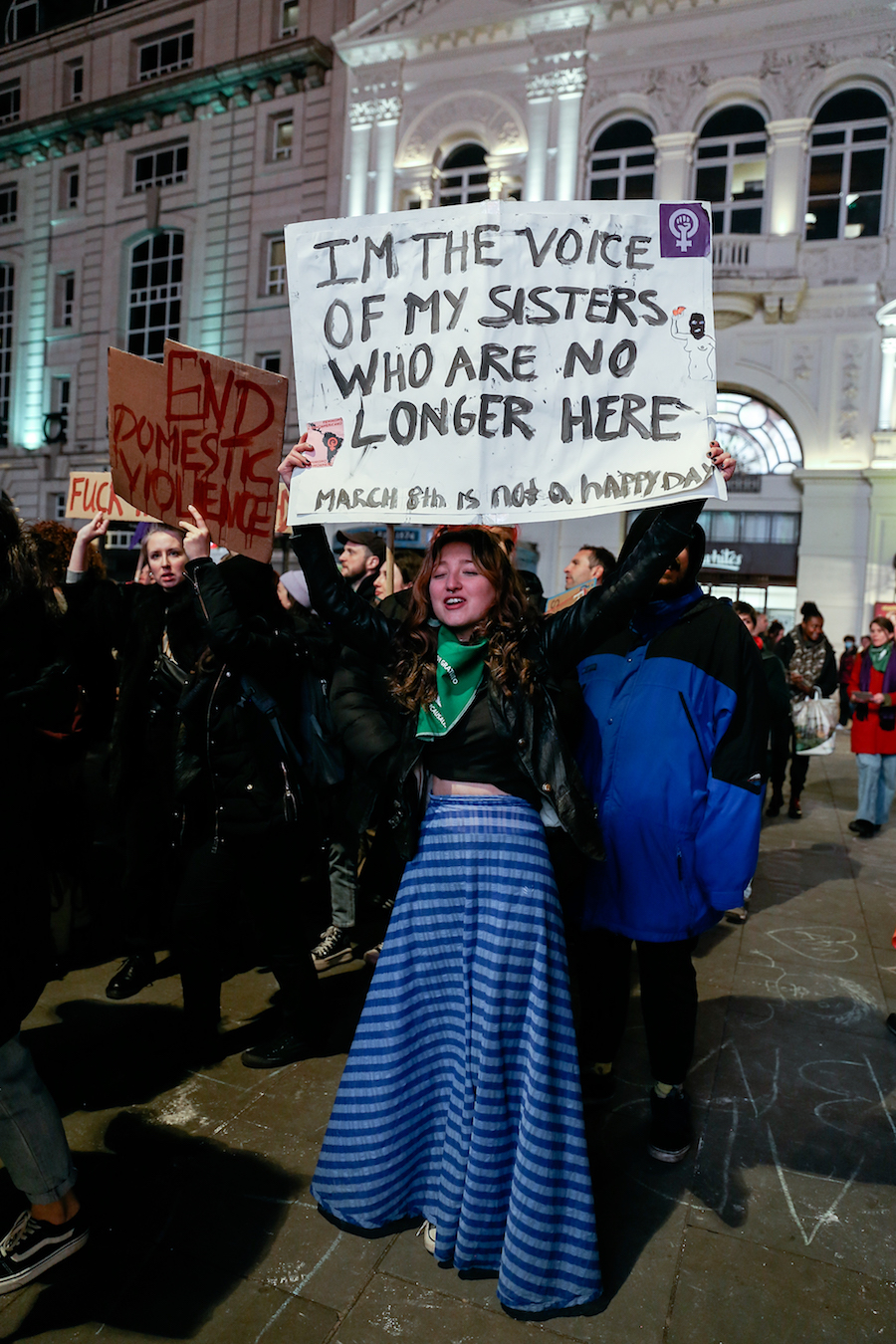
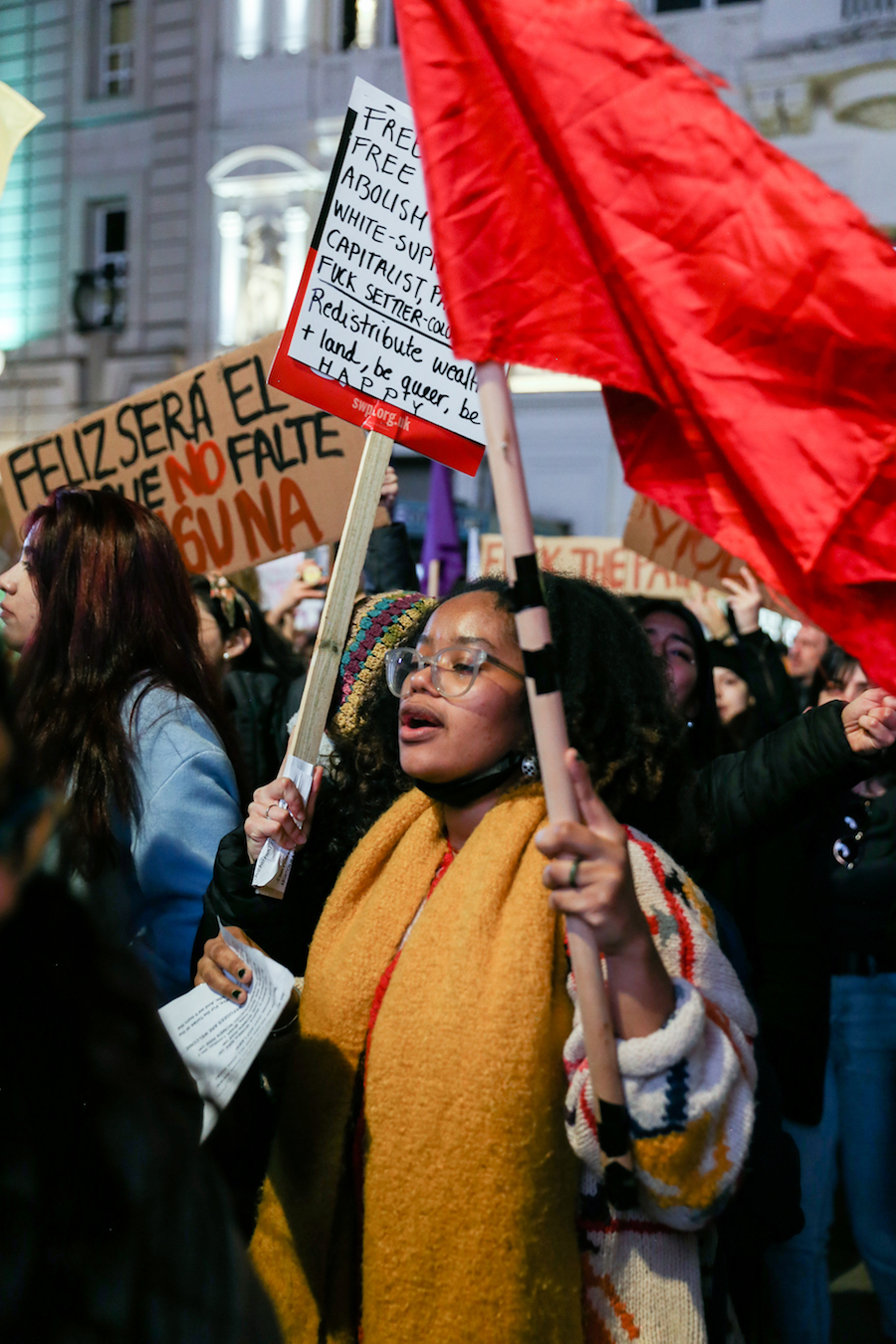
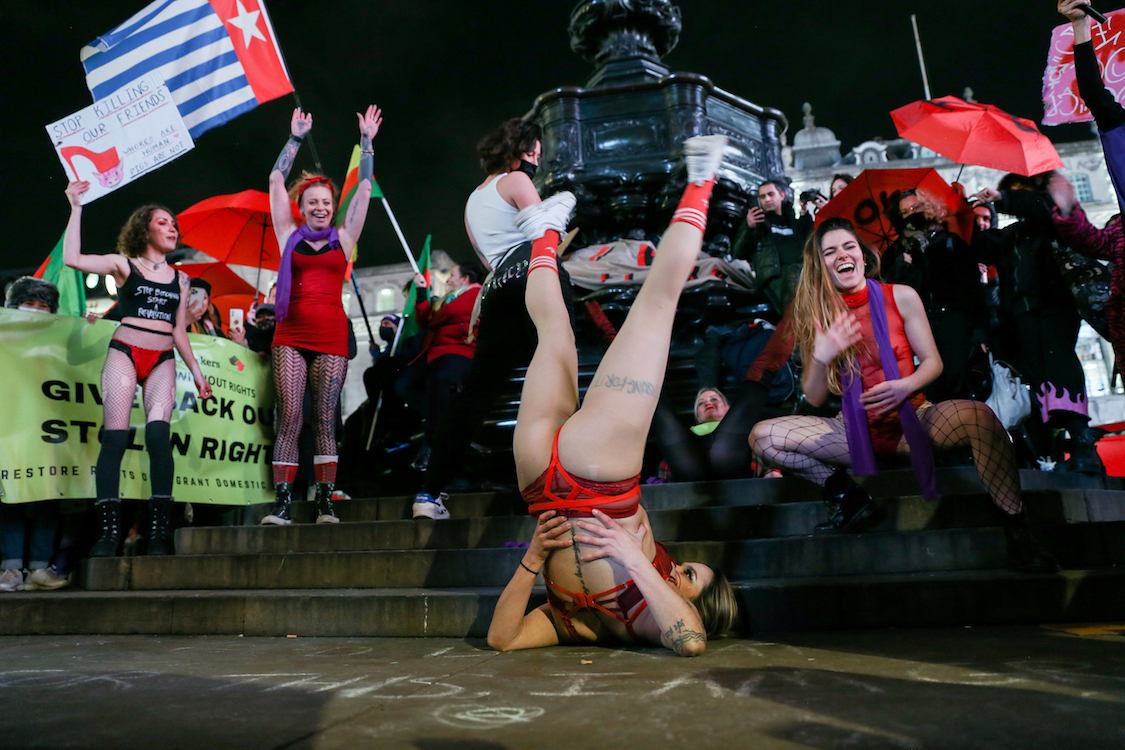
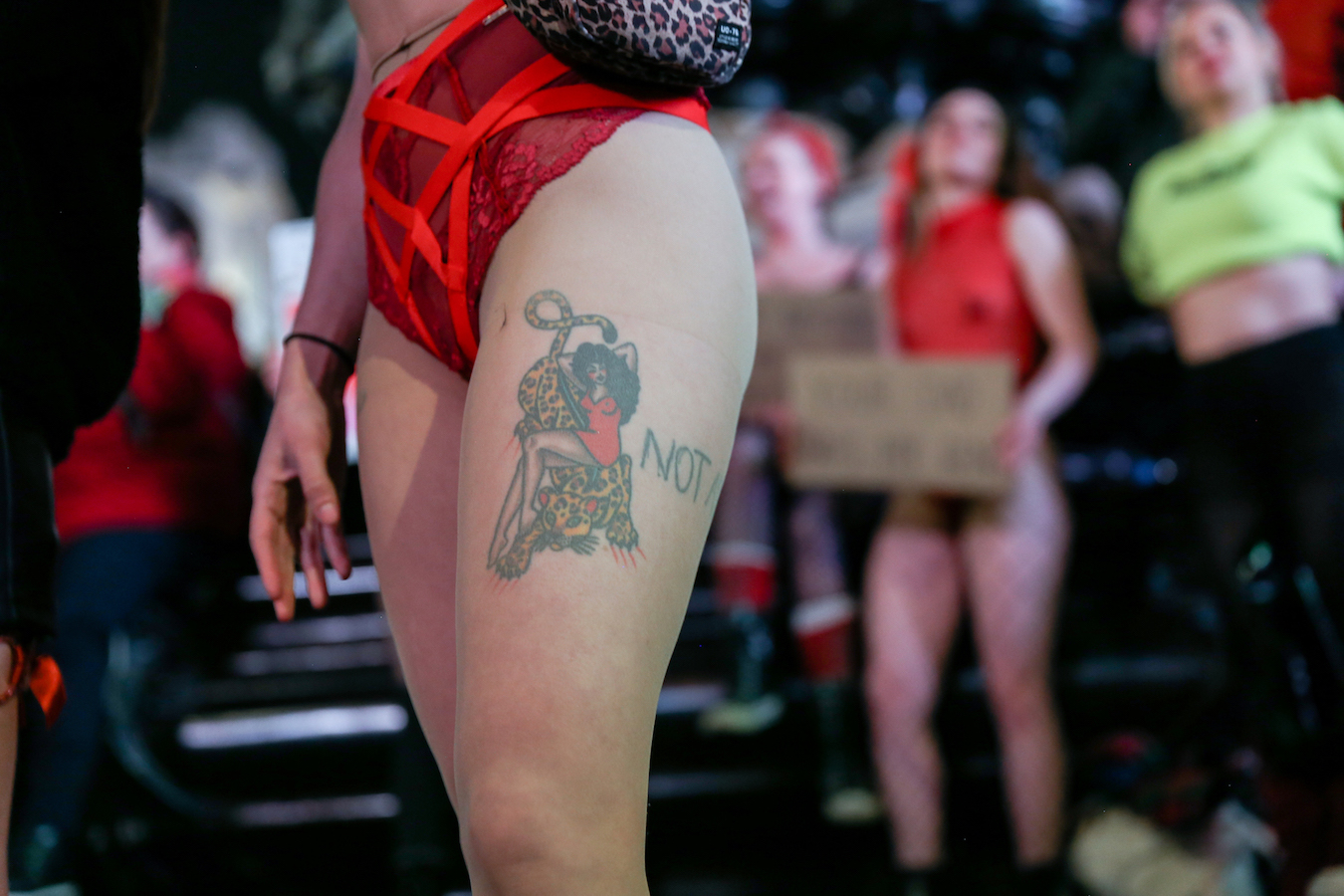
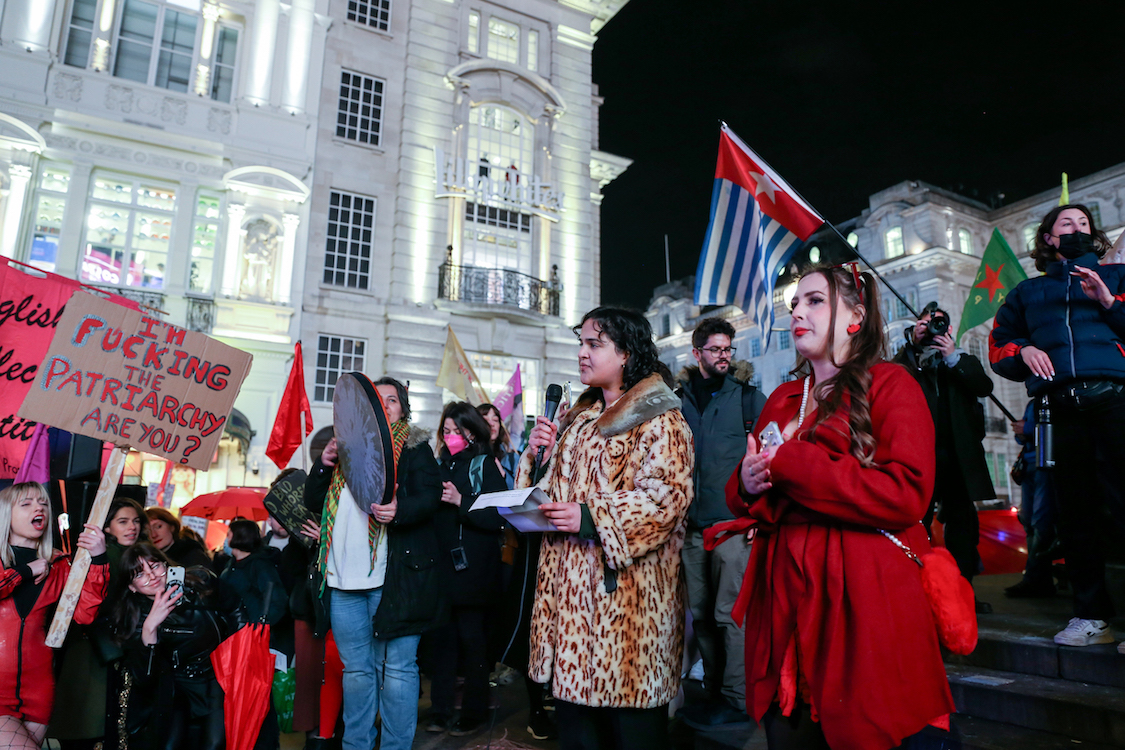
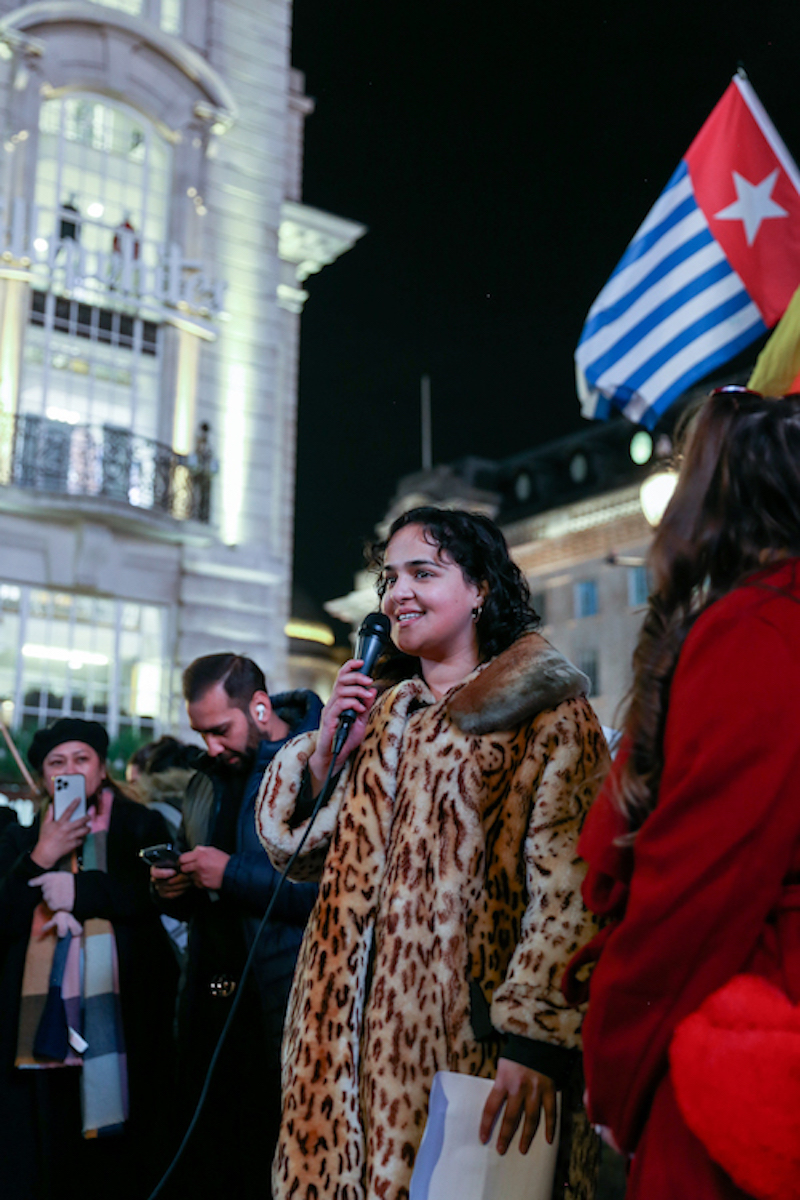
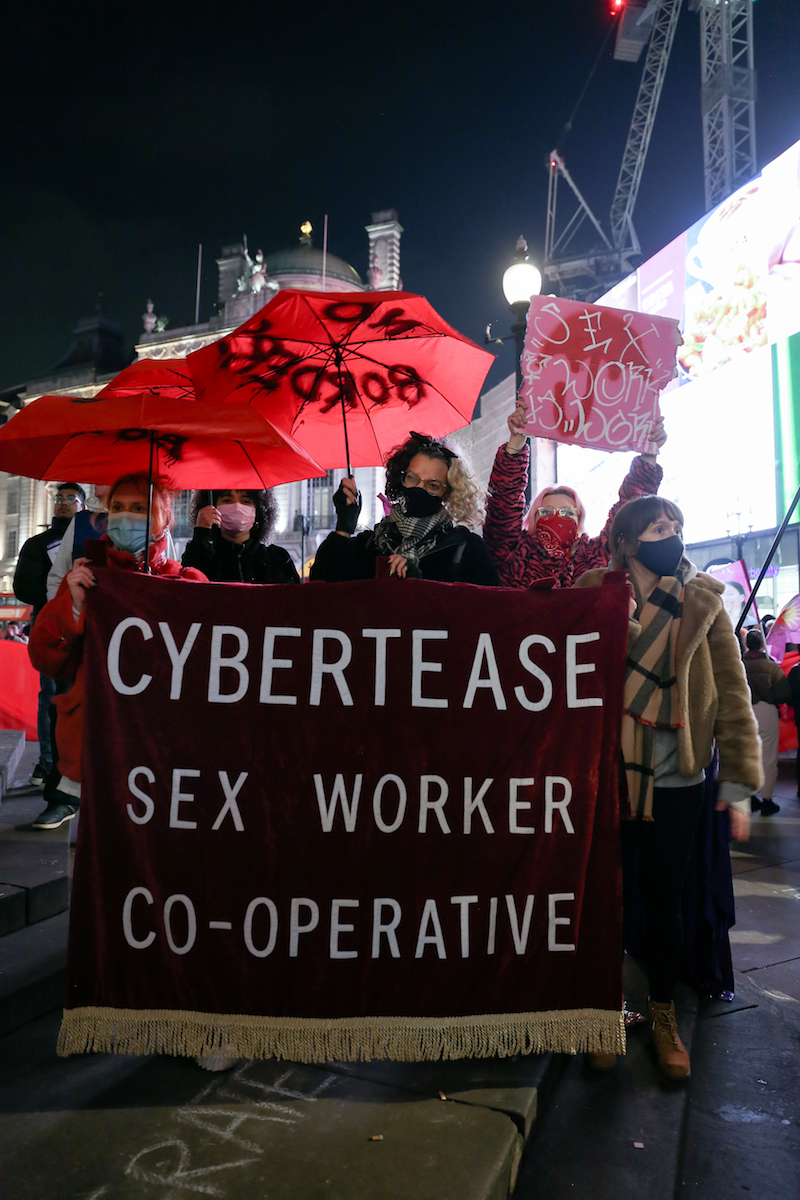
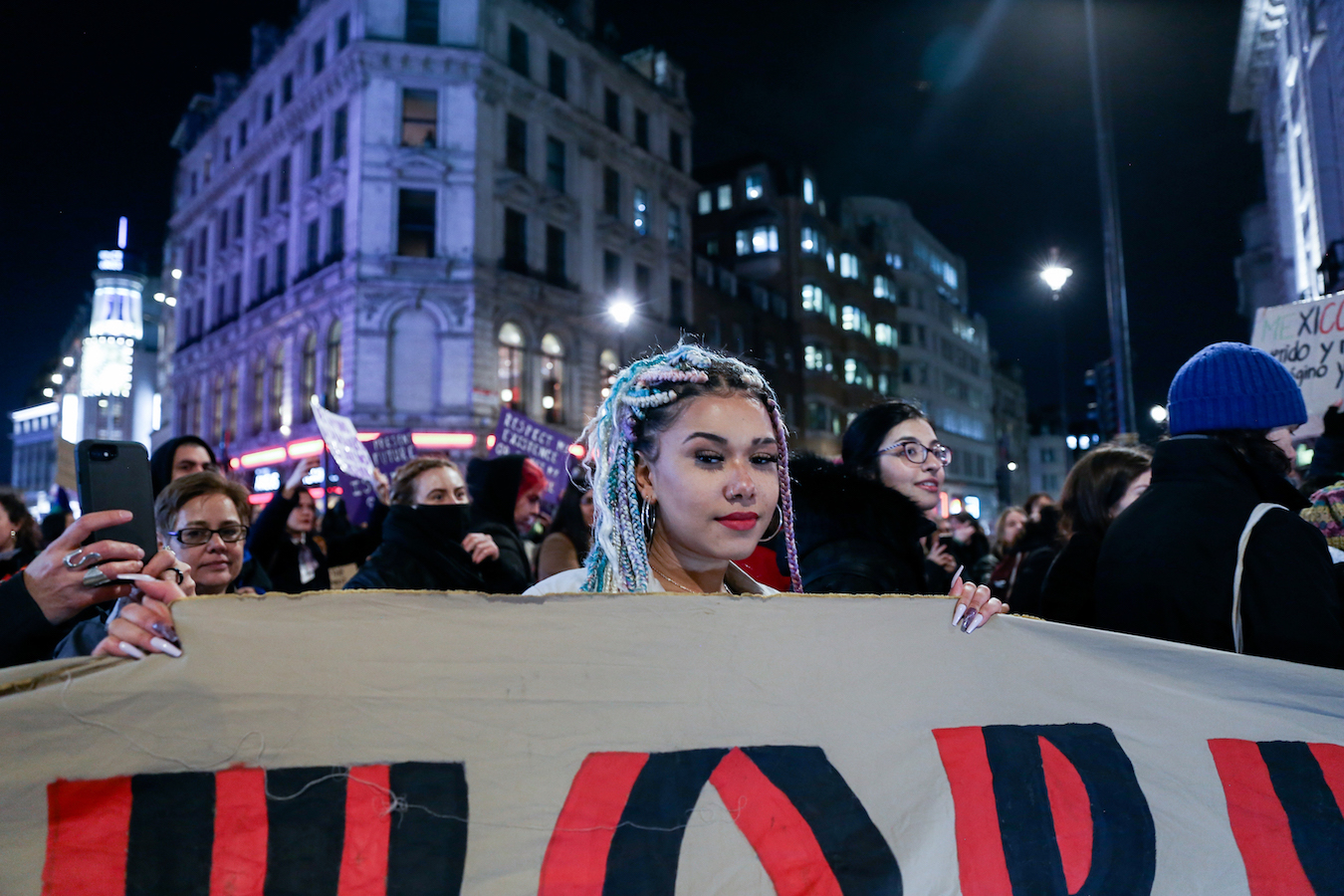
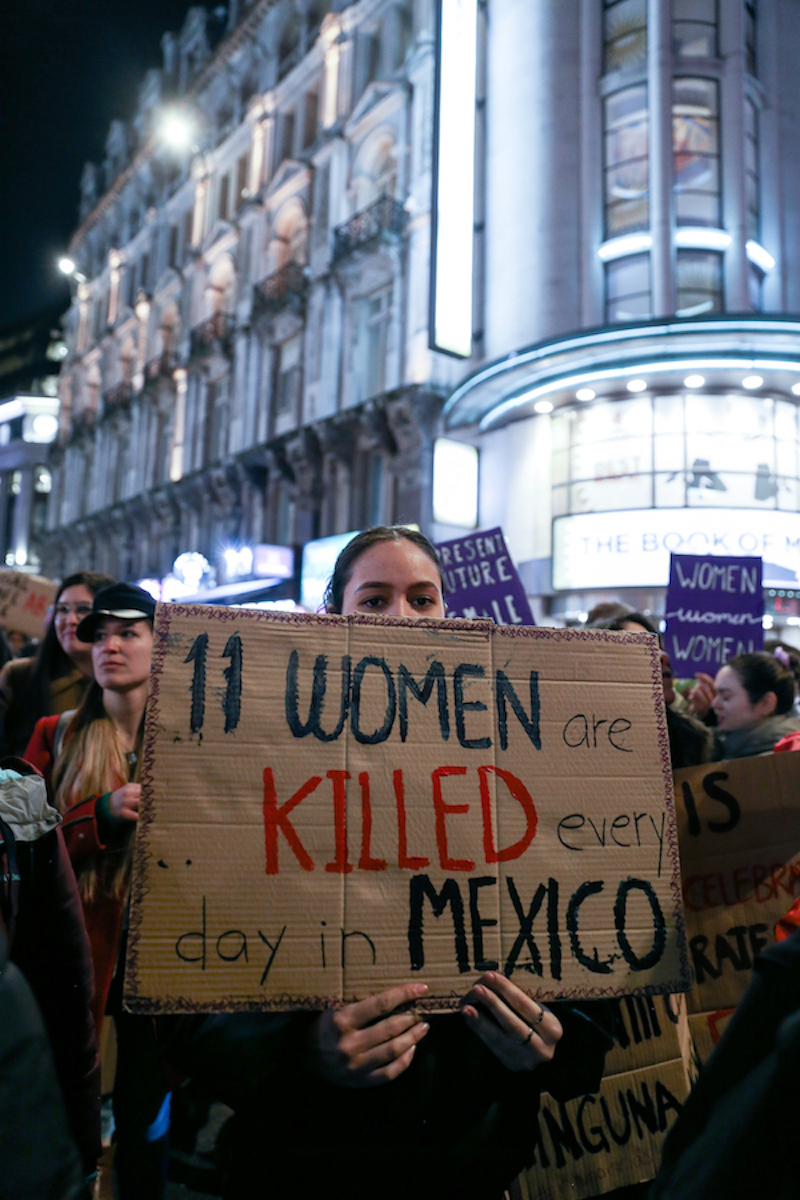
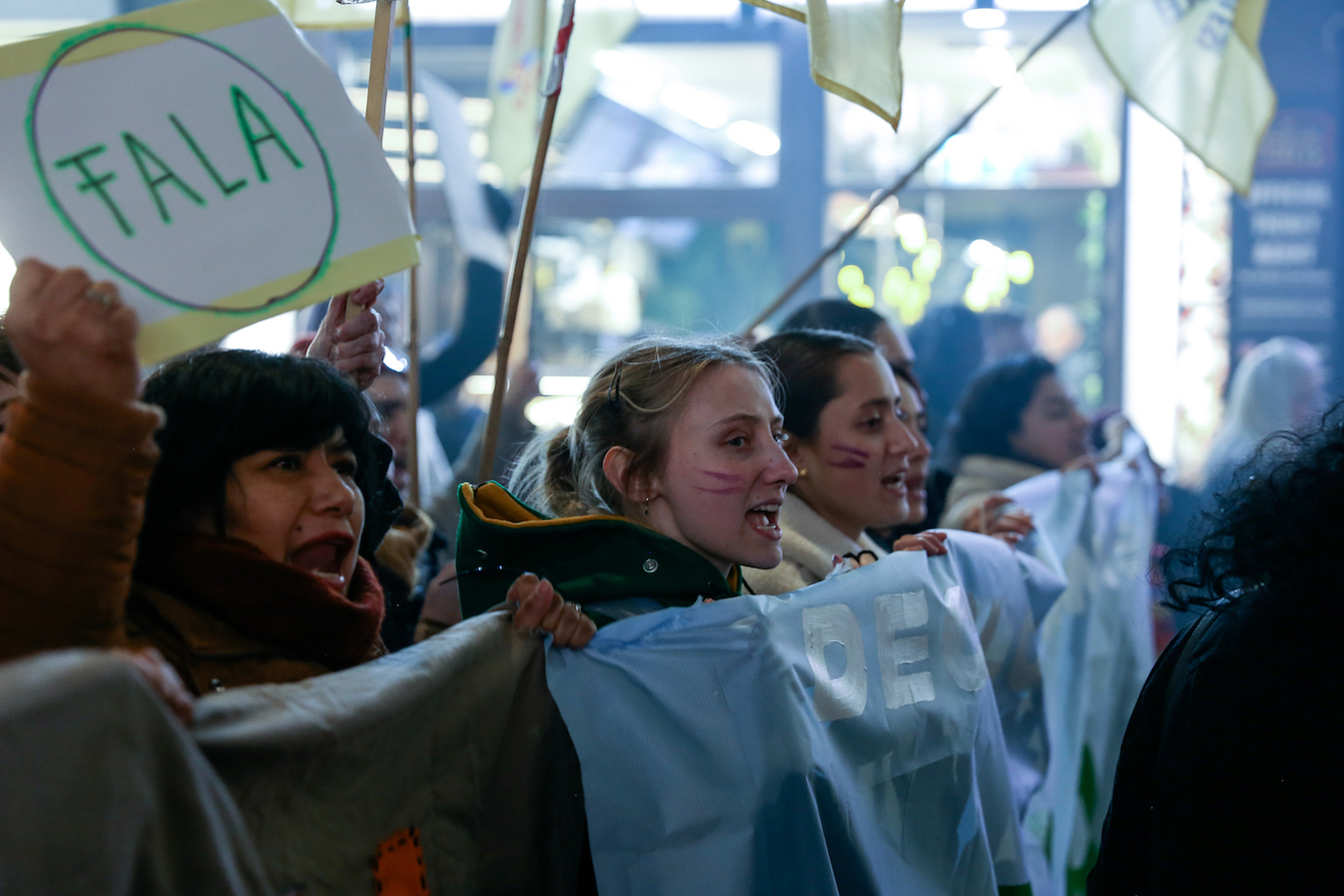
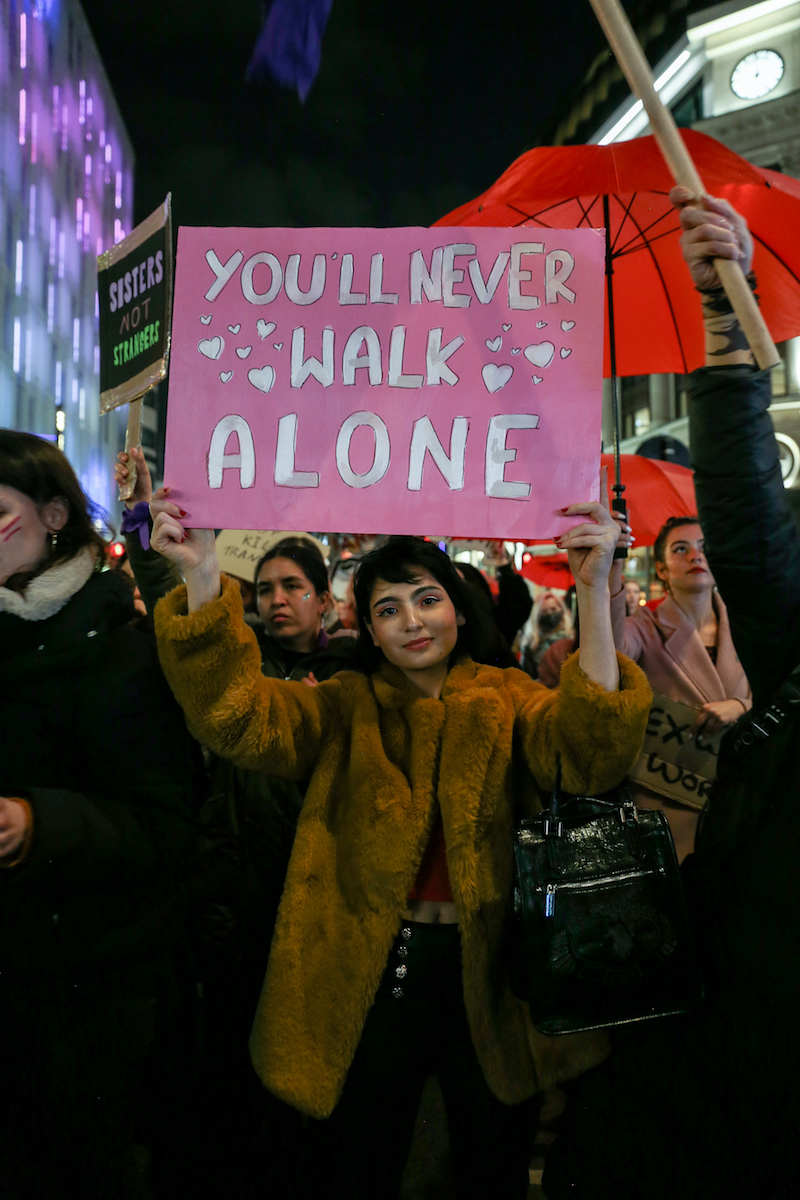
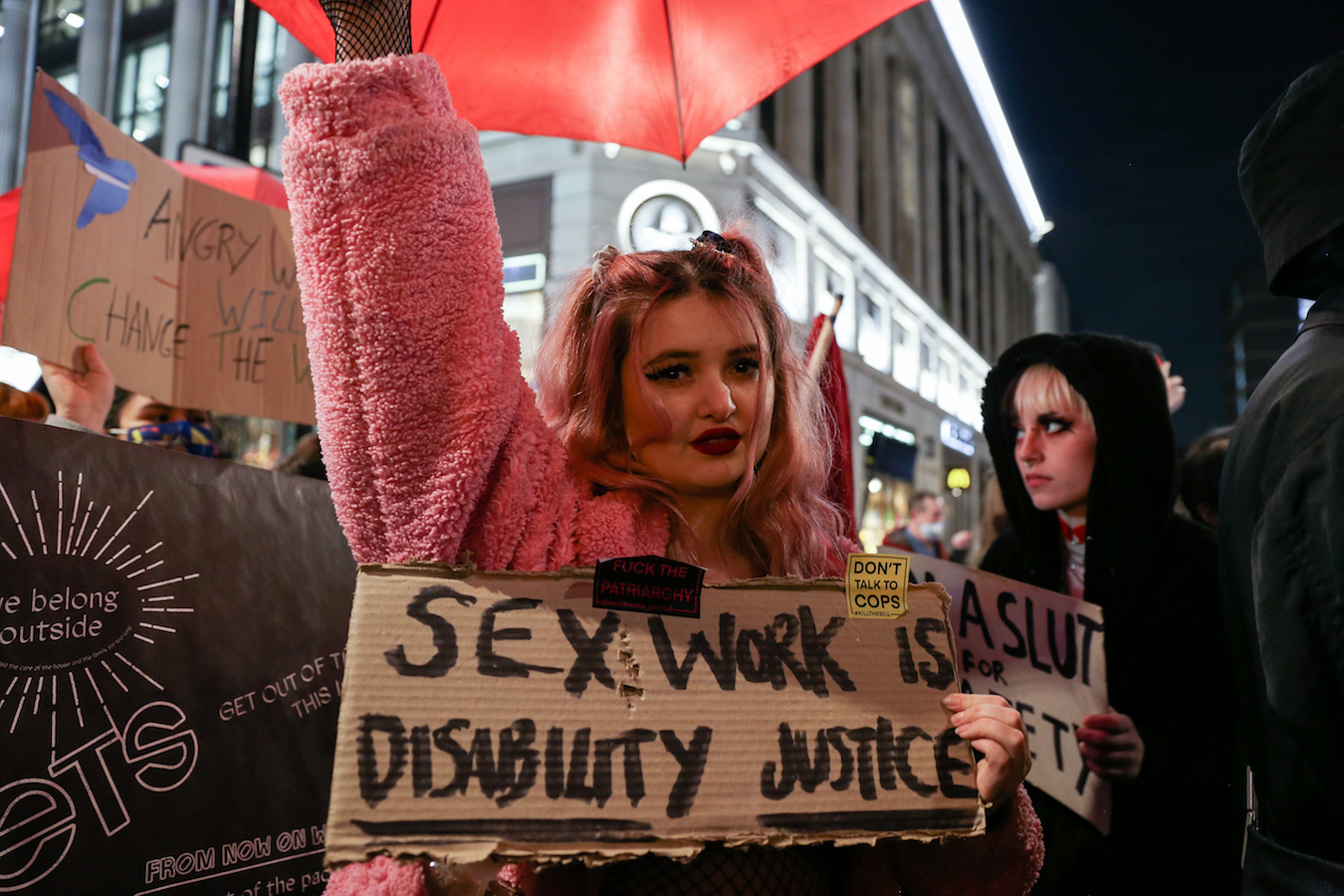
In London, hundreds gathered in the city’s Leicester Square for a joint women’s and sex worker strike. The crowd heard speeches from striking Great Ormond Street Hospital workers, international unions and anti-war groups as well as a statement from Russian women organising against the war in Ukraine. Strikers then marched en masse to Picadilly Circus to hear from sex workers including representatives of Sex Workers United – a trade union for sex workers who also performed. Labour MP for Nottingham East Nadia Whittome also spoke on the need to decriminalise sex work before the crowds moved into Soho and on to Charing Cross police station.
The police station has been the site of controversy with a recent IOPC report revealing widespread misogyny, homophobia, rape culture and abuse of power by serving officers stationed there. Speakers from the English Collective of Prostitutes and Sisters Uncut addressed the crowds outside the station. The latter have called a demonstration for Saturday 12 March to mark the one year anniversary of the vigil on Clapham Common for Sarah Everard, which was brutally broken up by the police.
Last night was a night of rage, determination and energy on the streets of central London. We sent photographer Bex Wade down to document the action.
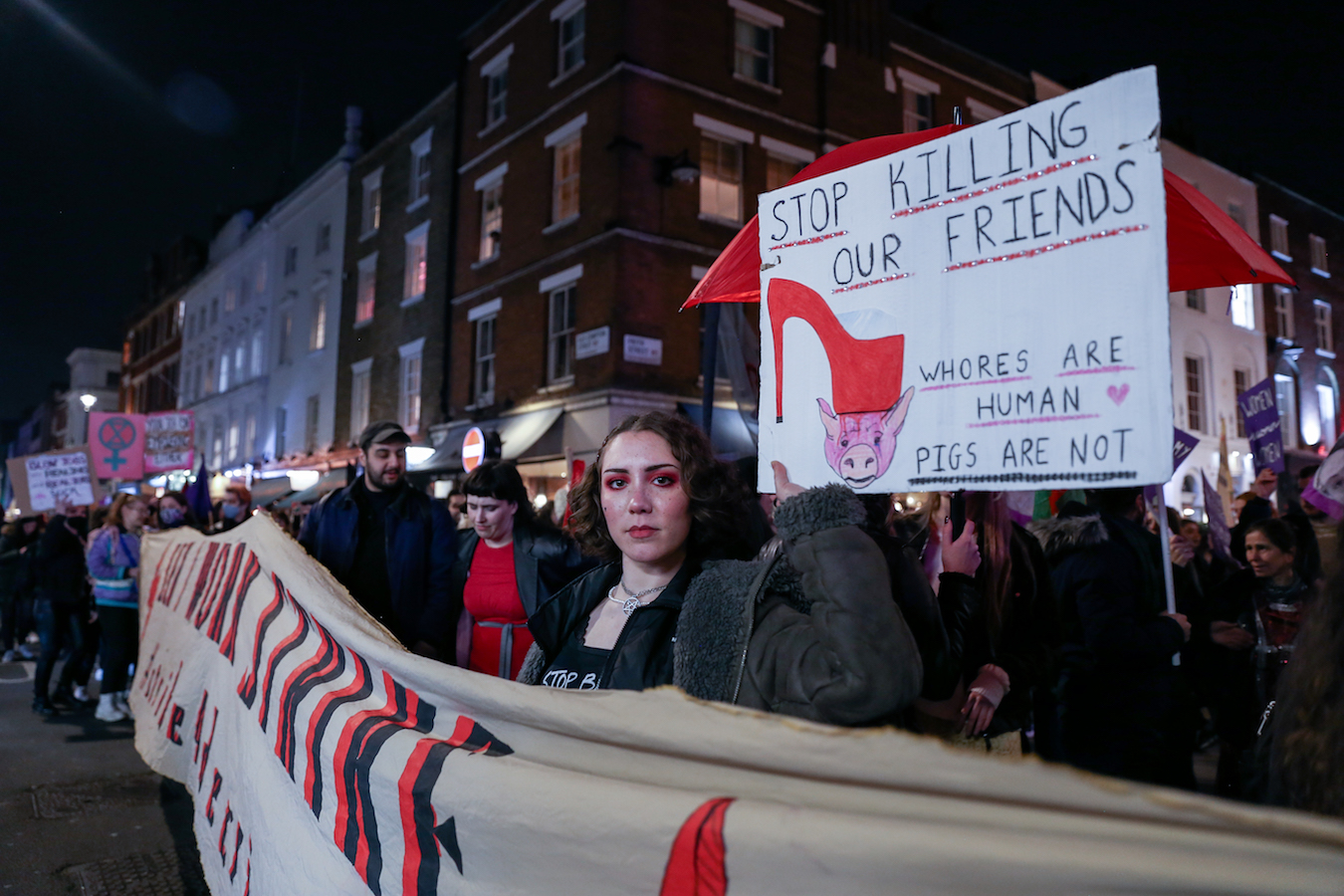
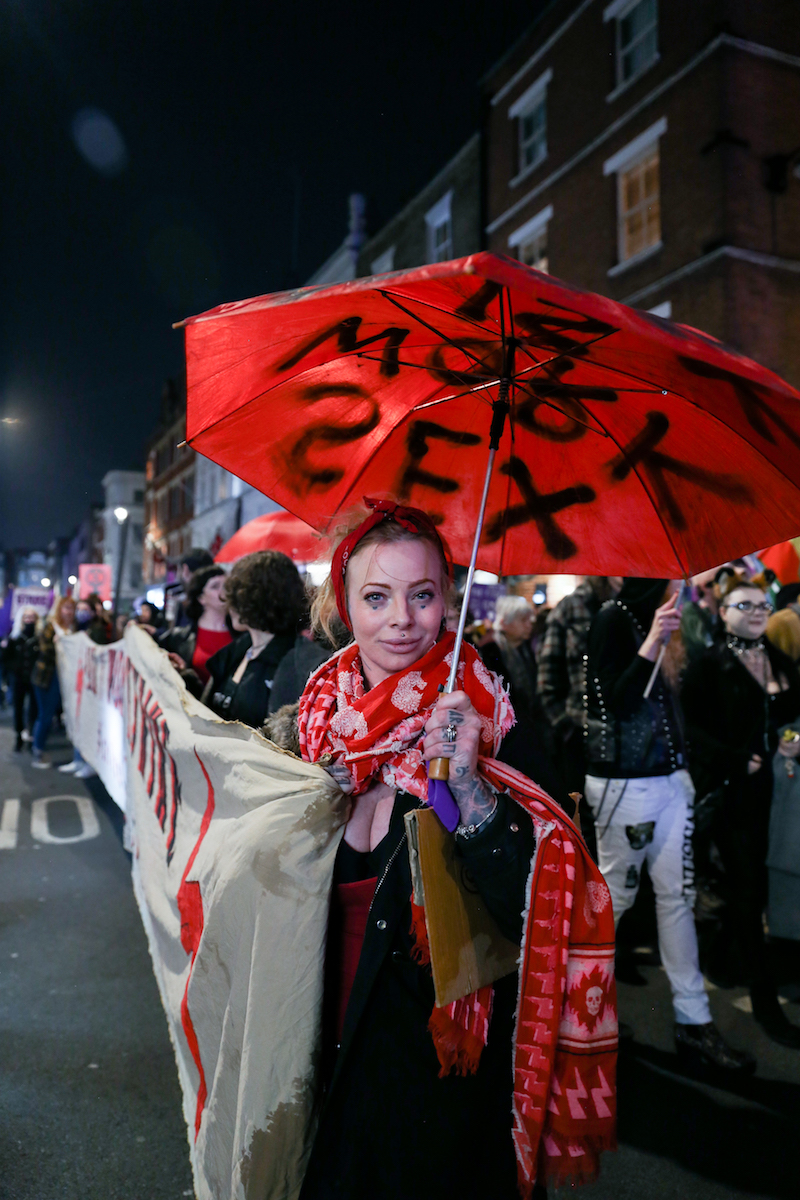
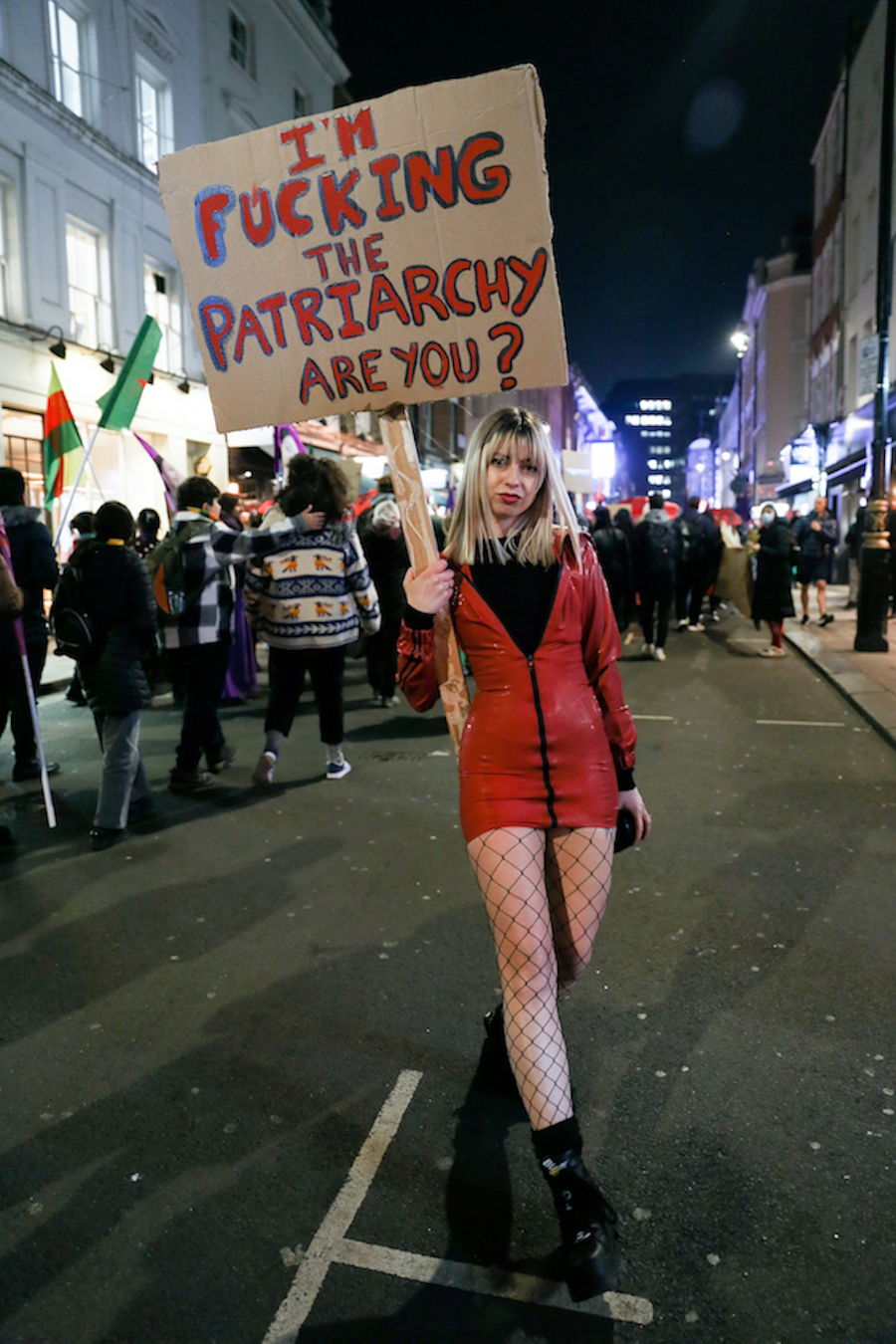
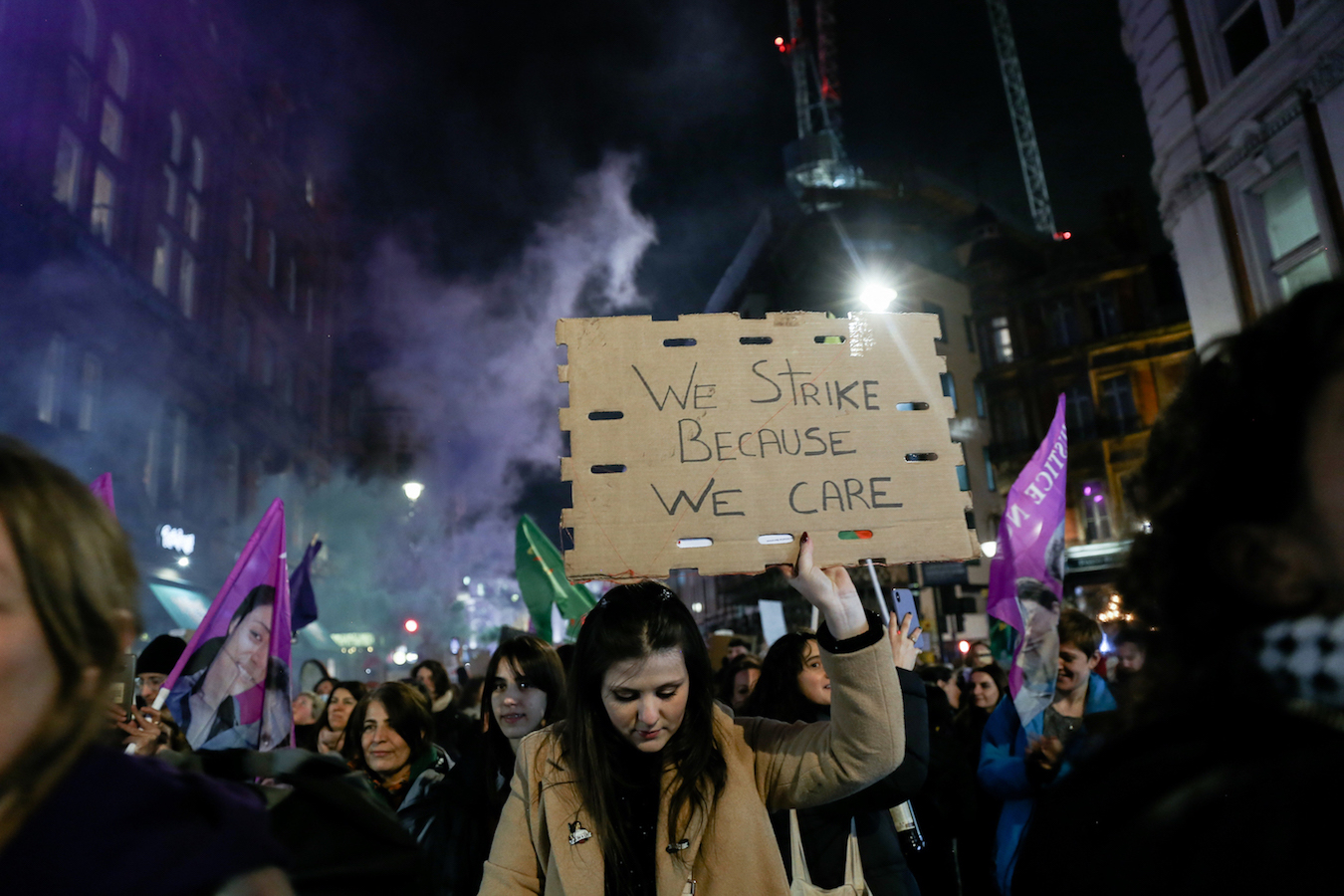



Follow Bex Wade on Instagram.
Enjoyed this article? Like Huck on Facebook or follow us on Twitter.
You might like

Inside the grunge golden age with Hole’s former bassist
My ’90s Rock Photographs — Melissa Auf der Maur’s new photobook is a sprawling visual memoir of her time at the heart of the US scene, from Tinker to The Smashing Pumpkins.

How the Home Counties took over UK rap

Introducing ‘The Chaos Isles’, a new photozine by Huck and Yushy
Normal Island — From unlicensed raves to the solstice at Stonehenge, furries to giant vegetable growers, Yushy is one of the UK’s best lensmen of its wild side. ‘The Chaos Isles’ will be sent out exclusively to Club Huck+ members.

Join Club Huck+ to get the most from Huck
Dispatches from the sharp edge of culture — Members get our print magazine, special photozines, The Huck Long Read newsletter, discounts from our friends and partners, digital versions of back issues and priority access to events.

Signs of solidarity as London marks three years of genocide in Palestine
Never forget — 250,000 people gathered on Saturday as Israeli attacks have continued in Gaza and the West Bank. Daisy Schofield photographed the diverse people and placards in attendance.

Landmark new exhibition is celebrating 50 years of female punk
God Save the Queens — The Museum of Youth Culture is bringing together rare photography, archive material and a one-night-only supergroup featuring members of X-Ray Spex, The Slits and The Raincoats.


