Twenty-four hours inside Sisters Uncut's East London occupation
- Text by Jade Jackman
- Photography by Jade Jackman

“It is not an occupation”, says Petra Hussein thoughtfully, “it is a reclamation of space”. Legal bureaucracy means that Sisters Uncut, a feminist direction group dedicated to fighting against cuts to domestic violence services, have to keep referring to their latest action as an “occupation’.
After feeling frustrated with Hackney council telling 60% of domestic violence survivors that they couldn’t be housed while 1000 council properties set empty, they decided to occupy one of them. But, really, they are just taking back what is rightfully ours.


Seeing as Britain’s political elite are still reeling from post-Brexit blues, it seems funny to find solace in the middle of an abandoned East London council estate. Inside one of the houses that should symbolise the cost of regeneration, unaffordable rents and the priorities of the current British Tory government, you’ll find a carefully created community space.
Sometimes political occupations can be totally divorced from the community that the activists profess to campaign for and stand alongside. All too often there’s a gaping void between those who take direct actions, and the reality of their new neighbours’ day to day life.


Bike fixing classes and ‘know your rights in temporary housing’ workshops were a few ideas that residents on the estate suggested to Sisters Uncut activists when they got talking – bridging that gap a priority. Indeed, a number of the women from the estate can now be found wearing the unmissable Sisters green and purple sash. Now, new and old Sisters, who live on the estate will be playing key roles in the impending negotiations with the council.


With the sun beaming down on the garden and kids skidding inside asking to fill up water guns, it’s clear to me that these homes are useable. This is what Sisters Uncut will try to convince the local authority when negotiations get underway in the next few days. But standing alongside these powerful women, something else becomes clear.
Shining through all their work is the idea that we do not have to just look to politicians for hope. It can be found through small acts of friendship, or sharing a plate of free hummus bought through donations or by supporters of Sisters Uncut.


After a busy day organising and planning more ideas for the space, I started talking to two of the activists, Petra, 24, and Nadine Ford, 18, and asked why this community centred approach was so integral to their fight to end violence to self-defining women.
“We run a stall every other week and we ask what their biggest issue at the moment”, says Nadine. “It has been directly told to us by the women that come to us that housing is a massive problem at the moment. So, the idea to occupy a council flat and turn it into a community centre came about.”


Initially, the Sisters aimed to show Hackney Council that this house was suitable for living, but they have exceeded expectations. With their free breakfast club, provision of free paints for children and their practical skillshares, they have managed to create a community space that actually responds to the needs of the people around them.
But, as Petra astutely points out, it isn’t just about having a centre. “In relation to violence against women and girls, especially BME women, it really is a safe space that is needed to be created”, she tells me. “Violence doesn’t just come from partners, it can also come from racist men on the street, we’ve seen how women have their Hijabs ripped off in public for all to see.”


“This evening we had a talk by Imkaan & the London Campaign Against Police and State Violence. They mentioned how in the community centre, Apna Haq (the BME women’s service in Rotherham), they are aiming to build a space to do classes and have discussions about the effects of violence. Out of these discussions, a community between survivors and others will form. We want something similar.”
Radical politics is often imagined as forceful, loud and embodied by men. Although beautiful displays of their colourful protests adorn the walls, the collaborative and accessible nature of their work is what is what is most revolutionary about Sisters Uncut.
After the UK’s first woman Prime Minister, Margret Thatcher, announced decades ago that there was no such thing as society, it seems that going against this attitude, and building communities, is inherently radical and political.


“For us, community and community organising is totally key to our work”, continues Petra. “We want to build more of a mass movement. It doesn’t have to look like what we are used to it looking like either.”
Despite most of them having full time jobs, these women have given up their emotional and physical labour to educate, support and do the frontline work that our Government and councils should be doing themselves.
They have been in occupation since Saturday 9 July 2016, and do not plan to leave until their demands are met. They have four key demands; firstly, they want to fill all of the 1047 empty council houses. Secondly, that hostels should not be used for survivors of domestic violence. Thirdly, another house should not be lost to regeneration as currently 915 are due to lost. And, lastly, the council should refuse to implement the Housing Act.
We’ve see documents that suggest otherwise, but Hackney Council argues they only have 384 ‘empty homes’ at present. Councillor Philip Glanville, Deputy Mayor and Cabinet Member for Housing, told Huck that the Council takes their “duty to victims of domestic violence extremely seriously, and do everything [they] can to make sure they get the right support and appropriate accommodation.”
“I look forward to meeting campaigners to discuss their concerns and how together we can press the Government for better help and funding in tackling the housing crisis,” continued Glanville.
Take it from me, the Council should be listening.
Keep track of Sisters Uncut on Facebook and Twitter.
Enjoyed this article? Like Huck on Facebook or follow us on Twitter.
You might like
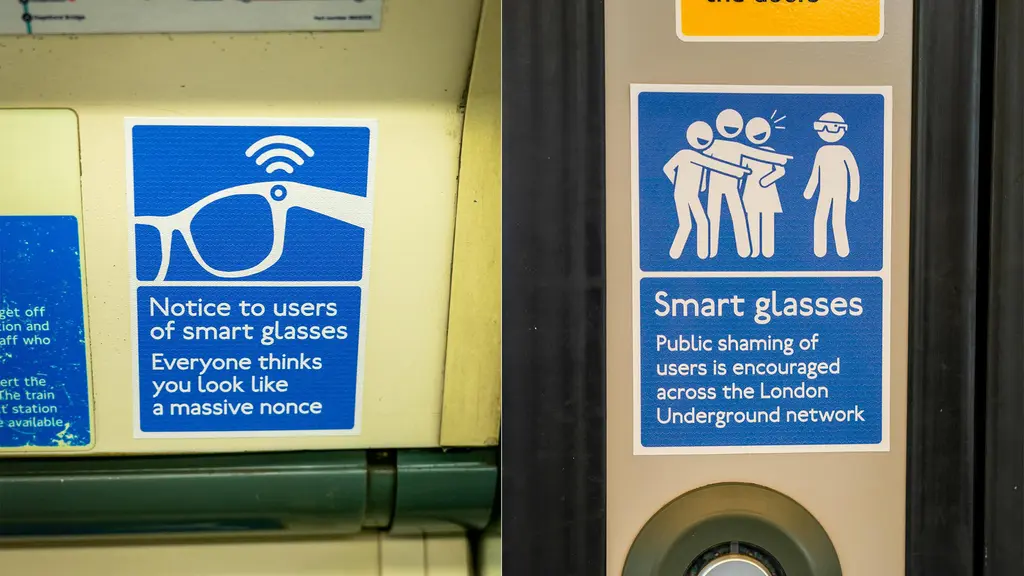
Activists slam “pervert glasses” in new guerrilla campaign
Everyone Hates Elon — Stickers have appeared on the London Underground network, criticising the wearable technology’s covert filming capabilities.
Written by: Isaac Muk

New exhibition highlights British radical living over 200 years
Earthly Paradise — Taking place at the William Morris Gallery, it explores the homes and lives of artists, writers, musicians and more, as well as the conditions that allowed them to thrive.
Written by: Isaac Muk

Pink Floyd’s Roger Waters joins team of new Palestinian resistance documentary
Freedom Theatre — Directed by Rishi Pelham, the film spotlights a theatre operating in the Jenin refugee camp.
Written by: Ella Glossop

Just Stop Oil holds first protest in 17 months
No new drilling — Having previously said that it was “hanging up the hi-vis”, the climate activist group has blocked a road outside Parliament to protest Andy Burnham opening the door for new oil and gas extraction licenses in the North Sea.
Written by: Ella Glossop

In photos: The enduring resistance of Notting Hill Carnival
Carnival of Resistance — A new photobook by Wayne Campbell and Wayne Crichlow reflects on the protest beginnings of Europe’s biggest street festival, along with the traditions keeping its original spirit alive today.
Written by: Isaac Muk

Tens of thousands gather to remember Jason Arday at London vigil
Stand Up to Racism — It took place in Trafalgar Square, with speakers paying tribute to the former Cambridge professor’s life and achievements, while calling for accountability over the reporting he faced from the mainstream press.
Written by: Ella Glossop


