
Celebrating the work of female Magnum photographers

“If your pictures aren’t good enough, you’re not close enough,” Robert Capa once famously said. The Magnum Photos co-founder understood that to capture the spirit of the moment, the photographer must be inside it.
This philosophy forms the foundations of a new exhibition, Close Enough: New Perspectives from 12 Women Photographers of Magnum at the International Center of Photography in New York, which celebrates the 75th anniversary of the famed photo cooperative. The exhibition brings together over 150 works by 12 photographers including Susan Meiselas, Alessandra Sanguinetti, Myriam Boulos, and Cristina de Middel, that offer revelatory perspectives into global and individual stories.
Curator Charlotte Cotton admires how these women are actively creating space and expand the language of photography itself in what has traditionally been a male-dominated industry. “I’ve developed a deep affection for the photographers’ choice of ‘close enough’ as the collective title because they claim it as their territory and re-frame Capa’s adage,” she says. “They give it new life and relevance while knowingly countering a history that did not adequately invite women in.”

A plane flies low over students riding a train at a funfair over the weekend, from Hafiz, 2018 © Sabiha Çimen
Envisioning Close Enough as a web of conversations between the photographers, Cotton sought to demystify the aggrandising approach often taken when curators attempt to create a pantheon of “greatness.” Instead, she simply met each photographer where they were in their practice at that moment in time, whether completing a new project or reflecting on an archival body of work.
The stories featured in Close Enough are a complex tapestry of women’s lives liberated from Western constructs of beauty and morality proscribed by traditional notions of the feminine. Whether it’s Meiselas’s work with domestic violence survivors seeking refuge in the Midlands, Sabiha Çimen’s vibrant portrait of young Islamic women in Turkey, and Bieke Depoorter’s multimedia project about a young club performer in Paris.

Lucy with Azaleas, from Knit Club, 2018. © Carolyn Drake
Cotton, who began using the phrase “the death rattle of the patriarchy” in the late 2000s to describe the growing aggression against human rights, recognises the importance of standing with women in the wake of the Dobbs decision, which overturned Roe v. Wade.
“It was not a surprise, but still a deep shock in outlining precisely where women’s rights stand today in this country,” she says. “Like many cultural workers at this moment, I’m attempting to find my usefulness again, and well-timed ways to commune directly with each other about photography and independent creativity.”
Cotton sees purposeful resourcefulness as the shared strategy these photographers. “It is not exclusive to those who identify as women by any means, but it does speak to intersectional journeys and strategies for the many who are not invited to sit at the cultural table [and] are not celebrated or seen,” she says. “You find a way and you carve the path.”

Almeria, Spain, from Agony in the Garden, 2021. © Lua Ribeira

The Necklace, from The Adventures of Guille and Belinda, 1999. © Alessandra Sanguinetti / Magnum Photos

Everyday After Work, West Philly from City of Brotherly Love, 2010. © Hannah Price

Newton, 43 years, Rio de Janiero, 2015. © Cristina de Middel / Magnum Photos

Untitled (Pull Over), Brewerytown from City of Brotherly Love, 2011. © Hannah Price

Tia in the garden, a refuge in the Black Country, from A Room of Their Own, 2015. © Susan Meiselas / Magnum Photos
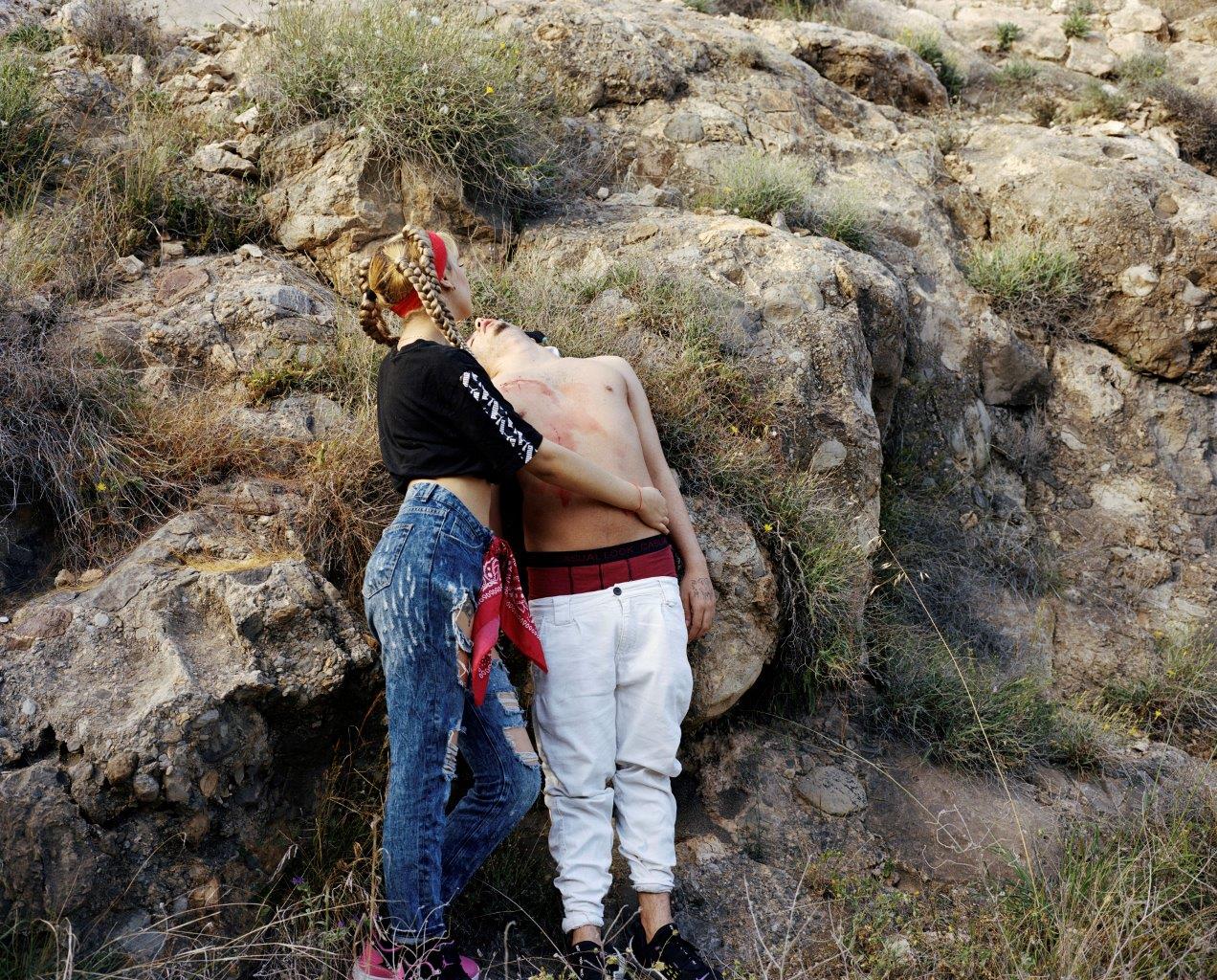
Almeria, Spain, from Agony in the Garden, 2021. © Lua Ribeira
Close Enough: New Perspectives from 12 Women Photographers of Magnum is on view til January 9, 2023, at the International Center of Photography in New York.
Enjoyed this article? Follow Huck on Twitter and Instagram.
You might like

What went down at Huck’s 20th birthday party
84 issues and counting — We took over east London’s Jaguar Shoes with friends old and new to celebrate two decades and our new issue, with Tony Bontana taking the decks for a special set.

Photos of friends, lovers and afters in Berlin’s party scene
Dreams and How to Keep Them – Vincent Wechselberger’s new monograph documents a decade of hedonism in the German capital, and the people he met along the way.

Inside the Los Angeles scene kid revival
The Rawring ’20s — For the cover of Huck 84, photographer Alexis Gross and writer Anna Zanes meet the latest faces of scene, who are finding freedom to express themselves through its technicolour, unafraid aesthetic.

Introducing our new issue of Huck Magazine: It Starts With Us
Huck 84 — For our second 20th anniversary issue, we spotlight 20 people and groups providing the world with a hopeful future.

The sharp rise of video game photography
Point, shoot — As the entertainment medium’s fidelity levels increase and developers build more powerful tools, a growing community of gamers are pushing the boundaries of image making in virtual worlds. Vicky Jessop meets people at the forefront of the emerging artform.

Joyous photos from the heart of the UK’s radical free festival movement
Common Grounds — The photographer has been capturing British counterculture for the past half century. A new exhibition looks at his archive sitting at the intersection of music, community and grassroots protest.


