What is the future of street photography?
- Text by Jackie Higgins
- Photography by Txema Salvans

The legendary American photographer Walker Evans once said, “Stare. It is the way to educate your eye and more. Stare, pry, listen, eavesdrop. Die knowing something. You are not here long.” The anonymity gained from living in crowded cities enables us to watch each other without being noticed and since its invention, the camera has often been used to preserve such voyeuristic acts. Moreover, the streets are increasingly under surveillance by automatic forms of image capture, from police cameras and CCTV to the ambitious yet controversial Google Street View project.
Txema Salvans and The Waiting Game

Txema Salvans from The Waiting Game, Valencia, Spain, 2005–13
Over the past eight years, Barcelona-based photographer Txema Salvans toured the outskirts of various cities along the Spanish Mediterranean coast and focused his lens on one group of people in particular: the prostitutes who ply their trade in broad daylight on the public highways. These women come from Russia, Romania, Latin America and Africa. They are drawn to places like Barcelona by the warm winters that enable them to work year-round and by the constant traffic of trucks carrying goods from Andalusia into France. To ensure the women continued to work in his presence, Salvans disguised himself as a topographer, someone who uses a camera to survey the lay of the land. “Then, simply what I did was to approach the girls to say ‘Look, I’ll be around here for a while near my van.’” The deception worked; the women ignored him.
Michael Wolf and Paris Street View

From Paris Street View © Michael Wolf, courtesy of Flowers London.
Michael Wolf moved to Paris in 2008 and embarked on a revolutionary street photography project: one that meant he did not even need to leave his apartment for its creation. He became one of the first street photographers of the online world by photographing photographs taken by Google Street View’s all seeing eye.
Adam Broomberg & Oliver Chanarin and People in Trouble Laughing Pushed to the Ground
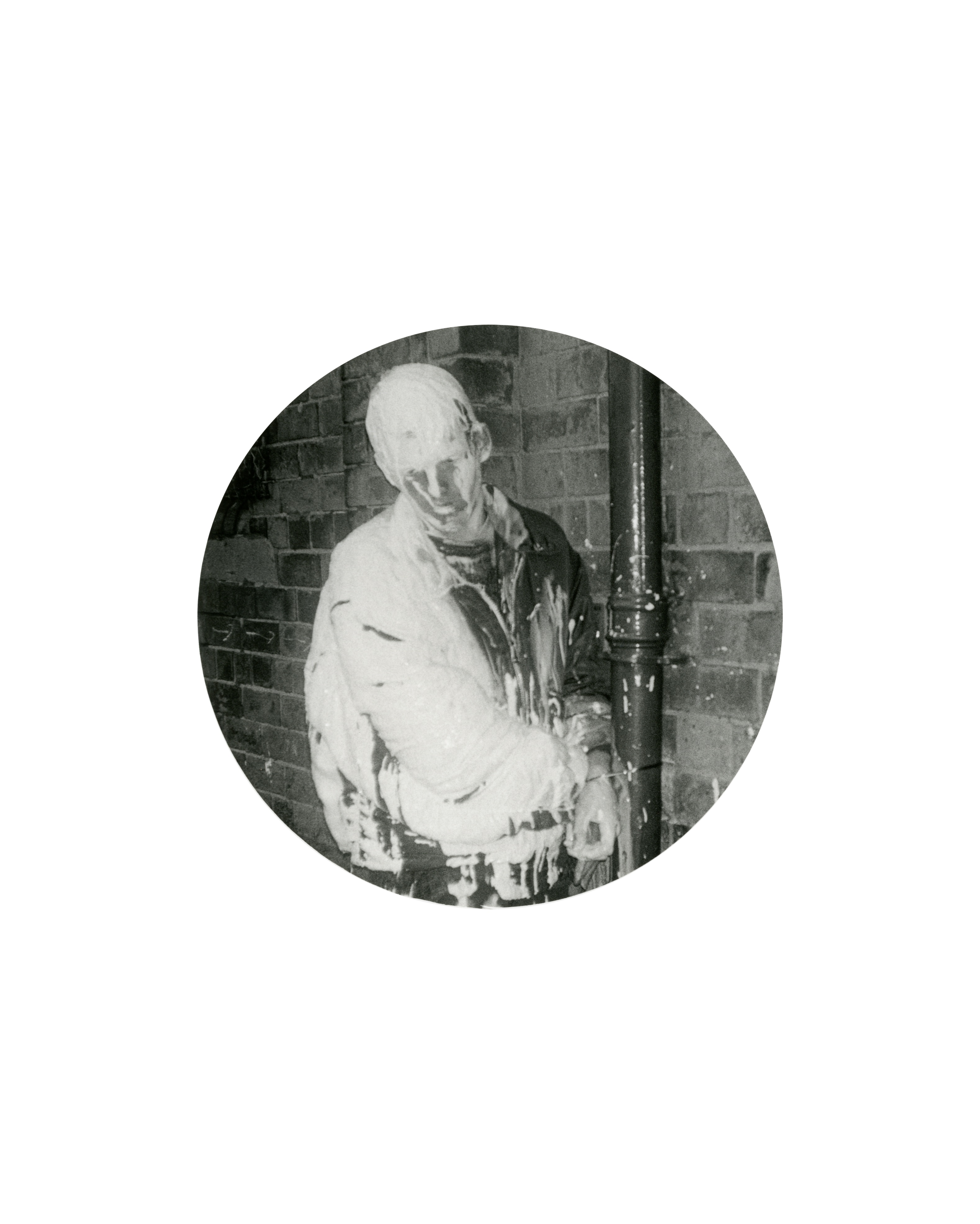
Adam Broomberg and Oliver Chanarin, ‘Untitled (Man Handcuffed to Drainpipe)’, Belfast, UK, 2010 from People in Trouble Laughing Pushed to the Ground, 2010–11. Courtesy of Paradise Row
In 2011, the London-based artists were invited to Northern Ireland’s Belfast Exposed photographic archive which houses imagery of the street protests, press conferences, violent confrontations and the ensuing funerals that took place in Belfast during the Troubles. What fascinated them were the markings people had made on the images, in particular those incidences when visitors had tried to erase identities from the public record, perhaps fearful of possible repercussions. Some used little circular stickers to cover up faces. “That area under the dot was rendered invisible, almost censored,” recall Broomberg and Chanarin, and that is what they chose to reveal, blow up and print.
Jackie Higgins is the author of The World Atlas of Street Photography, published by Thames & Hudson.
Check out Part 1: Africa – Identity and Inequality.
Look out for Part 3: Asia – The City’s Future.
You might like

Jesse Glazzard’s messy portrait of queer friends, lovers and chosen family
The Sound of Dirt and Beauty — The photographer’s debut monograph explores tender, unpolished moments shaped by the people who he surrounds himself with, while offering a window into the UK’s working-class LGBTQ+ community.
Written by: Sunny Sunday

Behind the curtain at Alternative Miss World 1981
Olympia glamour — Running a subversive take on the traditional beauty pageant, the Andrew Logan organised event prioritised underground creativity and invention. Photographer David Corio went behind the scenes at its biggest edition.
Written by: Miss Rosen

New exhibition highlights British radical living over 200 years
Earthly Paradise — Taking place at the William Morris Gallery, it explores the homes and lives of artists, writers, musicians and more, as well as the conditions that allowed them to thrive.
Written by: Isaac Muk

What life on the Strait of Hormuz is really like
Southern Winds — Bandar Abbas based photographer Morteza Niknahad has been capturing the diverse communities and stories of his local region since he first picked up a camera. His new series highlights the human impact of war.
Written by: Isaac Muk

Nick Haymes’s intimate portrait of his family’s life
Chronograph — Over 25 years, the photographer documented his son’s lives as they grew into adults. The resulting photobook is an exploration of the passage of time, as well as the optimism of youth.
Written by: Miss Rosen

Kristina Rozhkova’s scatty, confronting portrait of captivity
Gut Feeling — The Russian artist’s 2024 arrest and subsequent detention opened her eye towards the omnipresent dynamics of power and control. Her new photobook is a stark exploration of being trapped.
Written by: Isaac Muk


