Ireland voted to repeal the 8th – so what happened next?
- Text by Lydia Morrish
- Photography by George Voronov

Aoife had to get two buses, five trains and two ferries to England to have an abortion. She’s one of more than 170,000 women who have travelled from the Republic of Ireland, where abortion is illegal in nearly all cases, to access the procedure elsewhere.
Despite the majority of voters saying “yes” to legal abortion in a historic referendum in May, women in Ireland are still having to travel across borders to terminate their unwanted pregnancies.
“We get called saying, ‘I thought it was settled’,” says Mara Clarke, the founder of England-based charity Abortion Support Network. “But it’s not settled.”
Since 2009, the charity has helped nearly 5,000 women from countries where abortion is illegal access treatment overseas by providing advice, support, money and travel. Most, like Aoife, are from the Republic of Ireland, which has long had one of the strictest laws on abortion in the world. There, a woman can only get an abortion if the pregnancy endangers the mother’s life.
All that is set to change after 66 per cent of Irish voters said in a public vote on May 25th 2018 that it was time to repeal the Eighth Amendment, the law that makes it near-impossible to get an abortion in the Republic of Ireland. The legislation, passed in 1983 after a referendum, gives a foetus the equal right to life as a pregnant woman.
At the time of this year’s vote, it was widely believed that Irish women would immediately be able to access abortion services in their own country. Unfortunately, that wasn’t to be the case. For those on the ground in Ireland, nothing has changed – and abortion isn’t yet on the list of services they can access
“Those wanting abortions in the last few months of this year are still waiting,” says Clarke, whose team has heard from 369 women seeking terminations since the referendum. The Abortion Support Network has arranged funding for 134 of them to travel to places where abortion is easier to access, like England or Holland, to obtain legal and safe terminations. “Anybody who contacts us we just bring them over now. It’s better to be safe than sorry.”
For now, the country’s abortion law – which Clarke calls a “piece of garbage” – remains in place.
*
At least 10 women travel overseas from Ireland to have legal abortions every day. Meanwhile, an estimated three women unlawfully take abortion pills bought on the internet to self-induce a medical abortion.
The vote to repeal the Eighth Amendment did what it said on the tin: it repealed the current law that makes abortion illegal on the basis that the life of the foetus has more rights than a pregnant woman, and made provision for a new one to be written and enacted.
Due to a legal challenge after the referendum, the bill to change the law was delayed by two months and wasn’t made official until September 18. The Irish Taoiseach (Prime Minister) Leo Varadakar said at the time that abortion services would be free and made available in January 2019.
It’s now getting there: as of December 14, the Regulation of Termination of Pregnancy Bill, that will allow women to access an abortion within the first 12 weeks of pregnancy with no restrictions, was passed by both Irish parliament’s lower and upper houses. The law now needs to be signed through by the president before becoming law in January.


While it’s still unclear if that deadline will be met, Dr Peter Boylan, the man tasked with implementing the legislation, said the service is due to go ahead on January 1.
“It’s possible for the law to be passed, signed and in operation by then, and services at some locations, but it’s now generally accepted there will be some delay before abortion is lawfully available absolutely throughout the country,” says Fiona De Londras, an Irish academic and the Professor of Global Legal Studies at the University of Birmingham.
The process of passing a law of any kind is “rigorous process and difficult”, says De Londras. Add to that the estimated 5000 abortion-seeking women in Ireland a year, and the health services they will need, and it’s a monumental task. “Ireland is trying to create a law on abortion more or less from scratch.”
De Londras says that while people are “disappointed that more preparation wasn’t undertaken from an earlier stage,” the four months from the repealing of the Eighth to rolling out services is not unusually slow. Writing new laws takes time, especially on a contentious issue like abortion. Irish lawmakers and health providers have been divided on the specifics of the new law, with debates and discussions in the Oireachtas relentlessly heated.
“For some politicians, this is a really morally challenging thing,” says De Londras. “We have seen politicians distressed in the chamber, upset about the prospect of abortion law in Ireland.” Shouting broke out on December 5 during questions on the bill in which one member of parliament, Mattie McGrath, was accused of trying to stunt its progress.
Politicians aren’t the only group getting heated. Around 40 Irish GPs walked out of a meeting on abortion services over divides on conscientious objection, the ability for a health professional to refuse to perform an abortion on the grounds of religion, freedom of thought or conscience.
Meanwhile, reproductive rights campaigners like Clarke argue that while the new law will be an improvement, the proposed legislation doesn’t go far enough in providing access to abortion for all women, and that there will still be people who “fall through the cracks” of the proposed law.


She identified the need for up to four appointments to be made by women hoping to get an abortion in the prospective law: an initial consultation, first medication, second medication, and a possible ultrasound scan.
But vulnerable people – homeless women, those in abusive relationships, and people in insecure work situations – may not be able to attend multiple appointments, Clarke says. A three-day wait period between appointments will also lead to avoidable delays in treatment, and push people over the 12-week limit and on planes to England.
Critics including De Londras also question the accessibility of ultrasound services. Due to long waiting lists in the public health service system, the Irish government health agency has asked private firms to provide scans to women seeking terminations. But they would be available at only 12 private sites across the country.
*
Even if services are legalised in January, it will take time for them to be rolled out across Ireland. But for those waiting, it couldn’t come soon enough.
“You could say four months is not a long time for people to do something this complicated,” says De Londras, “but at the same time you could say every single day of those four months, an average of 10 women had to travel abroad to exercise their basic human rights.”
Exactly when women will be able to access abortions in their own country, is still unclear. But Clarke is confident that whatever Ireland’s new law, women will be able to access abortions through the Abortion Support Network. “We’re always here for the vulnerable people,” she says.
Whatever happens, De Londras says this is a special moment: “We are on the precipice for the first time in history of our state of actually having a system where reproductive agency is respected in law.
“Even with all faults in the law and the challenges we have to overcome, that’s a significant and long-overdue development that we should recognise as finally the product of 35 years of feminist activism to try to repair this wrong that was done to women in 1983 when the Eighth Amendment was put into the constitution.”
Follow Lydia Morrish on Twitter.
Follow George Voronov on Instagram.
Enjoyed this article? Like Huck on Facebook or follow us on Twitter.
You might like
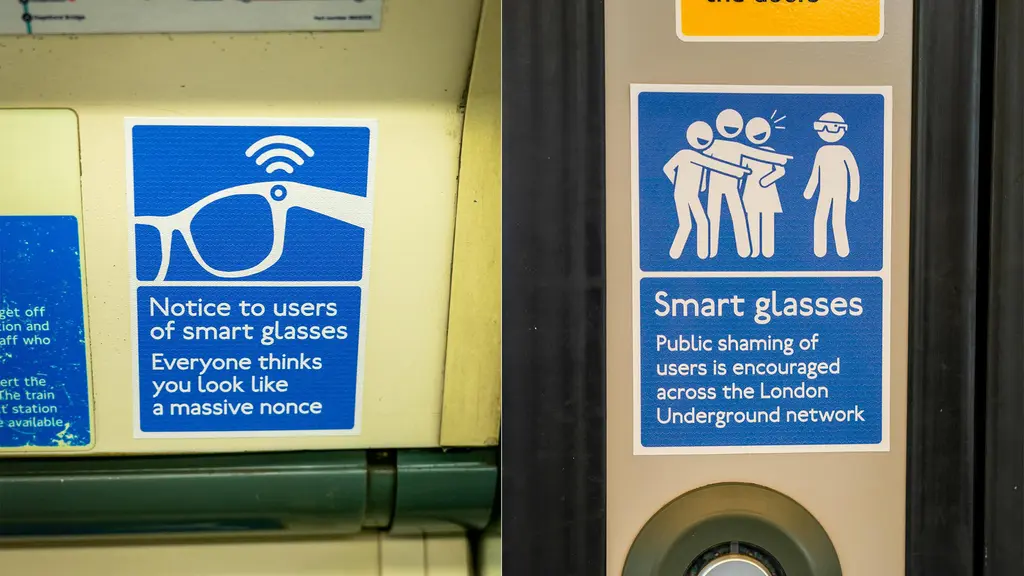
Activists slam “pervert glasses” in new guerrilla campaign
Everyone Hates Elon — Stickers have appeared on the London Underground network, criticising the wearable technology’s covert filming capabilities.
Written by: Isaac Muk

The battle for the soul of lockpicking
Under locksport and key — In recent years, breaking locks for fun has grown from a niche hobby into an activity followed by millions of people. As it has matured, so have tensions over who sets the rules.
Written by: Jack Dennison-Thompson

New exhibition highlights British radical living over 200 years
Earthly Paradise — Taking place at the William Morris Gallery, it explores the homes and lives of artists, writers, musicians and more, as well as the conditions that allowed them to thrive.
Written by: Isaac Muk

Pink Floyd’s Roger Waters joins team of new Palestinian resistance documentary
Freedom Theatre — Directed by Rishi Pelham, the film spotlights a theatre operating in the Jenin refugee camp.
Written by: Ella Glossop

Just Stop Oil holds first protest in 17 months
No new drilling — Having previously said that it was “hanging up the hi-vis”, the climate activist group has blocked a road outside Parliament to protest Andy Burnham opening the door for new oil and gas extraction licenses in the North Sea.
Written by: Ella Glossop

In photos: The enduring resistance of Notting Hill Carnival
Carnival of Resistance — A new photobook by Wayne Campbell and Wayne Crichlow reflects on the protest beginnings of Europe’s biggest street festival, along with the traditions keeping its original spirit alive today.
Written by: Isaac Muk


