What does food justice look like in 2025?
- Text by Sarah Bentley, Roshni Shah
- Photography by Made In Hackney (courtesy of)

WE COOK PLANTS — Huck Magazine day-one writer and food activist Sarah Bentley drops in to chat about her new book, as well as her plant-based community cookery school Made In Hackney.
As an early-day Huck writer, it’s weird to find myself writing about myself, but here goes. I’m Sarah Bentley; campaigner and activist, lover of people, food, surfing, and hope addict. I’m also the founder of plant-based community cookery school Made In Hackney. I was once called a “global plant-based movement” leader, which although nice, I’m tussling with the ick of having the audacity to describe myself as such.
Over the years I’ve described Made In Hackney in many ways – but my favourite is: we’re a food justice revolution disguised as a community cookery school. Our aim is to resist the damaging corporate control of our food system and fight back with community centred solutions; delicious, nutritious, climate-friendly plant-based food; and create space for connection, care, celebration and joy.
We’ve done this by offering thousands of plant-based growing and cooking classes in diverse culinary skills, multicultural cuisines and health supporting food working predominantly, but not exclusively, with marginalised communities; by providing nutritious meals to households who need food support, upskilling civil society to go more plant-based, and by offering training and mentoring to groups internationally via our Global Plant Kitchens programme. We started small, just me in a tiny cupboard like office, and now 13 years deep we’ve upskilled and inspired over half a million people to grow, cook and eat more plants. Wild.
Our debut book, WE COOK PLANTS, released this October, has been years in the making, and was something I only had the time and head space to curate after I stepped down from my full-time leadership role at the charity (I’m now a proud ambassador) to create space to homeschool my autistic son. It’s a food justice call-to-arms cum beautiful plant-based cookbook, featuring over 100 recipes from 70 chefs including celebrity supporters Andi Oliver, Sami Tamimi, Dr Rupy Aujla, Anna Jones and Sandor Katz. It’s also my heart. And everyone else’s who has joined and supported the charity over the years striving to resist, recreate and reimagine a food system that has care, collectivism and compassion at its core.
My inspiring collaborator Roshni Shah is an anti-oppression and food justice facilitator, former MIH team member and recipe/thought contributor to WE COOK PLANTS. Here she asks me a few questions about Made in Hackney and the book’s journey.


Roshni Shah: How and why was Made in Hackney set up?
Sarah Bentley: That’s a long one, I’d been a reggae/dancehall music and social justice journalist for 10 years. I loved this, but I wasn’t seeing enough impact in the world from my work. I wanted to be more in service for people and the planet. I started in community food growing and thought that was my path, but the opportunity came to start Made In Hackney and my life drastically changed course. Systemically speaking – we designed MIH as a local but replicable response to the climate crisis, health inequalities crisis, and a vehicle for bringing communities together using the transformative and healing power of plants.
What were the challenges of establishing a plant-based community cookery school?
So many! The build was a nightmare. The builder ran off without finishing and we had to gather volunteers to install the units, paint, tile, do the ironmongery – it was nuts. Me and my husband Baba were there until 3am for weeks on end to get it finished. Looking back, it was a beautiful community effort, but at the time it was stressful. Constantly securing funding is exhausting. Each funder has different criteria, which is time consuming and inefficient. Charities do vital work, but the system they operate within is archaic and pretty much the same as it was when it was set up in Victorian times. Too much admin, stress and disproportionate power rests with charity trustees as opposed to the workers. I’d love to collaboratively re-design the whole system.
Let’s talk about the ‘V word’ (vegan). How did people respond to the food in 2012?
Back then there weren’t warm fuzzy feelings around veganism. People thought we ate lettuce leaves and were in a cult. I was aware of this, so we didn’t mention vegan but talked about all the positives – compassionate, kind, climate friendly, low-cost, food hygiene safe, inclusive, diverse. We wanted people to enter the kitchen with open hearts and minds, and this approach has worked well. In the early days we had our fair share of push back. A dietician attending with a youth group handed out ham sandwiches, crisps and chocolate after class where the young people cooked and ate brown lentil shepherd’s pie, brown rice and greens. She said she was concerned they hadn’t had a nutritionally balanced meal. It was wild. This doesn’t happen now – things have progressed!


What happened in your life to lead you to setting up a plant-based community cookery school? Who or what inspired you?
The pivotal moment in my adult life was a conversation with Indian agro-ecology activist and academic Vandana Shiva. I was writing an article about the supposed agricultural ‘green revolution’ in Africa. This conversation lit a fire in me about food that’s been blazing ever since. Looking to my formative years, I went veggie at age nine, after reading an article about how animals were transported to the slaughterhouse. I read it in floods of tears, feeling so let down by the adult world. As a young reggae journalist in Jamaica, I encountered Rastafarian Ital food and that opened the door to veganism. I can’t forget the influence of my late Mother. She was a home economics teacher, so I grew up in a food-loving household watching someone grow veggies and cook from scratch. I thought her vocation wasn’t feminist and completely disengaged with it when I was a teenager, so it’s funny I ended up starting a cookery school. At age 75 she came to teach – everyone loved her and it was so cool watching her lead a class.
At its core, MIH is a food justice charity. What does that mean and why is it so important to the organisation?
I’d love to hear your take on this Roshni, but I’ll give you mine to begin. Food justice is a food system where every person, living entity and eco-system is treated in a just manner. So that’s animals, insects, growers, farmers, delivery people, processors and packers, factory workers, retailers, kitchen workers, chefs and of course, all people that eat food. Justice would mean all these people are paid fairly and work in healthy, supportive, safe environments, and indigenous food ways and cultures are championed while the environment is respected and protected. Having access to enough nutritious, delicious food of your preference is a human right, not a privilege. But for millions of people all over the world they experience food insecurity every day. In the UK alone 14.5 million people, close to a quarter of the population, regularly go hungry. In the sixth richest nation in the world this is a gross failure of successive governments. MIH seeks to push back against a broken food system and contribute to building a healthy and just food system for all – including animals. If I could suddenly wave a magic wand, I’d cease all food commodity trading and have baseline prices for global staples. Food commodity trading capitalises on scarcity to create profits for a few and starve millions. It’s totally dark… What are your thoughts?
You touched on the most important points. To add, I would say we must also recognise the colonial roots of our inequitable food system and their impact today. We live in a system built on extraction and violence. Colonisers destroyed traditional farming systems and introduced cash crops which made them reliant on western trade. They also extracted labour of indigenous folk through systematic violence. A significant amount of the land in the UK was acquired using wealth gained through slavery. The consequences of colonialism play out today in numerous ways. Global Majority farmers in the UK struggle to gain access to land for growing, and racialised households are more likely to experience food insecurity (with restricted access to healthy and culturally appropriate food). Wealthy countries still control global supply chains (what is grown, the price, access) and countries in the global south face the sharp end of climate breakdown. This is important for a charity like Made in Hackney, whose values are rooted in addressing health inequalities, food access and climate justice.
“In the UK alone 14.5 million people, close to a quarter of the population, regularly go hungry. In the sixth richest nation in the world this is a gross failure of successive governments.” Sarah Bentley

We live in a world trying to divide us. Far right narratives and identity politics are used to create fear rather than connection. How does MIH use food to create connection?
I’ve always said the most important ingredient to a MIH class is joy. Our classes are opportunities for celebration, connection, learning and personal growth. Cooking and sharing food is a potentially powerful vehicle for connection. It’s communal, visceral, bonding. We all have different life experiences, but as humans there is so much more that unites rather than divides us. If we can get the time to slow down, listen, and connect, ideally over a delicious, nutritious, climate friendly, compassionate meal, we’d all not just realise this, but feel it in our hearts. Capitalism strips us of our humanity. We must push back against this to intentionally co-create the space needed to live and be together differently.
How has MIH grown and evolved over the years?
We started off working just in Hackney, but within months our chefs were taking our classes to venues all over London. Today we have a team of 12 staff, 200 volunteers, 30 active chefs and teachers. We initially only ran free community cooking classes, but over the years we’ve added in community feasts, paid masterclasses; our national skills training programme Plant Prospects; and our international movement building and mentoring programme Global Plant Kitchens. In total we’ve inspired and upskilled half a million people to grow, cook and eat more plants. Which is mind blowing and testament to all the amazing people that have believed and contributed to our work, and a better way of doing food.
What joyful moments stand out for you?
There’s so many. Our pre-pandemic summer parties for 300-plus people gave me life. Calypso bands, mega raffles, Ghanian acrobats, delicious food – they were an amazing way to give back to the community and have a good time. The first day of our community meal service, one day into the national lockdown, where I turned the corner and saw 30 cycle couriers queued along an otherwise empty street to deliver meals to our community is a moment I’ll never forget. The power of community in action. The time someone told me they no longer needed to take insulin to manage their diabetes after coming to our classes and being inspired to go wholefood, plant based. There are so many moments of joy.


Many people claim that a vegan diet can’t be healthy because it is too reliant on ultra-processed products (UPFs). What do you say to that?
The association of veganism with UPF has been placed in people’s minds by a powerful PR campaign by the big meat and dairy industry. Go into any supermarket and you’ll see the majority of UPF products, some of which can be problematic for health, are not vegan. But thanks to millions being pumped into associating veganism with UPF, and they’ve done a great job, it’s the first thing people now ask us about when you say you’re vegan. Faux meats and cheeses are a great gateway for people starting their journey into living animal product free. Of course, a whole food plant-based diet is best – but it’s also nice to enjoy a sausage and a burger now and then. It’s a distraction to maintain the status quo.
Veganism has long been viewed as a white, middle-class movement. Why is it important to celebrate Global Majority vegan food cultures?
Plant-rich food cultures are integral to so many Global Majority cuisines that to portray it as a white, middle-class thing is a huge misrepresentation. Food writer and author Anna Sulan Masing has written about the tech bros of Silicon Valley trying to pass off mock meats as their innovation, when faux meats have been part of East Asian food culture for thousands of years.
As you mentioned, plant-based food cultures have existed for many thousands of years before the term ‘vegan’ was invented. But those cultures are disregarded, often, until the west ‘discover’ them. For example, I know all South Asian people did a collective eye roll when the west suddenly ‘discovered’ the healing properties of turmeric – something we have known for thousands of years. Therefore, to privileged white folk, I say this with respect: Get out of the way. Use your privilege and platform to uplift and honour Global Majority voices, stories and cultures. To do this, we must first face some uncomfortable truths. Acknowledge our colonial history but then move to action. Appreciate, not appropriate. Celebrate plant-based foods from Global Majority cultures by platforming chefs from those areas. These cultures not only give us access to exciting new flavours, but we can use the food to start conversations. Food is something that connects all of us, and we have our own personal stories to tell. Those stories can build connections and communities across cultures. We can discover that there is more that connects us than divides us.
Read next: Inside the community kitchen feeding Hackney


If people are thinking of buying WE COOK PLANTS – what should they expect?
It’s a food justice call to arms disguised as a glamourous plant-based cookery book! It’s both a how-to and we-did, celebrating 13 years of community cooking, while featuring over 100 global plant-based recipes; fermentation, foraging, food waste reduction and food growing tips and food justice related think pieces. I don’t think there’s a cookbook out there quite like it – it’s the perfect gift for your ethical foodie friend who wants their gift to give back as much as it gives to them.
How can people get involved and support the charity?
SB: You can buy or gift our book; set up a regular donation which helps us to provide more emergency food support and life changing classes; volunteer; or book a team building event for your workplace. There’s always ways to get involved and we can promise great food, good vibes and a whole lot of hope and joy.
WE COOK PLANTS by Sarah Bentley is available from bookshop.org and your local independent bookstore.
Buy your copy of Huck 82 here.
Enjoyed this article? Follow Huck on Instagram and sign up to our newsletter for more from the cutting edge of sport, music and counterculture.
Support stories like this by becoming a member of Club Huck.
You might like

The raw beauty of Jamaica's dancehall culture
24 hour party people — Photographer Ivar Wigan has been documenting Jamaican street style for 10 years. Then a friend's murder gave the project a new layer of meaning...
Written by: Cian Traynor

Capitalism is co-opting, & ruining, the feminist movement
We deserve better — This week, Gillette shared a mawkish film paying lip service to the #MeToo movement. But, like many clumsy multinationals before them, they got it all wrong.
Written by: Dawn Foster
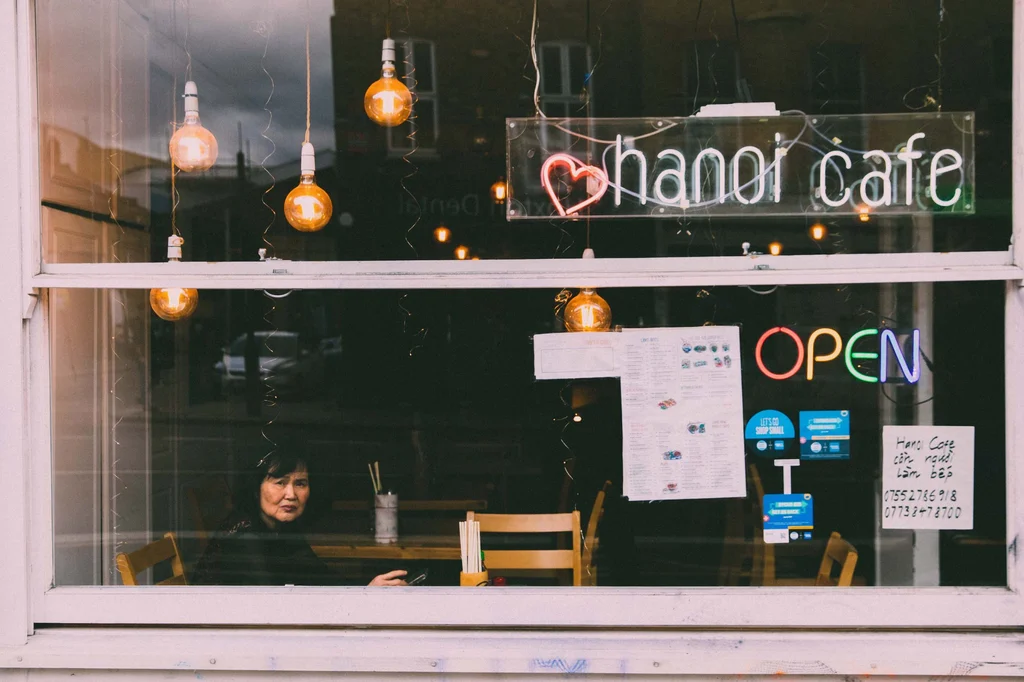
Hackney’s Pho Mile and its history of resistance
Home Away From Home — For decades, an area of East London has served as a vital community hub for Vietnamese people looking for a taste of home.
Written by: Georgina Quanch

Park life: photos of London in lockdown
Taking the air — As the coronavirus crisis gears up, photographer Theo McInnes documents how the city’s outdoor spaces are changing.
Written by: Huck

A visual ode to Leicester’s South Asian community
After being subject to racism while growing up, Kavi Pujara’s photo series was a chance to reconnect with and reimagine his hometown.
Written by: Isaac Muk

A stark, confronting window into the global cocaine trade
Sangre Blanca — Mads Nissen’s new book is a close-up look at various stages of the drug’s journey, from production to consumption, and the violence that follows wherever it goes.
Written by: Isaac Muk


