Why Trans Pride is more important than ever
- Text by EM Williams
- Photography by Bex Wade

My first London Trans Pride was in 2021. I travelled down from Hull and missed the main march but was able to catch the speeches.
In a packed out Soho Square I watched Abigail Thorn scream until her voice was hoarse. I watched Mzz Kimberley start her song three times to rapturous support when the sound system fucked up. I watched best friends wish their friends were still here, others thanking theirs for helping them still be here. I watched poetry pour from veins. I held stillness and silence. I watched people crying, with sadness, pain and laughter too. I watched people share stories, eye contact and kisses. I watched someone offer a man a space at the urinal, for him to say, “oh no I don’t have one of those yet, but thanks”.
As I was getting ready to leave, an ethereal being with long dark shiny hair and combed beard framing their brown skin came up to me and said “I saw you from across the way and I just had to come up and tell you…I see you. I just… I see you.”
At the time, I only had a few, thin cracks. Cracked, for those who aren’t in the community, is a term for when you realise you’re trans and come out of your pretended and not so protective Cis-Shell.
Transgender and GNC individuals make up around 0.5% of the UK according to 2021 census data. There are more people here with ginger hair. More children born each year are currently called Oliver than those who will come out as Trans or GNC. For every one Trans woman in the UK there are around 100 people who report to have an allergy to penicillin. Despite this, there are 514 pages of search hits on the word “Transgender” on the Daily Mail online, with a dedicated sub-section for “Transgender Issues.” By comparison, there are just 2 pages of hits for penicillin.
This huge disparity in reporting, with the vast majority of it in bad faith, comes as Trans people and communities are under legislative attack. In Scotland, the devolved Government’s Gender Reform Bill provided much needed reform to self ID rules which proved a huge barrier to Trans people accessing healthcare and services they need. Amid huge furore over the law the Conservative Government in Westminster, backed by politicians of all stripes, took the unprecedented step of blocking the legislation. Elsewhere, last year, the Tories rolled back on a promised ban on conversion therapy, proposing the exclusion of Trans people from the ban. The Government eventually u‑turned and promised the bill, which was introduced in April of this year, would include Trans people.
More recently news broke of a new proposed set of guidelines for schools that would see them mandated to breach the confidence of children and notify parents if their children were questioning their gender — a move many have condemned as putting children at risk.
The focus on ‘the protection’ of children is straight out of history’s playbook. Section 28 of the Local Government Act 1988 amended section 2A of the 1986 act of the same name. It stated, “A local authority shall not promote the teaching in any maintained school of the acceptability of homosexuality as a pretended family relationship.”
On top of the media and legislative attacks on the community, Trans people face other threats. High profile bans on the inclusion of Trans people in sports and ongoing ‘debate’ about the ability of Trans people to access certain spaces continues to toxify society and have real world consequences as transphobic hate crimes reach record highs. Elsewhere poor access to healthcare, spiralling rates of suicide and homelessness and precarity all paint a truly terrifying picture for Trans people in this country.
It’s these reasons, and many more that we cannot have LGB without the T. The progressive rainbow community has shared experience of institutionalised attacks and challenges to their very existence. Whether they come in one large wave, a thousand tiny cuts, or on the statute books.
Author and activist bell hooks once wrote that she was ‘queer as not being about who you’re having sex with — that can be a dimension of it — but queer as being about the self that is at odds with everything around it and has to invent and create and find a place to speak and to thrive and to live’.
The trans and gender non conforming community know this more than most. We have a unified understanding of multiple year long waiting lists, homelessness, crowdfunders, mutual aid, bridging prescriptions, safe places to take a piss, TERF awareness, harassment warnings, suicide and mental health watching. The community holds each other up under the cracking and well worn foundations of discords, signal and telegram, tiktok and insta, even twitter when we absolutely have to. And we have to.
This year, I joined the London Trans Pride organising committee. Over the last five years the event has grown, so much so that we’ve had to change the route this year to accommodate the numbers. An antidote to the overly sanitised and commercial Pride in London, the march remains as important to me now as it did two years ago — perhaps even more so now. As the attacks on Trans people continue, it’s more important than ever for people to mobilise in support, to show our strength as a community and to fight back. We hope to see you there.
We are still crowdfunding for the next London Trans Pride please find the link here.
London Trans Pride is taking place Saturday 8th July starting at Trafalgar Square at 1pm with the route taking us down to Wellington Arch on Hyde Park Corner. For a map and further information please visit here.
Enjoyed this article? Follow Huck on Twitter and Instagram.
You might like

Sports Banger is throwing a party to mark 90 years since the Battle of Cable Street
“Fascists hate dancing” — The October event will bring DJs, live music, sound system culture and anti-fascist politics together in East London.
Written by: Ella Glossop
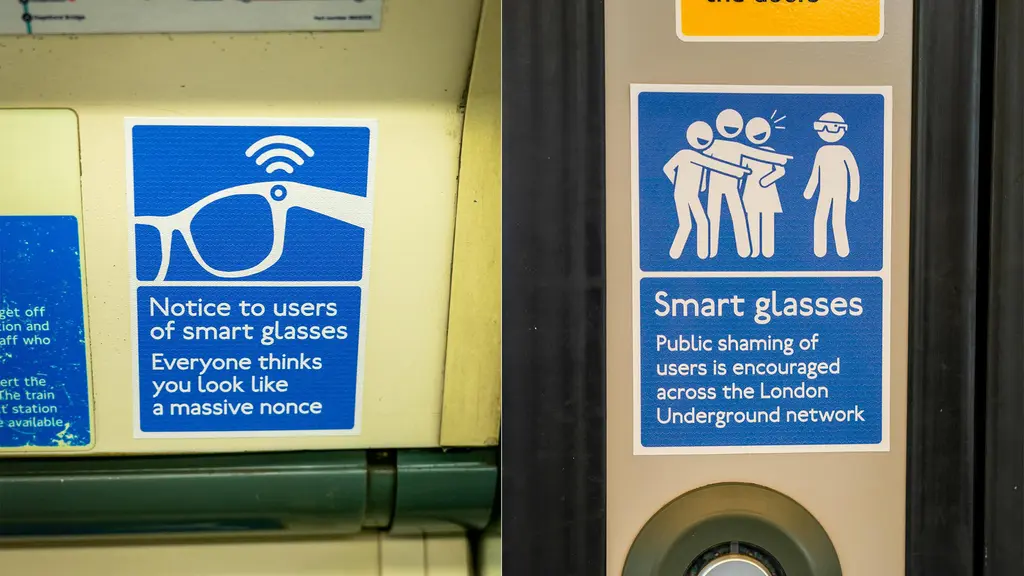
Activists slam “pervert glasses” in new guerrilla campaign
Everyone Hates Elon — Stickers have appeared on the London Underground network, criticising the wearable technology’s covert filming capabilities.
Written by: Isaac Muk

New exhibition highlights British radical living over 200 years
Earthly Paradise — Taking place at the William Morris Gallery, it explores the homes and lives of artists, writers, musicians and more, as well as the conditions that allowed them to thrive.
Written by: Isaac Muk

Pink Floyd’s Roger Waters joins team of new Palestinian resistance documentary
Freedom Theatre — Directed by Rishi Pelham, the film spotlights a theatre operating in the Jenin refugee camp.
Written by: Ella Glossop

Just Stop Oil holds first protest in 17 months
No new drilling — Having previously said that it was “hanging up the hi-vis”, the climate activist group has blocked a road outside Parliament to protest Andy Burnham opening the door for new oil and gas extraction licenses in the North Sea.
Written by: Ella Glossop

In photos: The enduring resistance of Notting Hill Carnival
Carnival of Resistance — A new photobook by Wayne Campbell and Wayne Crichlow reflects on the protest beginnings of Europe’s biggest street festival, along with the traditions keeping its original spirit alive today.
Written by: Isaac Muk


