Reckless or revolutionary? An expert considers the dangers of freediving
- Text by Shelley Jones
- Photography by Elina Manninen
Freediving has captured the world’s imagination this year. It may be an ancient discipline, once used by pearl hunters and spear fishermen, but it only caught on as a competitive sport in the late 20th century. Since then, freediving has kept building popularity.
Humans descending to mysterious depths in the ocean is a romantic concept – with directors like Jacques Cousteau and Luc Besson creating films that explore our fascination – but as the competitive side of the discipline has become more popular so too has the scrutiny it faces. The struggle is similar to that of surfing in the ’80s when the competitive side became popular and the culture basically divided into two camps: ‘pros’ or ‘soul surfers’.
A year ago we interviewed freediver James Nestor, author of the book Deep – Freediving, Renegade Science and What the Ocean Tells Us About Ourselves, and he controversially suggested competitive freedivers were ‘reckless’ and represented ‘0.01% of freedivers in the world’. There have been a number of tragedies associated with the sport. One of the most infamous involved the first couple of freediving Francisco ‘Pipin’ Ferreras and his wife Audrey Mestre. Mestre died during a competitive dive in the Dominican Republic (Ferreras was later accused of foul play). And more recently, this summer, the greatest freediver of all time Natalia Molchanova died on a recreational dive off the coast of Ibiza.
But as the sport progresses, so too have the safety measures and competitive freedivers are keen to represent their sport fairly, as something that carries a certain amount of risk (like any other sport), but is essentially positive, progressive and responsible. We caught up with Finnish champion Antero Joki, who also works for AIDA, the sports international regulatory body, to find out the truth, and question just how far the sport can keep pushing.
What are common misconceptions people have about freediving?
People who know nothing about freediving think it is dangerous. That’s only partially true.
If you freedive alone, it can be lethal. But if you do it the correct way and respect safety procedures, it is a really safe sport. Real freedivers always follow the safety procedures. Other ways freediving can be dangerous are if you are a very competitive person and you don’t really listen to your body. If all that matters to you is the goal that you want to achieve, freediving can be potentially dangerous, you can harm yourself. You must respect your own body to keep it safe. And you must respect the sea because it will always be stronger than you.
In his book James Nestor describes competitive freedivers as ‘reckless.’ How do you feel about that description?
I can’t say that there is not one reckless freediver in the world since most likely that is not true. There are all kinds of people involved with freediving like in any other sport as well. What I can say is that all the competitive freedivers I know personally couldn’t be described with the word ‘reckless’. His kind of thinking can be caused by seeing athletes having black-outs in competition. In competition everyone wants to do their best and the announcements are in the limits of the person’s capabilities. Sometimes the mental pressure in competition can be a positive force and sometimes too much pressure can have negative result. Even if the person has done the same result in training it can be difficult to repeat in competition. If you are calm and relaxed your oxygen consumption is far less than in stress. That is the reason why we have safety divers in all competitions.
Is there any hostility between competitive and non-competitive freedivers?
No, absolutely not! The spirit between all freedivers is so wonderful that there is no hostility even between competitors. We are all friends together and we are all more or less recreational freedivers as well. There is this very old saying that, ‘We are like a big happy family.’ In freediving, it is really true. There must be something already in the type of person that wants to start freediving, and if you keep doing it for some years you will be ‘infected’ with this great spirit and positive energy. This great spirit has been one of my motivations to get into the competitions. The more freedivers present in the same place the better atmosphere it will be.
There’s a limit to how deep humans can go. Do you think competitive freediving has to stop progressing at some point?
Of course there is a limit how deep humans can go, as there is a limit to how fast humans can run. But after many decades of racing the 100 metres, the world sprint record still gets improved regularly. Actually, more and more people are running under 10 seconds. The same will happen in freediving since this is a relatively new sport with just a 23-year-old history of AIDA International and current disciplines. The time when world records will get really hard to improve on is still quite far away. Training methods improve, equipment develops and our understanding of the human body increases with all the studies that have been done and will be done. What stays the same is the sea and the pressure, which is the reason we need more understanding.
What do you think are the main achievements in freediving in the last couple of years?
As I also work in the administrative side of this sport, on the AIDA Board. The records get the biggest publicity, which they for sure deserve. Every world record is a fantastic performance. Every new personal best is a wonderful achievement for each particular person. We have renewed our Safety Procedures to make this sport even safer for all athletes. One important thing is our new Rules for Competitions and Records where safety issues play a big part as well. The goal has been making the rules clearer and more fair for everyone. The big renewal was approved in the end of year 2014 and the next improvement will get voted on in the beginning of 2016. Hopefully there will be regular improvements also in the future.
In what direction would you like to see the sport go in the future?
AIDA International is not the only organisation in freediving. There are other organisations doing the same (work). It would be great if we could have more cooperation with all the organisations together. That way we would get stronger and it would also be clearer: having only one world record in each discipline. Now it is a bit like in boxing with more than one world champion in the same discipline. The other thing is I would like very much to increase the knowledge of freediving outside of freedivers. For example many people have problems finding training time in pools because the responsibilities consider freediving dangerous. The fact is that people sometimes test their limits in diving without understanding anything about safety procedures and that is dangerous! They are not freedivers. When freedivers make their diving safe, they can also educate others to do the same. Freediving can actually increase the safety in pools since they are trained to save people under water. Ignorance and denial do not increase safety, knowledge and understanding do.
Would you like to see freediving as an Olympic sport?
Yes, of course. It would be fantastic to be included in Olympic sport family. That is a goal for which we need to do lot of work before it can be achieved. Nevertheless it is a dream for the future.
Check out our film on Antero, Into The Deep, the first in a new series Journey From the Source, about interesting characters all over the world that have an unusual relationship with water.
You might like
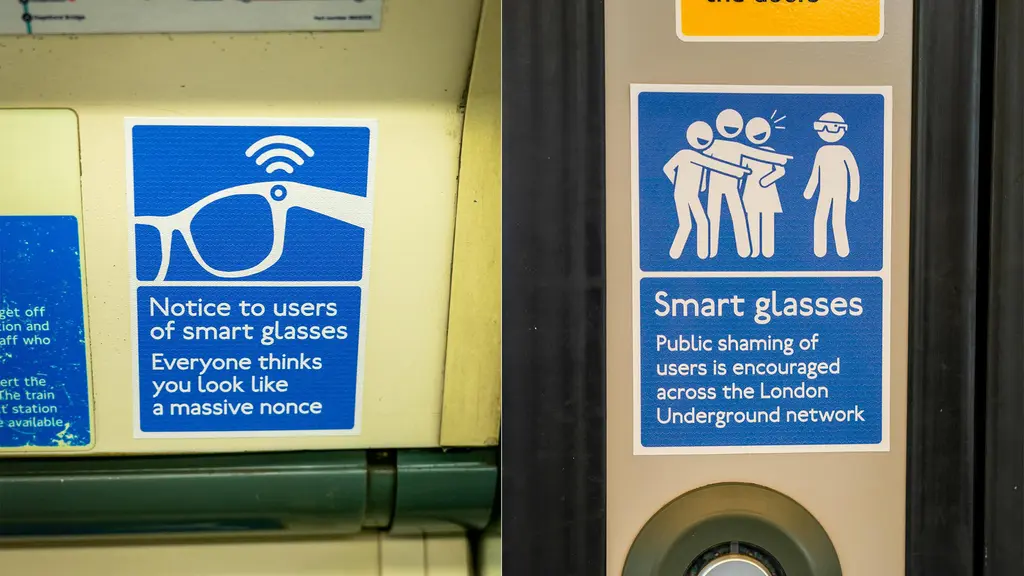
Activists slam “pervert glasses” in new guerrilla campaign
Everyone Hates Elon — Stickers have appeared on the London Underground network, criticising the wearable technology’s covert filming capabilities.
Written by: Isaac Muk

New exhibition highlights British radical living over 200 years
Earthly Paradise — Taking place at the William Morris Gallery, it explores the homes and lives of artists, writers, musicians and more, as well as the conditions that allowed them to thrive.
Written by: Isaac Muk

Pink Floyd’s Roger Waters joins team of new Palestinian resistance documentary
Freedom Theatre — Directed by Rishi Pelham, the film spotlights a theatre operating in the Jenin refugee camp.
Written by: Ella Glossop

Just Stop Oil holds first protest in 17 months
No new drilling — Having previously said that it was “hanging up the hi-vis”, the climate activist group has blocked a road outside Parliament to protest Andy Burnham opening the door for new oil and gas extraction licenses in the North Sea.
Written by: Ella Glossop

In photos: The enduring resistance of Notting Hill Carnival
Carnival of Resistance — A new photobook by Wayne Campbell and Wayne Crichlow reflects on the protest beginnings of Europe’s biggest street festival, along with the traditions keeping its original spirit alive today.
Written by: Isaac Muk

Tens of thousands gather to remember Jason Arday at London vigil
Stand Up to Racism — It took place in Trafalgar Square, with speakers paying tribute to the former Cambridge professor’s life and achievements, while calling for accountability over the reporting he faced from the mainstream press.
Written by: Ella Glossop


