The artists turning acts of pollution into works of art
- Text by Adam White

With Beijing’s ‘airpocalypse‘ continuing to reach unprecedented levels of density, the city’s artistic population is turning to the skies for inspiration.
One such artist is Nut Brother, who on November 30, 2015 completed a 100-day project to build a brick from dust and smog particles collected from the Beijing sky using a vacuum cleaner. The artist walked the streets daily with the vacuum, holding a suction nozzle up to the air and storing the collected material. On completion of the project, he mixed the airborne residue with clay to form the finished brick – a physical embodiment of the city’s smog crisis.
Nut Brother is joined by other creatives turning environmental tragedy into works of art, many as striking in their visuals as they are important statements on the desperate need for social change. Here are five more artists finding beauty in our polluted world.
Animals Made of Garbage

Facebook (Bordalo II)
Artur Bordalo, aka Bordalo II, is a Portugese street artist. Frustrated by the continued dumping of metals, plastics and similarly eco-unfriendly objects, Bordalo trawls landfills and back streets to source material for his series of enormous 3D murals. From afar the murals are colourful and eye-catching, forming oversized images of beautiful animal life, but up close reveal a darker narrative: bodies made of crudely painted cables, car parts and ceiling fans – abandoned, man-made trash obliterating the natural world.
Juxtaposing Two Visions of India

With its ever-increasing population, relative lack of recycling and over-reliance on landfills, India is one of the world’s most rubbish-strewn countries. To tackle the issue, Karma Recycling, Delhi I Love You and Shaily Gupta have developed the ‘Dirty Pictures’ campaign, determining that the sheer prevalence of waste in cities makes traditional environmental advertising ill-effective. The scheme features imagery juxtaposing joyous Bollywood scenes with the environmental crisis most often encountered by locals, with movie star romances pasted on top of acres of steaming garbage.
Turning Sewage Into Paint

JohnSabraw.com
The polluted waters of Athens, Ohio, where drainage from local mines have been turning streams orange for years, inspired British-born, Ohio-based artist and environmentalist John Sabraw to try and combine both of his passions. Working with chemist Guy Riefler, the duo decided to extract iron oxide from the streams, turning its initial ‘wet sludge’ form into acrylic and oil-based paints. Sabraw uses the materials to create colourful psychedelic prints he refers to as the ‘Chroma sessions.’
The Glacier That Fell to Pieces

Photographer: Jens Ziehe
Exhibited in a refrigerated room, Olafur Eliasson’s installation ‘Your waste of time’ puts an immersive spin on the glacier crisis as the work is comprised of large pieces of ice gradually broken off of Vatnajökull, Iceland’s largest glacier. With some of the ice pieces estimated to have been formed over the course of 800 years, it is a sombre depiction of environmental devastation.
The Face Mask Bride

Photo: sina.com
For many Beijing brides, their big day involves a local addendum that the most famous fairytales tend to leave out – the requirement of wading through blistering smog en route to the altar. For artist Kong Ning, the environmental plot twist inspired ‘Marry the Blue Sky’, a performance piece that saw her decorate a wedding dress and its accompanying train in 999 pollution filtering face masks before wandering the city streets in search of her groom, the elusive Beijing heavens. It came as no surprise when he didn’t show.
Enjoyed this article? Like Huck on Facebook or follow us on Twitter.
You might like
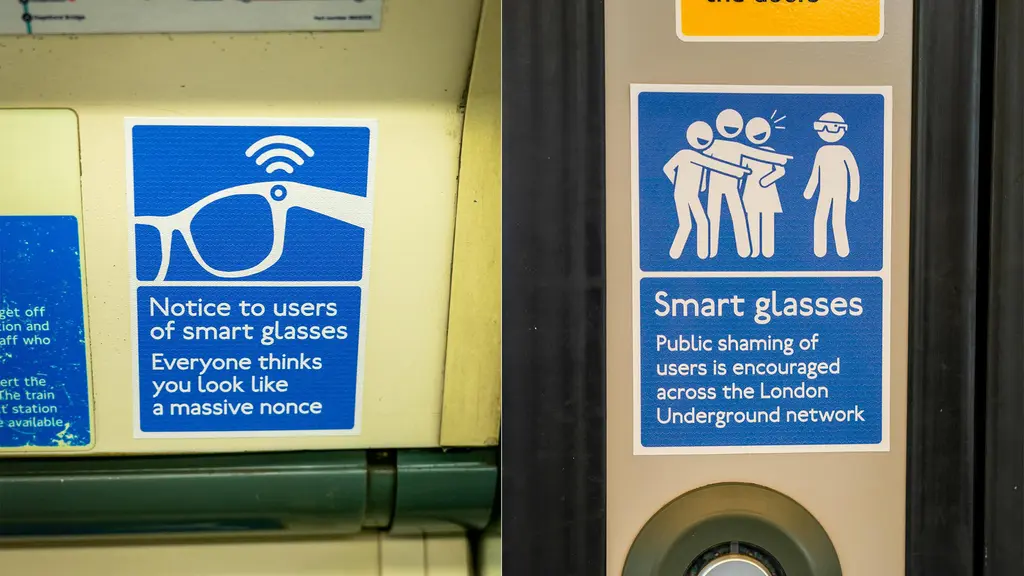
Activists slam “pervert glasses” in new guerrilla campaign
Everyone Hates Elon — Stickers have appeared on the London Underground network, criticising the wearable technology’s covert filming capabilities.
Written by: Isaac Muk

New exhibition highlights British radical living over 200 years
Earthly Paradise — Taking place at the William Morris Gallery, it explores the homes and lives of artists, writers, musicians and more, as well as the conditions that allowed them to thrive.
Written by: Isaac Muk

Pink Floyd’s Roger Waters joins team of new Palestinian resistance documentary
Freedom Theatre — Directed by Rishi Pelham, the film spotlights a theatre operating in the Jenin refugee camp.
Written by: Ella Glossop

Just Stop Oil holds first protest in 17 months
No new drilling — Having previously said that it was “hanging up the hi-vis”, the climate activist group has blocked a road outside Parliament to protest Andy Burnham opening the door for new oil and gas extraction licenses in the North Sea.
Written by: Ella Glossop

Nick Haymes’s intimate portrait of his family’s life
Chronograph — Over 25 years, the photographer documented his son’s lives as they grew into adults. The resulting photobook is an exploration of the passage of time, as well as the optimism of youth.
Written by: Miss Rosen

Kristina Rozhkova’s scatty, confronting portrait of captivity
Gut Feeling — The Russian artist’s 2024 arrest and subsequent detention opened her eye towards the omnipresent dynamics of power and control. Her new photobook is a stark exploration of being trapped.
Written by: Isaac Muk


