Let’s be real: vegan sausage rolls are not going to save us
- Text by Ben Smoke
- Photography by Theo McInnes
- Illustrations by Emma Balebela

The planet. It’s good, isn’t it? For billions of years this little blue marble, spinning at unfathomable speeds through space and time, has managed to sustain life. Sentient life, too: things that are able to move, think and feel. Things that are able to laugh, shout and scream. Things like us.
Now to us. In the grand scheme of things, we haven’t been here for that long. But during our short reign of terror on the earth we’ve pumped billions of tonnes of noxious emissions into the atmosphere. Under our watch, the planet has heated up, ice caps have melted, and fragile ecosystems have been completely wiped out.
So, after centuries of ravaging our world, we stand on the edge of a precipice. If we do not alter course, the planet as we know it will end. The climate crisis will see mass flooding from rising sea levels, extreme weather events, failed crops, droughts and, eventually, mass extinction for the human race. According to the IPPC, we now only have 10 years left to stop it.
For many, there’s a sense of helplessness. More and more people are being told to think about their own individual actions. To fly less. Use public transport more. Cut down on meat consumption. Lean in to things like Veganuary, and start to take individual ownership of our choices in order to save the planet.
In his Best Actor Oscar acceptance speech earlier this month, Joaquin Phoenix summarised much of the issues around the individualistic discourse around climate action, by hailing the moral imperatives of veganism. They echoed thoughts he shared shortly before being arrested on the steps of the US capitol in January. “The meat and dairy industry is the third leading cause of climate change [in the US],” he told the crowd. “I struggle so much with what I can do at times. There are things that I can’t avoid – I flew a plane out here today, or last night rather. But one thing that I can do is change my eating habits.”
It all seems very noble, but the idea that we each carry the same ability to effect change is a dangerous myth. According to one 2018 study, the richest countries of the world emit 86 percent of CO2 emissions, despite being home to half of the world population.
Just 15 per cent of the UK population take 70 per cent of flights. Or to put it another way, 15 per cent of the population make up 70 per cent of air travel emissions. The average family deciding to forgo their one holiday a year to Spain will do very little to impact emissions from air travel, while elites like Joaquin Phoenix constantly jet across the world to espouse the virtues of veganism.
Since 1965, just 100 companies have been responsible for 71 per cent of all carbon emissions. The top 20 offenders are all fossil fuel companies, with the top four – Chevron, Exxon BP, and Shell – contributing over 10 per cent of all carbon emissions.
In October 2019, speaking to the Guardian, leading climate scientist Michael Mann said: “The great tragedy of the climate crisis is that seven and a half billion people must pay the price – in the form of a degraded planet – so that a couple of dozen polluting interests can continue to make record profits. It is a great moral failing of our political system that we have allowed this to happen”.
The hard truth of the matter is, while these companies are allowed to ride roughshod over our planet, it really doesn’t matter how many Greggs sausage rolls you righteously chomp down on – we’re still very much fucked. There’s a sense of ownership in individual actions; of being in control of a situation that seems so big, so amorphous and momentous as to barely be able to grapple with, but we have to be real about how we’re going to solve it.
Reality is, if you wanna get serious about the climate crisis, it’s time to put down the vegan burger. Individual solutions will not solve this mess whilst the CEO’s of companies like Shell, Exxon, Chevron and BP still ravage the environment, all in the name of greater profit margins. It’s time to hold the right people to account and take action. Real action, against those that are truly responsible for the crisis.
Follow Ben Smoke on Twitter.
Enjoyed this article? Like Huck on Facebook or follow us on Twitter.
You might like
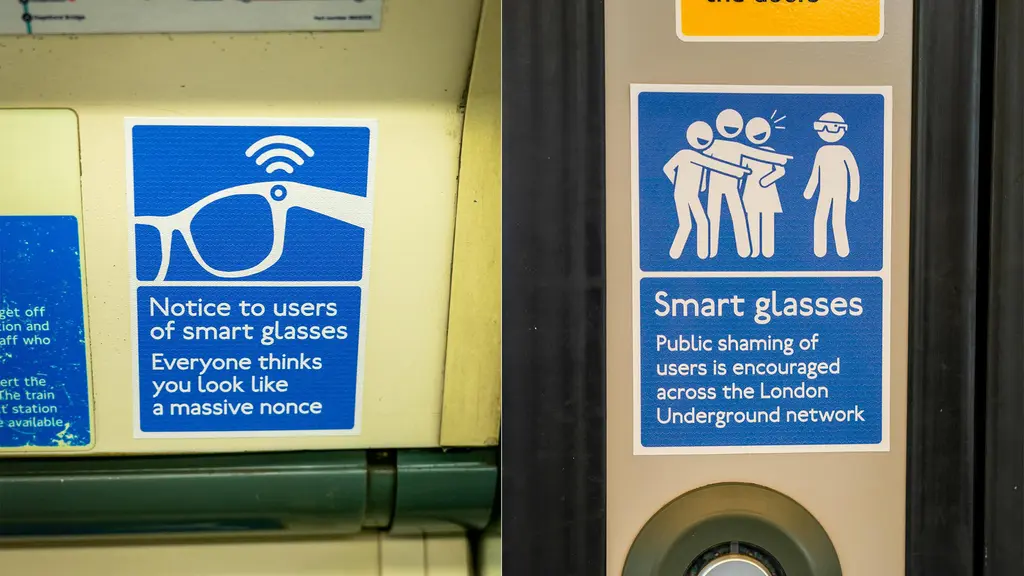
Activists slam “pervert glasses” in new guerrilla campaign
Everyone Hates Elon — Stickers have appeared on the London Underground network, criticising the wearable technology’s covert filming capabilities.
Written by: Isaac Muk

New exhibition highlights British radical living over 200 years
Earthly Paradise — Taking place at the William Morris Gallery, it explores the homes and lives of artists, writers, musicians and more, as well as the conditions that allowed them to thrive.
Written by: Isaac Muk

Pink Floyd’s Roger Waters joins team of new Palestinian resistance documentary
Freedom Theatre — Directed by Rishi Pelham, the film spotlights a theatre operating in the Jenin refugee camp.
Written by: Ella Glossop

Just Stop Oil holds first protest in 17 months
No new drilling — Having previously said that it was “hanging up the hi-vis”, the climate activist group has blocked a road outside Parliament to protest Andy Burnham opening the door for new oil and gas extraction licenses in the North Sea.
Written by: Ella Glossop

The rise of the outdoor’s punks
Future is unwritten — As demand for the outdoors has grown, so has the codification of its rules and styles. Phil Young searches for those adventuring against the mainstream and asks if the industry is about to get its own record label moment?
Written by: Phil Young

In photos: The enduring resistance of Notting Hill Carnival
Carnival of Resistance — A new photobook by Wayne Campbell and Wayne Crichlow reflects on the protest beginnings of Europe’s biggest street festival, along with the traditions keeping its original spirit alive today.
Written by: Isaac Muk


