NHS workers are struggling to survive as inflation soars
- Text by Ella Glover
- Photography by Ehimetalor Akhere Unuabona

“There is likely going to be no Christmas in our home this year with this constant battle,” Simone* a senior nurse working for NHS Scotland tells Huck. Despite being in band 7, meaning she is paid between £40,000 to £45,000 a year pro rata, Simone, who has two children, says she lives in poverty.
“My wage is gone by the 10th of every month, even with cutting back to basic meals and having no luxuries,” she says. Although she is deemed to earn too much to qualify for benefits as a single parent, she has no help from her children’s father. “I do not live an extravagant lifestyle,” she continues. “I recently down-graded to a two-bed flat with a basic car in order to be able to meet my household bills, which now due to rises I can’t meet anyway.”
Simone regularly has ask for short-term loans from friends or parents – something she describes as “humiliating”. She adds that she has struggled to afford school supplies and uniforms for her daughter, who just started high school. Simone isn’t alone: there have been reports of NHS trusts setting up food banks and “marketplaces” offering donated school uniforms and office wear to struggling staff members.
Despite the struggle NHS staff like Simone are facing, a below-inflation pay rise of an average of five per cent was imposed on NHS nurses in Scotland – well below the 15 per cent (or five percent above inflation) pay rise grassroots organisations and unions have been campaigning for. Nurses in England and Wales have been offered four per cent, with some exceptions. The Royal College of Nursing (RCN), which represents almost half a million nurses, midwives, nursing support workers and students, called the pay award a “grave misstep”.
Now facing a real terms pay cut in the face of 10 percent inflation, things are only going to get worse for Simone. With the energy price cap set to rise even further in October, Simone wonders how she will manage – and it’s taking a toll on her mental health. “Petrol rises and household bill increases have me on occasions thinking I can’t cope and take my head to dark places due to the pressure of finances,” she says. “I’ve long since realised in terms of finances I’m better off dead to my family than alive.”
In order to make up the shortfall between her wages and expenses, Simone works extra “bank” shifts – temporary shifts for NHS staff to pick up on a flexible basis where needed – but she has found that often the trusts she works for don’t pay on time due to staff forgetting to sign the shift off, putting her in further debt. “Help never comes,” she says. “I frequently find myself crying or having sleepless nights.”
Working extra shifts is not uncommon: a recent snap poll by Nursing Notes found that 74 per cent of nursing staff plan on working overtime or agency shifts to be able to afford gas and electric prices, with 56 per cent expecting to work more than a week (37.5 hours) extra per month to be able to make ends meet. Lewis*, 19, a senior healthcare assistant working in Scotland, has flitted between jobs in the NHS, mostly as a zero-hour bank worker on Covid wards. Now a part-time worker on an acute admission ward, he says he loves his job but “the patients and staff can’t keep going on like this”.
What a fantastic bunch 💙 ❤️
Your RCN London reps are working hard to make sure all London members know about the Industrial Strike Ballot.
Their message is clear: enough is enough. Vote to strike. pic.twitter.com/jXPDlQIx2P
— RCN London (@RCNLondon) September 7, 2022
With an average monthly salary of £1100 and outgoings of £1020 – before any unexpected expenses, petrol or disposable income – Lewis is still struggling to pay off debt despite working extra shifts under an agency, often working 60 hours a week in total. Now in Band 3, meaning he is paid just over £11 an hour, Lewis is also expecting to receive a five per cent pay increase. But, he says, the wages “do not match the job we do or the price for things, especially as bills go up”.
Lewis worked on Covid wards from the start of the pandemic and, in February last year, lost his mum to Covid at age 44. After taking some time off to grieve, he returned to work on Covid wards and in the High Dependency Unit (HDU). “From the get go it was a struggle to work with people rapidly declining in health after my own person struggles with Covid,” he says. He eventually left to work for a nursing home, only to find they were having the same traumatising problems and returned to the NHS.
As a member of the NHS bank team, he continued to cover the Covid floor. With his mother’s death, and being estranged from other family members, Lewis had little choice. “At the time our hourly rate was £10.02 per hour,” he says. “I was 18 and had my own house for which I had to pay rent, bills, food, as well as everything else.” He says he “struggled to make ends meet” and was living off food banks, despite working 40 plus hours a week, falling into debt as a result.
He took out personal loans to cover the shortfall but, unable to pay them back, his mental health worsened. Even when he gained a full time position in the NHS, primarily testing for Covid-19, things weren’t much better. “My debt grew even though I was working endless hours, often working 11, 12, 13 shifts in a row and still not being able to pay my bills,” he says.
“I was receiving constant letters from companies threatening court action and repossessing my property. In March, the DWP arrested my wages for universal credit advances I couldn’t pay back. This just further set me into a downward spiral. I couldn’t pay my bills, I couldn’t go on nights out, I couldn’t do things on my days off. Again, I thought to myself, what is the point?”
Eventually, Lewis sought therapy and is in the process of being diagnosed with anxiety and PTSD, both of which can be traced back to working on the Covid wards and “giving last rights to over six patients a night.” He says he wouldn’t be surprised if he wasn’t the only one suffering with PTSD after the past two years.
This is all compounded by the NHS’s worst staffing crisis in history, mostly a result of low-pay and worsening conditions. “In my new ward within acute medicine, we have 20 beds but our current capacity is only five patients as we have no nursing or medical staff,” says Lewis. “Something needs to be done, and fast.”
UNISON head of health Sara Gorton says that “many more staff will leave unless there’s a decent pay rise”. This will, in turn, make conditions worse for staff and cause more delays for patients. “Without urgent action from ministers to deal with staffing and the cost of living, health workers are being left with no other option but to prepare for industrial action,” says Gorton.
Lisa*, 36, a Band 3 Community Healthcare Assistant from Epsom, agrees: “[NHS workers] can’t afford things as they are and it will only get worse,” she tells Huck. She lives with her partner and says they are both concerned about how they are going to cope come winter. “We are both worried about energy prices this winter and worried that my pay won’t keep up with all the rising prices,” she says. “It will be a struggle to make ends meet – even right now I have to budget for everything.”
Holly Turner, a registered nurse and founder of the grassroots organisation NHS Workers Say No, which spearheaded the campaign for a 15 percent pay increase, says this imposed pay award “will only intensify the staffing crisis and push thousands more workers further into financial difficulty as we face yet another hike in energy prices from October”.
She continues: “Enough is enough. NHS staff are mobilising and organising in preparation for strike ballots landing, and we are ready to take action to safeguard our profession, our patients and each other.”
Nurses in Scotland unionised under the RCN will vote on industrial action in autumn, while those in England and Wales are voting in consultative ballots. The ballot was due to open on Thursday (15 September) but was postponed after the death of the Queen, who was the RCN’s royal patron. UNISON members across each country are also preparing to vote on whether to take industrial action, with ballots opening in October.
Lewis only joined the RCN recently because he “wants to have a say in the vote to strike action next month,” which he will be voting in favour of. And there appears to be strong public support for nurse’s taking strike action: a survey of 2,000 people, commissioned by the major healthcare unions in July, found that more than half (55 percent) of the public believe that an above-inflation pay rise for NHS would be a fair increase.
Lisa, a UNISON member, says she’ll be voting yes in favour of strike action and to reject the pay award. “NHS workers deserve and need a pay rise, as do all workers,” she says.
“After what we have had to endure the past two years and I can’t understand why £10.02 per hour is all we are worth,” says Lewis. “For everything the NHS has done, especially in these past few [years] we deserve more than a five per cent increase.”
*Names have been changed to protect anonymity
Follow Ella Glover on Twitter.
Enjoyed this article? Like Huck on Facebook or follow us on Twitter.
You might like
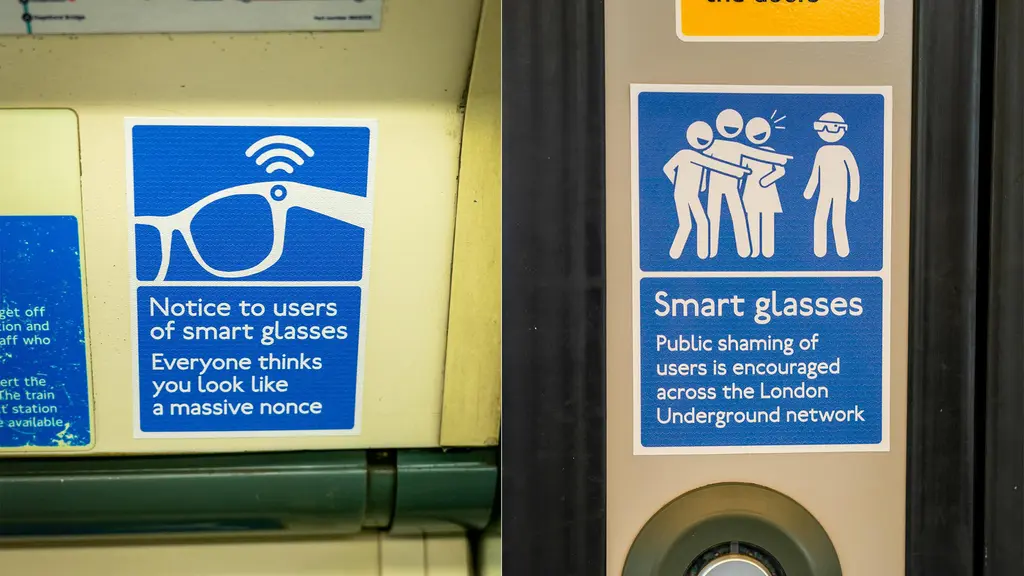
Activists slam “pervert glasses” in new guerrilla campaign
Everyone Hates Elon — Stickers have appeared on the London Underground network, criticising the wearable technology’s covert filming capabilities.
Written by: Isaac Muk

New exhibition highlights British radical living over 200 years
Earthly Paradise — Taking place at the William Morris Gallery, it explores the homes and lives of artists, writers, musicians and more, as well as the conditions that allowed them to thrive.
Written by: Isaac Muk

Pink Floyd’s Roger Waters joins team of new Palestinian resistance documentary
Freedom Theatre — Directed by Rishi Pelham, the film spotlights a theatre operating in the Jenin refugee camp.
Written by: Ella Glossop

Just Stop Oil holds first protest in 17 months
No new drilling — Having previously said that it was “hanging up the hi-vis”, the climate activist group has blocked a road outside Parliament to protest Andy Burnham opening the door for new oil and gas extraction licenses in the North Sea.
Written by: Ella Glossop

In photos: The enduring resistance of Notting Hill Carnival
Carnival of Resistance — A new photobook by Wayne Campbell and Wayne Crichlow reflects on the protest beginnings of Europe’s biggest street festival, along with the traditions keeping its original spirit alive today.
Written by: Isaac Muk

Tens of thousands gather to remember Jason Arday at London vigil
Stand Up to Racism — It took place in Trafalgar Square, with speakers paying tribute to the former Cambridge professor’s life and achievements, while calling for accountability over the reporting he faced from the mainstream press.
Written by: Ella Glossop


