
On 8 March 1908, thousands of women left the textile factories where they worked and took to the streets of New York with pieces of stale bread and bouquets of roses in hand. They marched for better working conditions, for an end to child labour and for the vote.
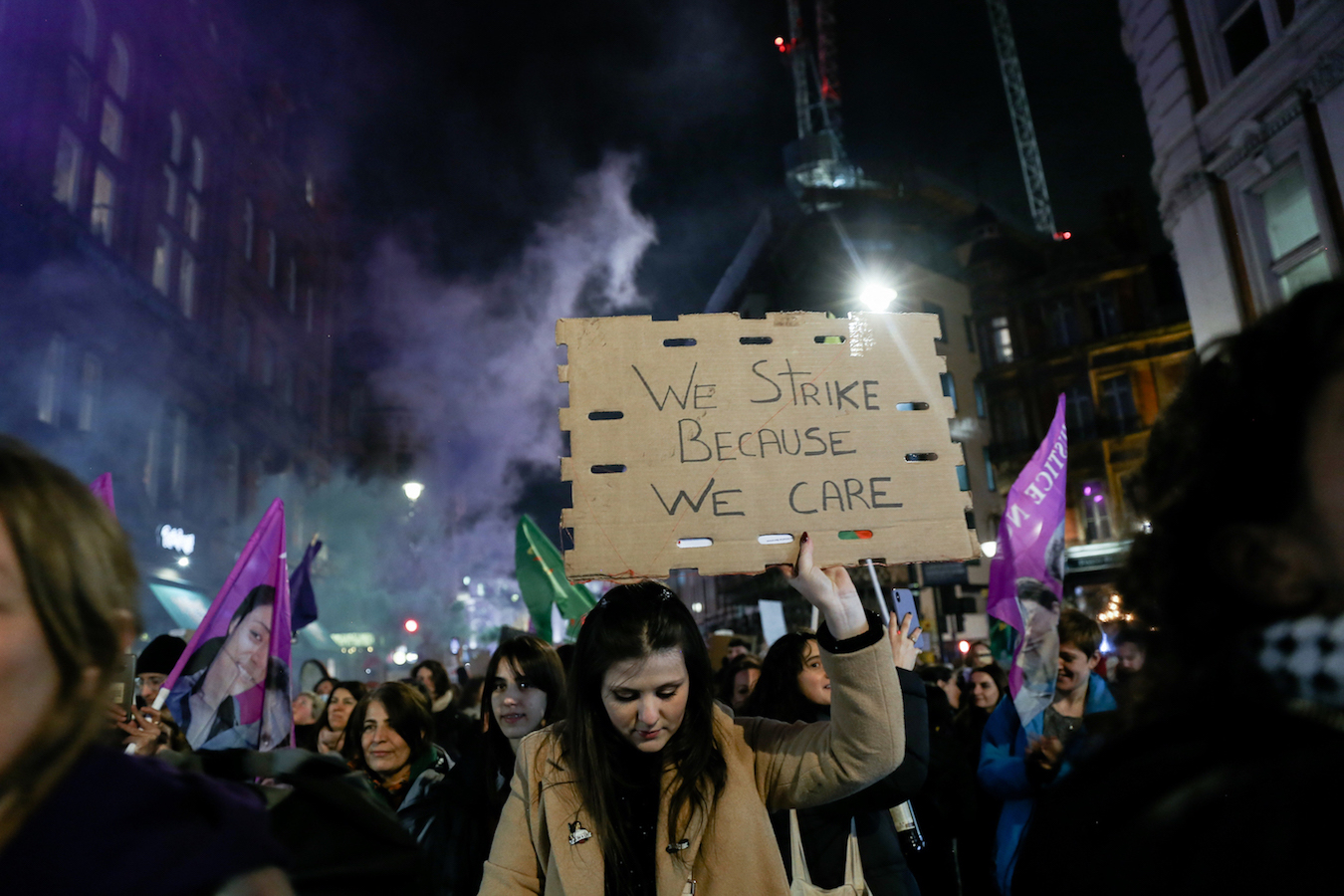
The Bread and Roses march kickstarted a feminist movement that rippled across America and the rest of the world. Since 1977, 8 March has been known as International Women’s Day and has been celebrated globally. Last night, to continue the tradition started by those New York textile workers, women came together in cities across the country for a women’s strike.
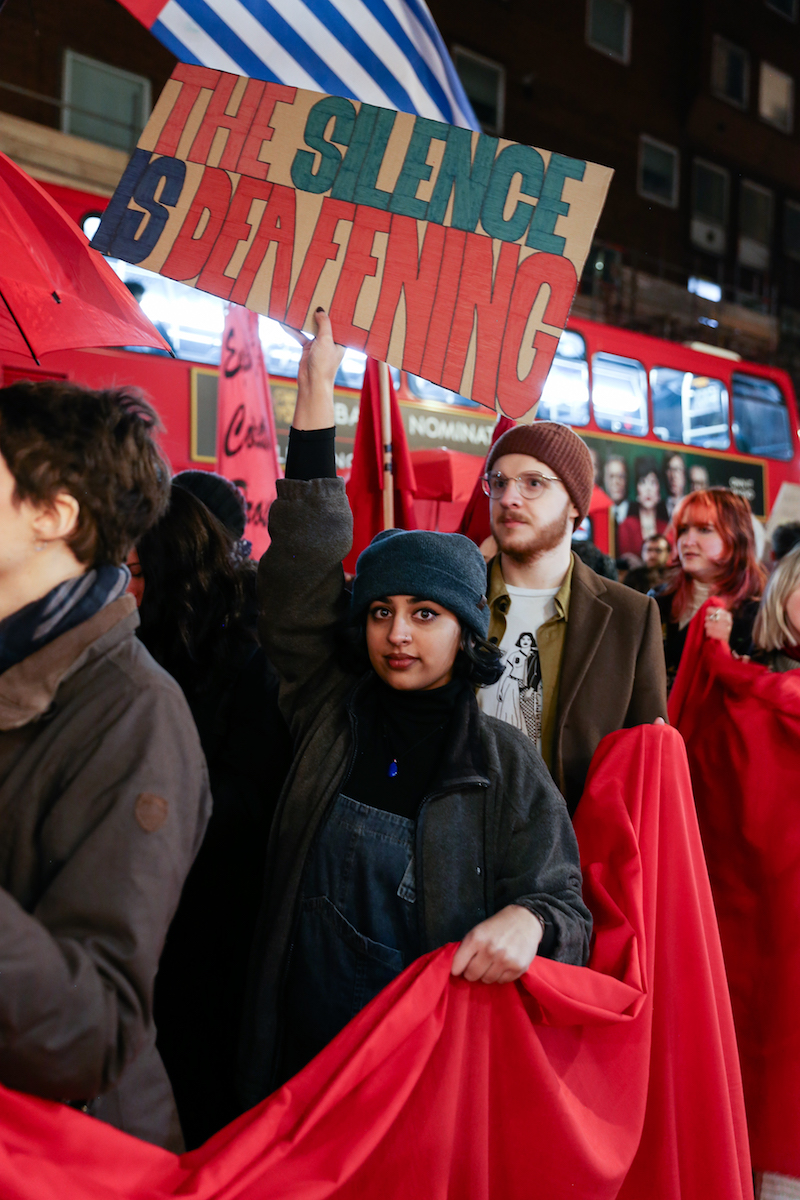
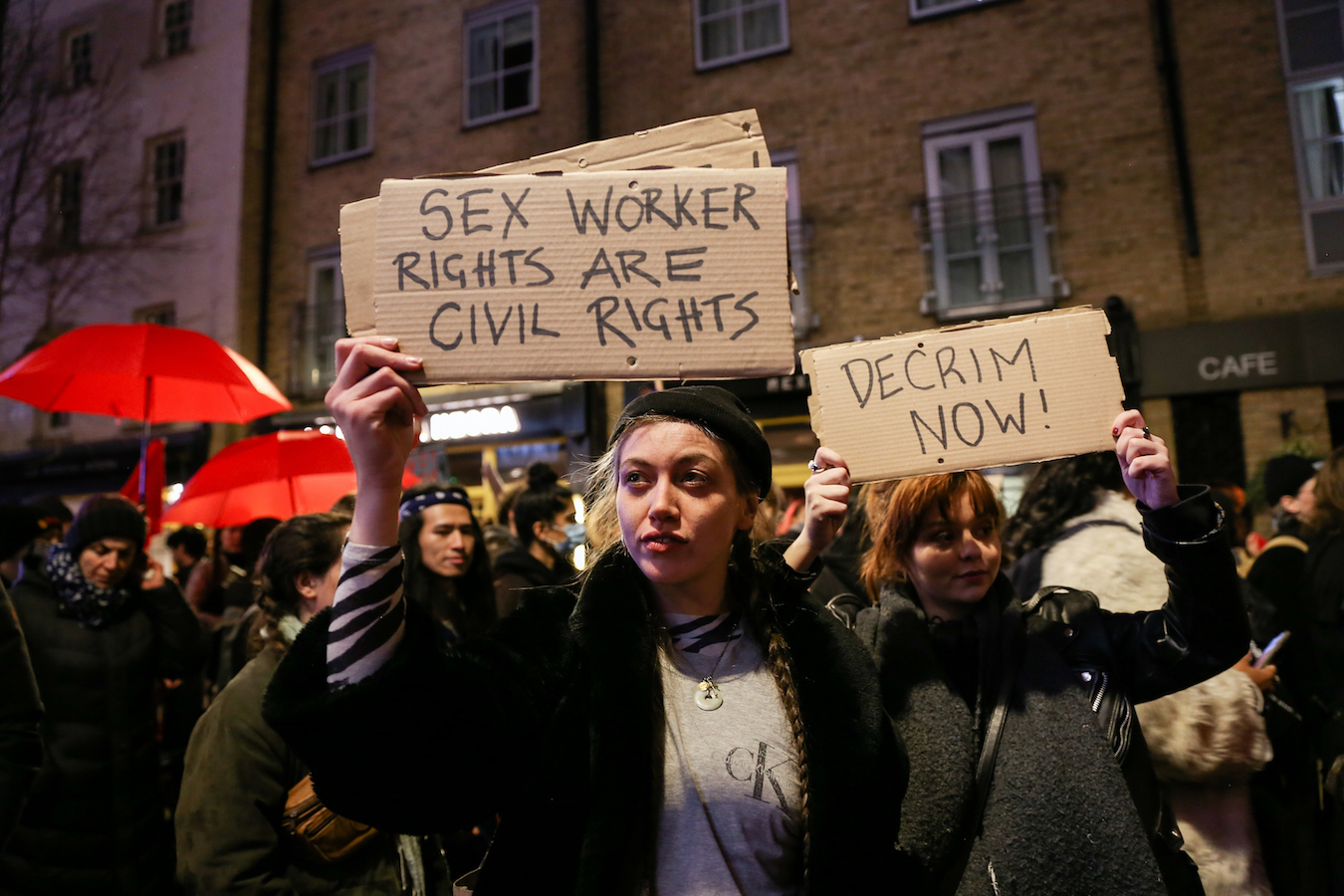
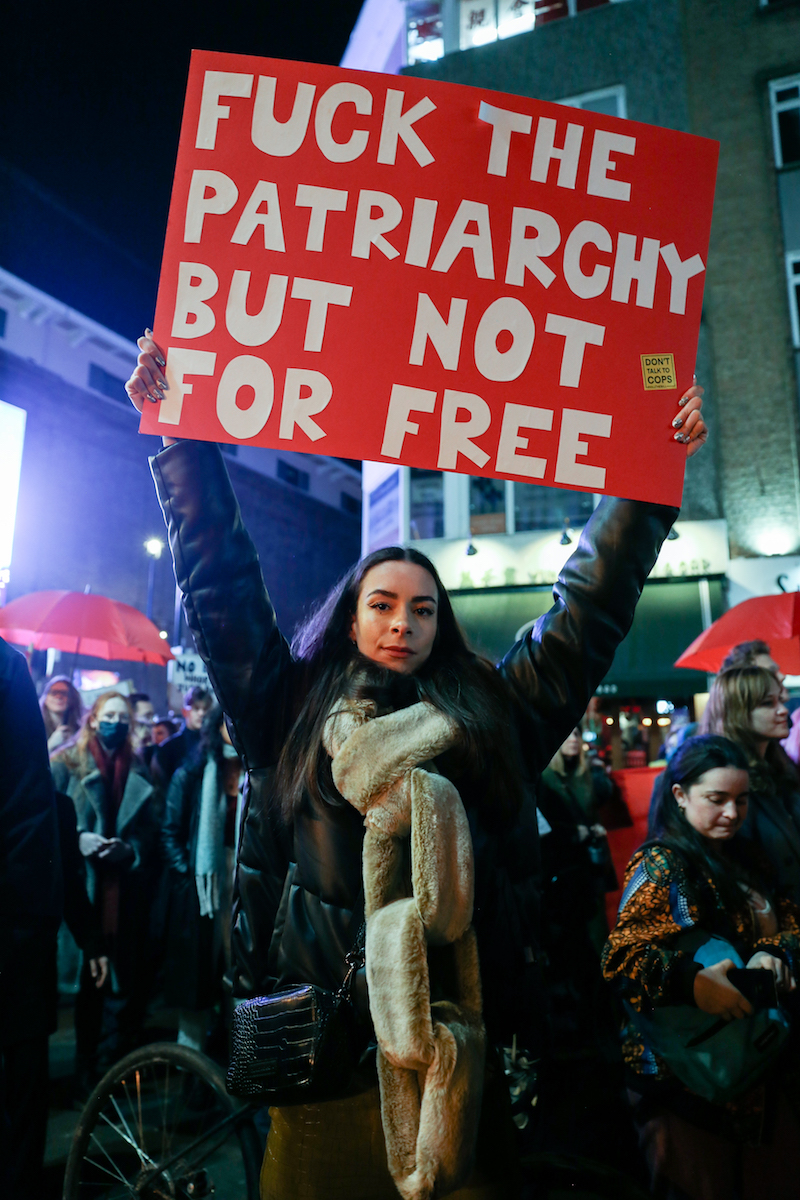
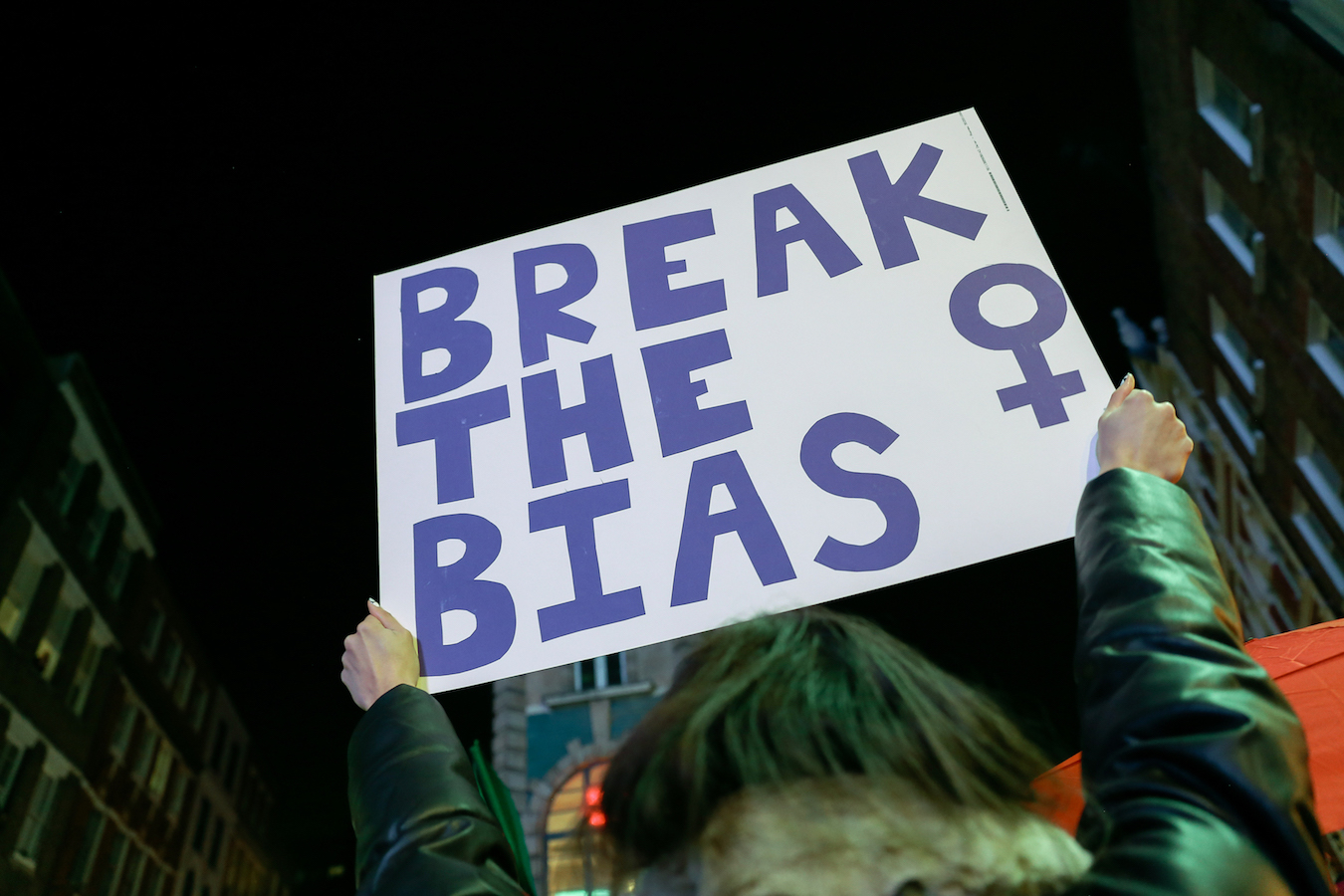
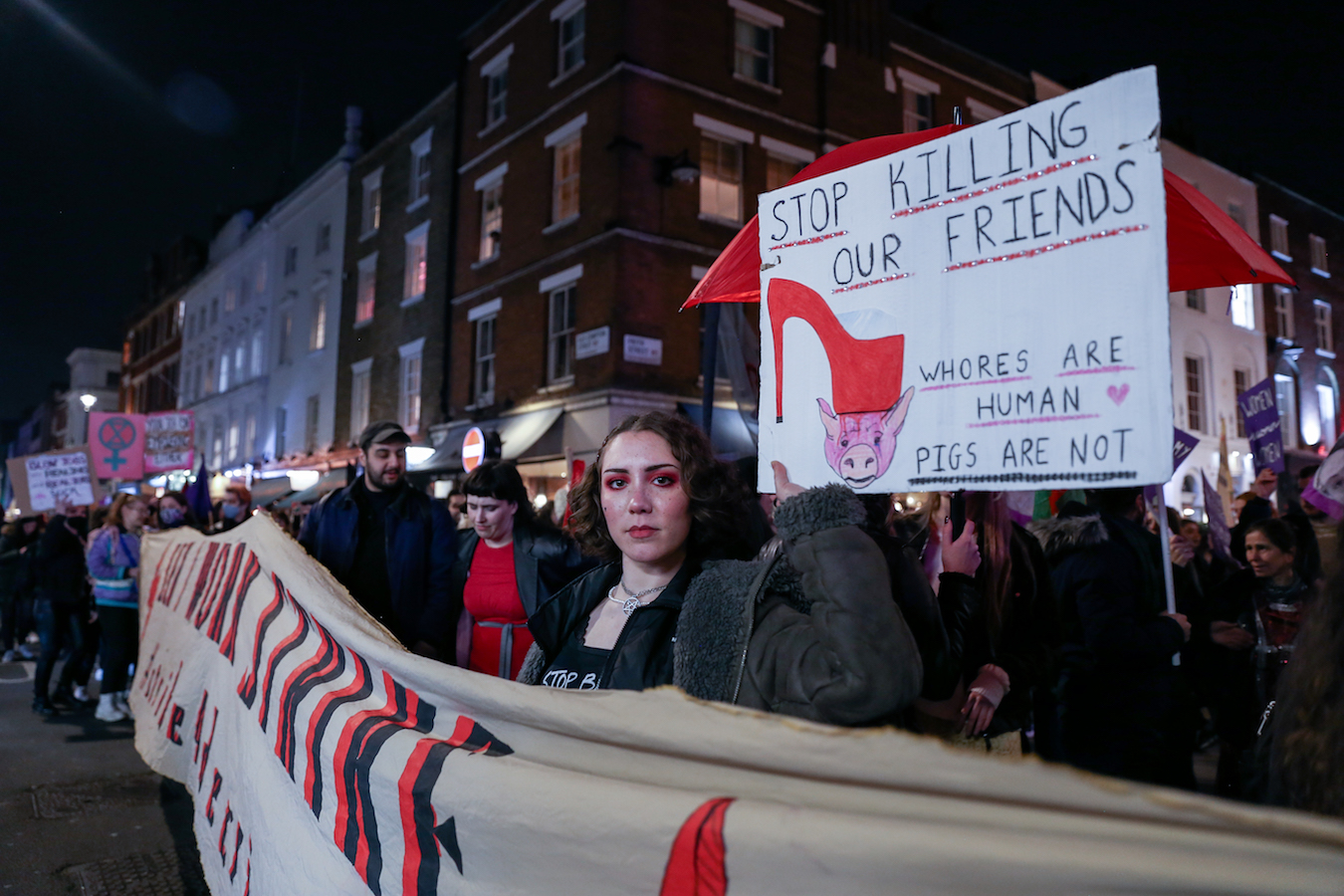
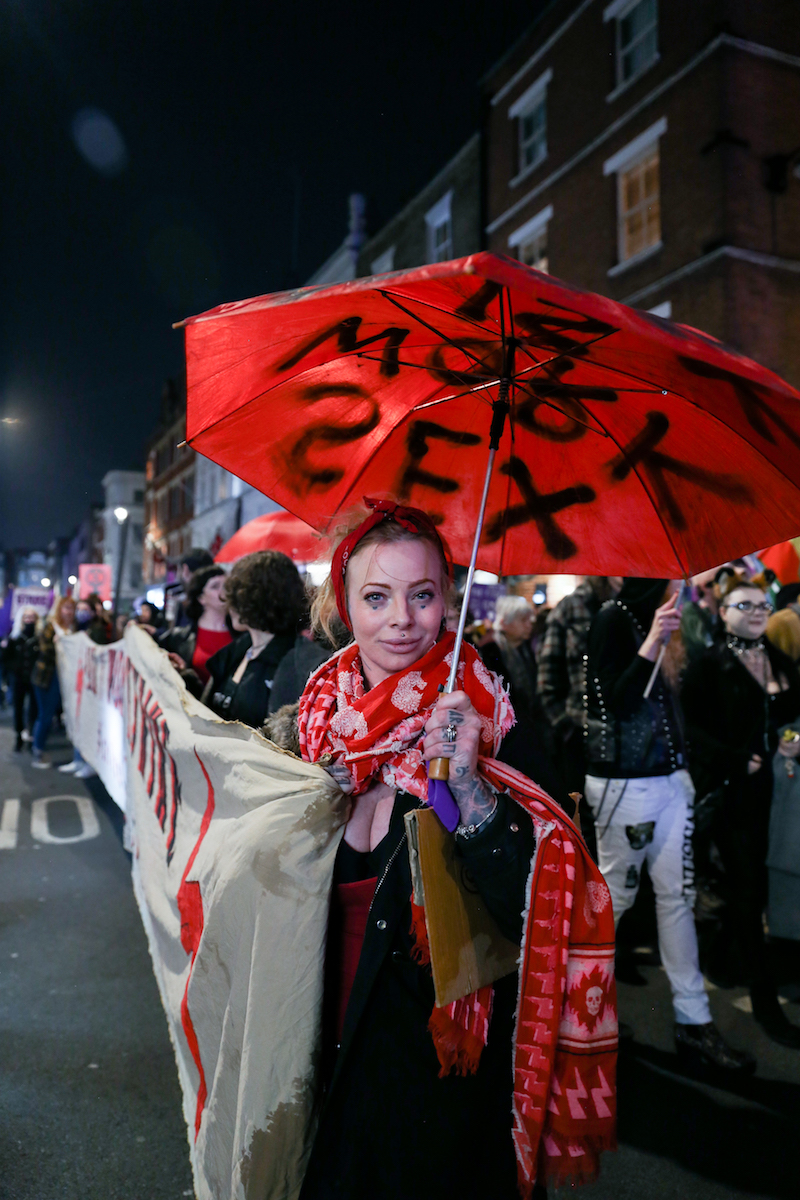
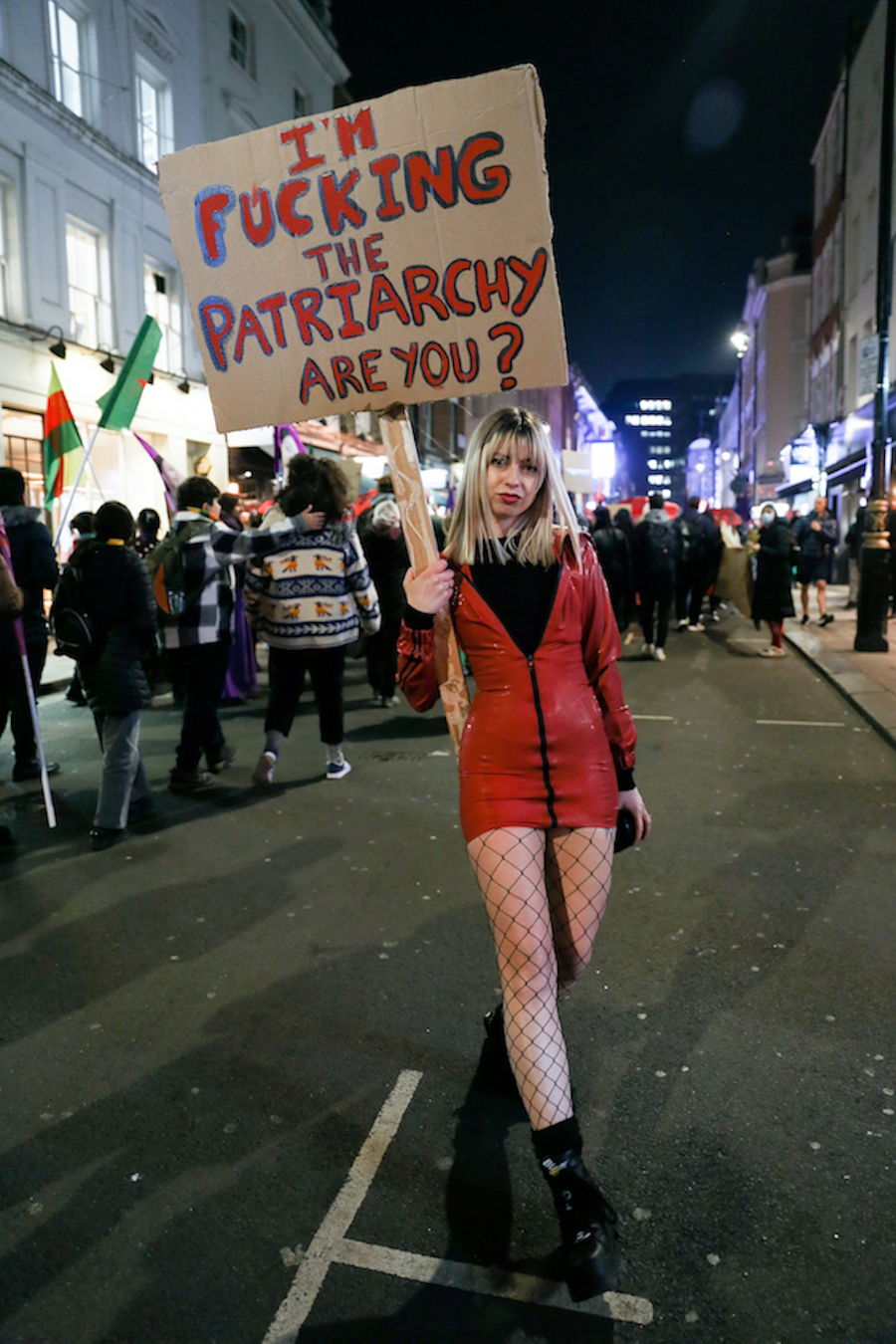
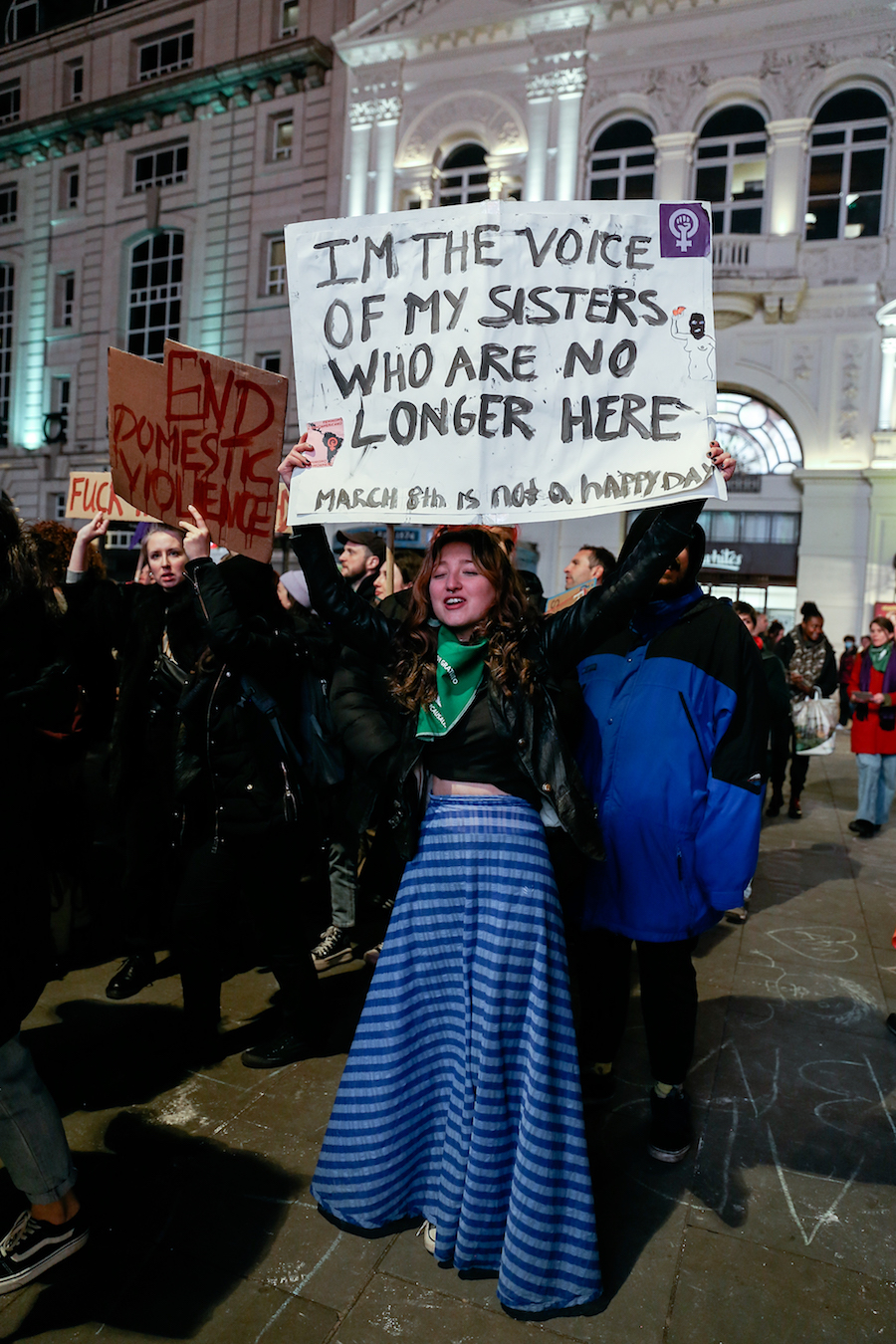
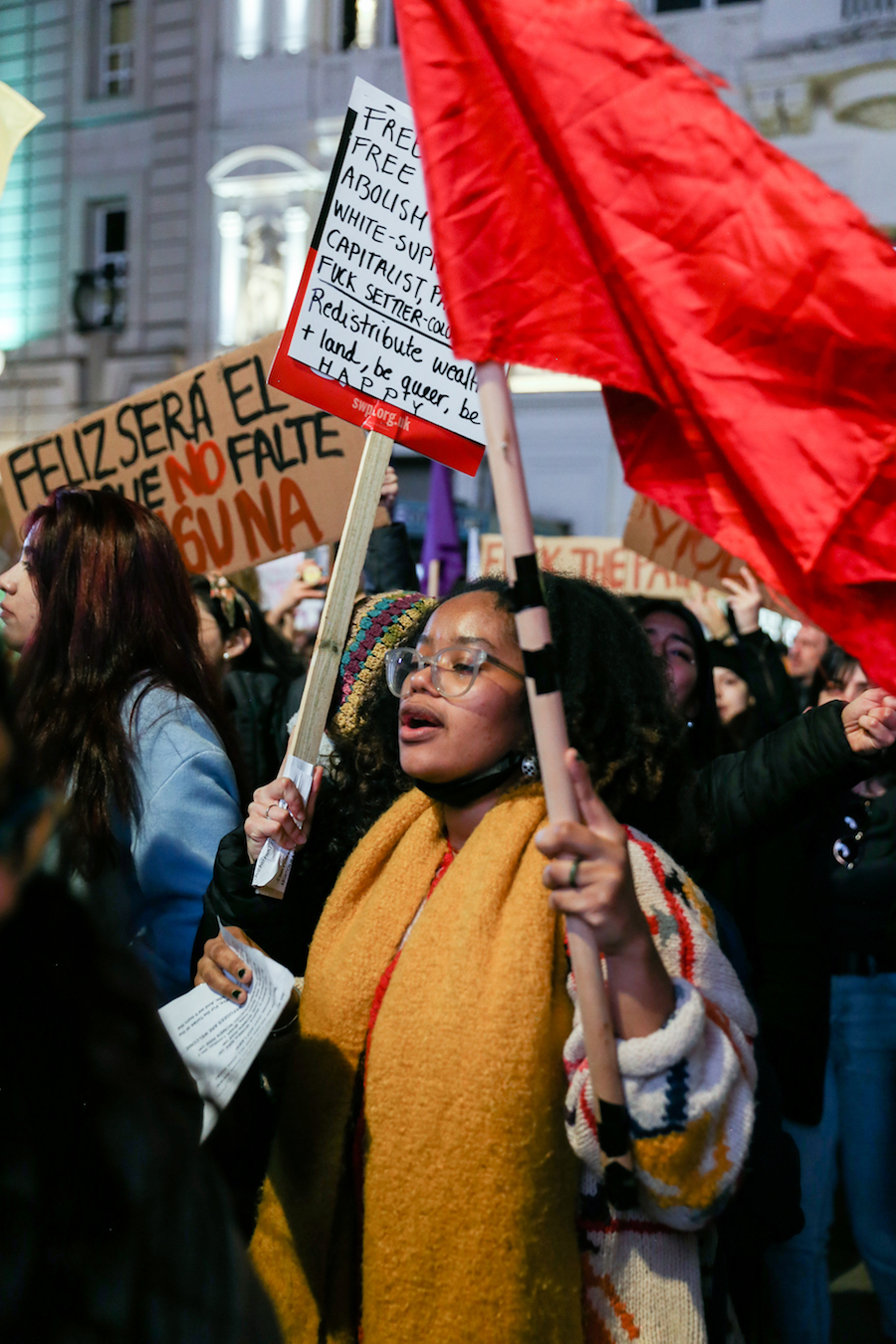
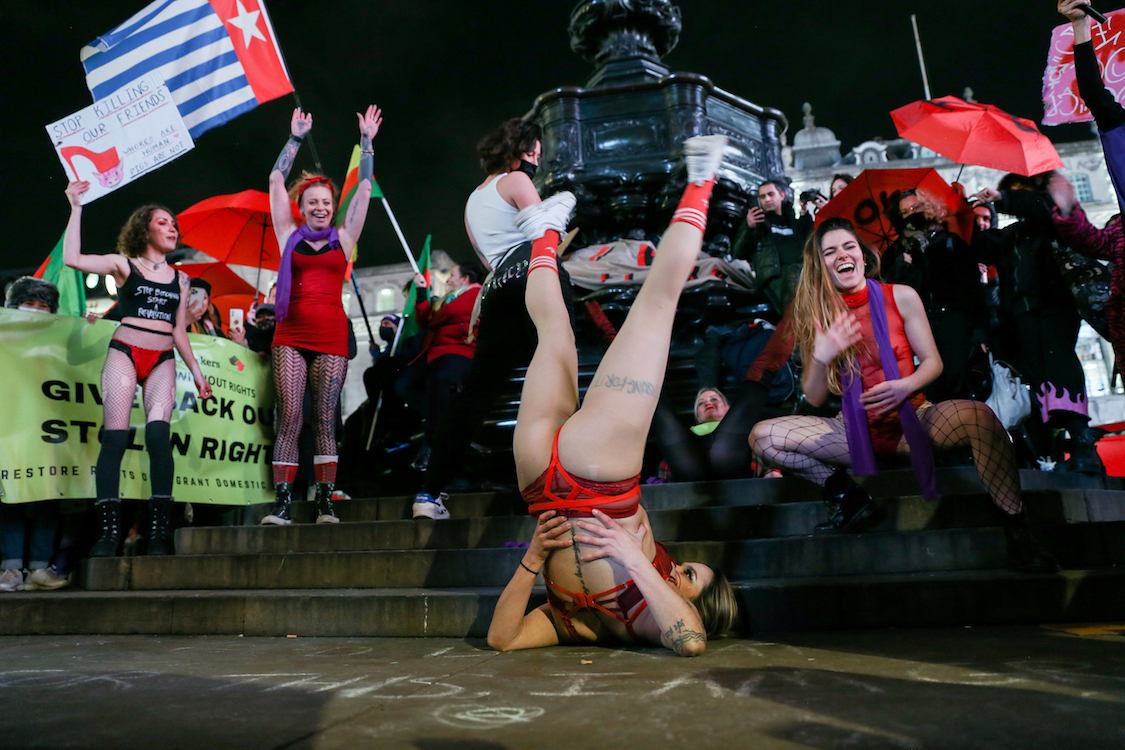
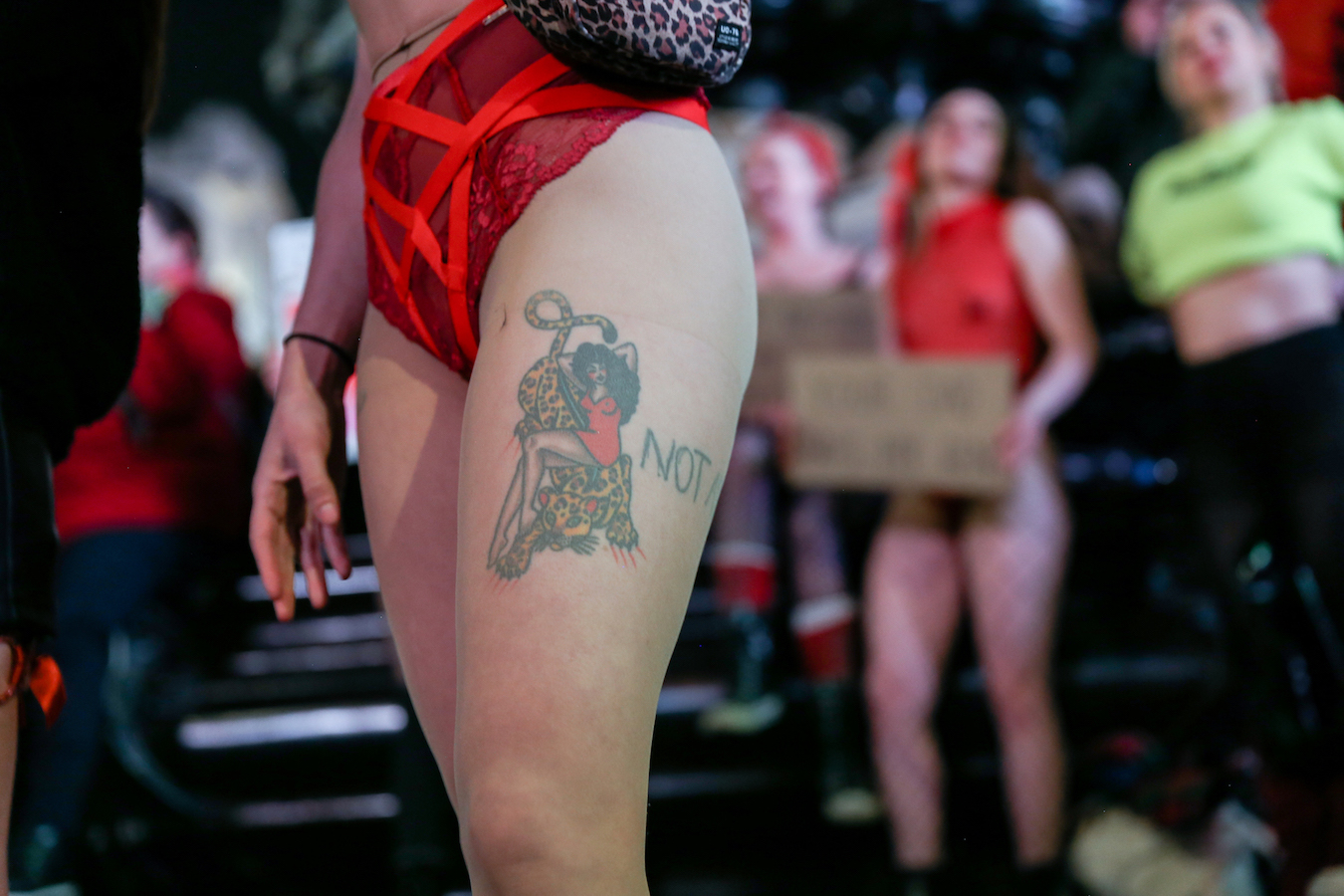
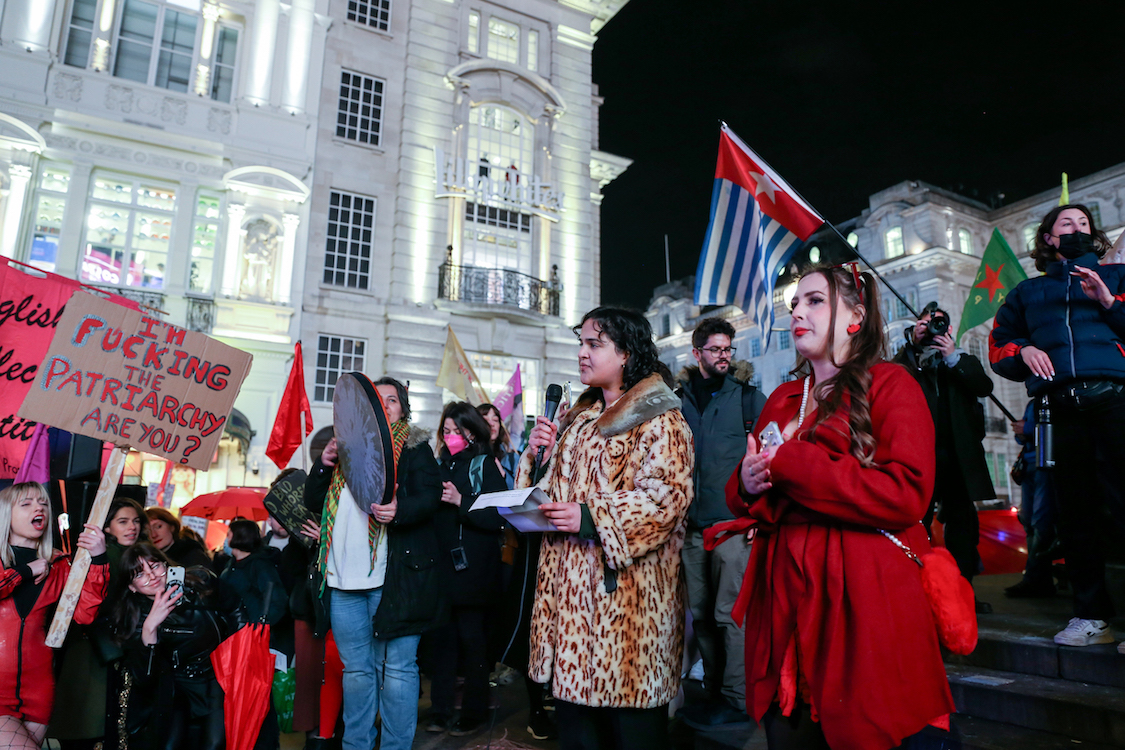
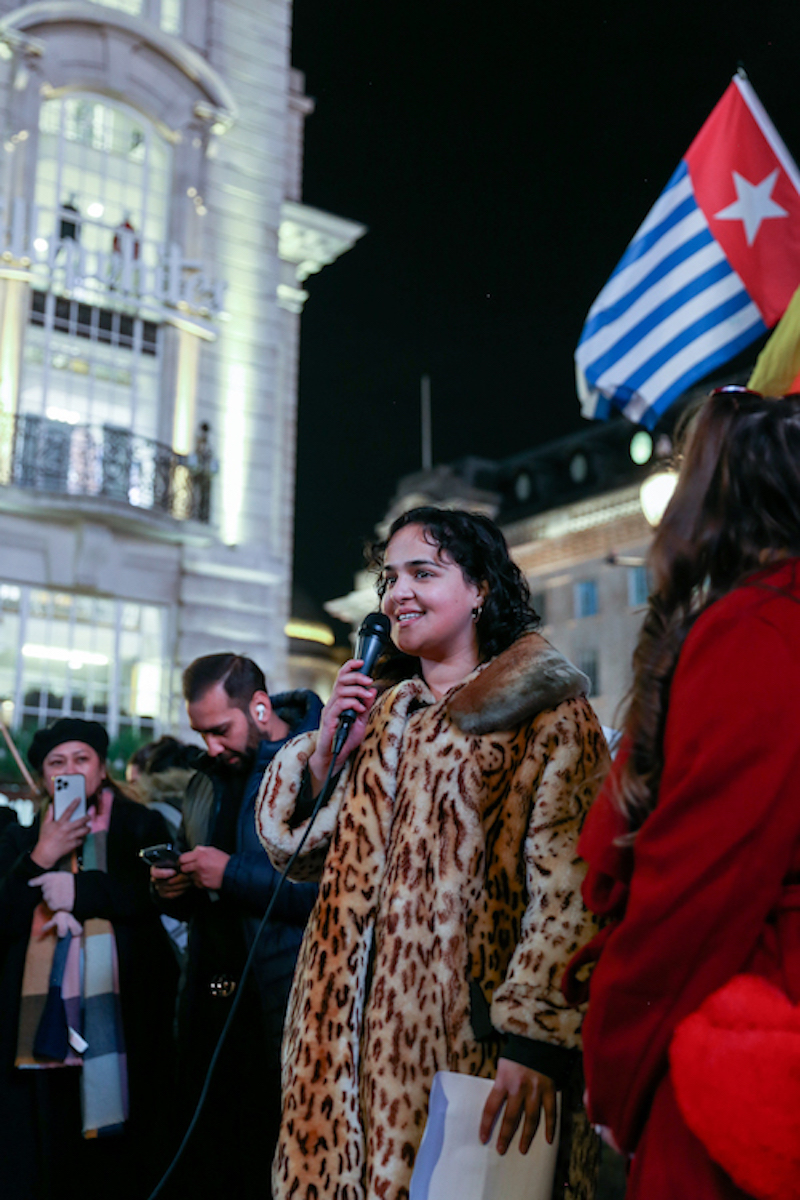
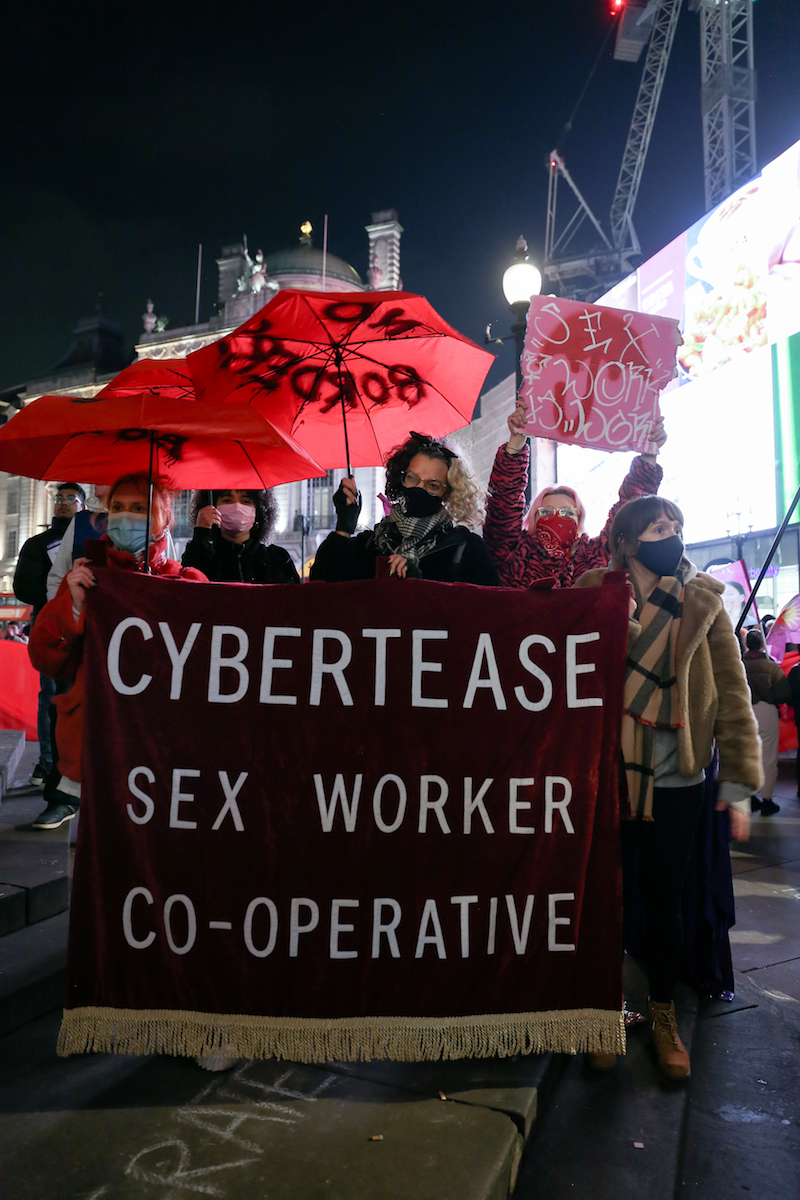
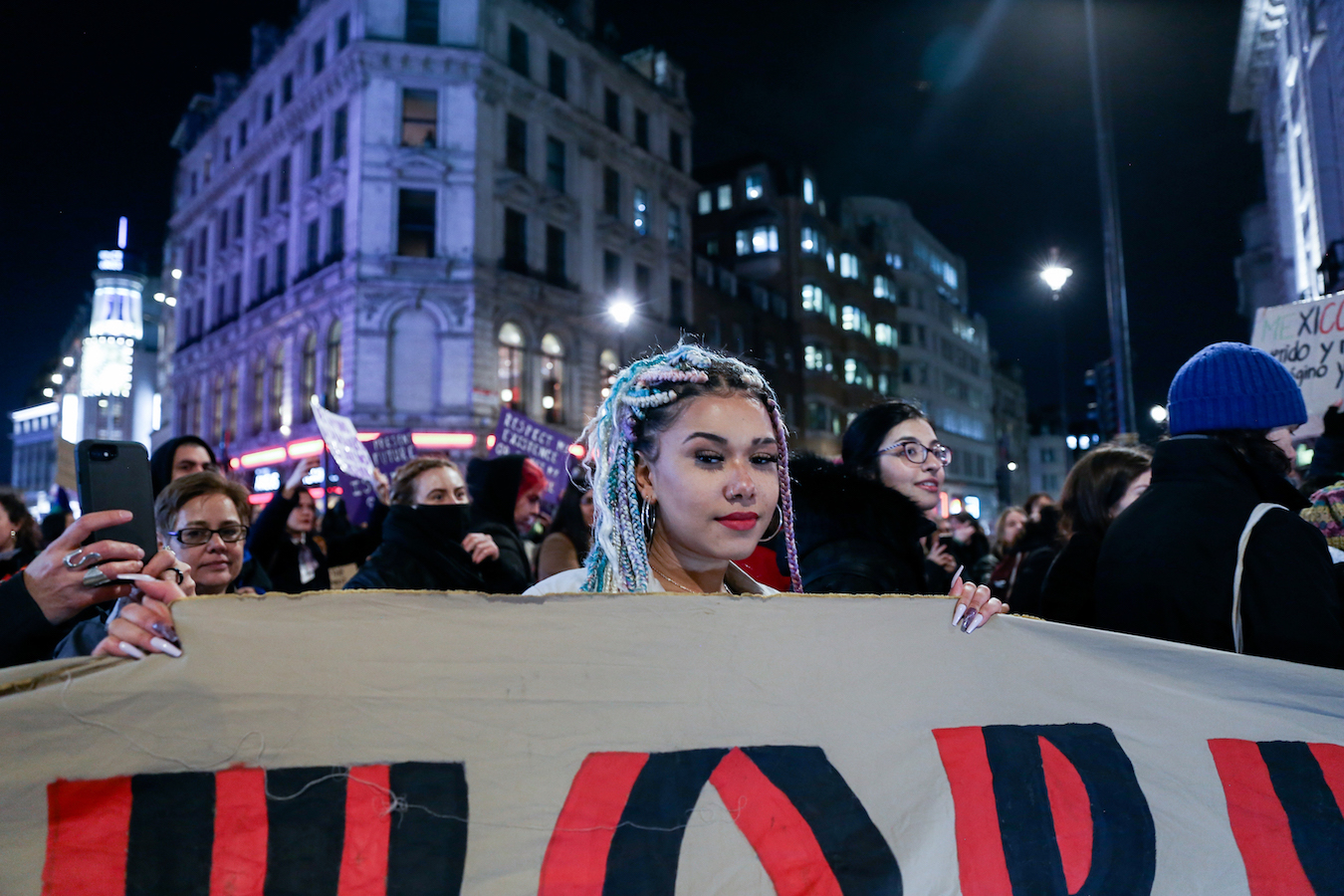
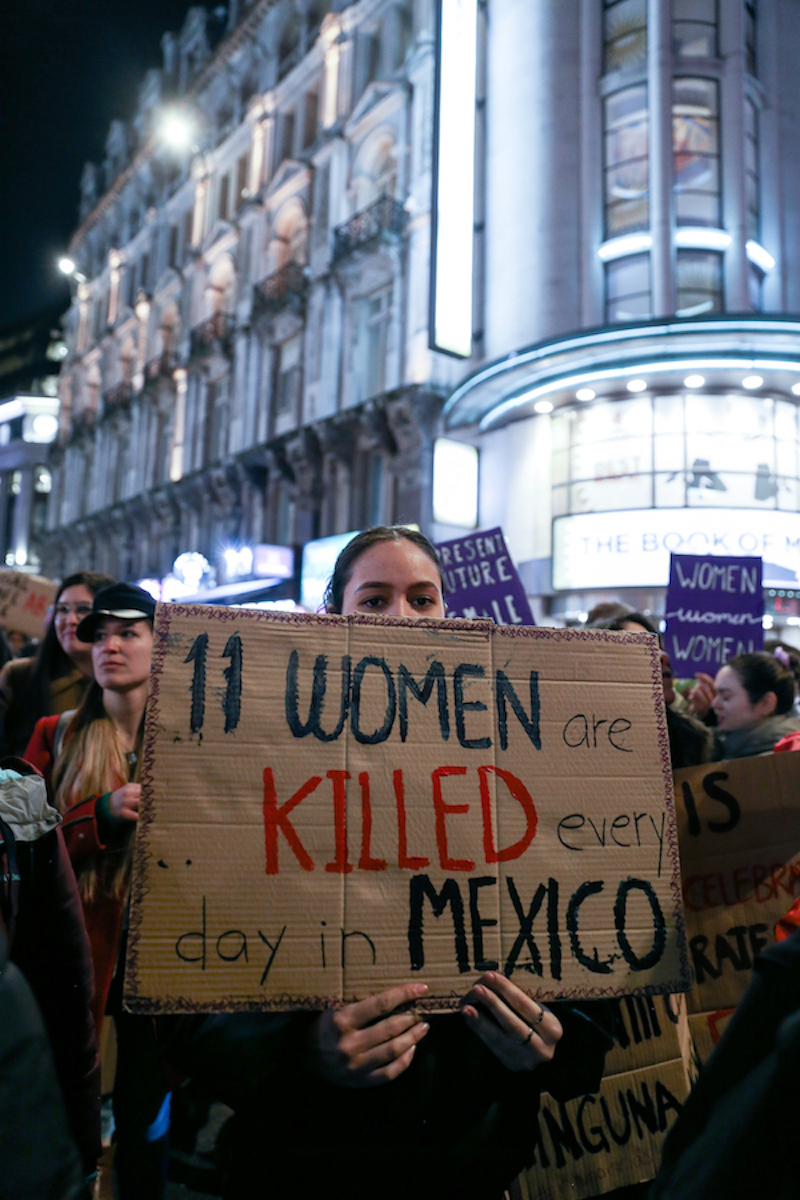
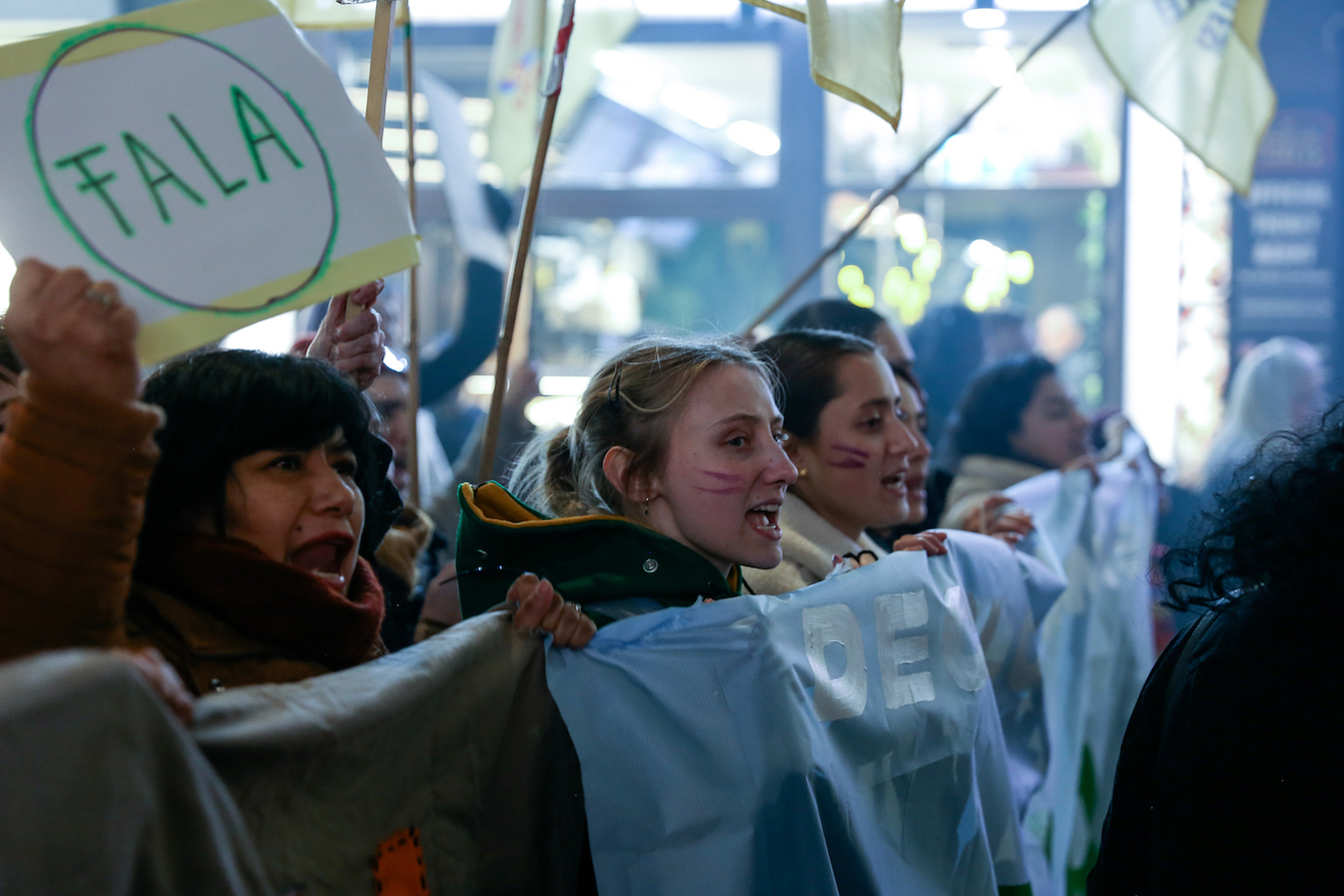
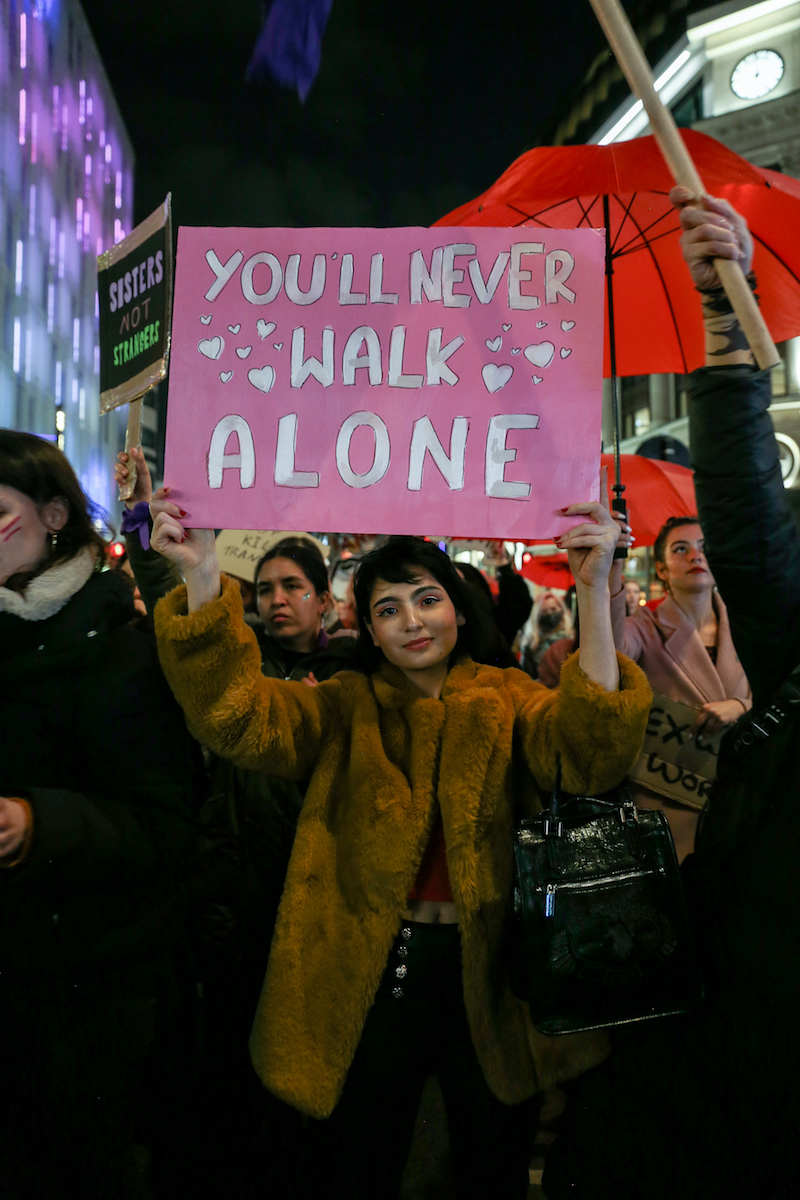
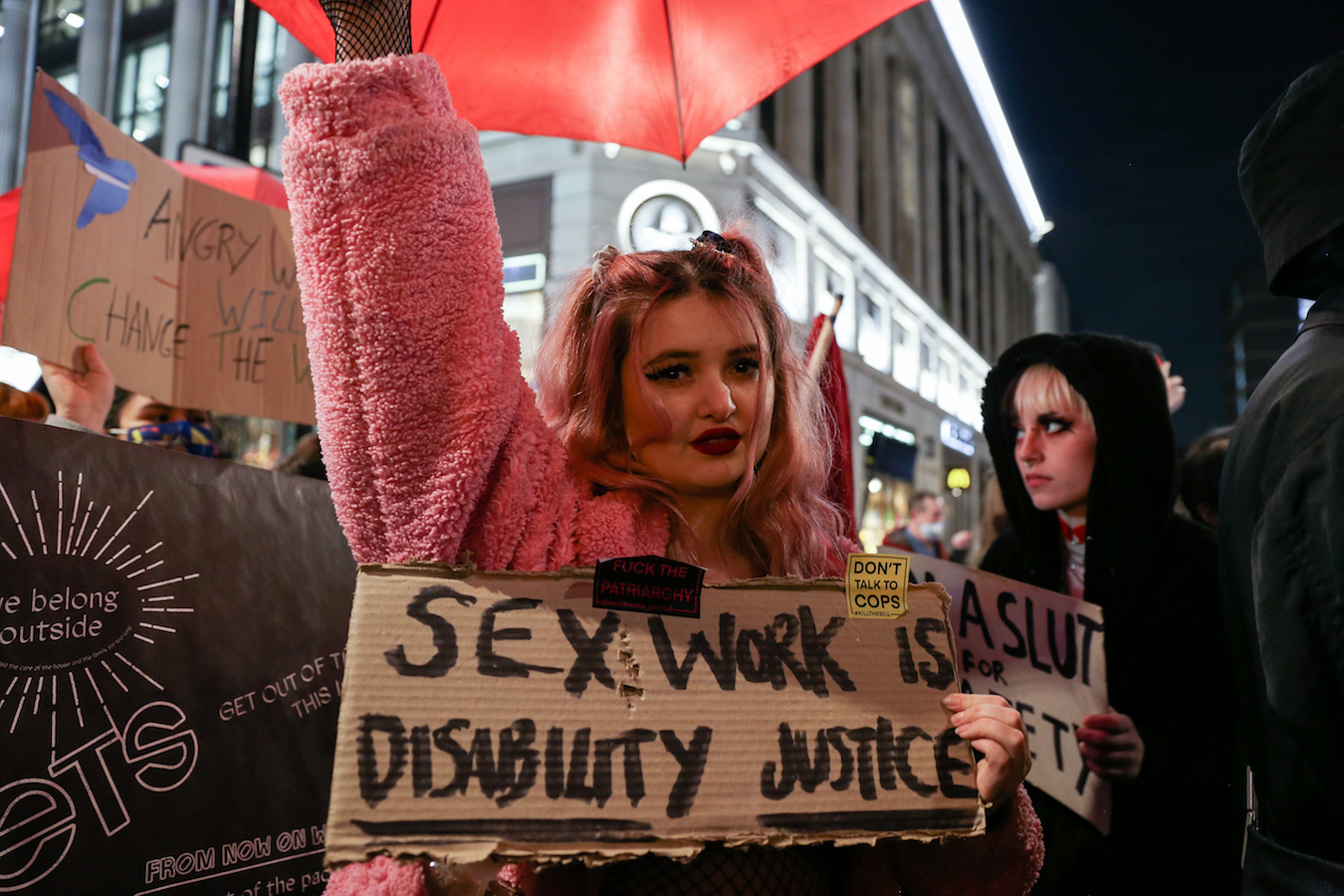
In London, hundreds gathered in the city’s Leicester Square for a joint women’s and sex worker strike. The crowd heard speeches from striking Great Ormond Street Hospital workers, international unions and anti-war groups as well as a statement from Russian women organising against the war in Ukraine. Strikers then marched en masse to Picadilly Circus to hear from sex workers including representatives of Sex Workers United – a trade union for sex workers who also performed. Labour MP for Nottingham East Nadia Whittome also spoke on the need to decriminalise sex work before the crowds moved into Soho and on to Charing Cross police station.
The police station has been the site of controversy with a recent IOPC report revealing widespread misogyny, homophobia, rape culture and abuse of power by serving officers stationed there. Speakers from the English Collective of Prostitutes and Sisters Uncut addressed the crowds outside the station. The latter have called a demonstration for Saturday 12 March to mark the one year anniversary of the vigil on Clapham Common for Sarah Everard, which was brutally broken up by the police.
Last night was a night of rage, determination and energy on the streets of central London. We sent photographer Bex Wade down to document the action.


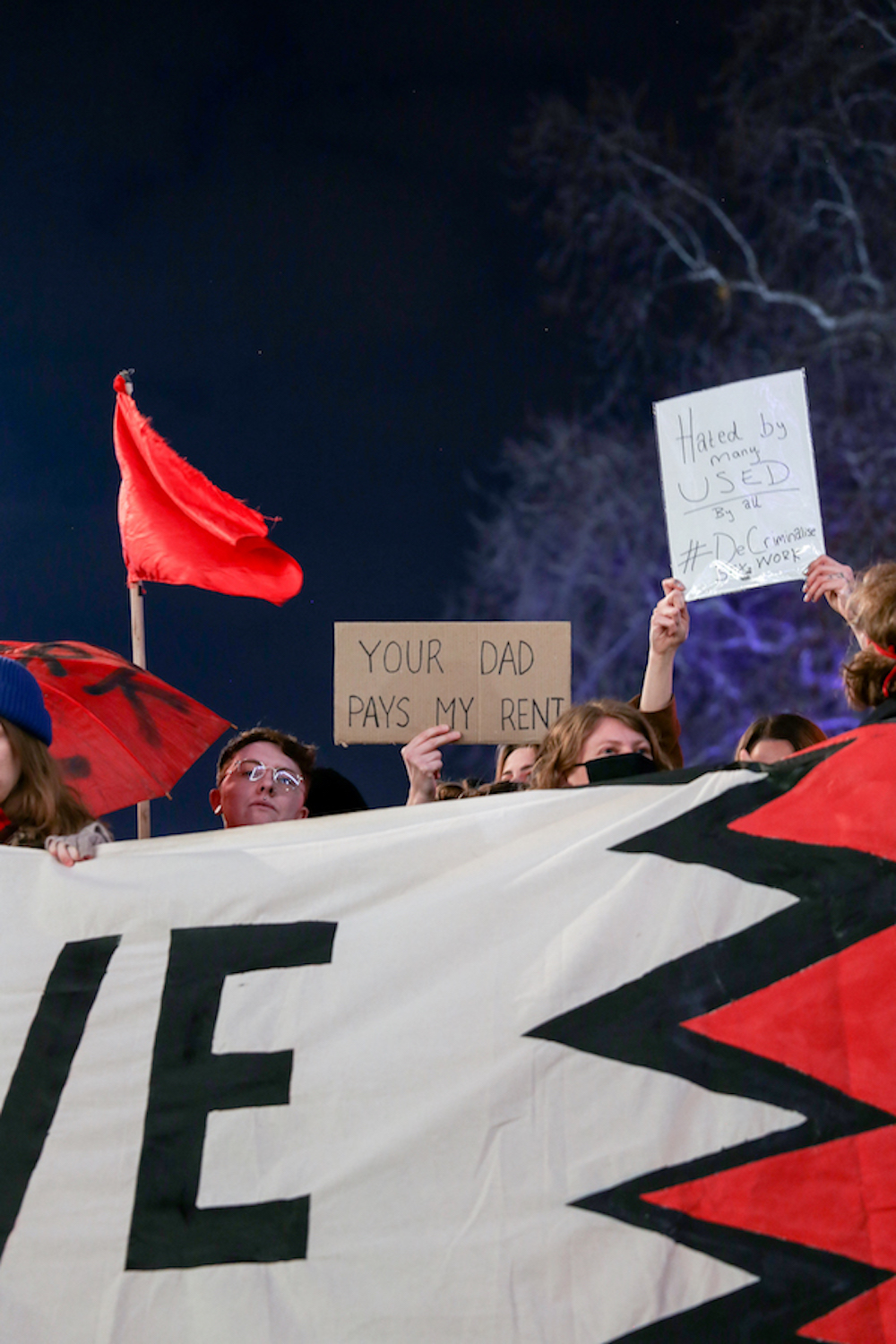
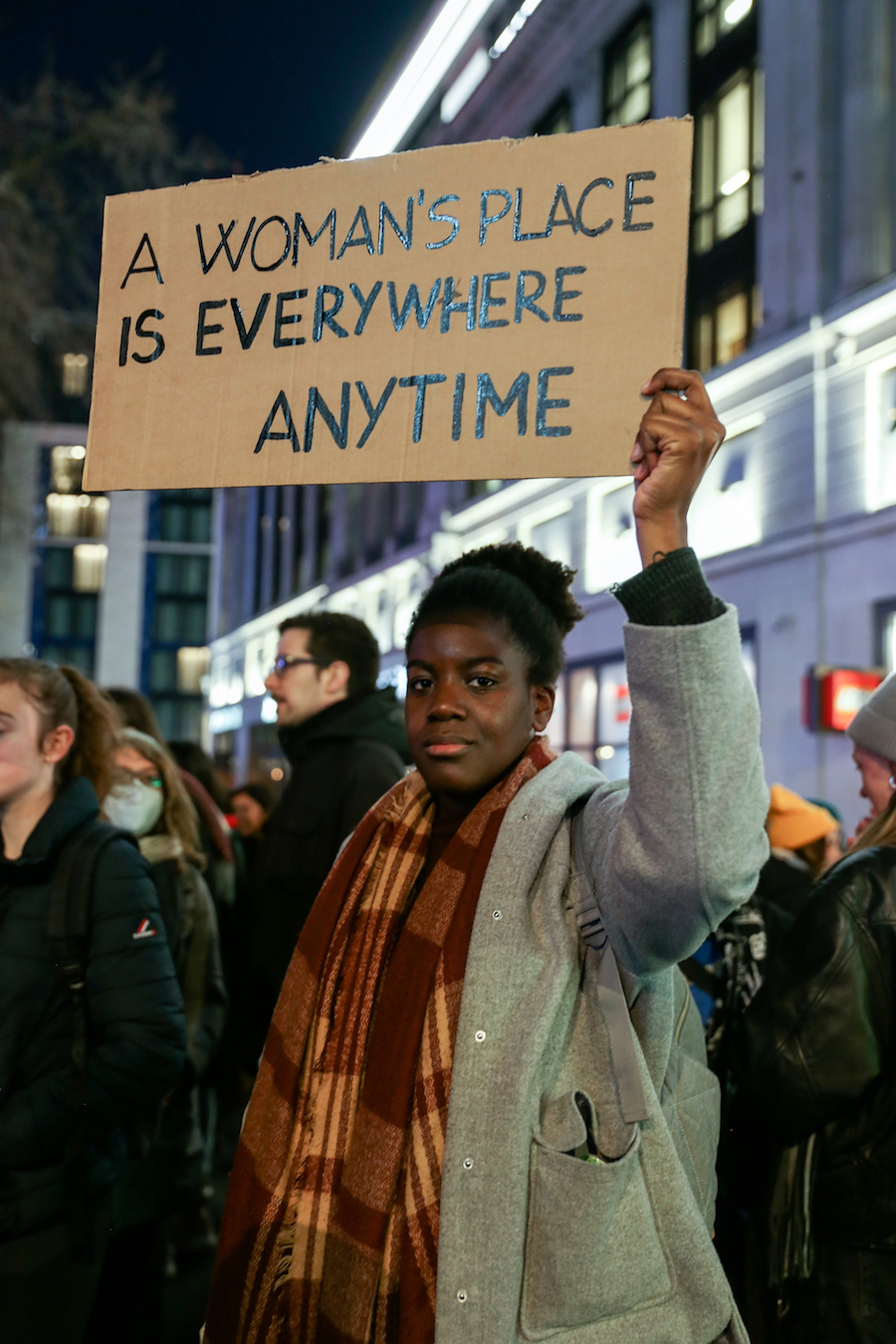

Follow Bex Wade on Instagram.
Enjoyed this article? Like Huck on Facebook or follow us on Twitter.
You might like

Jesse Glazzard’s messy portrait of queer friends, lovers and chosen family
The Sound of Dirt and Beauty — The photographer’s debut monograph explores tender, unpolished moments shaped by the people who he surrounds himself with, while offering a window into the UK’s working-class LGBTQ+ community.
Written by: Sunny Sunday
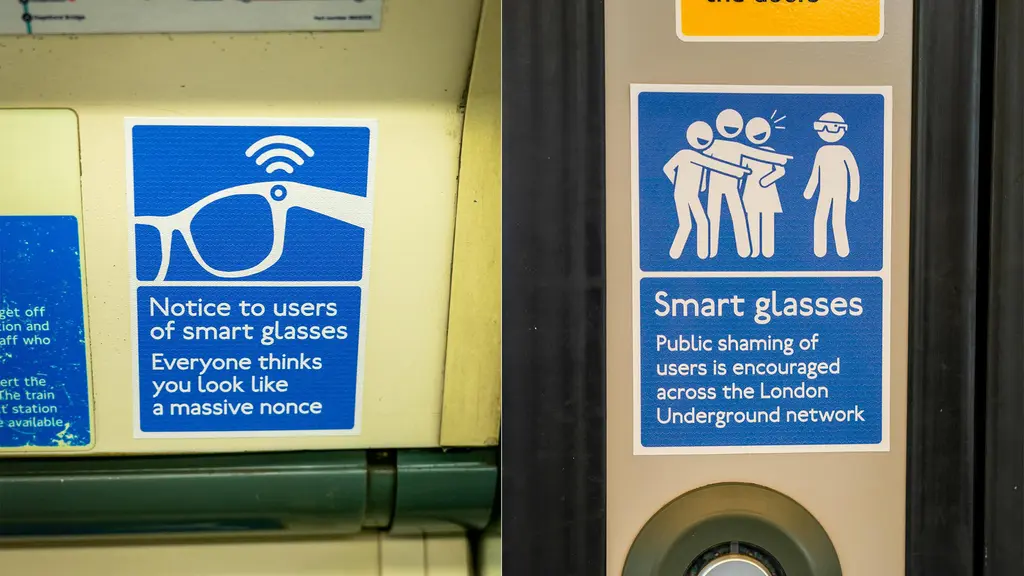
Activists slam “pervert glasses” in new guerrilla campaign
Everyone Hates Elon — Stickers have appeared on the London Underground network, criticising the wearable technology’s covert filming capabilities.
Written by: Isaac Muk

Behind the curtain at Alternative Miss World 1981
Olympia glamour — Running a subversive take on the traditional beauty pageant, the Andrew Logan organised event prioritised underground creativity and invention. Photographer David Corio went behind the scenes at its biggest edition.
Written by: Miss Rosen

Dan Lacey: “BMX is forever evolving”
Overground — Steph Pomphrey caught up with the two-wheel legend after his latest meet in east London, chatting about fatherhood, music and action sports within the outdoor industry.
Written by: Steph Pomphrey

The battle for the soul of lockpicking
Under locksport and key — In recent years, breaking locks for fun has grown from a niche hobby into an activity followed by millions of people. As it has matured, so have tensions over who sets the rules.
Written by: Jack Dennison-Thompson

New exhibition highlights British radical living over 200 years
Earthly Paradise — Taking place at the William Morris Gallery, it explores the homes and lives of artists, writers, musicians and more, as well as the conditions that allowed them to thrive.
Written by: Isaac Muk


