Disunited States: Lessons learnt in a divided America
- Text by Michael Segalov
- Photography by Jarrett Christian

It’s 4am, and it’s cold and dark in Atlanta, Georgia. I’m sat in the departure lounge of the world’s busiest airport (honestly, the number of Atlantans who’ve boasted about this…), waiting for my flight to Washington DC before I finally head back to England.
Just a week ago I was sat at my desk in London, trying to process the election results of the night before. I couldn’t, so I jumped on a plane to America to try and see if I could get an insight into what exactly had gone down, and how.
It’s been a bittersweet trip: I’ve no complaints about spending a week in an exciting new city, but the reality – that I’m stateside only because Donald Trump has been elected to the White House – has put a bit of a downer on the whole experience. Thanks mate.
When I jumped on a plane just a week ago, I had no idea what to expect. Atlanta is a sprawling and diverse metropolis, a progressive island of Democrat blue in a sea of Republican red. I wanted to find people scared and angry about what American voters had done, and I wasn’t left disappointed.
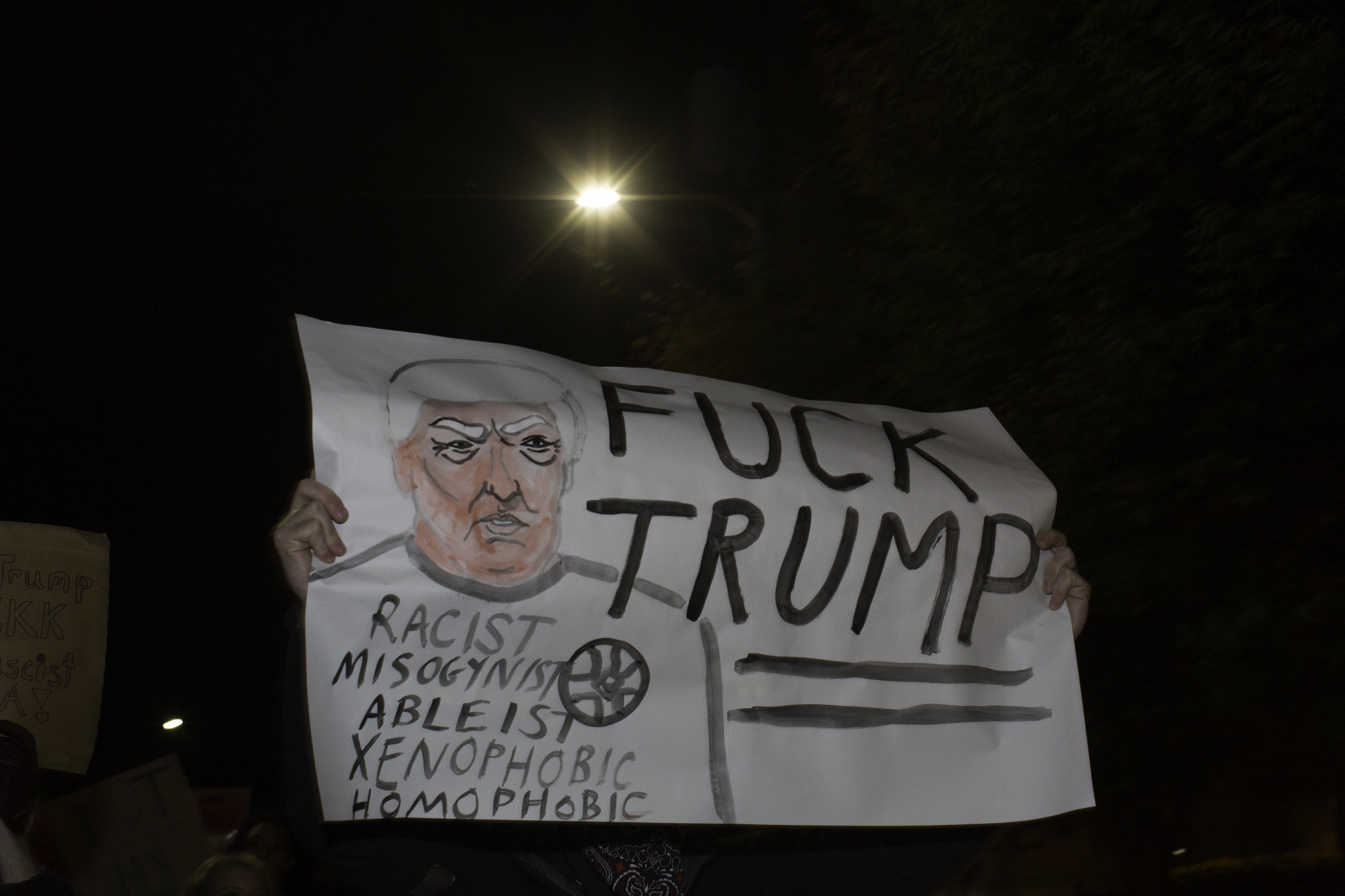
With demonstrations erupting across cities nationwide, I joined a protest that shut down Atlanta’s streets. Thousands chanted and blockaded, this young and diverse group were scared and angry, disconnected and disillusioned by what their country had voted for. It might have been a tiny proportion of the city’s population, but onlookers flocked onto the streets as they past, raising their fists and honking their horns.
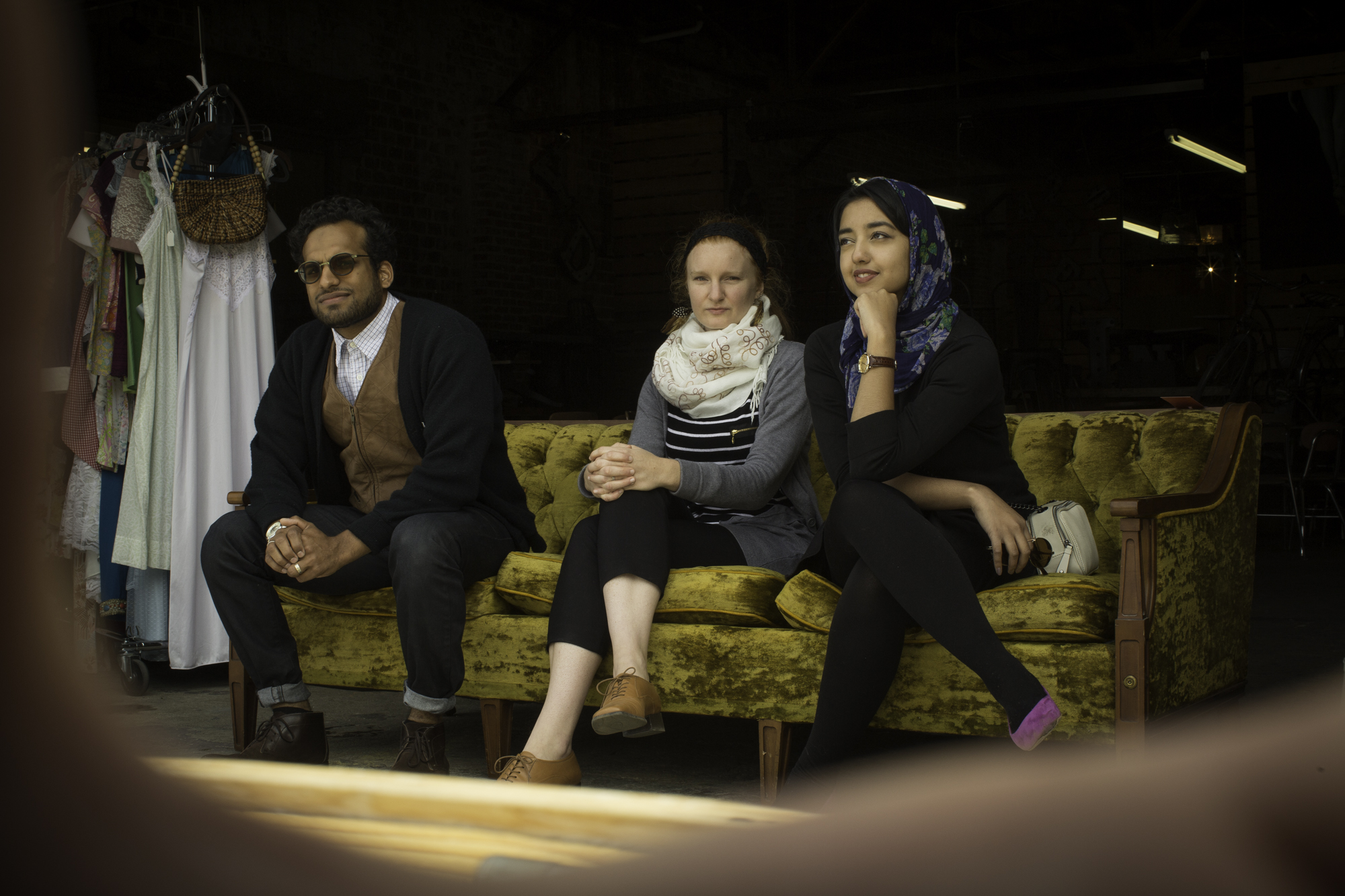
Away from the action a sense of shock and mourning was prevailing: young queers, Muslims and skaters were all still working out what just happened. Nobody knows what Trump will actually do when in office, but a homophobic Vice President, and a distinctly racist leader of the free world wasn’t filling anyone with confidence.

The data is still being processed, but projections before the election put nearly every state as a win for Clinton when only counting voters aged 18-25. The young people I spent time with didn’t recognise the country that had put Trump in office, and remained confident that our generation won’t follow suit.

Phillip
Even the young Republicans I spoke to on the most part suggested their thoughts rung true. It’s a hope we can all cling on to in this volatile and dangerous time, but it won’t stop the next four years from coming at us.
I didn’t want to just speak to those who, like me, see Trump as a dangerous monster, so I headed out into rural Georgia to meet those who’d voted for the bloke on their ballots. It wasn’t a comfortable experience.
As I drove back towards Atlanta from a rural gun show just a few days ago, the conversations I had with attendees played out again in my mind. I’d thought long and hard about what I expected from Republican voters: not just avid Trump supporters, but those who’d traditionally voted for the party and followed its lines.
Of course I’m making generalisations here, but the Trump supporters I encountered split nicely into two distinct camps: those who agree with the divisive rhetoric, and others who stuck with the Republicans because that’s what they’ve always done.
Most younger voters I spoke to were very much the latter camp, which reassured me. These younger people seemed optimistic that Trump would leave the most unpleasant policy positions behind, but the problem is the older voters I spoke to, on the most part, were all for it.
It might sound like an all-too obvious observation, but American is also really fucking big. As someone who’s really only spent time in the US’s liberal, costal cities, this trip has been something of a wake up call.
The thing is, living in the UK the vast majority of the population is never more than a few hours drive from a bustling and diverse metropolitan city.
I can’t help but feel that for many of the younger people I spoke to outside of Atlanta’s progressive boundaries, some interaction with those with most to lose, and a better understanding of their relative privilege, might well have changed the way they voted.
For most of these young Republicans, their belief that Trump was all talk and bluffing allowed them to see him as the lesser of two evils, they couldn’t understand or empathise with the fears of those just a few hours drive away. Or they didn’t want to. Either way they’ve elected a man who’s set to make many lives miserable, and it’s no excuse, but blindly labelling half of America as racist will do little to bridge these divides.
But it wasn’t just the interviews and press releases that got me thinking about the results, what happened before and what happens next. It was the discussions over a beer, chats with uber drivers as we cruised though the city, the overheard conversations as I sat in coffee shops trying to work.
What did I learn? Well, these election results are anything but simple. Trump won because some Americans are racist, but also because Hilary Clinton really isn’t popular on the ground. Whether this is purely sexism or her seemingly dishonest character remains unclear, but there’s no doubting she’s part of the political establishment that’s being rejected on both sides of the pond.
Trump also succeeded because half of America didn’t turn out on election day: a sense of disenfranchisement reigns. For Trump to be held to account for his actions, and booted out by 2020, this will need to be examined and repaired.
What’s most important now is that people don’t stop getting angry, don’t stop fighting; that Trump’s rhetoric doesn’t become part of the norm. In the coming weeks we’ll be looking at how to make this happen. Too much is at stake not to.
Keep track of all our Disunited States coverage as it happens.
Enjoyed this article? Like Huck on Facebook or follow us on Twitter.
You might like

The battle for the soul of lockpicking
Under locksport and key — In recent years, breaking locks for fun has grown from a niche hobby into an activity followed by millions of people. As it has matured, so have tensions over who sets the rules.
Written by: Jack Dennison-Thompson

Nick Haymes’s intimate portrait of his family’s life
Chronograph — Over 25 years, the photographer documented his son’s lives as they grew into adults. The resulting photobook is an exploration of the passage of time, as well as the optimism of youth.
Written by: Miss Rosen

Defiance and pride in Chicano Camera Culture
A Photographic History — A new major exhibition surveys Mexican American photography over six decades, platforming Chicano artists at a Chicano museum for the first time.
Written by: Miss Rosen

Inside the searing, strangely wholesome world of competitive chilli eating
Red hot — Exploding out of pandemic-era isolation, a growing community of chilliheads are competing across the globe, devouring millions of Scoville units and fighting off agonising capsaicin cramps in the process. Hannah Bentley speaks to some of the scene’s key figures to find out why.
Written by: Hannah Bentley

As Hanoi’s nightlife faces raids & repression, its underground scene modulates
Spaces Between the Beats — Tensions between nightlife and authorities have grown in recent times, as police target venues and their patrons with increasingly frequent drug testing and searches. With clubs becoming hostile spaces as a result, Hanoi’s electronic music community is finding new spaces and forms of expression, reports Martin Guttridge-Hewitt.
Written by: Martin Guttridge-Hewitt

In photos: Black Texas life since emancipation
Kinship & Community — A new photobook and exhibition showcases the rich culture, history and community of African American folks in the Lone Star State, whose existence in the region predates colonial Britain.
Written by: Miss Rosen


