Chaos and community in British photography since the ‘60s
- Text by Miss Rosen
- Photography by Rock Against Racism. Photo by Syd Shelton, Leed 1981 (main image)

While working on Martin Parr’s first retrospective exhibition in 2018, curator and filmmaker Ralph Goertz became fascinated by the development of British documentary photography over the past 60 years. He began thinking about the importance of elevating the work of photographers who were sometimes unexplored or forgotten alongside celebrated figures like Parr and David Hurn.
With the recent publication of Facing Britain: British Documentary Photography Since the 1960s (Walter Konig), which accompanies a touring exhibition of the same name, Goertz does just this. Bringing together the work 48 photographers including James Barnor, Tish Murtha, Alys Tomlinson, and Tony Ray-Jones, Geortz explores different eras of economic expansion and decline, political movements and crises, and scenes of everyday life in Britain.

Nim and Other Stories (c) Kalepsh Lathigra
“The strength of British documentary photography is that it always starts as a reaction to political and social struggles,” says Goertz. “All protests, conflicts, financial booms, and industrial declines have shaped these photographers, their attitude and empowerment.”
Goertz also cites education, women’s empowerment, and a more inclusive society as having a deep impact on the development of the form, as photographers fight alongside the people for their voices to be heard. “Most of the photographers worked on their series as independent artists, which is very unique,” he says. “It was very impressive to see them express a special relationship or attitude on a specific issue or topic, and just doing it.”
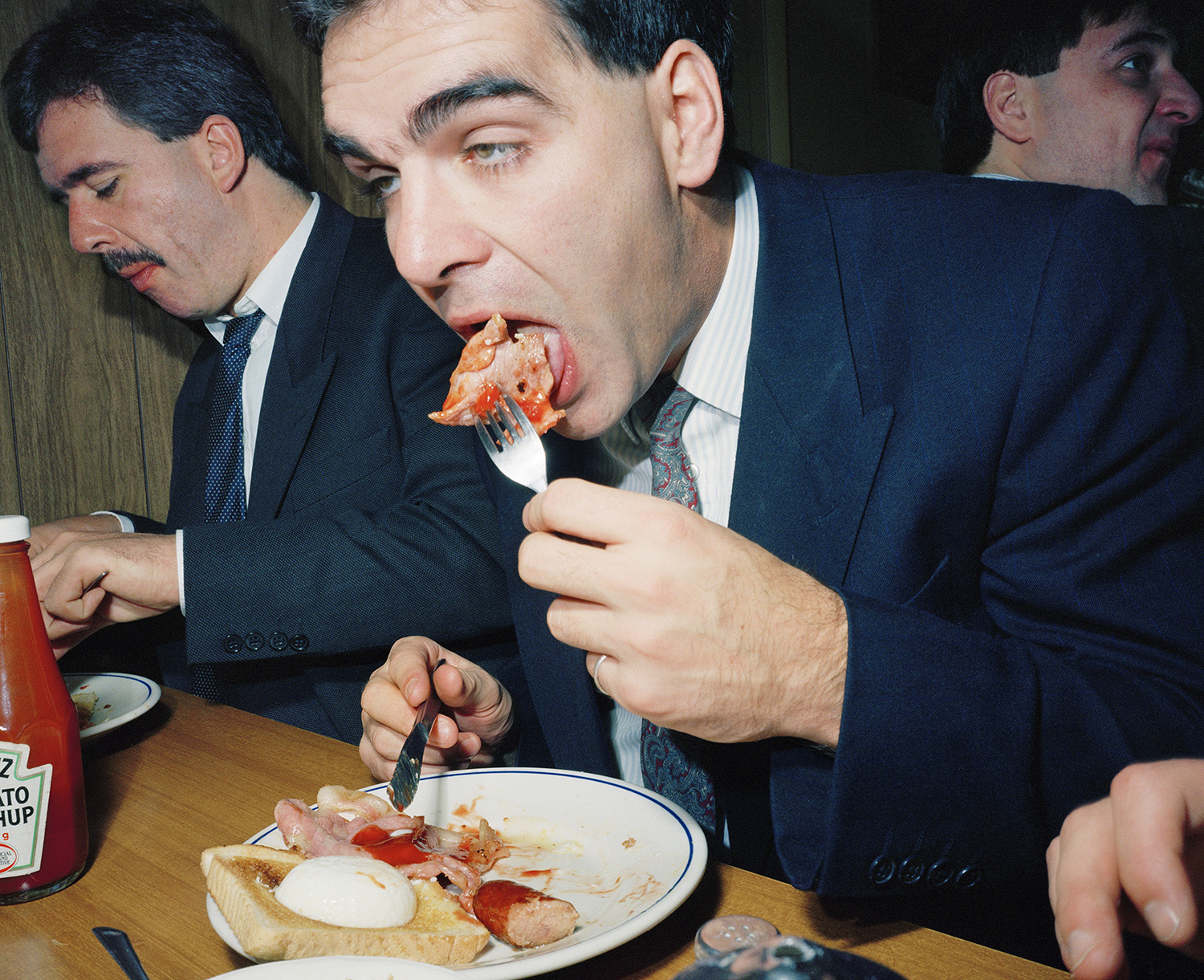
Fortunes are being made that are in line with the dreams of avarice, 1987 (c) Anna Fox

My favourite colour is yellow, 2016 (c) Kirsty Mackay
Inspired by Cornel Capa’s notion of “the concerned photographer,” many British documentary photographers have long recognised the camera as a tool for social justice. “Photographers like Mike Abrahams, Dave Sinclair, Homer Sykes, Syd Shelton and Chris Steele-Perkins are part of this group,” says Goertz.
“John Davis’s brilliant landscapes are strong photographs that can stand alongside works by Ansel Adams. But if you read the context for a photograph like ‘Ffestiniog railway, Blaenau, Ffestiniog, Snowdonia’ (1994), it punches you in the stomach. That romantic small town is toxic from nuclear materials to this day.”
Seeing himself as an outsider due to his German background and education, Goertz looks to bridge his own view of photography with those working in the UK. “I see photography as a dialogue. Some photographers are great observers while others are more active or more part of the scene,” he says.

Mr. & Mrs. Hudson. Leeds (c) Peter Mitchell
“Tom Wood’s series, Looking for Love’is a great example for being part of a community; the same with Roy Metha and his series on Harlesden, which you can read as a love letter to the multicultural community in London. There’s also John Myers’s very conceptual portraits he did in the 1970s in his West Midlands neighbourhood.”
Seeking to find a balance between the stories being told and the photographers being represented, Goertz uses the exhibitions as a way to expand the conversation and share new works. “No venue has the same show,” he says. “It’s always different, always new photographers.”

Black Copper, London, 1985 (c) Dave Sinclair

Harlesden, West London, 1989 – 1993 (c) Roy Mehta

From ‘The Last Resort. 1983-85 (c) Martin Parr

I can help, 1986-88 (c) Paul Reas

Junior Wales ballroom dancing championships. 1973 (c) David Hurn
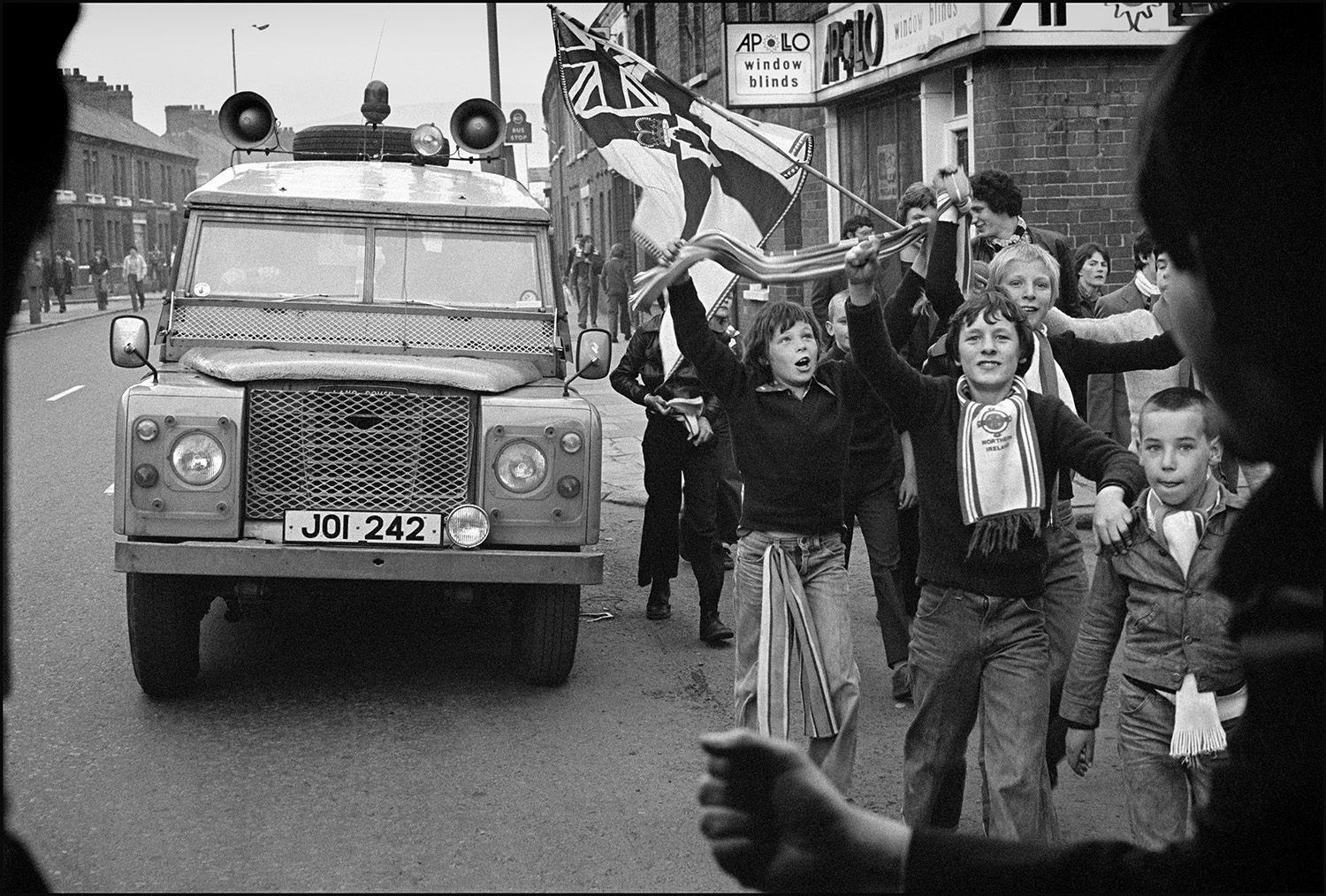
RUC Patroling Northern Ireland football supporters, Belfast 1979 (c) Kevin O’Farrell
Facing Britain: British Documentary Photography Since the 1960s is on view at Mönchehaus Museum in Goslar, Germany, through May 1, 2022, and the Museum of Photography in Krakow, Poland, in 2022.
Enjoyed this article? Like Huck on Facebook or follow us on Twitter.
You might like

In photos: Black Texas life since emancipation
Kinship & Community — A new photobook and exhibition showcases the rich culture, history and community of African American folks in the Lone Star State, whose existence in the region predates colonial Britain.
Written by: Miss Rosen

Youthful joy & end-of-era poignancy at a London school prom
Leavers — For several years, Lewis Khan documented young people as they celebrated the last of their school days and the completion of their exams. The series is now collated in a new self-published photobook and short film.
Written by: Zoe Whitfield

Harry Gruyaert’s vintage, kaleidoscopic scenes of New York
A Sense of Place — For 50 years, the Belgian photographer and Magnum Photos member has been capturing NYC’s colourful chaos. A new photobook and exhibition showcase his unique, technicolour view of the city.
Written by: Miss Rosen

In the pit at one of the UK’s last stock car & banger speedways
Stock Car Racing Isn’t Dead — Photographer Liam McCarthy spent time in and around the Arlington Raceway’s circuit, capturing the diehard community that keeps the sport alive.
Written by: Isaac Muk

Inside Lower Duck Pond, the nicest town on the internet
/r/HaveWeMet — With a population of 2,500 and no fixed location, the subreddit is a space for roleplaying citizens to solve mysteries, host fictional events and ultimately connect. In an internet that’s often divided and toxic, Vicky Jessop hangs out in one of its most wholesome corners.
Written by: Vicky Jessop

A major Nan Goldin exhibition is coming to London
You Never Did Anything Wrong — Opening at the Hayward Gallery in November, the show will debut a new film from the artist and activist, alongside a slate of recent work.
Written by: Jack Dennison-Thompson


